C. S. Lewis translates Virgil

C. S. Lewis translates Virgil

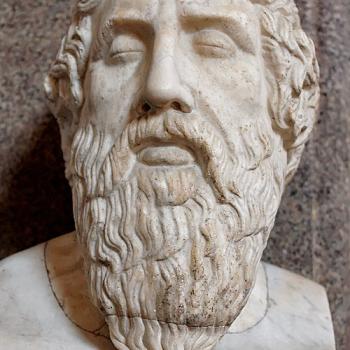
Is it a good idea to publish EVERYTHING that a good author wrote?  His notes, scraps, unfinished projects, and what he never intended for publication because it wasn’t good enough?  I have my doubts, but it appears that we are getting virtually everything from C. S. Lewis.  Just out from Yale University Press, no less, is C. S. Lewis’s translation of Vergil’s Aeneid:  C. S. Lewis’s Lost Aeneid: Arms and the Exile.

Well, it’s actually only the first book of the Aeneid, along with fragments of the other eleven.  Still, a true Lewis fan can’t help but be interested.  It would be worth tracing Virgil’s influence on Lewis, and a work like this can show us Lewis’s imaginative response to the great epic in ways that may illuminate its translator’s own original work.

Sarah Ruden, herself a translator of classical literature, likes Lewis, but she doesn’t think much of this work as a translation of Virgil.  She does, though, have some interesting things to say about both writers.  See  C. S. Lewis as Translator from Books and Culture.
"Talk about telling me what I want to hear . . . James Carville has ..."

Telling Us What We Want to ..."
"Could there be nonhuman extraterrestrial beings made in the image of God? No! Could Scripture ..."

Would Evidence of Aliens “Shatter” Christian ..."
"Sorry, I got busy offline yesterday.Yes, it's true that the context of that quote was ..."

Telling Us What We Want to ..."
"I remember Roman Hruska well. I am not familiar with that particular quote, although it ..."

Telling Us What We Want to ..."

Browse Our Archives

Follow Us!


TAKE THE
Religious Wisdom Quiz

True or False: James states that the tongue is a fire, a world of iniquity.

Select your answer to see how you score.