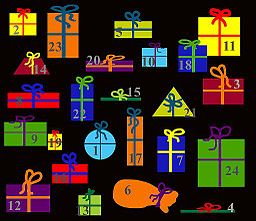
 One reason that many Christians are rediscovering Advent is that Christmas has become so commercialized. Advent is a way to keep our concentration on what the Christmas season is supposed to be about, namely, the coming of Christ. But now Advent is also becoming commercialized!
Alissa Wilkinson has written a good explanation of Advent for Vox. She explains the history of the season and what it means. She includes some interesting details that I had not realized. (For example, that Lutherans invented the Advent Calendar. By the way, Lutherans apparently also invented the Advent Wreath, according to another source that I stumbled upon, which says the wreath derives from the Scandinavian custom of hanging up a wagon wheel decorated with evergreens and candles.)
She then says that the theme of “anticipation”–specifically, anticipation for Christmas (rather than for Christ)–is for non-religious people too. She focuses on the secularized versions of Advent calendars, which are built around candy or Santa Clausy things for children and product lines for adults.
From Alissa Wilkinson, Advent, explained – Vox:
Most Christmas customs in the US share two characteristics. First, it’s usually hard to pin down their origins to a single source. And second, their roots almost always reach back to religious custom — Christmas being the second most important feast day (behind Easter) on the Christian calendar — but have been happily adapted and, in some cases, scrubbed of religious content to make them more broadly palatable.
The celebration of Advent — whether with wreaths in church or calendars at home — is among these customs. On the one hand, it’s one of the major seasons celebrated by most Christian churches in the Western tradition: Roman Catholics, Anglicans, Episcopalians, Lutherans, and many additional Protestant churches mark the roughly month-long period with special observance.
But the word Advent comes from the Latin word for “arrival” — adventus — which means non-Christians can celebrate it simply as a fun countdown to Christmas. In that respect, it’s also become a marketing opportunity for retailers, mostly through Advent calendars, which have been around since the 19th century and have, of late, grown steadily more, shall we say, creative.
[Keep reading. . .]
Photo by Anna reg (Own work) [GFDL (http://www.gnu.org/copyleft/fdl.html) or CC BY-SA 3.0 at (http://creativecommons.org/licenses/by-sa/3.0/at/deed.en)], via Wikimedia Commons
















 Ad-Free & Subscriber Log-In