(Back then, Sanger said he hadn’t found a church to join, but he has now joined the conservative, traditional Anglicans in the Episcopalian-breakaway Anglican Church of North America [ACNA], attending a congregation in a diocese that doesn’t ordain women. He tells why he chose that church body here. He loves liturgy, Biblical commitment, historical theology, but is leery about Calvinism, Baptists, non-denominationals, Pentecostals, Catholicism, Orthodoxy, while accepting them as fellow Christians. The reasons he gives show that he was indeed formed by his Lutheran catechesis. He says now he likes and respects confessional Lutheranism, but can’t go along with our exceedingly high view of the sacraments. That’s fair. ACNA is a good place for him to land.)
Anyway, Sanger has been critical of today’s version of Wikipedia, with which he is no longer formally affiliated, for its secularist bias. This is evident particularly when you look up something about the Bible, with the entry always giving the higher-critical perspective.
In the course of a post entitled Nine Theses on Wikipedia, modeled after Luther’s 95 Theses (ahem), he usefully gives a name to the perspective that he is complaining about: the GASP worldview — Global, Academic, Secular, Progressive.
From Thesis 2 (my emphasis):
Neutrality is impossible to practice if editors refuse to compromise—and Wikipedia is now led by such uncompromising editors. As a result, a favored perspective has emerged: the narrow perspective of the Western ruling class, one that is “globalist,” academic, secular, and progressive (GASP).
In fact, Wikipedia admits to a systemic bias, and other common views are marginalized, misrepresented, or excluded entirely. The problem is that genuine neutrality is impossible when one perspective enjoys such a monopoly on editorial legitimacy.
I propose a natural solution: Wikipedia should permit multiple, competing articles written within explicitly declared frameworks, each aiming at neutrality within its own framework. That is how Wikipedia can become a genuinely open, global project.
I like that acronym. It describes the mindset (secular, progressive), while also naming its origin (academic) and its multicultural claims (globalist).
Ironically, GASP today, being postmodernist, would deny universality, in the sense of classical thought, but affirm globalism, in the sense of multicultural relativism. This is not actually affirming the value of different cultures–since actual cultures don’t tend to be relativistic–but rather it is a way of maintaining that claims of truth and morality are nothing more than cultural constructions. Actually, this view is a construction of the academic, secular, and progressive culture!
Anyway, I think GASP is a better acronym than WEIRD (“Western, Educated, Industrialized, Rich, and Democratic”), which Gaspers use to relativize Western civilization).
Here are details about GASP from Sanger:
- Globalism, as ordinarily understood, is the view of a remarkably provincial group: typically wealthy, university-educated, and concentrated in a few cities in Western Europe, the coastal United States, and the Anglosphere. Most people on the globe are not globalists.
- Academia, for all its virtues, reflects peculiar assumptions not shared elsewhere. In many fields, especially the humanities, there is a dominant philosophical outlook: secular, progressive, relativistic, and now often hostile to most Western traditions. Objectivity has increasingly given way to activism; the careful rigor that once defined scholarship has eroded.
- Secularism itself is hardly neutral: most people, including many of the most intelligent, are religious. This is a worldview alien to most of humanity, one that scorns all faiths or feigns a perfunctory respect in order to treat them clinically, taking their claims seriously only as objects of study.
- Progressivism, too, is not some inevitable, universal norm or default position. It is at bottom a parochial ideology of Western “elites,” drilled into students at a small class of expensive institutions.
As an example of GASP bias, he cites the Wikipedia entry for “Yahweh”:
Wikipedia has an article titled “Yahweh.”⧉ Now, as I am a Christian, “Yahweh” is the name of my God. My observant Jewish friends would say the same (though they would not utter the word itself, which is called “The Name,” or in the Hebrew transliteration, Hashem, since it is sacred to them). The repeated uses of the phrase “the LORD” in the Bible are translations of the name of God.
But in the Wikipedia article,⧉ we read that Yahweh
was an ancient Semitic deity of weather and war in the ancient Levant, the national god of the kingdoms of Judah and Israel, and the head of the pantheon of the polytheistic Israelite religion. Although there is no clear consensus regarding the geographical origins of the deity, scholars generally hold that Yahweh was associated with Seir, Edom, Paran, and Teman, and later with Canaan. The worship of the deity reaches back to at least the early Iron Age, and likely to the late Bronze Age, if not somewhat earlier.
According to Wikipedia, Yahweh was (past tense) one god (lower case) in a whole pantheon, the chief god in a polytheistic religion. The article thus presents as uncontroversial fact a theory that is held by Bible critics. The claim that Yahweh was a tribal war god is not a neutral, historical fact, but a modern theory, rejected by many of the most deeply erudite Bible scholars around the world, Jewish, Christian, and Muslim. But to Wikipedia, the claim is treated as “neutral.” The page’s chief maintainers do not tolerate⧉ internal debate on the matter. But the article’s stance certainly is not neutral, precisely because it deliberately ignores the majority view on the topic named by the title, a view taken by the billions worldwide who worship Yahweh. Even the views of serious scholars critical of the supposed secular “consensus” are omitted and treated with scorn.
Here is the complete list of Sanger’s theses, each of which can be clicked at the site for further elucidation and discussion:
Nine Theses on Wikipedia
1. End decision-making by “consensus.”
2. Enable competing articles.
3. Abolish source blacklists.
4. Revive the original neutrality policy.
5. Repeal “Ignore all rules.”
6. Reveal who Wikipedia’s leaders are.
7. Let the public rate articles.
8. End indefinite blocking.
9. Adopt a legislative process.
Further theses
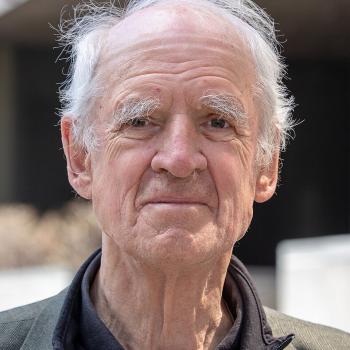
Photo by Larry Sanger – http://www.larrysanger.org/lsanger02.jpg [dead link], CC BY-SA 2.5, https://commons.wikimedia.org/w/index.php?curid=10687609
















 Ad-Free & Subscriber Log-In