

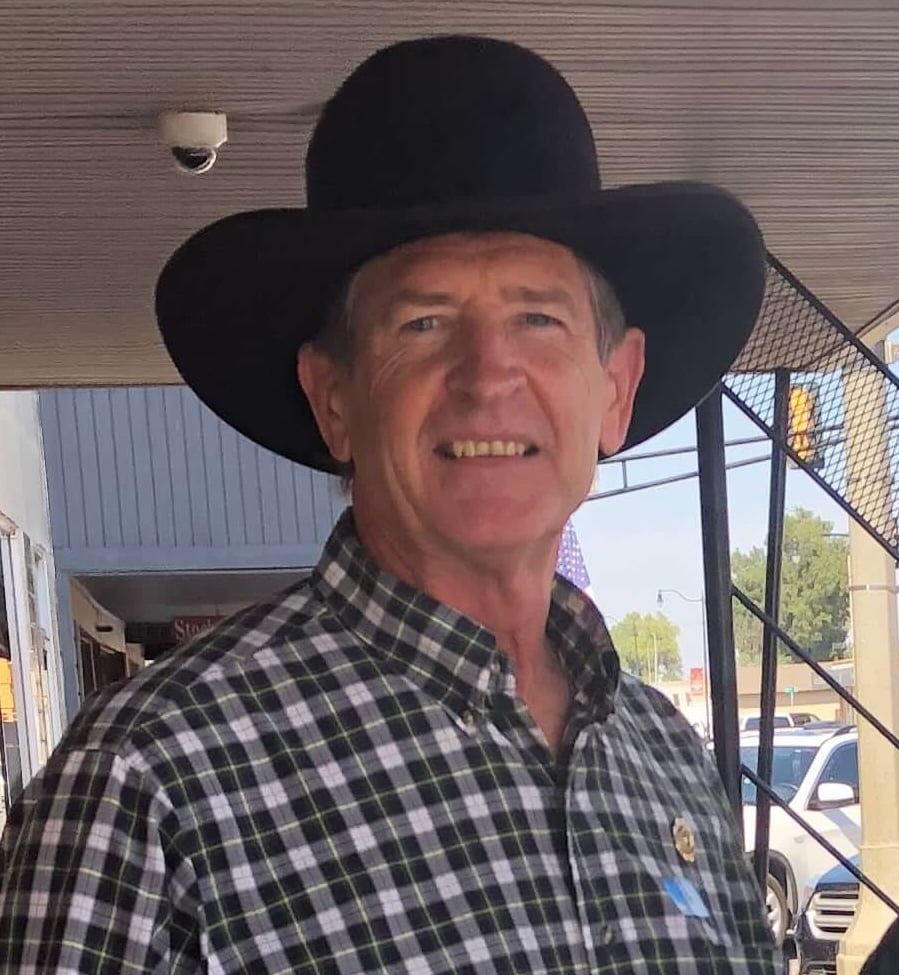
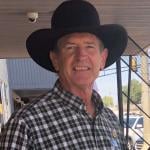
Saddlemaker and leatherworker Cary Schwarz–a longtime member of the Cranach blog community–has been given “the nation’s highest honor in folk and traditional arts” by the National Endowment for the Arts.
Cary was in on the very beginnings of this blog, indeed, at the very beginnings of my writing career. My first book, back in 1983, was The Gift of Art: The Place of the Arts in Scripture, later, in 1991, expanded into The State of the Arts: From Bezalel to Mapplethorpe. I don’t remember exactly when he first contacted me–it must have been in the 1990s, in the early days of e-mail–but he introduced himself as a Lutheran artist, a leatherworker, who found my discussion of the vocation of the artist and the place of the arts in God’s design to be helpful.
We corresponded back and forth. He likes to barter, so when I would publish a new book, I’d trade him a copy for something he made. You should see the western belt he made me for Postmodern Times! (I think it was.) Ever since I started this blog in 2005, Cary was a reader and sometimes commenter. Some of you will remember him.
A few years ago, when we still lived in Oklahoma, he had a show at the National Cowboy and Western Heritage Museum (a.k.a., the Cowboy Hall of Fame) in Oklahoma City, and we finally met in person. We went out to eat at the iconic Cattlemen’s Steak House.
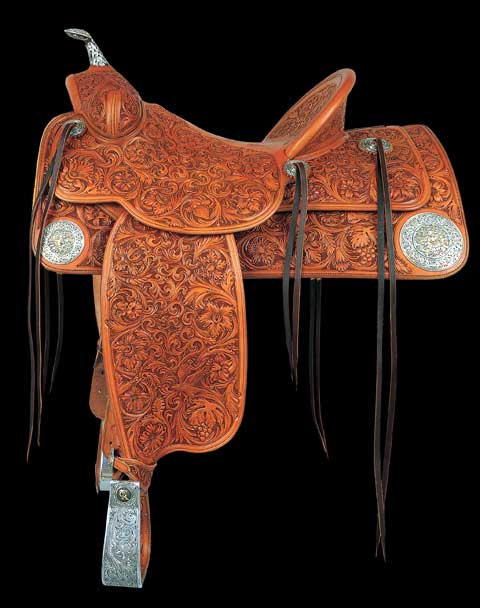
To say Cary Schwarz makes saddles is true, but that’s like saying Michelangelo paints ceilings. His intricate designs, in details so tiny you can hardly see them that interlock with ever-larger patterns, reminds me of the ornamentation on a medieval illuminated manuscript.
Cary is not just making separate, stand-alone aesthetic objects. These saddles are breath-takingly beautiful, but they are also designed for the practical task of riding horses. As he says on his website, “The best saddles made are those that have a successful blend of function and art. This is the goal for every saddle I build whether plain or fancy.” He is making equipment for the real world, but he is making it beautiful. He brings together truth and beauty.
Cary lives on a ranch in Salmon, Idaho. He’s a real cowboy. He’s also a devout Lutheran Christian. Read A Bit About Me on his website. Note the Luther rose.
The National Endowment for the Arts just awarded Cary a National Heritage Fellowship. In the words of the NEA website, “The NEA National Heritage Fellowships is the nation’s highest honor in folk and traditional arts. Each year since 1982, the program recognizes recipients’ artistic excellence, lifetime achievement, and contributions to our nation’s traditional arts heritage.”
Here is why they did that. From the commendation:
Cary Schwarz is a master saddlemaker and leather artist whose work reflects nearly five decades of dedication to the traditional ranching arts of the American West. Based in Salmon, Idaho, he creates custom saddles valued not only for their beauty, but also for their strength, balance, and lasting performance. For Schwarz, a saddle must serve its purpose in the field while reflecting the skill and judgment of its maker.
Schwarz’s interest in leatherwork began in childhood, when his parents gave him a Tandy Leathercraft kit. What started as a hobby grew into a vocation shaped by years of steady practice and mentorship, including guidance from 2008 NEA National Heritage Fellow Dale Harwood. Over time, Schwarz developed a disciplined approach to design, creating every saddle as an original work rather than relying on stock patterns.
His style is recognizable for bold yet refined floral carving, balanced proportions, clean and confident lines, and careful attention to fitting both horse and rider. He avoids overcrowding the surface, allowing each element to be appreciated on its own. The symmetry of his layouts, the depth of his tooling, and the smooth flow of one form into another give his saddles a quiet clarity.
As his reputation grew, Schwarz helped found the Traditional Cowboy Arts Association (TCAA), bringing national attention to saddlemaking and related trades such as rawhide braiding, silversmithing, and bit and spur making. He was instrumental in launching the Saddlemaker Summit in Idaho, creating a space for makers to exchange skills and ideas. Through workshops, apprenticeships, and instructional videos, he continues to guide emerging craftsmen, urging them to pursue both technical excellence and personal voice.
Browse through his website. Here is a video, in which he talks about his work:
And here we are in Oklahoma City in front of Cattlemen’s Steakhouse. (He’s the one on the left.)
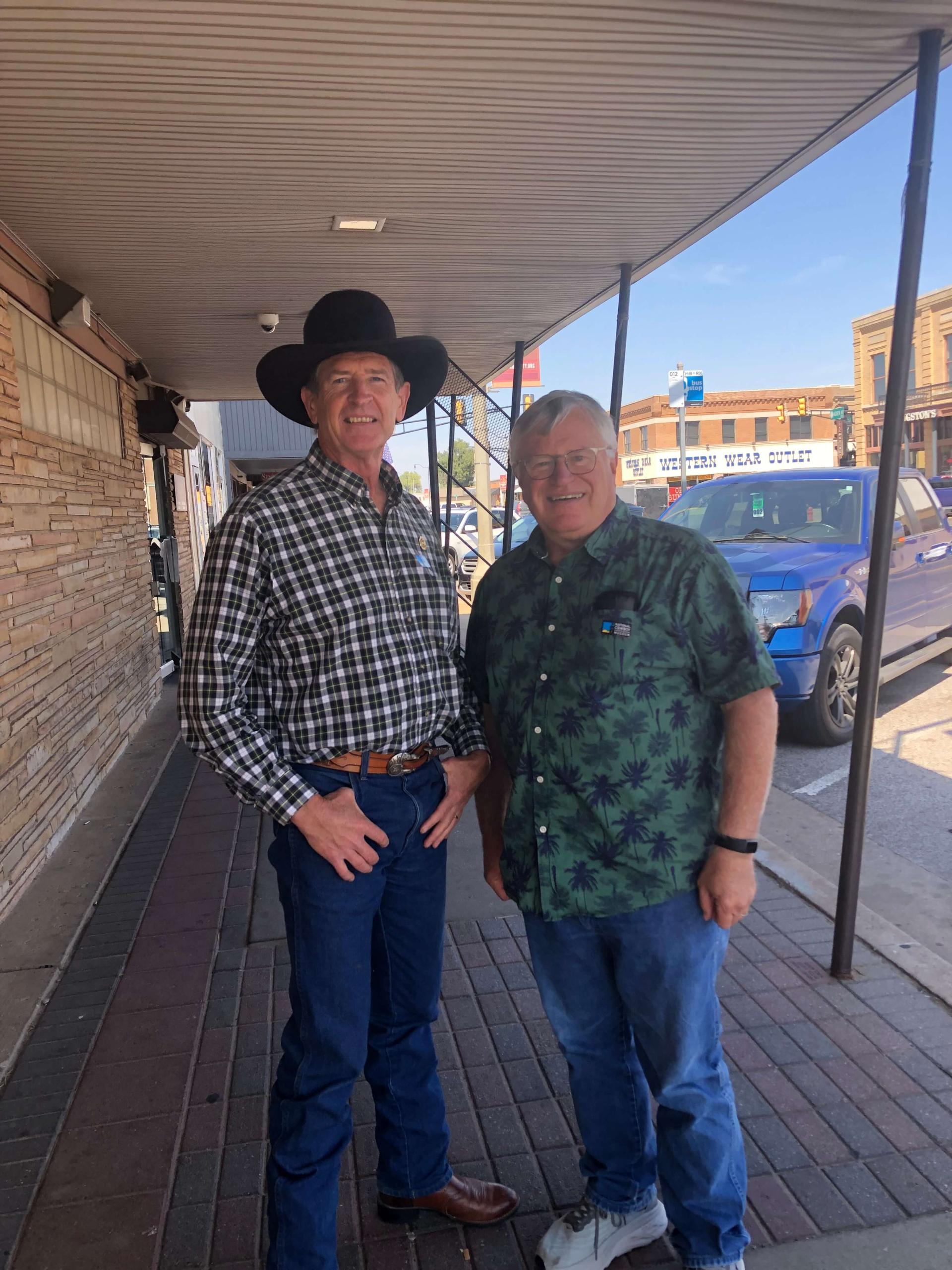
Photo of the saddle, courtesy of Cary Schwarz. Other photos by G. E. Veith.











 Ad-Free & Subscriber Log-In