


The Iran War is less popular than the Vietnam War. Updates for Virginia and Finland. And the cause of the Palisade Fires in California.
The Iran War Is Less Popular Than the Vietnam War
A larger percentage of Americans oppose the current War in Iran than opposed the Vietnam War.
According to an April 28 poll, 61% of Americans oppose our military action, up from 43% at the beginning of the war exactly a month earlier. At the end of the Vietnam War, 60% of Americans thought it was a mistake. The Iraq War and the Afghanistan War were also opposed by 61% of the population.
Updates for Virginia and Finland
There have been developments in two stories that we blogged about earlier.
Virginians are currently represented in the U.S. House of Representatives by six Democrats and five Republicans. As we blogged about, voters by a narrow margin approved a referendum that would redraw the state’s congressional districts so as to gerrymander away all but one of the Republicans. The new map, in which the conservative rural parts of the state would be forced into the same districts with the liberal residents of the Washington beltway, would result in tend Democratic congressmen and only one Republican.
But now the Virginia Supreme Court has ruled against Virginia’s gerrymandering ploy and has voided the referendum.
Meanwhile in Finland, as we reported, Dr. Päivi Räsänen and Lutheran Bishop Juhana Pohjola (whose church is in fellowship with the LCMS) were convicted by that country’s Supreme Court of committing a hate crime by putting out a pamphlet explaining what the Bible teaches about homosexuality.
They had already been acquitted twice, first by the criminal court and, since Finland doesn’t have our Constitutional protection against double jeopardy and thus allows the prosecution to appeal a case they didn’t win, and then by the appeals court. But the prosecution appealed that ruling to the Supreme Court, which rendered the guilty verdict.
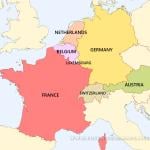
Now the two have decided to appeal that verdict to an even higher court, the European Court of Human Rights, in Strasbourg, France, to which Finland is subject as a member of the Council of Europe (an entity distinct from the European Union).
This will put not only Dr. Räsänen and Bishop Pohjola on trial. It will put Finland’s judicial system on trial. An acquittal will resonate throughout Europe that “hate crime” laws may not be used to infringe religious liberty, freedom of speech, and the freedom of the press. Though the court could also rule the opposite, to the detriment of human rights in Europe.
St. Paul invoked his rights as a Roman citizen to appeal his conviction for proclaiming the Gospel at Jerusalem. “I appeal to Caesar,” he said (Acts 25:11). This took his ministry to the halls of power in Rome, with great effect, though it also led to his execution.
Whatever happens in Strasbourg, we should pray for these two Christians and appreciate their courage and their steadfast faithfulness.
The Cause of the Pacific Palisades Fires in California
Remember last year’s Pacific Palisades fires, which killed 12 people and destroyed nearly 7,000 homes and other structures in Los Angeles county?
Now we know that the devastating fires were another example of leftwing violence. Jonathan Rinderknecht, a 30-year-old Uber driver, has been charged with arson and will go on trial June 8.
He says that he was inspired by the example of Luigi Mangione, who murdered Brian Thompson, the CEO of United Healthcare, a few weeks earlier. According to Noah Rothman, quoting the New York Times,
“Mr. Rinderknecht searched for Mangione-related news, using the search terms ‘free Luigi Mangione,’ ‘lets take down all the billionaires,’ and “reddit lets kill all the billionaires,’ according to court documents.” When asked by investigators why he did it, Rinderknecht compared his deed to the righteous blow Mangione struck against the capitalist enterprise. “We’re basically being enslaved by them,” the alleged arsonist reportedly insisted.
So in his self-righteous zeal, Rinderknecht set Los Angeles ablaze, with the fire engulfing rich and poor alike.










 Ad-Free & Subscriber Log-In