


Evidence young men really are returning to church. Why public school boards are so liberal. And the AI that can hack into everything and bring down the financial system.
Evidence Young Men Really Are Returning to Church
There has been lots of anecdotal evidence about a revival of Christianity, particularly among young men, but hard evidence has been inconclusive. But now Gallup has some firm numbers that support at least some of the anecdotes.
According to 2024/2025 data from a new Gallup poll, which has been tracking religion in the U.S. with these same questions since 2000, 40% of men between the ages of 18 and 29 attend church at least monthly. That is up from 33%, a number that had been stable from 2016 through 2023, a 7% increase.
Attendance for women in the same age group is up 3%, from 36% in 2023 to 39% in 2024/25. That is statistically about the same as for the men.
The poll also asked subjects whether religion is “very important” to them. Of the young men 18-29, 42% said that it was. In the previous Gallup poll covering 2022/23, only 28% said that it was, a jump of 14%.
Though young women’s church attendance is about the same as men’s, the importance they are placing on religion is much less, with only 29% saying that religion is “very important,” down from 32% in 2022/2023.
In every other demographic besides the 18-29 year olds, women are more interested in religion than men are. Also, the trend lines for both attendance and the importance of religion are down for every other demographic, which no doubt accounts for the conflicting studies about American religion. Nevertheless, some cohorts have higher rates than for young adults. For example, 51% of women and 49% of men over 65 go to church once a month or more, though this is down from 70% and 61% in 2000.
Why Public School Boards Are So Liberal
It has long been puzzling how and why public education has gotten so left wing, even in conservative states.
Social scientist Stanley Kurtz has found an answer. In his National Review essay entitled How Progressives Stole Our Schools, and How to Take Them Back, he points out that most school board elections are “non-partisan,” meaning that the political affiliations of candidates are not shown on the ballot.
Also, most school board members are voted on in “off-cycle” elections. That is, not on the same dates as general elections, in which local, state, and national offices are filled. “Off-cycle” elections invariably have very low turn out.
As a result of these two factors, as Kurtz explains, “low-turnout, low-information, off-cycle school board elections are dominated by highly organized and self-interested teachers’ unions.” Unions in general and especially the teachers’ unions lean hard to the left. Thus, in school board elections, teachers’ unions and their progressive allies come out to vote, while most ordinary citizens don’t.
The result is that a great many conservative districts are run by progressive Democratic school boards. . . .That ed school–produced progressive education establishment now dominates local, state, and national education bureaucracies, even in red districts and states.
His solution? Conservative states should make school board elections partisan and schedule them along with all of the other partisan elections.
That is to say, the only way to get politics out of public education is to bring politics into public education. But that’s democracy for you.
The AI That Can Hack into Everything and Bring Down the Financial System
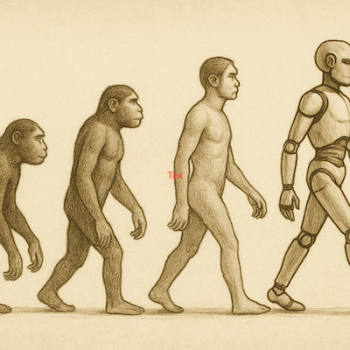
Anthropic, known for its AI system named Claude, has come out with Claude Mythos, which is so powerful that it can hack into virtually any and every computer system and website.
This was discovered prior to the release of Mythos. According to Forbes, it found “vulnerabilities in every major operating system and every major web browser. Fully autonomously. No human guidance needed.”
This was so alarming that Anthropic considered Mythos to be too dangerous to release. Instead, it sent the program to 40 tech companies–including Amazon, Apple, Google, Microsoft, Nvidia, and the Linux Foundation. Also major banks such as JPMorgan Chase and the federal government. The idea is for these key players to use Mythos to discover their own vulnerabilities so as to find a way to fix them, guard against Mythos-enabled attacks, and figure out an approach to cyber-security that can resist AI-driven break-ins.
This led Federal Reserve Chair Jerome Powell and Secretary of the Treasury Scott Bessent to meet with representatives of the nation’s banks to discuss the Mythos threat and the possibility that it could bring down our entire financial system.













 Ad-Free & Subscriber Log-In