

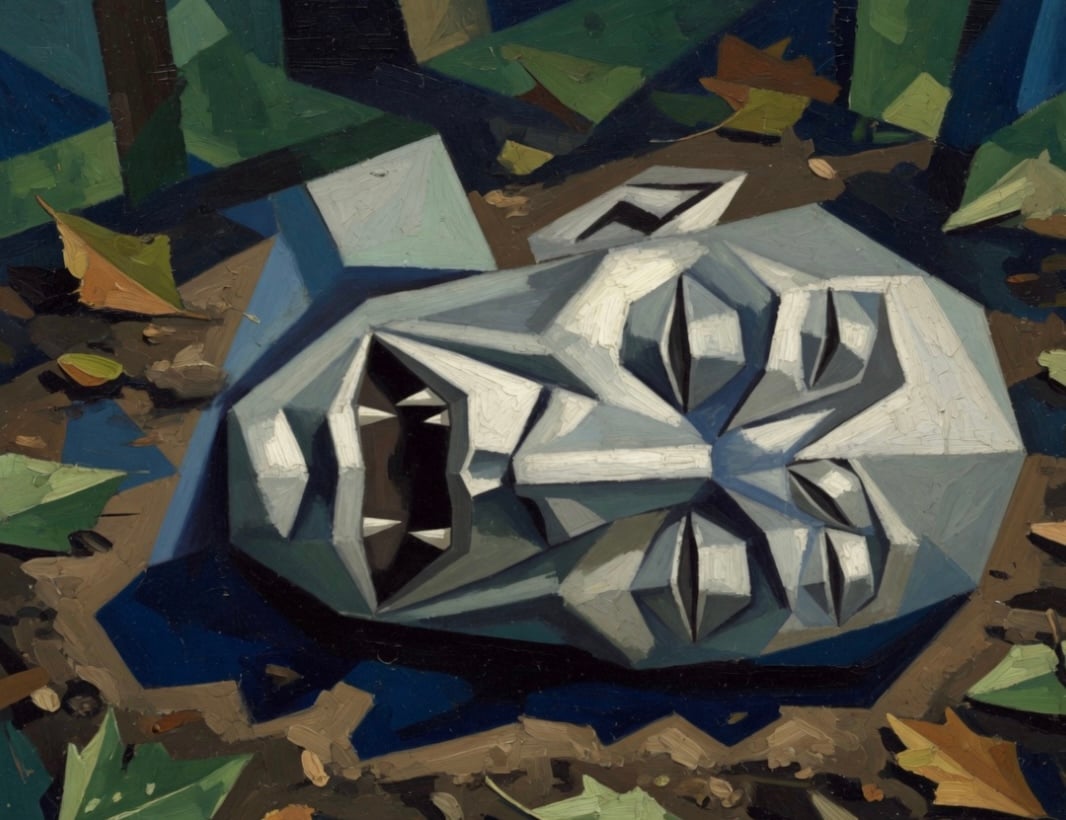
The Monster
Every execution begins with a story.
Someone commits an act so terrible that ordinary language struggles to contain it. The crime becomes synonymous with the person. A human being becomes a symbol. A defendant becomes a murderer. A murderer becomes a monster.
The Monster Narrative That Makes Executions Possible
The logic that follows seems inevitable. Monsters are dangerous. Monsters cannot be redeemed. Monsters do not belong among us. Therefore, monsters must be destroyed.
The death penalty depends upon this narrative. The state cannot kill a neighbor. Before the body can be executed, the imagination must be prepared. The condemned must first be reduced to the worst thing they have ever done. The public must stop seeing a person before it can tolerate a murder.
But beneath all of this lies a question nobody wants to answer.
What happens after we kill the monster?
The victim is not restored to life. The family does not recover the years that were stolen from them. The nightmares do not disappear. The empty chair remains. No execution has ever reversed a murder. No execution has ever undone an act of violence.
The promise of execution is therefore not restoration but satisfaction. It offers the feeling that something has been balanced. The scales have been corrected. Justice has been done because suffering has been imposed upon the one who caused suffering.
But stories never end that way.
The grief remains. The questions remain. The wounds remain. Communities continue to struggle with violence, trauma, poverty, addiction, abuse and all the conditions that helped produce the tragedy in the first place. The execution creates the appearance of resolution without actually resolving anything.
The Lie at the Center of Capital Punishment
If the purpose of execution is to affirm the value of human life, why is the affirmation expressed through the deliberate destruction of a human life?
We condemn killing by killing. We teach that violence is wrong by performing a carefully regulated act of violence. We insist that every life possesses dignity while simultaneously declaring that some lives possess none. The state attempts to solve this contradiction through procedure. Hearings, appeals, warrants, witnesses, protocols. The machinery creates an appearance of moral certainty. But procedure cannot answer the underlying question.
A murder remains a murder even when authorized by law.
What is most striking about capital punishment is not its violence but its confidence. The death penalty assumes that human institutions can identify the irredeemable person. History is crowded with wrongful convictions, false testimony, racial prejudice, prosecutorial misconduct, inadequate defense counsel and public hysteria. When imprisonment is mistaken, correction remains possible. A prisoner can be released.
Execution permits no correction.
But even when guilt is certain, another problem remains. Human beings are not static creatures. The person who enters prison at twenty is not the same person at forty or sixty. Years alter people. Suffering alters people. Some become wiser. Some discover remorse. Some spend decades wrestling with the horror of what they have done.
None of this erases the harm. None of it excuses terrible crimes.
But it reveals something the monster narrative cannot accommodate.
Human beings change.
The category of monster depends upon permanence. A monster must remain a monster forever. The moment growth becomes possible, the category begins to collapse. This is why death row prisoners are so often invisible. The public hears about the crime but rarely about the decades that follow. Silence protects the death penalty. The more we encounter the condemned as human beings, the harder execution becomes.
Humanity complicates every story built upon certainty.
The Monster is Immortal
There is a secret hidden at the center of capital punishment. When we kill the monster, we become the monster.
Not because we become identical to the murderer. The claim is deeper than that.
The monster’s defining belief is that a human life can be reduced to a single act…a single judgment…a single decision to destroy. The death penalty adopts that same logic. It looks at a human being and concludes that nothing remains worth preserving. No future transformation matters. No possibility of redemption matters. The only answer is death.
We call it justice because the killing is organized, regulated and legal. But legality does not change the nature of the act.
The monster was never merely the condemned prisoner. The monster was the belief that some people can be discarded. The monster was the conviction that killing can heal what killing has broken.
After every execution, the same reality remains. One person is dead because of a crime. Families continue grieving. Violence continues existing.
The monster is gone.
And yet the world is not healed.
We killed the monster.
But the monster didn’t die.
Because the monster was never merely the person we condemned. The monster was the darkness within us that longs to destroy what it cannot heal.
And the monster is immortal so long as it lives within us.










 Ad-Free & Subscriber Log-In