

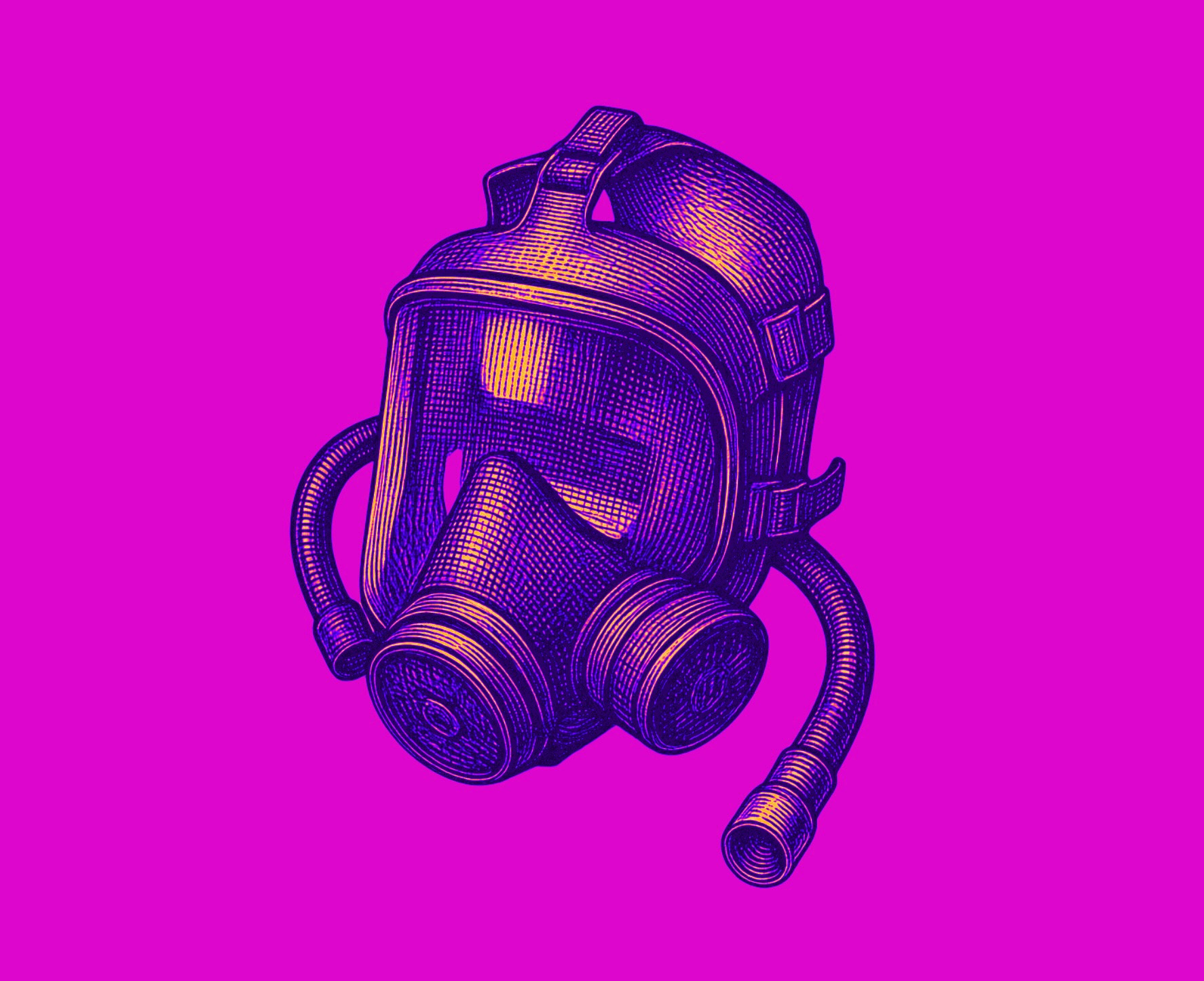
The Body Does Not Lie
Holy Week insists on the body.
Not theology in the abstract. Not doctrine at a safe remove. The body…the weight in the chest, the fight for air, the precise physical reality of what it means when a state slowly ends a human life and calls the process just.
We follow, across these days, a man who was arrested by the state, tried by the state, and executed by the state. Crucifixion was designed to kill by suffocation. When the body could no longer push itself up to breathe, death came. The state called it justice. History called it murder. The Church called it revelation…the moment when God entered the very worst of what human systems do to human bodies and refused to look away.
I have written a book called Suffocation by Design. The title was not chosen accidentally.
The Method and the Lie
Nitrogen hypoxia was sold to the American public as the clean alternative…the approach so scientifically simple that human error could not corrupt it. What it turned out to be was suffocation. Deliberate, state-engineered, legally sanctioned suffocation.
“This book is born from those moments that cling to memory. Nitrogen hypoxia…the newest method of execution in the United States…was sold to the public as ‘humane,’ ‘clean,’ ‘quick’ and even ‘painless.’ Those words are lies. I know because I stood there. I know because I heard the gas hiss, felt the trembling of a body fighting against death and saw the eyes that begged silently for mercy that would never come.”
I was there for Kenneth Smith and for Anthony Boyd. I watched both executions as their spiritual advisor. And the book you are holding is the account of those two, and the six executions in between — drawn from witness testimony, legal records, judicial opinions, autopsy findings, and the raw, unedited truth of what it looks like when the state suffocates a human being in the name of justice.
The Body Does Not Lie: Specific Reality of Eight Deaths
Specifics matter, because specifics are what the official narrative is designed to prevent you from sitting with.
These are not eight abstractions. They are eight specific men, with specific bodies, whose deaths followed a specific pattern that the state insisted…every single time…was humane.
Kenneth Smith was the first. The method had never been used before on a human being. He was, by definition, a test case. When the nitrogen began to flow, his body convulsed violently. His chest heaved. His head jerked upward repeatedly…a silent scream trapped behind the mask. His legs strained against the restraints. His body shook with enough force to make the gurney itself tremble. I was in that room. I watched his eyes go wide and searching for air that would never come. The state called it a success.
Alan Miller had been stretched into what he himself called a “crucifixion position” during a botched 2022 lethal injection attempt…his arms spread, needles inserted repeatedly across his arms, hands, and feet for ninety minutes while he described the pain as “excruciating.” At one point executioners began slapping the skin on his neck as they considered inserting a central line through his jugular. A needle in his right foot made his entire body shake in the restraints. The gurney was tilted vertical. He hung there, bleeding, for twenty more minutes. When he was finally executed by nitrogen two years later, witnesses reported he shook and trembled for two minutes, followed by six minutes of gulping breaths. His spiritual advisor called it torture. The Attorney General called it constitutional.
Carey Dale Grayson’s attorneys presented expert testimony that he would experience agony while conscious and deprived of oxygen, and that pulmonary edema…fluid in the lungs…was a foreseeable physiological consequence of the method. The judge dismissed this as speculation and extrapolations from hearsay eyewitness accounts of highly questionable value. Grayson’s last gesture was to raise both middle fingers.
Demetrius Frazier spoke his final words with full coherence…apologizing to the family of Pauline Brown, declaring his love for those he was leaving behind, connecting himself to his Michigan origins with the words “Detroit Strong.” Then the mask went on. Within seconds of the nitrogen flowing, he raised his hands and moved them in small circles. His fingers trembled as his hands fell. He clenched his jaw, flared his nostrils, and quivered as his legs lifted from the gurney. Witnesses described short, labored breaths persisting for several minutes — twitching arms, lifting and lowering legs, grimacing, audible gasps or groans. Signs of conscious reaction for eight to ten minutes. He was pronounced dead at 6:36 p.m….26 minutes after the mask was applied.
Jessie Hoffman had spent 26 years on death row in Louisiana, a state that had not executed anyone in fifteen years. He had married, raised a son from prison, become a Buddhist, practiced breathwork as a spiritual discipline, and written of genuine remorse for what he had done. His attorneys argued that forcing him to die by asphyxiation violated his religious practice…that the very act of breath was sacred to him. The court denied relief. When the nitrogen flowed at Angola, witnesses reported convulsing, violent writhing, vigorous gasping, shaking, gulping breaths. He was pronounced dead at 6:50 p.m….29 minutes from the start of the execution protocol. The officials who declared the execution a success had not been present to watch it.
Gregory Hunt described Jesus as a defense attorney who would have opposed the death penalty. He had spent 35 years on death row…longer than his victim had been alive. He represented himself in his final legal challenges. He took a series of four or more gasping breaths with long pauses in between. The phrase four or more is telling…witnesses couldn’t agree on an exact count.
Geoffrey Todd West gave his attorney a thumbs-up as the execution began…confirming, with that gesture, that he was fully conscious and aware as the nitrogen started to flow. The Commissioner described West’s execution as showing the least movement of any nitrogen execution yet…and yet witnesses still described gulping, and a process lasting 26 minutes. The Commissioner also acknowledged variation in movement across all the executions…an admission that the method produces inconsistent results, after months of insisting on its reliability.
Anthony Boyd had told me beforehand to watch his chest, his feet, his legs. He had practiced his breathing. He had prepared me to witness what his body would say when his voice could no longer speak. His execution…described as the longest yet, exceeding even Hoffman’s 29 minutes…lasted nineteen minutes of agonized, deliberate, measured breathing, then seventeen more as his body clung to life. His hands clutched at nothing, grasping the invisible hope of air. He was my second. He will not be my last memory.
“Witnessing nitrogen hypoxia is a psychological crucible. The horror does not end with the last breath. It follows, uninvited, into sleep and prayer. I wake to the sensation of air being pulled from my own lungs. In dreams, gurneys tilt, straps fail, masks shift and men I have accompanied flail and gasp again. The fluorescent lights flicker. The hiss of nitrogen becomes a scream I cannot locate. This is not metaphor. It is memory. It is trauma.”
The Body Does Not Lie: Five Judges and the Shape of Justice
Suffocation by Design is also a careful legal history. Five judges…Huffaker, Pryor, Dick, Marks, and Sotomayor…have shaped the legal fate of nitrogen hypoxia, and their divergence reveals deep fault lines in how American courts engage with state killing.
Huffaker cleared the way, requiring proof of suffering that could only be generated by the suffering itself. Pryor dissented with moral fury: “He will die. The cost, I fear, will be Mr. Smith’s human dignity, and ours.” Dick granted a preliminary injunction in Louisiana, finding that 35 to 40 seconds of conscious air hunger was constitutionally significant…the first federal court to directly halt a nitrogen execution. Marks, writing after seven executions had already occurred, found Alabama’s refined protocol constitutionally sufficient…showing how repeated use normalizes even a contested method. And Sotomayor warned from the Supreme Court that the nation was betraying not only the condemned but its own constitutional commitments.
Holy Saturday: The Weight of the Tomb : The Body Does Not Lie
Between death and resurrection, there is a day the Church has never quite known what to do with. Holy Saturday. The day when the stone has been rolled and the world goes quiet and there is nothing to do but sit with what has been lost.
I know that day. I have lived inside it…in the hours after each execution, in the silence of the drive home, in the weeks when the legal system moved on and the world forgot and only I and a handful of witnesses carried the memory of what we had seen. Holy Saturday is not only a liturgical moment. It is the space that opens when justice has failed and the body has been claimed and there is not yet any sign of what comes next.
The Church does not skip this day, and neither should we. These eight men deserve our Holy Saturday…our willingness to sit in the grief without rushing to resolution, to resist the pressure to smooth over what was done with easy comfort.
The Body Does Not Lie: The Empty Tomb and the Unfinished Story
But Holy Week does not end at the tomb.
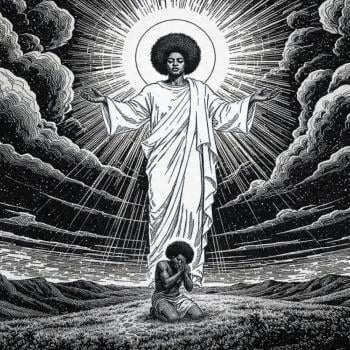
The resurrection does not undo the crucifixion…it does not erase the nails or unfill the lungs or retroactively make the state’s violence acceptable. What it does is refuse to let death have the final word. It insists that the story is not over. That the bodies the empire thought it had silenced are not, in fact, silent. That the testimony of those who witnessed…the women at the foot of the cross, the ones who came at dawn and found the stone rolled away…becomes the very foundation of everything that follows.
There is a long tradition of people who stood at the edge of state execution and refused to look away. Who witnessed. Who remembered. Who told the story. Their testimony, not the official account, is the reason we know what actually happened. Witness is the reason these deaths cannot be erased. And the resurrection is, among other things, the vindication of the witnesses…the confirmation that what they saw was real, that it mattered, that the truth they carried at great cost to themselves was worth carrying.
That is the tradition I stand in. That is why I went to those chambers. That is why I wrote this book.
“This book is an attempt to get people as close to the suffocation as possible — to help people read a letter from the edge of death — and have the courage to not ignore its contents. The future will be judged by how seriously the nation takes the lessons written on the bodies of the men who died in those chambers. Nothing can change what happened during those executions. But the future depends on what is done with their truth.”
What Holy Week Demands
Jesus was suffocated by design. So were Kenneth Smith, Alan Miller, Carey Dale Grayson, Demetrius Frazier, Jessie Hoffman, Gregory Hunt, Geoffrey Todd West and Anthony Boyd.
Eight men. Eight bodies. Eight deaths the state called humane.
Holy Week does not allow us to hold the resurrection without first holding the cross…without first reckoning honestly with what human systems, operating with full legal sanction and institutional confidence, are capable of doing to a human body. The hope of Easter is not cheap. It is purchased at enormous cost, and it is available only to those willing to stand at the place of execution and witness what actually happened there.
I was there. I witnessed. I am telling you now.
The empty tomb does not answer every question.
But it does ask one of us: Having seen what was done…what will you do with the truth?






 Ad-Free & Subscriber Log-In