


The Collective Evil of the State and Alabama’s Execution System
Alabama’s adoption of nitrogen hypoxia as a method of execution marks a disturbing evolution in the machinery of state killing. First used in January 2024, this method has been presented as “efficient” and “humane,” yet beneath the technical veneer lies a profoundly intimate cruelty. The execution chamber is not a neutral space. It is a crucible of violence where life is extinguished through deliberate human intervention, and moral responsibility is distributed across a vast network…from the Governor who authorizes the act to the officers, clerks and medical personnel who sustain it.
Nitrogen Hypoxia: A “Humane” Yet Intimate Cruelty
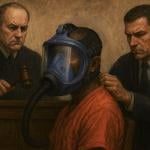
The procedure itself is harrowing and intimate. The condemned is guided onto a gurney and strapped down…wrists, ankles and chest secured to hold the body still. A clear mask is pressed over the face and connected to nitrogen lines. As the gas flows, panic sets in, muscles convulse, the chest heaves and eventually life departs. Machines facilitate the process, but human hands restrain, human eyes witness and human voices pronounce the ritual. The horror is not abstract…it is tangible, immediate and morally unavoidable.
Shared Responsibility: From Governor to Gate Guards
No single person completes every step. One officer secures the straps, another fastens the ankles, a third presses the mask, while someone else opens the valve. Beyond the gurney, a wider network participates…gate guards monitor transport, clerks process orders, control-room staff track the procedure, medical personnel verify identity, the warden oversees and the Governor authorizes. Each task, no matter how minor, is necessary for the act to succeed. Evil does not hide in a single gesture…it spreads, like a stain, through every hand and every signature. The moral weight is shared, yet fully present in all.
Understanding the Collective Evil of the State
Hannah Arendt’s notion of the “banality of evil” illuminates how ordinary bureaucratic acts produce extraordinary harm. A buckle fastened, a strap tightened, a signature placed…all appear routine, yet each is a thread in a fabric of violence. Compartmentalization may dull awareness, but it does not dilute responsibility. Every participant, from the highest office to the most junior role, contributes to an evil that is both systemic and intimate.
Hannah Arendt and the Banality of Bureaucratic Violence
Theological reflection deepens this understanding. Human life is sacred, yet nitrogen execution deliberately extinguishes it. Every act…the restraint, the mask, the flow of gas…is a moral trespass. Those who sustain the system, knowingly or unwittingly, enter into communion with evil. The state does not commit this alone…it acts through human hands and choices. Moral and spiritual harm is inseparable from the act of killing.
Anthony Boyd: The Human Face of the Consequences of the Collective Evil of the State
Anthony Boyd is not an abstraction. He is a human being whose life is imperiled by a system that prioritizes procedure over conscience. His case illuminates the architecture of evil in Alabama’s death machinery. It is not the action of one officer or one official…it is the collective act of a state choosing to extinguish life. Each role, however seemingly minor, contributes to the same moral apocalypse.
Individual and Collective Repentance
Repentance must be both individual and collective. Individuals must acknowledge their participation in, or tacit support of, the machinery of death. Institutions and society must confront structures that normalize killing and distribute responsibility. Ethical integrity requires recognition of the evil, acknowledgment of harm and deliberate turning away from complicity. Justice cannot coexist with unquestioned obedience to a system that extinguishes life.
Awakening Conscience and Restoring Justice
Alabama’s nitrogen execution chamber stands as a mirror of the state itself. It reflects the cost of obedience without conscience, the consequences of bureaucracy divorced from moral judgment and the danger of law exercised without mercy. Evil may appear orderly, procedural and polite…but it is no less destructive. Every hand, every signature and every eye that sustains the system is implicated. To witness this truth is to confront the unconscionable, to name it and to demand repentance.
The prophetic call is clear…society must see the machinery of death in its entirety and recognize the collective moral failure it embodies. The chains of responsibility cannot be erased by bureaucratic distance. From the Governor to the gate guard, from the secretary’s desk to the officer’s hand, all are implicated in the moral injury of the act. Conscience must awaken, mercy must reclaim its place and life must be restored as the measure of justice. Only then can Alabama begin to reckon with the evil it has wrought.
*
*If you would like to support the Execution Intervention Project (the organization that financially supports Dr. Hood’s work), click here.















 Ad-Free & Subscriber Log-In