

The Under the Ancient Oaks course “Unpacking Your Religious Baggage So You Can Live A Magical Life” is nearing conclusion (but it’s on-demand, so you can start it now if you like). This week’s module is “Cutting the Cord” – it covers things we can do to permanently break ties with an old toxic religion so we can focus on healing the damage and then moving forward. It includes a cord cutting ritual, which I find more helpful than “debaptism” or anything like that.
K.D. Echols does the transcripts for the on-line courses, which means she sees them before anyone else does. When she sent me the transcript for this module, she included a comment, which I share with permission:
I wonder if some students will feel grief during the ritual, like the heaviness amid the relief of signing the divorce papers of a dysfunctional marriage. Not grief from wanting to stay in the marriage, but mourning the death of the image of the relationship that turned out to be only in our head.
I’ve never been divorced, but I was in a five-year relationship that ended badly. K.D.’s words ring true. The feelings are similar with leaving a toxic religion, but at least in my case, they were worse. Of course they were worse. I was in that bad relationship for five years. I was in that toxic religion for between 18 and 39 years, depending on how you’re counting.
Different people experience and process grief differently. The 5 Stages of Grief are a gross oversimplification that do not apply in all situations. I felt nothing but relief and excitement when I got out of toxic religion, and again when I discovered Paganism. It was only later, when I thought about what might have been, that I felt grief. Honestly, there are times when I feel it now.
Like that five-year romantic relationship that ended badly, I have no desire to go back to the toxic religion of my childhood. But I still sometimes think about what might have been.
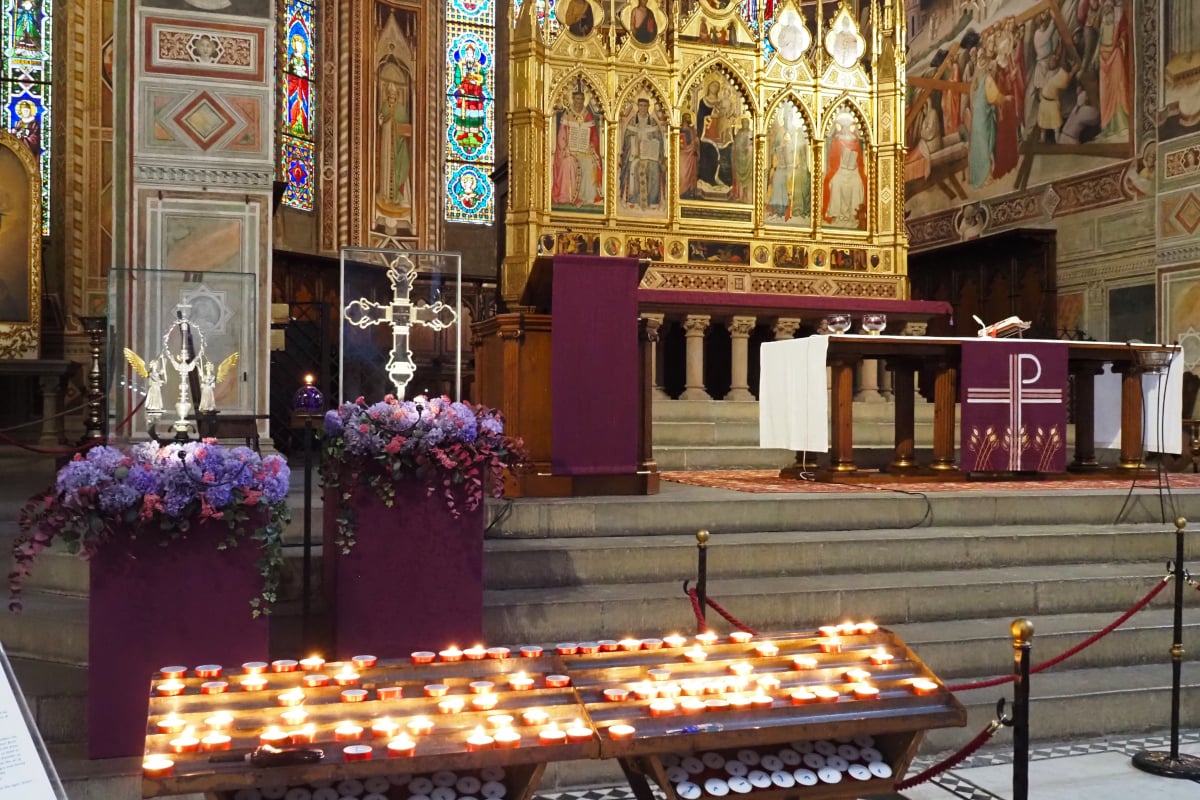
I grieve the loss of two thousand years of continuous tradition
There is power in continuity. There is comfort and security in doing something people have done for centuries – for millennia. We often call our religious and spiritual paths “traditions” even though they’re not particularly old.
The church where I grew up did not acknowledge saints, but there were historical figures they respected and celebrated. I knew other denominations had a rich history and mythology going back much farther. I grieve that loss.
Except: The Christian tradition isn’t as unbroken as it often claims. We know little with certainty about the early church. More importantly, Christian tradition has been broken multiple times: especially the East-West Schism of 1054, Luther’s 95 Theses in 1517, and Henry VIII’s creation of the Church of England in 1534. The 20th century saw many denominations growing closer or even merging – the 21st century has seen more schisms.
Instead: Continuity alone means nothing. The first priority of any healthy religion must be to meet the needs of its followers here and now, not to mindlessly continue traditions that may have been meaningful and helpful at one point but are now restrictive and harmful. Further, we can restore and reimagine old traditions (the modern Druid tradition is legitimately 300 years old) and we can start new traditions here and now.
I grieve the loss of the universal church
The Apostle’s Creed (one of the foundational statements of Christian faith) speaks of “the holy catholic church” – the universal church. While the fundamentalist Baptists of my youth did not recite the Apostle’s Creed (“we have no creed but the Bible” – which completely misses the point of a creed) even they admitted that other denominations had enough of the truth to find their way to heaven, even if many of them wouldn’t. Religious unity is a beautiful and powerful idea.
Except: As with the examples of tradition above, Christian unity is more about the idea than actual practice. If an alien who knew nothing of human religion were to examine the Roman Catholic Church, the Southern Baptist Convention, and the United Church of Christ (to pick three obvious examples) they would conclude that while the groups have common roots, they have diverged to the point they function as separate religions.
Instead: As a polytheist, it’s easy to understand that different Gods call different people to worship, work with, and work for them in different ways. Humans are one species, but we have many distinct languages and cultures – and many different religions. Further, when we accept that religion is about how we relate to each other and to our highest values and virtues and not about qualifying for the good place in the afterlife, we understand that there is no need for universal religion, however attractive it seems to some.
I grieve the loss of liturgical worship
Let me begin by saying there is power in the loud and emotional worship of many low church Protestants, especially in the historically Black churches. But that worship style did nothing for the nerdy little kid I was who craved intellectual rigor and liturgical mystery. One of my uncles married a Catholic and converted – I always wanted to go to their church. My father loved his brother and respected his choice, but he insisted that his own children attend the Baptist church – every week, with no exceptions for curiosity or exploration.
I often wonder how my spiritual journey might have worked out if I had grown up in a liberal, mystical, Episcopal church – something that would have fed my soul and not turned me off with fundamentalist theology and conservative politics.
Except: While different styles of worship and practice appeal to different people, what matters most is the content: the concepts and values being proclaimed and promoted. And while many Christians are inclusive and respectful of other religions, their scriptures and doctrines still insist they are the best way, if not the only way.
Instead: Pagan worship and celebration can be even more varied than Christian worship. Over the years I’ve led and participated in rituals that worshipped the Gods in reverence, that experienced the Gods in ecstasy, that spoke to our need for intellectual honesty and depth, and that connected us to the beliefs and practices of our ancient ancestors. We are not limited to high liturgy or emotional revivals or intellectual reflections – we can do it all, as fits the occasion and the group.
Grieving what should have been, not what was
I grieve the religion that might have been – the religion that should have been.
But this is not the grief I felt when my mother died… or the greater grief I felt when it became obvious that her mental capacities were in serious decline. That was grieving a true loss.
This was like grieving the breakup with my college girlfriend. Yes, there was the loss of companionship, but K.D. Echols was right – most of the grief was over the image of the relationship I had in my head. It was never going to work because the relationship was a bad match, and staying in the relationship would have been worse.
Just like that relationship, the religion I left was toxic. No amount of tradition, no amount of universality, no amount of liturgy would have ever made it healthy.
I needed to get out.
I needed to cut the cord.
And I did.
Moving on to something better
The two years following that romantic breakup were not pleasant. But then I met Cathy and things took off quickly. We just celebrated our 38th wedding anniversary – I can’t imagine being with anyone else.
My religious journey was longer and less straightforward. I left fundamentalist Christianity for progressive Christianity. I left progressive Christianity for a vague deistic universalism. I left that for a solitary Paganism, which led to finding Druidry and CUUPS and polytheism and witchcraft and all the things I do and write about. I’m not finished learning and growing and I don’t expect I will be finished until I take up permanent residence in the Otherworld.
But I’m on a path that calls to me.
I’m on a path that fills my soul.
And I’m committed to this path because I cut the ties to the toxic religion of my childhood. I can’t erase all the bad religious experiences I had, but I’ve been able to unpack them, understand them, and then crowd them out with good and meaningful experiences on this Pagan path.
I suppose I will always wonder what might have been. But I’m happy and fulfilled where I am, and where I’m going.
And that’s cause for celebration.












 Ad-Free & Subscriber Log-In