


“To be anointed with oil is higher than being immersed in water, because it is only when we are anointed that we become the Christ, not when we are baptized.
“Christ was called the Messiah because of this: He is the “anointed one.”
“The Father gives unction (breath and life) to the Son. The Son gives unction to the Apostles, and the Apostles share it with us. Whoever is anointed participates in the plentitude and is resurrected; the cross and the Holy Spirit are in them. This is what is revealed to them by the Father in the Bridal Chamber.
“The Father is in the Son, and the Son is in the Father. Such is the Kingdom of God. Some want to enter this Kingdom by despising the world, and they left it, but did not become like Christ. There are those who go into the water, and when they emerge, they recognize the Presence in all things. This is why there is nothing to be despised. A king in rags is still a king. Those who mock him have not entered the Kingdom of God. Likewise, one must not mock the bread, the chalice, or the unity, even though they are only symbols. What we call the world is not the real world, but if we could see it with the eyes of the Being who infused it, we would see it as incorruptible and immortal. The fall consists in aiming away from the object of desire. What we call the world has always been transient. Nothing can receive incorruptibility that is not grounded in family relation. If someone does not know how to receive, how can they give? The cup of communion contains the wine and also water. Both are symbols of the blood of blessing (eucharist). The cup is filled with the Holy Spirit. It is the cup of the realized Human Being. If we drink from it, we enter into fullness.” (The Gospel of Philip, vs. 95-100)
One of the most important messages we need to receive from mystical texts like this is that what is true of Christ is true of all of us. This is the secret meaning of the decision to have the Gospel of Thomas named after the disciple whose name means “twin.” So that we may understand that we are twins with Christ. This is also why the Apostle Paul is constantly connecting what is true of Christ with all of us. He tells us that because Christ is crucified, we are crucified with Christ, and that because Christ has been raised from the dead, we are also raised from the dead (present tense), and that because Christ is seated at the right hand of the Father, we are also seated with him at the Father’s right hand. (See Ephesians and Colossians).
So, when we read here in Philip’s Gospel that “Whoever is anointed participates in the plentitude and is resurrected,” we must understand that we are also anointed in the same way that Christ is anointed. This is actually the meaning of the word “Christ,” to be anointed of God.
The anointing we receive is not ritualistic. It is not a physical smearing of oil upon our heads that catalyzes our Christlike anointing. Our anointing is spiritual. It is tied to our identity as human beings.
Notice that the anointing of Jesus mentioned here is followed by the statement that “The Father gives unction (breath and life) to the Son.” In other words, Jesus becomes anointed the very moment he comes into being. To be alive is to be made in the image of the Father, and that image carries the anointing of Christ.
“The Son gives unction to the Apostles, and the Apostles share it with us.”
The unction (breath and life) that the Son receives is given to the Apostles, and then the Apostles share it with us. This anointing is passed down to us from the Father, through Christ, and the Apostles.
“Whoever is anointed participates in the plentitude and is resurrected; the cross and the Holy Spirit are in them. This is what is revealed to them by the Father in the Bridal Chamber.”
This reality is already real and true for everyone, but it is only “revealed to (us) by the Father in the Bridal Chamber.” The realization does not make it come true. It is already true and we must awaken to this reality in order to see it and experience it.
“The Father is in the Son, and the Son is in the Father. Such is the Kingdom of God. Some want to enter this Kingdom by despising the world, and they left it, but did not become like Christ.”
We are all in one another. Nothing can change this. This is the Kingdom of God, but some believe they can enter this reality by performing religious disciplines like fasting, or prayer, or almsgiving. This is not the path to enlightenment. If anything, this path originates from the Tree of Unhappiness which is all about what is good or bad, right or wrong. It is more about starving the flesh than feeding the spirit.
“There are those who go into the water, and when they emerge, they recognize the Presence in all things. This is why there is nothing to be despised.”
Philip’s Gospel has already told us that the anointing is better than being immersed, and yet, here, we read that some of us awaken to the reality of oneness in baptism. The symbol and the ritual point them to a deeper truth that awakens them to the reality of Oneness, and “they recognize the Presence in all things. This is why there is nothing to be despised.”
In other words, it is never about good or bad, or right or wrong. If we come to realize our Oneness through Baptism, or through some other means, we should celebrate it and rejoice.
“A king in rags is still a king. Those who mock him have not entered the Kingdom of God. Likewise, one must not mock the bread, the chalice, or the unity, even though they are only symbols. What we call the world is not the real world, but if we could see it with the eyes of the Being who infused it, we would see it as incorruptible and immortal.”
Our judgment of others based on their appearance or behavior is foolishness. What matters is the reality of everyone’s inherent value as children of God. Every son and daughter of the King of Kings is a child of God, whether they know it or not. We do not look down upon anyone who has not yet awakened to their identity. We treat them as Kings and Queens, sons and daughters, brothers and sisters in Christ.
“The fall consists in aiming away from the object of desire. What we call the world has always been transient. Nothing can receive incorruptibility that is not grounded in family relation.”
Philip’s Gospel does not affirm the notion of the Fall of Man in the Garden, and yet the concept of a fall is acknowledged whenever we try to receive a gift by refusing its opposite. We cannot find the light by running from the darkness. We do not quench our thirst by refusing to breathe the air. So, in the same way, we cannot awaken to the Holy Spirit by neglecting our flesh.
Why? Because the idea that flesh and spirit are separate is, in itself, a denial of the reality of Oneness. Everything is created in God’s image. Nothing is separate from God. The Incarnation is the fusion of flesh and spirit, so we cannot receive the spirit by denying the flesh. This is why Philip’s Gospel says: “If someone does not know how to receive, how can they give? The cup of communion contains the wine and also water. Both are symbols of the blood of blessing (eucharist). The cup is filled with the Holy Spirit. It is the cup of the realized Human Being. If we drink from it, we enter into fullness.”
We must drink both the water (the creation) and the spirit (the wine) together.
If we can receive both at once, we will have entered into the fullness of Oneness.
**
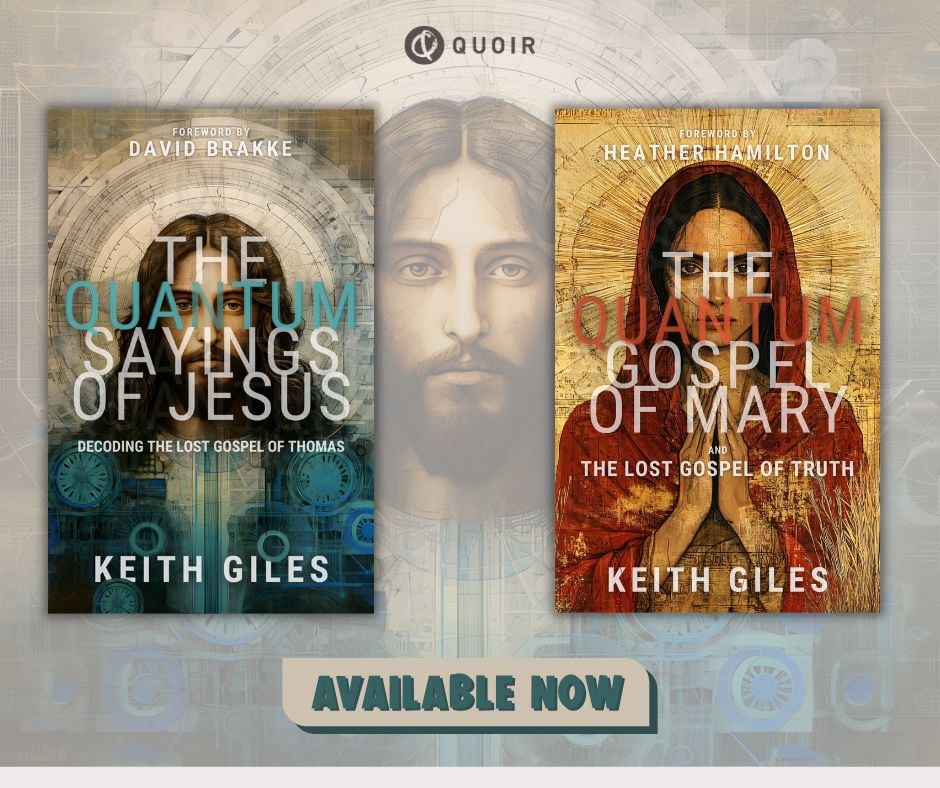
My new book, “The Quantum Gospel of Mary and the Lost Gospel of Truth” is now available on Amazon.
The book from Keith Giles, “The Quantum Sayings of Jesus: Decoding the Lost Gospel of Thomas” is available now on Amazon. Order HERE>













 Ad-Free & Subscriber Log-In