

Who are the real Catholics?
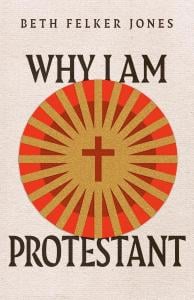
In this second part of my review of Beth Felker Jones’ Why I Am a Protestant, I’m going to tackle the central issue at stake in the book: the nature of the Church. For Wesleyans like Beth, disagreements with Catholicism on ecclesiology are often sharper and more central than disagreements over soteriology, and her book seems to bear out this generalization. Certainly ecclesiological issues were central in my own very long process of discerning whether I should seek full communion with Rome.
The debate between Catholics and Protestants is most fundamentally over the word “Catholic” itself. Confusing as this often is to both sides, Protestants historically claim to be full members of the “Catholic Church” described in the Creeds. (Some will use a lower-case c to distinguish their understanding from ours, and Beth endorses this approach on p. 23.) What does it mean to belong to the one universal Church throughout space and time which we all confess to be a central feature of historic, orthodox Christianity?
Institutional unity?
Beth’s account of the debate on pp. 24-29 follows a common Protestant pattern of identifying the Catholic understanding of the Church as “institutional unity.” This is language I was very familiar with growing up in a family that stressed the “invisible Church” over against the “visible” or “institutional” Church. Beth doesn’t go that route. She agrees with me that the Church is always something concrete and embodied. But she does want to reject what she calls an “institutional” account of unity.
I think we have to be very clear what we are talking about when we talk about the Catholic account of unity as “institutional.” The Catholic Church has many, many “institutional” aspects. The Papacy developed bureaucracy before Western European monarchies did and they imitated its institutions in many ways. Medieval universities developed in large part as training institutions for the educated administrators needed to run the Church (and, secondarily, secular systems of government). Medieval religious orders developed representative forms of government that predated the development of representative democracy in the secular sphere. The College of Cardinals and its system of electing Popes is arguably the oldest continuous political institution on the planet.
But none of these interesting features, good or bad, are essential to what we mean when we talk about the unity of the Church. We hold the same view of most of our institutions that ecumenical Protestants like Beth do, or that Protestants typically hold about their own denominational structures of governance. They are human arrangements in service of the unity that matters, but they do not define it and the Church could exist without them and has existed without them.
An ecclesiology of communion
There are basically three features of the Church which we actually regard as essential: leadership of local churches by bishops in succession from the apostles; communion of these bishops with each other; and specifically communion of all bishops in the world with the bishop of Rome as the successor of Peter and center of unity. Yes, these features involve a basic level of “organization,” but primarily they are about relationship and communion, not bureaucracy or regulations or even top-down hierarchy (though they have been perverted in that direction far too often and this remains something we struggle with).
I admit that since Vatican I we have made the third of these features sharper by insisting that the Pope has direct pastoral authority over all Christians and that the Holy Spirit may choose to speak through the Pope in a way that is irreversibly binding on the Church, even without some process of ratification by other bishops. And of course the role of the bishop of Rome within the Church (particularly since Vatican I but before it as well) has long been the chief point of difference between us and the Orthodox, as well as one of the features of our ecclesiology Protestants attack most sharply.
Ignatius, Irenaeus, Cyprian
The first two points, though–apostolic succession and the communion of all bishops around the world–are well established by the third century. Ignatius of Antioch, in the early 2nd century, insisted that local churches had to be led by a bishop and that local Christians did not have the right to establish their own communities in opposition to the bishop. Irenaeus of Lyons, at the end of the century, argued for apostolic succession as a mark of authenticity over against Gnostic claims, and cited Rome as the prime example. Irenaeus even claimed in an admittedly much-debated passage that Rome was the church with which other churches could be expected to agree (I’m skating over some linguistic ambiguities there).
Finally, in the third century, Cyprian affirmed the necessity of adherence to the worldwide communion of bishops in order to have a saving relationship with Christ. In his famous (or infamous) words: “no one can have God for his father who does not have the Church for his mother.”
Modifying Cyprian
As that last quote indicates, Cyprian’s view is much harsher than most of us would defend today. One of the things that frustrates me about Protestant appeals to the early Church’s allegedly greater freedom and diversity is that actually early “Catholic” Christians were much more ferocious and “sectarian” in their treatment of other Christians than modern Catholics are. In fact at one time I used this as an argument against Catholic criticisms of Protestant ecclesiology: since all of us have departed from Cyprian’s ecclesiology, Protestants can argue that their ecclesiology is just as legitimate a development of early Christian teaching as Vatican II’s ecclesiology is.
I still think that’s true in principle. I don’t think that the kind of inclusive ecclesiology Beth defends is automatically wrong because it’s not the ecclesiology of early Christians. We have all modified the ferocity of Cyprian’s ecclesiology. (Well, maybe some of the more extreme Orthodox haven’t.) The question is: which modification makes more sense? I think Vatican II’s ecclesiology is both richer and more coherent than any of the Protestant alternatives.
Creative tension
What C. S. Lewis calls “mere Christianity” and what Beth describes so beautifully in her first chapter is indeed the heart of Christian faith. Catholics have made progress in recognizing our common ground with Protestants, but we have a long way to go. We need to become much more inclusive, much more generous, and much humbler in our relationships with our fellow Christians.
But the tension we experience between inclusive and exclusive elements in our ecclesiology is itself a core constituent of historic Christianity–and indeed goes back to the Old Testament, with the tension between the particularity of God’s call to Israel (and, in parts of the narrative, specifically God’s covenant with the Davidic monarchy and the Aaronic priesthood at Jerusalem) and God’s generous, gracious activity throughout the world. I think Beth would acknowledge this general pattern, but naturally as a Protestant she doesn’t see it applying to disagreements over such things as apostolic succession, Roman primacy, or the doctrinal and sacramental developments historically rejected by most Protestants.
Cyprian and the Donatists
Beth’s treatment of Augustine’s response to the Donatist controversy illustrates what I’m talking about. Some background for anyone not familiar with this: as I said earlier, the 3rd-century North African bishop Cyprian had insisted that salvation could only be found within a unified worldwide communion of local churches led by bishops. He condemned a strict group of Christians called the Novatians for splitting away from the Catholic Church to form their own “purer” church, and he claimed that they were cutting themselves off from Christ by doing so. Hence, their baptisms were invalid.
In the fourth century, a new “rigorist” group, the Donatists, ironically appealed to Cyprian’s authority for their rejection of the Catholic Church. (By “the Catholic Church” I mean the mainstream Christian church from which we are all descended, which by the fourth century had become, or was becoming, the imperial Church. Obviously whether this was the “same thing” as the modern “Roman Catholic Church” is precisely the point at issue here.) The Donatists claimed that Catholic baptisms were invalid, because the “Catholics” were not the true Catholics at all–the Donatists were.
Augustine and the Donatists
Augustine insisted, as Cyprian had done, that schismatics such as the Donatists had cut themselves off from salvation. But he disagreed with Cyprian’s claim that schismatic baptisms were invalid. In Augustine’s theology, someone baptized by the Donatists was validly baptized but would not receive grace from the baptism until he or she was reconciled with the Catholic Church. This remained the official Catholic position on “other Christians” until the 18th century, when Catholics finally began to accept that non-Catholic Christians could have a real relationship with Jesus.
Where’s the gold?
Beth (pp. 49-51) sees Augustine’s affirmation of the validity of Donatist baptism as the “theological gold” to be found in his anti-Donatist writings. She criticized “Roman Catholicism” for not taking Augustine’s doctrine of grace as far as we should. Augustine’s generous acceptance of Donatist baptism is due to his theology of grace, while his condemnation of the Donatists is associated with the development of “Roman Catholicism.”
But historically that’s not the case. In accepting the validity of Donatist baptism, Augustine was agreeing with Rome over against Cyprian. Back in the third century, when Cyprian said that baptisms outside the Church were invalid, Bishop Stephen of Rome disagreed with him and insisted that people returning to the fold from a breakaway group did not need to be rebaptized. The Donatists, with whom Beth is somewhat sympathetic (and I agree that they have their admirable aspects), were the ones insisting on the strictly exclusivist position upheld by Cyprian.
Meanwhile, Augustine’s theology of grace, of which Beth speaks so warmly, was leading him to the conclusion that since God doesn’t owe anyone grace, those who reject God (which for Augustine would include the Donatists as a group, assuming they never repented) are doing so because God has chosen not to give them grace. In other words, Augustinian grace theology can actually be made to serve a very harsh, exclusive understanding of the Christian faith, and probably has done so more often than not.
Still arguing over Augustine
So here Beth and I are, more than 25 years after our first encounter, still arguing about Augustine. I respect her right, as a theologian, to pick those elements in Augustine that she appreciates and reject the rest. I do the same thing. But I think a fuller account of the Donatist controversy than the one she gives actually illustrates why I and so many others have (as she points out with some regret) felt drawn into full communion with Rome. Rather than simply abandoning the early Church’s insistence on unity, we Catholics have continued to nuance Cyprian’s ecclesiology along the lines begun by Pope Stephen and defended, rightly, by Augustine.
As a result, in Catholicism today we find a rich, creative tension between the exclusive, particularist claims that have always been part of “orthodox” Christianity and the generous acknowledgment of God’s grace at work everywhere. Protestantism, in contrast, seems invariably to fall apart around a split between “orthodoxy” (often a highly partial and dubious vision of orthodoxy) and inclusion.
Agreement and disagreement
I don’t think Beth and I disagree fundamentally on what we think the Church should look like. I don’t think we disagree on what the problems with both Catholicism and Protestantism are. I think we disagree regarding where we see the problems as more fundamental, more inherent to what makes Catholics and Protestants differ from each other.
I agree entirely with Beth that the unity of the Church is messy, complicated, embodied, not abstract, tidy, and “organized.” But in Catholicism I’ve found a messy, complicated, embodied unity that actually means something. In my experience, it’s Protestant claims of unity that remain highly abstract and “spiritual.” That doesn’t negate the many ways in which Protestant communities embody the Body of Christ in the world–often better than Catholic communities do.
Welding the cracks with gold
I love Beth’s use of the Japanese art of kintsugi as a metaphor: the use of gold to weld back together broken pieces of pottery so that the breaks remain but have become a thing of beauty. But in Protestantism as a whole, I do not see the pieces coming back together. I just see more and more breaks.
I do not grudge Beth her joyful participation in a form of Protestant Christianity where she finds grace and embodies the unity of the Church in a local, “messy,” embodied way. I very nearly took that path myself. I am not pontificating about which choice is right or wrong. But I will argue that taken as a whole, post-Vatican-II Catholicism has a more meaningful and compelling account of unity than Protestantism does.
The vision of unity articulated by early “Catholicism”–local churches around the world accountable to one another and to the apostolic roots of our faith–remains valid, however much we have needed to nuance it. And while the forms that accountability has taken have often been flawed, I cannot see that Protestantism has an effective alternative way of embodying this twofold accountability to the Church around the world and throughout history. Ultimately the question is whether we simply abandon the early Church’s understanding of unity or not. And I think it is better not to.












 Ad-Free & Subscriber Log-In