

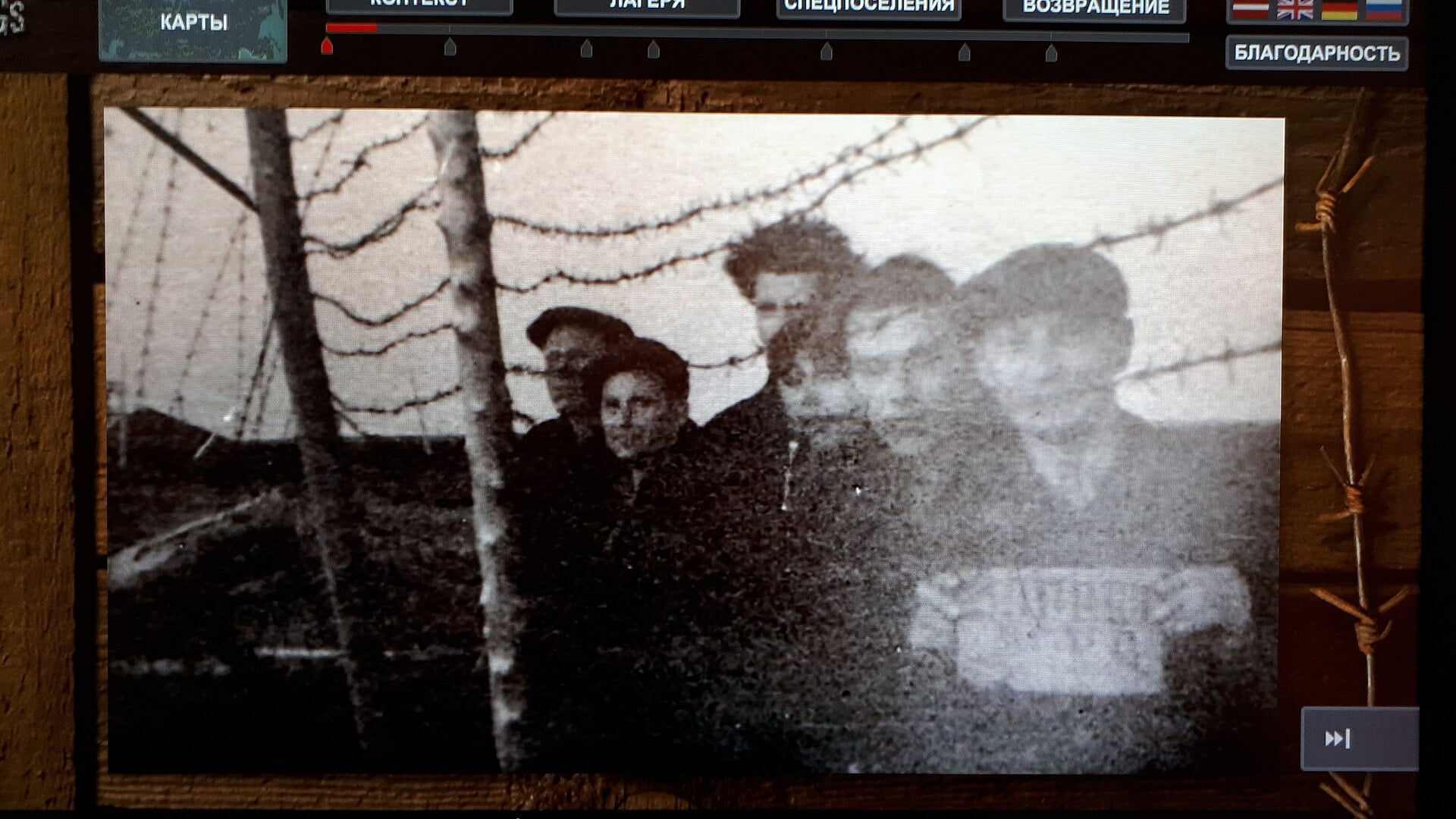
The Vatican has announced that it is closing the canonization cause for Fr Walter Ciszek. If you don’t know about Fr Ciszek, I encourage you to read his book, With God in Russia.
As for the cause of his canonization, I don’t trouble myself about the inner workings of the Vatican concerning things like beatifying potential saints. I know that it can take hundreds of years for a saint to finally be canonized.
St Thomas More is an example. He was convicted of High Treason and subsequently beheaded for refusing to swear allegiance to the King as the Supreme Leader of the church in England in 1535. He was not beatified until 1886 and then there was another long pause to 1935 before he was canonized and recognized as a martyr.
So, I assume that just because the Vatican has set aside the cause of canonization for someone, that is not necessarily the end of the matter. My reaction to this kind of thing is simply that, in time, God’s will, whatever that will may be, will be done.
In the meantime, we still have the life and witness of Father Ciszek to educate and inspire us. We have his books to teach us what faith and personal courage in action look like under totalitarian regimes.
Father Ciszek was born in Pennsylvania, in 1904. He had a rough and tumble youth as a member of violent street gangs. No one would have thought that young Walter Ciszek might be the subject of a cause of canonization. In fact, when he suddenly announced that he was called to the priesthood, his friends, family and everyone who knew him were astonished.
I doubt if any of the people who knew him thought he would make it as a priest. But God had use for a rough and tumble man like Walter Ciszek. He wasn’t calling him to lead a cushy upper class parish.
Ciszek entered the Jesuits in 1928. The pope made an appeal for priests who were willing to go to Russia as missionaries. One year later, Walter Ciszek volunteered. He was sent to Rome to study Russian, theology and the Greek Orthodox liturgy. In 1937, Ciszek was ordained a priest in the Russian Rite in Rome and sent to a Jesuit mission in Eastern Poland.
Russia was a closed society in 1937, and priests, in particular, were not welcome there.
When Nazi Germany attacked Poland in 1939, the Nazis forced Ciszek to close his mission. He realized that he would be able to get into Russia by joining the streams of refugees fleeing the Nazis.
He received permission from his superior to do this, and, along with two other Jesuits, entered Russia. He ended up in a logging camp in the Urals where he performed hard labor and discreetly ministered to the other loggers.
He was arrested in 1941 under the false accusation that he was a Nazi spy. He ultimately signed a “confession” under severe torture and was sentenced to 15 years in a Gulag.
After he served his 15 years, he was forced to remain in Russia. During all this time, he ministered as a priest to other prisoners, and after the Gulag, to the Russians around him.
This ministry was perilous, dangerous work. But he successfully converted people, heard confessions, baptized and said Mass; all under the most repressive and dangerous conditions possible.
In all that time, he had never been allowed to write his family in the United States. His family and the Jesuits both assumed that Fr Walter Csizek was dead.
When he was finally allowed to send a letter home and his sisters learned their brother was alive, they swung into action, trying to bring their brother home. Finally, in 1963, President John F Kennedy arranged a trade of two Soviet spys for Fr Ciszek.
Fr Ciszek had not spoken English during his captivity, and he had difficulty with it once he got home. The Jesuits assigned a priest to interview Fr Ciszek and write a book about his years of captivity.
If you haven’t read With God in Russia, I encourage you to do so. It’s not a feel-good, ponies and rainbows kind of book. It’s more sobering than that.
Walter Ciszek did God’s work in Russia. He never wavered from his faith. But the darkness of a totalitarian state doesn’t let much light shine through.
He suffered enormously. And the people of Russia suffered enormously. He didn’t triumph in the sense of overturning that evil. He didn’t start a movement, or change the course of history. The state rolled on and every time the wheel of state turned, it crushed its citizens deeper into the mire.
What Fr Ciszek accomplished was personal; one on one. He secretly heard whispered confessions while marching in line. He said Mass in secret.
When he was released from the Gulag, he baptized the babies of people who’d never been inside a church or heard a homily. He said mass inside his hut and ministered to the dying in secret.
He was repeatedly disciplined for this. It is likely that if President Kennedy had not gotten him free, he would have ended up back in the Gulag.
His story is not the tale of how one man can cause historic change. It is, rather, the story of how God can work through one, tough and faithful priest to give people the gift of God’s love in even the most difficult situations.
Fr Ciszek’s story has a number of messages, including just how evil totalitarian dictatorships — it doesn’t matter whether they are fascist or communist — truly are. Any form of government that denies the unalienable worth of individual human beings is anti-Christ.
That is one message in Walter Ciszek’s story, and it’s easy to see. The other message, the most important one, runs parallel to it.
God didn’t use Fr Ciszek to overturn the horrors of totalitarian Communist Russia. He used him to hear a confession from another prisoner while they marched to their day of slave labor. He used him to say mass in secret to men who were mostly bound to be worked to death in the Gulag.
He used him to baptize babies of people who’d never been inside a church, and to say mass inside his little hut once he was released from prison.
He also used him to tell his story to another priest so that it could be written down for us to read.
God used him this way because the person whispering that confession in the Gulag was God’s precious child. The babies he baptized in secret were God’s babies. The people who received the Eucharist in his hut were God’s children.
Fr Ciszek didn’t overturn Communism. But he was faithful to Christ in almost unendurable suffering, and his faithfulness saved souls.
There isn’t anything better than that.
From National Catholic Reporter:
The canonization cause for Jesuit Fr. Walter Ciszek — a Polish American priest who ministered amid years in Soviet captivity — has been terminated, although Vatican’s decision does not “diminish the enduring spiritual value” of his witness, said a leading advocate for the cause.
In an April 9 letter, Msgr. Ronald Bocian — board president of the former Father Walter Ciszek Prayer League — advised fellow league members that the Diocese of Allentown, Pennsylvania, had been informed the cause’s documentation “does not support” advancing the case for beatification or sainthood.
Bocian’s letter replicated a statement from the diocese, provided to OSV News April 17, saying the prayer league will now become the Father Walter J. Ciszek Society and “remain committed to honoring his memory, sharing his message, and encouraging devotion to the profound spiritual insights he left to the Church.”
“This development comes after years of careful study and discernment at the level of the Holy See, which bears the responsibility of evaluating each Cause with thoroughness, integrity, and fidelity to the Church’s norms,” said the diocese, which assumed responsibility for the cause following its initiation by the New Jersey-based Byzantine Catholic Eparchy of Passaic.








 Ad-Free & Subscriber Log-In