2020-07-14T13:23:08-04:00

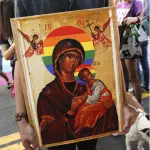
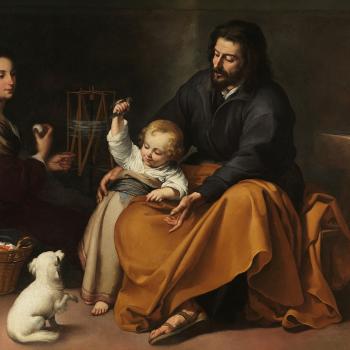
In the past I’ve discussed the possibility that Joseph’s marriage to Mary was not his first marriage, that he was a widow and significantly older than her. There are several pieces of circumstantial evidence in the New Testament Gospels that made me take this possibility seriously. Although it could well have been created just to justify the idea of Mary’s perpetual virginity, I had always thought it was too early and too widely held a view to be just due... Read more

2020-07-14T09:12:23-04:00

A few years ago, Mike Bird posted the first “Let’s all do X and then tag others and pass it on” blog post that anyone had done for a while. Here’s what his proposal was: I want to launch a series whereby bibliobloggers nominate “a book that you’d be surprised that I like.” Sounds simple enough at first. But given his choice, which is not surprising because of its perspective but because it is not widely known, I find myself... Read more

2020-07-12T20:23:06-04:00

I found myself thinking about this topic once again as I was working on my book What Jesus Learned from Women. I’ve written in the past about the question of whether Jesus was thought to be illegitimate, using the implications of the interactions he has with contemporaries as a more reliable guide than specific things that characters in the Gospels happen to say. In addition to my article in Journal for the Study of the Historical Jesus, see also Robert Miller’s... Read more

2020-07-11T08:13:40-04:00

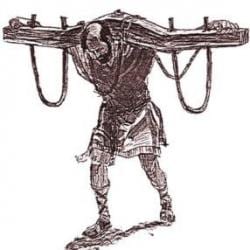
I’ve been thinking about a couple of sayings of Jesus and the possibility that the one gave rise to the other for a while now. The two sayings are “come to me…take my yoke upon you” and “come after me…take up your cross.” When John Squires blogged about one of the two sayings, I decided it was time to share my thoughts with a wider audience: Come to me, take my yoke, I will give you rest (Matt 11; Pentecost 6A)... Read more

2020-07-09T14:58:05-04:00

As I prepare to teach my class on Religion and Science Fiction again, I’ve been thinking about a way to include some engagement with novel series by Octavia Butler and by Margaret Atwood that I’ve avoided having students read in their entirety lately, since there is so much other material and so many other topics that would have to be dropped in order to do so. Depth vs. breadth remains a perennial problem. But I have an idea and I’m... Read more

2020-07-06T14:16:29-04:00

I shared a somewhat frustrating interaction that I had with Randal Rauser not that long ago. Let me share something now that I found especially helpful and which I want to pass on to a wider audience. He wrote: Every worldview faces serious objections. Many of us spend a lot of time pointing out the specks in our neighbor’s worldview. Do we have the courage and intellectual honesty to confront the planks in ours? — Tentative Apologist (@RandalRauser) April 2,... Read more

2020-07-04T07:24:10-04:00

Scholastic engagement with genres and texts of science fiction across various regions and cultures around the world has grown significantly over the last decade. In an effort to expand this ongoing study, the MOSF Journal of Science Fiction is accepting submissions for a special issue on Middle Eastern science fiction to be released in the winter of 2020. With this issue, we aim to become a gathering place of current topics, trends, and themes in the field of Middle Eastern... Read more

2020-07-08T06:41:11-04:00

The episode Meglos is easily distinguished in every fan’s mind from all other episodes, with no possibility of confusion about which one it is. It is one that I have a clear visual memory of, and would probably have said (if I was just relying on my recollection from decades ago) this is “the episode in which the Doctor turns into a cactus.” Even if one saw it last when they were young, and that they as decades ago, the... Read more

2020-07-06T14:16:06-04:00

There have been a lot of helpful resources shared lately that pertain to whiteness. I want to share a few here. But first let me mention my conviction that even terminology that is used in efforts to combat racism and work for inclusivity reflects a racist framework. The only way that one can talk about “people of color” is to treat whiteness as a lack of color, as the default in relation to which everything else is defined. How might... Read more

2020-07-04T07:27:22-04:00

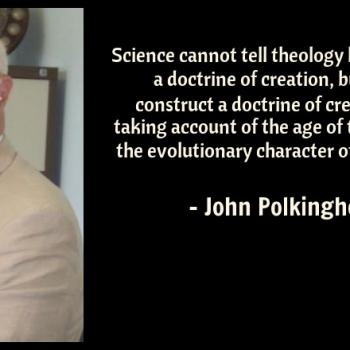
This call for submissions recently came to my attention: How can theologians employ science in the service of theology? The Science-Engaged Theology Project (University of St Andrews) is creating an online resource to advance the studies on the interrelationship between scientific and theological subdisciplines. Science-Engaged Theology encourages research that gives concrete answers to “Theological Puzzles”. A Puzzle is a theological question that heads toward concrete answers, deals with possible objections, is transparent about using a methodology appropriate to its success conditions, and in principle unsolvable without the help of,... Read more

Follow Us!


TAKE THE
Religious Wisdom Quiz

In Philemon, what does Paul ask Philemon to receive back?

Select your answer to see how you score.


Browse Our Archives