

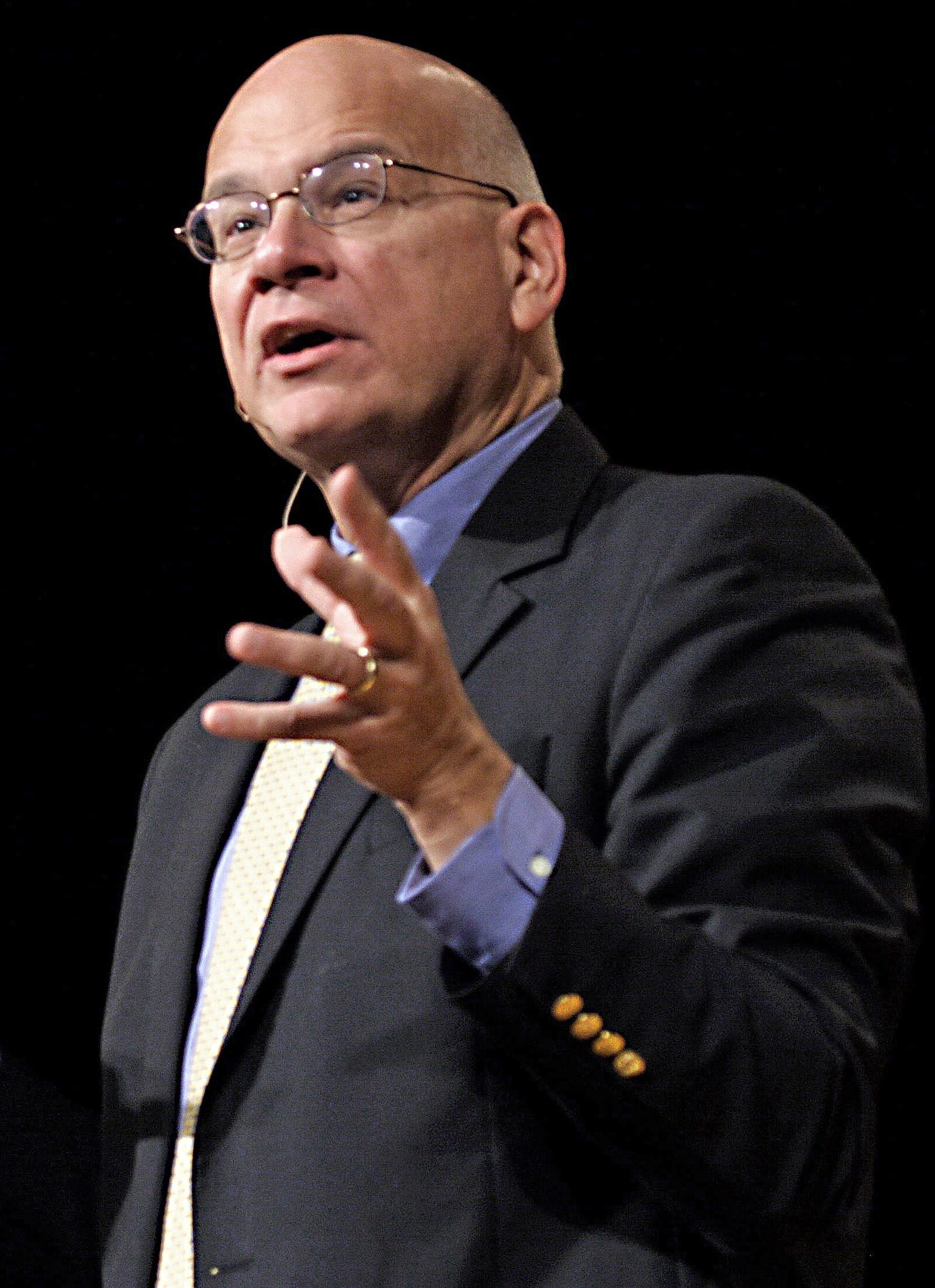
I knew of this “Third Way” in American political engagement long before I heard its name—“Third Way.” According to some sources, the label was coined by New York pastor-theologian Tim Keller and is inspired by his book Center Church. For those who do not know, Keller was a very influential pastor, thinker, speaker, writer and co-founder of The Gospel Coalition, a mostly Reformed group of conservative Protestants. In brief, the Third Way eschews church alliances with political parties and ideologies and seeks to stand apart from such, picking and choosing what social-political issues to speak about and how without guidance by politicians or parties or ideologues.
Of course, this has been the stance taken by many American (and other) Christians for a long time, but it is gaining new traction in the present situation in which many American Christians seem to align themselves uncritically with one political party or the other and to be unapologetically “left-leaning” or “right-leaning” with those labels being defined by political parties and their leaders.
 I do not think Keller or other Third Way advocates would eschew any membership in any political party. What they advocate is a critical Christian stance toward all of them.
A problem is, of course, that the present cultural context, including the media and influencers and religious spokespersons, militate against such an autonomy regarding politics and ideologies. Who hasn’t encountered someone who says you can’t really be independent in the present context even if you don’t belong to a political party? Given the seriousness of the situation(s), you must take a strong stance if only against one of the two parties. “You can’t be a real Christian and a Republican” or “You can’t be a real Christian and a Democrat.”
The Third Way says nonsense to that but also says every Christian should hold his or her party membership or political commitments lightly and never uncritically. What matters is Jesus Christ and his Lordship, not any secular party or ideology.
Don’t mistake this for some kind of modern theocratic stance; Keller was and Third Way Christians are not theocracy advocates. They are not Christian Reconstructionists who might agree that the Christian should maintain independence from any party or secular ideology. But Christian Reconstructionists tend to make their version of Christianity into an ideology.
I agree with this broad version of a Third Way in American Christian political engagement with politics.
What would be an example of what Third Way Christianity is against?
Years ago I visited a conservative, evangelical mega-church on the Sunday closest to Independence Day, July 4. The church service was centered solely on America and the ceremonies and speeches reflected a strongly Republican vision including militarism. A Republican Senator gave a brief homily. Knowing the church well, I am sure it would never have invited a Democrat to speak inside the church.
On the other hand, I am aware of churches that obviously align themselves in many ways with the Democratic Party; they would never invite a Republican, however ideologically neutral, to speak there.
Another way of detecting this church alignment with political parties and ideologies is to look at the books displayed in the church library. I have seen churches where the library windows are filled with books by Republican and conservative authors and commentators and politicians without any sign of an alternative.
Third Way Christians are not quietists. Quietism is a form of Christianity that eschews any involvement in politics or social transformation. Quietism rejects all political or social activism. I do not think Keller or his Third Way fans would agree with Quietism. But they believe that no Christian church should adopt a political party and become that political party at prayer (as the old saying goes about the 19th century Church of England being the Troy Party at prayer).
Too many American churches seem to be, in fact, a particular political party “at prayer.” The danger there is loss of prophetic power. Prophetic power requires some distance between the church and any political party or organization with an ideological bent.
*Note: If you choose to comment, make sure your comment is relatively brief (no more than 100 words), on topic, addressed to me, civil and respectful (not hostile or argumentative), and devoid of pictures or links.*








 Ad-Free & Subscriber Log-In