

“The AI Bible is run by Pray.com, a for-profit company that claims to have ‘the world’s #1 app for faith and prayer.’ The new AI videos are being warmly received online, according to Ryan Beck, Pray’s Chief Technology Officer. The viewers are mostly under 30 and skew male, though not too heavily.”
I argue for a hermeneutic of inclusion and I have spent years advocating for this and defending it with deep dives into the whole of scripture, including ongoing, yearslong explorations of the book of Jonah, the prophets, the book of Acts, the Gospels, and the letters of Paul. Because of this, I am regularly criticized as having “a low view of scripture.”
The for-profit company Pray.com currently monetizing its YouTube channel with AI slop based on a sub-VBS understanding of “Bible stories,” however, is regarded by those same critics as having a “high view of scripture.”
OK, then. Good to clarify the meaning of those terms.
Based on the photos included with the NPR story linked above, the autocorrect-CGI videos have an aesthetic that’s part ’80s album cover, part Zach Snyder movie, part Jack Chick comic, and part early 20th-century antisemitic propaganda cartoon. The imagery is intended to reach that audience of under-30 males that the Pray-dot-com guy talks about. Put that together with a mostly male cast of characters from the producers’ favorite Bible stories and you end up with male figures designed for the male gaze and it’s all more than a little bit homoerotic.
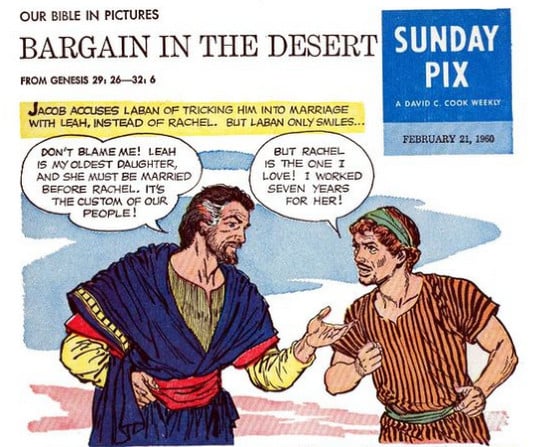
There’s a great deal that could be said about the “translation” of biblical text to biblical imagery, and the choices that requires visual artists to make, whether it’s for an illustrated Bible or a “biblical” film or TV series. I grew up reading the David C. Cook Sunday PIX Bible comics, which were both abridged and embellished in ways that Sunday-school publishing house didn’t fully understand — and which we devout young readers certainly didn’t understand.
But we should save that discussion for situations where actual artists are making actual choices and doing actual work, which isn’t the case here. The only choice being made here is the choice not to do any of that actual work, or to hire actual artists, or to put any thought whatsoever into any of this beyond whatever pop-culture references to include in the prompts fed into the plagiarism machine.
Pray.com is a clickfarm peddling slop and calling it scripture. Behind the pious posturing, they’re no different than the AI-generated podcast spammers of Inception Point AI.
Again, there’s a great deal to be said about the way that “Bible stories” are packaged and repackaged, distorting their contexts in ways that invert their meanings. And some of that seems to apply to the “biblical” slop being churned out by these folks. But even this short post has taken more time, thought, and energy for you to read than any of those AI scammers put into “creating” their content, so they haven’t earned the attention and thought that conversation will require.













 Ad-Free & Subscriber Log-In