

Ryan Burge asks a question here, so I will try to answer it. After listing what he categorizes as the “20 Largest Evangelical Denominations,” Burge writes:
I don’t think anyone could look at this list and have any major gripes about these groups being classified as Evangelical. Maybe the Amish? But if they aren’t Evangelical, then what are they? They certainly aren’t Mainline Protestants or part of the Black Church.
Anabaptist and Pietist sects are not evangelical any more than they are Mainline Protestants or part of the Black Church. They are their own thing. Some of these groups have assimilated enough that they might now possibly to be squeezed into one of Burge’s boxes — some Mennonite and Brethren congregations are more or less evangelical, some Quakers are more or less Mainline Protestants. But the Amish have not assimilated to the point where they would affiliate or associate with anyone.
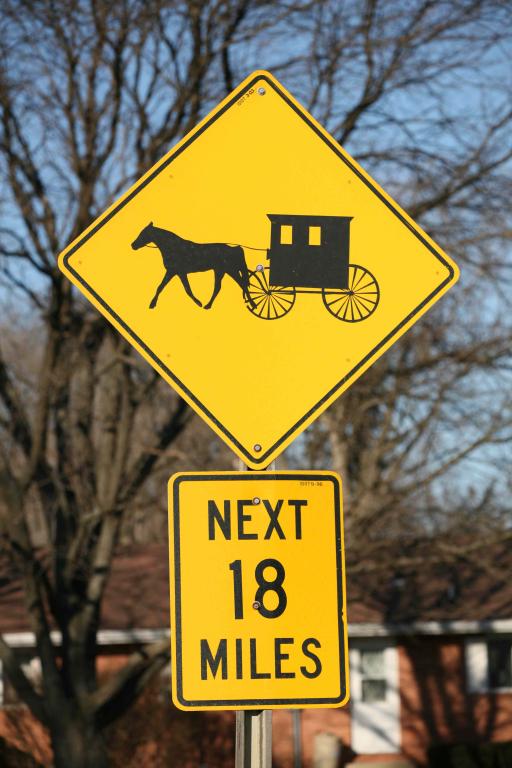
Not assimilating is kind of their whole deal. So, no, the Amish are not evangelicals. They’re their own thing.
The interesting thing about Burge’s question is that it involves a debate about the boundaries or definition(s) of “evangelical” that seems wholly distinct from the usual forms of this endless argument. It’s separate from both the ongoing historiographic battles among historians of American religion and from the ongoing power-struggles among the wanna-be-popes who seek control as gatekeepers of their brand. Instead, Burge is attempting something more like a system of Linnaean classification in which every religious group or sub-group has to be classed into a limited set of categories. Thus, since the Amish “certainly aren’t Mainline Protestants or part of the Black Church,” they must be classified as “evangelicals.” Kingdom: Christian; Phylum: Protestant; Class: Evangelical … or something like that.
The argument-evading simplicity of this is superficially appealing. Just redefine “evangelicals” as “American Protestants who are not members of a Mainline denomination or a part of the historic Black Church.” Easy peasy. And no need to get bogged down in reading all those critiques of the Bebbington Quadrilateral and whatnot.
But, alas, this just doesn’t work.
This Linnaean approach fails partly because religion is full of platypuses, like the Amish. And it fails mainly because it’s backwards — creating categories and then trying to force various groups to fit into them whether they like it or not. That’s a recipe for getting bogged down in semantic distractions and pointless arguments over questions like “Are Latter Day Saints Protestants?” (They’re not Catholic or Orthodox, so they must be Protestants — and since they’re definitely not either Mainline Protestants or part of the Black Church, then the LDS faithful must be “Evangelicals,” right?)
The backwardness of this cram-into-categories approach also helps us understand why Burge’s list of the “20 Largest Evangelical Denominations” is not, in fact, a list of the 20 largest evangelical denominations.
Consider the United Methodists. The UMC is not part of Burge’s list because he’s got them classified as “Mainline Protestants” instead. That makes sense because they are, after all, one of the largest ecumenical Protestant denominations cooperating through the National Council of Churches. That’s the original sense of this category, and it’s why the normal practice used to be distinguishing between “evangelicals” and “ecumenicals.”* That distinction has always been fuzzy, since a large percentage of American “evangelicals” have always been members of those ecumenical denominations.
Any historian arguing for the existence of “evangelicals” prior to the mid-century “Neo-evangelical” movement led by Billy Graham and Co. is mostly talking about exactly such “evangelicals” — Protestant Christians who were members of the churches Burge treats as the wholly separate category of “Mainline Protestants.” If we use something like the “Bebbington Quadrilateral” to identify evangelicals, then a big chunk of United Methodists today should still be counted as “evangelicals.” How big a chunk? I don’t know, but if a fifth of the 5 million United Methodists fall into that category, that would still put them in the top half of Burge’s “20 largest evangelical denominations.”**
Or consider the West Virginia Baptist Convention, 351 churches that look like any other southern Baptist churches, but which are not Southern Baptist churches only because the Baptists of the Mountain State 160 years ago were patriots and did not betray their country to commit treason in defense of slavery. That’s why to this day the West Virginia Baptist Convention is affiliated with the American Baptist Churches — and why the tens of thousands of evangelical Christians in its churches wind up, in Burge’s system, categorized as Mainline Protestants.
And let’s note, again, that the “Neo-evangelical” movement that birthed contemporary white evangelicalism in America was not a group that broke away from “Mainline Protestants.” It was a group that broke away from fundamentalists. That was the whole point of Graham’s movement. They weren’t trying to differentiate themselves from Mainline Protestants, but from fundamentalists.
The break from Mainline Protestantism happened a generation earlier — during the “Fundamentalist-modernist controversy” of the early 20th century. It seems insulting to Graham and Carl Henry and the rest of the “Neo-evangelicals” to project back onto that actual history a reimagined one in which the “Fundamentalist-modernist” split turns into an “evangelical-modernist” divide. That equates “evangelicals” with “fundamentalists,” which is exactly what Graham et. al. were insisting was not the case.
Fundamentalists still exist, of course. That’s another group that, like the Amish, cannot be made to fit into Burge’s All Protestants Must Be One of These Three Things categories.
Fundamentalists are also a bit like the Amish in this context in that they would both resist and reject any system that lumped them in as a subset of “Evangelicalism.”
Well, that’s true of old-school fundamentalists — folks like the Bobs Jones or Bill Gothard or any of the Sword of the Lord-style Independent Baptists still around. The new breed of 21st-century fundamentalists has learned to like passing themselves off as “evangelicals.” Guys like Al Mohler and Ken Ham and John Hagee and the Jerries Falwell and the late Tim LaHaye learned that there was more influence, power, and money to be had by passing themselves off as part of the evangelical mainstream they all once denounced as craven, compromised, worldly apostates. (They still spend most of their time bashing evangelicals as craven, compromised, worldly apostates, but they do it on Twitter now while simultaneously claiming that they alone represent the real, true evangelicalism.)
I’m not intending here to pick on Ryan Burge. His list of the “20 largest evangelical denominations” is fascinating and helpful in a lot of ways. And he is, in general, a really good Numbers Guy if you’re looking for “data” on American Christianity. But if that “data” is put in service of models that require us to lump the Amish in with evangelicals, then that data ceases to be helpful.
The Amish cannot be lumped in with evangelicals because, among other reasons, Amish ecclesiology is wholly incompatible with evangelical ecclesiology. “Ecclesiology” is the fancy seminary term for a denomination’s doctrine of the church. The Amish have a unique, embodied doctrine of the church. Evangelicals don’t really have one at all. What they have, instead, is a kind of free-market ecclesiology based on marketing and market share — sales, ratings, attendance, and clicks. None of that has any place in the church as far as the Amish are concerned.
Another way to consider all of these groups, apart from formal doctrines or number-crunching attempts to create classification systems, would be to think of them as distinct communities of interpretation. The Amish and the evangelicals and the modernist Mainline Protestants and the Black Church and the fundamentalists all read the same Bible, but they do not all read it in the same way. The same texts mean different things to these different groups. Those same texts mean different-ly to these different groups — they have meaning in different ways
This is part of why the category or classification of “evangelical” is so contentious and frustratingly evasive. I basically agree with Burge that, apart from the Amish, “I don’t think anyone could look at this list and have any major gripes about these groups being classified as Evangelical.” And yet it is clearly not true that the Presbyterian Church in America and the Vineyard can be regarded as part of the same community of interpretation.
Burge’s list of the 20 largest “evangelical” denominations includes groups with wildly divergent and incompatible approaches to understanding the Bible. Especially considering that the largest group there — the nondenominational, unaffiliated congregations — includes a vast hodgepodge of disparate beliefs and practices. But for all of these 20 19 groups’ different understandings of interpretation and their different approaches to scripture and Christian teaching, we can point to one common thread. They all turn to scripture in all their various ways in order to seek and to find (and to impose) there the same thing.
That same thing is partly soteriological, but it is mainly cultural and, thus, political. Evangelicalism is a diverse community of interpretation united by the way its various approaches to interpretation all seek support for the same thing.
That agenda is not shared by the Amish. The Amish are not evangelicals. They are simply, you know … the Amish.
* Making any distinction between “evangelicals” and “Mainline Protestants” in the 19th century is a tricky business that almost always involves projecting contemporary distinctions back onto people who would not have understood or accepted them. By the early 20th century we got things like the “Fundamentalist-modernist controversy,” where this distinction begins to describe something real. A generation later, neither of those sides was still comfortable with that terminology, with both the “fundamentalists” and the “modernists” feeling like those labels had acquired too many negative connotations. So they rebranded as “evangelicals” and “ecumenicals,” respectively.
The shift from “ecumenical” to “Mainline” was promoted polemically by opponents of the NCC and the churches it represented, whose support of the New Deal and of desegregation — “Communism” — made them an enemy. The groups supporting this anti-“Mainline” effort recognized that lots of born-again, biblicistic, conversions, etc., white Christians were members of those “Mainline” Protestant denominations and sought to peel them off by creating “evangelical” caucuses within those denominations that could be turned into splinter groups — “Good News” Methodists and such.
Those anti-Mainline groups — the Institute on Religion & Democracy, among others — had an interest in promoting the most expansive estimates of, for example, how many members of the UMC were “really” evangelicals. Were their estimates accurate? How could we go about measuring that? Questions like those, it seems to me, are where we need help from number-crunching Data Guys like Ryan Burge.
** It is 1980-something in Little Rock and the first lady of Arkansas, Hillary Rodham Clinton, is attending a meeting of Church Women United where the church ladies will be making preparations for this southern UMC congregation’s participation in that year’s Crop Walk. The right-wing propaganda machine had not yet created its monstrous caricature of her, but Hillary was still a Yale Law valedictorian and something like the stereotype of the both theologically “liberal” and politically liberal intellectual that anti-“Mainline” evangelicals love to pretend is characteristic of everyone in those denominations. But at that same CWU meeting, there was almost certainly also a nice white southern homemaker and full-time Mom who didn’t vote for the governor and whose “conservative” theology was much more like what we would describe as “evangelical.”
And what happened when these two very different women met at that Church Women United meeting? Well, the liberal intellectual and the conservative homemaker prayed together with all the others at the start of that meeting, and then they all hashed out the details of the Crop Walk — these things don’t just happen by themselves — and then they closed the meeting by praying together again and said goodnight to one another and see you on Sunday,
And that sort of thing happens every day in churches all over America with no one involved bothering with or bothered by the categories we’re discussing here.









 Ad-Free & Subscriber Log-In