


Empires rarely die in battle. They die in shame. Not with a roar, but with a whimper — the sound of small men convincing themselves they’re gods. Rome had Nero. We’ve got Trump. The tools have changed, but the pathology’s the same: delusion wrapped in divine self-promotion, backed by enablers too hungry for power to tell the truth.
The end of empire never comes suddenly. It comes slowly, with applause — the crowds cheering the very men who lit the match.
When Rome Burned
History remembers Nero as the emperor who fiddled while Rome burned. That’s not entirely accurate — but it’s symbolically perfect. He didn’t start the fire, but he didn’t stop it either. When flames engulfed the city in 64 CE, Nero’s first instinct wasn’t compassion or leadership. It was performance.
While much of Rome lay in ashes, Nero hosted a lavish garden party for the elite. He paraded through the ruins singing songs about Troy, reciting poetry, and posing as Apollo, god of light and art. The night sky glowed red with destruction, and Nero turned it into stage lighting.
Citizens wandered the streets barefoot, burned, and homeless. Thousands starved. The empire needed a leader; they got a narcissist with a lyre. And when the smoke settled, Nero did what small men always do when confronted with failure: he found someone else to blame.
He pointed fingers east at the foreigners, immigrants, outsiders — anyone who didn’t fit the Roman mold. The first Christians, already mistrusted and misunderstood, became convenient scapegoats. They were tortured, crucified, burned alive to light Nero’s gardens — human torches for a man desperate to distract from his own incompetence.
When the public rage faded, Nero unveiled a statue of himself: 120 feet tall, cast in bronze, proclaiming his divine glory. A starving nation got a monument to megalomania. The empire burned, and the emperor built a god out of himself.
The Reality TV Caesar
Two thousand years later, we’ve perfected the art of imperial decay. Our Caesar doesn’t wear a toga; he wears a red hat and a spray tan.
Trump, like Nero, sees himself as divinely chosen — God’s instrument with better lighting. His court is filled with flatterers who whisper prophecy into his ego, convincing him that his whims are wisdom and his tweets are gospel. They cling to him not out of loyalty, but self-interest. Nero had senators and courtiers; Trump has sycophants, grifters, and Fox News hosts.
When crisis hits, he doesn’t govern — he performs. During the longest government shutdown in U.S. history, workers missing paychecks while Trump golfed and started construction on a new White House ballroom. Inflation climbed, healthcare eroded, and tariffs punished the poor. His response? More golf, more grievance, more scapegoats.
Immigrants, minorities, journalists, the “deep state” — anyone but himself. The old emperor blamed foreigners for Rome’s fire; the new one blames everyone else for America’s slow burn.
And just like Nero’s statue, Trump builds monuments — not out of marble, but out of memes, merch, and myth. Trump Bibles, NFT trading cards, and $400 sneakers. When substance runs out, spectacle fills the void.
The Fiddle Becomes the Feed
Nero’s fiddle has become Trump’s feed. What once echoed in palace halls now scrolls endlessly across social media.
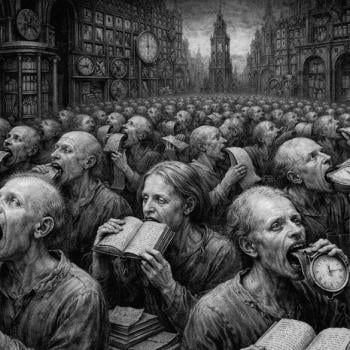
In Nero’s Rome, spectacle kept the people docile. Bread and circuses, gladiator fights, and chariot races — distractions from decay. In Trump’s America, the circus runs 24/7. The bread is outrage, and the arena is digital.
Every tweet becomes a torch. Every rally, a Roman spectacle of grievance. Empires don’t need truth when they have entertainment. Nero had his singers and jesters. Trump has pundits and influencers who sing his praises for clicks.
He doesn’t play music — he plays the algorithm. The fire spreads, and the crowd cheers.
Revelation Wasn’t a Prophecy — It Was a Protest
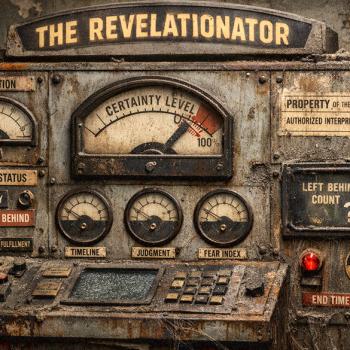
Here’s the part most Christians miss: Revelation wasn’t a cosmic prediction of future doom. It was a political protest — a resistance letter from John of Patmos written in code under Rome’s boot. The “Beast” wasn’t the devil. It was empire. It was Caesar. It was Nero.
The early Christians didn’t need prophecy charts; they were living through the apocalypse — empire devouring its own citizens while demanding worship. John’s message wasn’t “look out for the Antichrist.” It was “you’re living under him.”
Fast forward to now, and the irony is unbearable. The same people who once saw Rome as the Beast now cheer for its reincarnation. American evangelicals have swapped Caesar’s face for Trump’s, draped him in Bible verses, and called it faith.
Revelation was written to expose empire. Today, it’s used to defend it. That’s not theology — that’s idolatry.
Bread and Circuses, Then and Now
The genius of empire is how it turns collapse into entertainment. Rome gave its citizens gladiator games; America gives them the latest manufactured culture outrage.
We scroll through decline like it’s a spectator sport. Outrage becomes ritual, cruelty becomes content, and empathy is the only thing that feels subversive anymore.
The crowd doesn’t want justice — it wants blood, metaphorical or otherwise. Whether it’s liberals and conservatives dunking on each other or billionaires mocking the poor, the coliseum is always full.
We think we’re different from Rome because our stadiums are digital and our slaves are algorithms. But the show hasn’t changed.
The Small Men Behind the Big Falls
Empires don’t collapse from invasion; they corrode from within. The barbarians don’t have to breach the gates — they’re already inside wearing suits and ties.
Nero had his fiddle. Trump has Truth Social. Both men mistake noise for music, spectacle for salvation. Both believe the empire will last forever because they can’t imagine a world without their reflection on every screen.
The Roman Senate once declared Nero “the enemy of the people.” America’s Congress declared Trump impeached — twice. And both men, in the end, fled from accountability. Nero took his own life. Trump will likely live to post another day. Different endings, same cowardice.
History doesn’t repeat, but it does rhyme like hell. The names change, the weapons evolve, but the melody stays the same:
Small men mistake cruelty for strength.
Power addicts mistake worship for leadership.
And citizens, exhausted and distracted, watch it all burn for entertainment.
The Fire Always Comes Home
Rome’s ashes still whisper the same warning: empires don’t die because of one man. They die because too many people decide to look away.
Every empire believes it’s exceptional — Babylon did, Rome did, Britain did. America’s no different. We tell ourselves we’re chosen, that our power is providence, not hubris. But the end is always the same: small men play gods while the empire smolders.
The fire’s not coming. It’s already here — burning through truth, decency, and democracy while the emperor scrolls through his mentions.
Empires burn because of small men who think they’re divine. It happened then. It’s happening again. And once more, the rest of us will be left to sift through the ashes, wondering how the world ended with a tweet instead of a trumpet.
For more Snarky Faith, check out the podcast and more:
- Snarky Faith website
- Instagram: @stuartdelony
- YouTube: @snarkyfaith
- Bluesky: @snarkyfaith.bsky.social
- Facebook Group: facebook.com/snarkyfaith
- Snarky Faith t-shirts and mugs available here.











 Ad-Free & Subscriber Log-In