

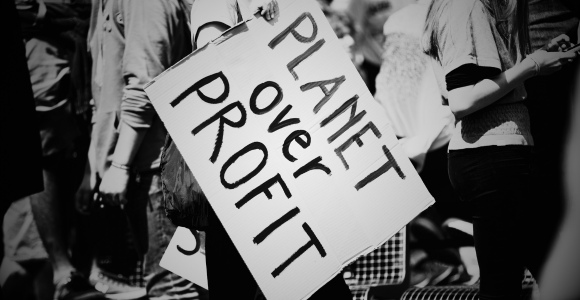
This ever-increasing wealth disparity is not merely an economic issue but a moral, theological and political one as well. Wealth disparity means that political power and social influence also becomes concentrated in the hands of a few. It harms democracy. Wealthy individuals and corporations shape policy, media narratives, and public priorities, often in ways that reinforce their own advantage and to the disadvantage of the masses. This concentration of power undermines democratic accountability and makes it harder to enact reforms that could redistribute resources or regulate environmentally harmful industries. The wealth disparity and environmental degradation created by our present system are intertwined. Both stem from the same structural imbalances that privileges profit over collective well-being of the masses.
Welcome Readers! Please subscribe to Social Jesus Here.
This is Part 3 of the series A World that is Just, Safe, and Compassionate for All
(Read this series from its beginning here.)
As we consider the unsustainablity of this system for most people, we need to consider its unsustainability for our planet, too. The environmental costs of our present economic system are becoming increasingly undeniable. Our system’s dependence on continuous growth and consumption exerts unsustainable pressure on our finite ecosystem. Fossil-fuel dependence, industrial agriculture, deforestation, and mass production all contribute to climate change and biodiversity loss. These are the intrinsic side effects of a system that depends on continual growth, profit, and accumulation. Every stage of our system’s production cycle, whether extraction, manufacturing, distribution, consumption, or disposal, involves the conversion of natural resources into products to produce profit or waste after those profits have been realized.
Environmental economist Herman Daly has argued that a system based on infinite growth is fundamentally incompatible with a finite planet. This is the contradiction now visible in our accelerating climate emergency, and inequality only compounds the problem. The wealthy contribute disproportionately to waste and resource use. Meanwhile, the poor bear the brunt of climate disasters, pollution, and resource depletion. Low-income communities often live near toxic waste sites or in regions vulnerable to flooding and drought. Jesus’ call to care about the poor thus is inseparably connected to caring about environmentalism. Globally, less developed countries suffer the consequences of the environmental damage richer nations produce. Again, environmental justice is inseparable from economic justice.
If our present system has led to wealth disparity and ecological damage, what does that mean for the future? Some argue for a fundamental transformation, a post-capitalist system rooted in ecological and social priorities rather than profit. Others advocate for “green capitalism” or market reforms that internalize environmental costs through things like carbon pricing, circular economies, and corporate accountability. I believe that even these reforms cannot solve the problem. So long as economic success is measured by GDP and shareholder returns, sustainability for the people who are wage earners and the planet who supplies natural resources will always be a secondary priority.
A more equitable and sustainable future requires reimagining what we mean by prosperity. Instead of endless growth, societies might pursue well-being, balance, and the common good. The kind of redistribution of wealth that we encounter in the gospels, that Jesus called his audiences to, could be achieved today through such things as progressive taxation, public investment, and labor empowerment. This month’s recommended reading for Renewed Heart Ministries is Ingrid Robeyns’ Limitarianism: The Case Against Extreme Wealth. Whatever course we chose, it must be a path toward correcting our iniquity of widening inequity.
Our future depends on policies that prioritize renewable energy, conservation, and sustainable production for both people and the planet. Grassroots movements, Indigenous perspectives, and cooperative models today offer alternatives that center community and stewardship rather than the demand for nonstop growth ing our present system.
Our present crises of growing inequality and the coming environmental collapse are both intrinsic symptoms of how we are choosing to shape our economic system. The relentless pursuit of profit, if left unchecked, will continue to erode both social cohesion and our planet’s foundations for life.
Just like in the 1st Century, life-giving change requires of us today a profound moral and political shift away from a system that values growth above all to one that values justice, sustainability, and collective flourishing. The gospels call us, just as they called to those in the 1st Century, to the work of shaping our world into a safe, compassionate, just home for all.
If the Galilean prophet of the poor named Jesus lived and taught in our society today, what would he say is our coming crisis of one stone not being left on another?
Begin each day being inspired toward love, compassion, justice and action. Free.
Sign up at HERE.
















 Ad-Free & Subscriber Log-In