


There were still two weeks of winter left, but the air was was so warm, it might have been summer.
The last of the snow had shrunk away and soaked the earth. The blades of brown grass had grown green. Besides the constant murmuring of LaBelle’s fat pigeons, the air was full of the chirrs and chirps of robins. Finally, just this week, it got good and warm.
I went outside to the garden, to tend to the soil for the first time this year. I turned over the compost heap and re-arranged the sopping wet cardboard on the vegetable patch. Adrienne brought out the guinea pig, who is old and having trouble seeing, but she felt the grass on her feet and tucked in for a delicious meal. The cat stalked the pig across the lawn, then jumped at her all of a sudden, and then jumped away.
Jimmy’s boy biked over to visit. The three of us worked on the garden, setting down some plastic edging so an errant lawnmower wouldn’t destroy the strawberries. We plotted about the lettuce, peas and onions we’re going to plant in a week or two. Jimmy’s boy begged to grow carrots and blueberries, neither of which I’ve had any luck with in the past, but I promised I’d give it a try again this year. We even planned to grow a tray of heirloom tomato seeds over at his house, since Michael is allergic to tomato vines so I can’t start them indoors here. I showed him the seed catalog and pictures of all the beautiful plants. It felt like being in Heaven. Surely Heaven was a garden full of endless beauty and possibility. Surely Jimmy’s boy, and my family and our ridiculous pets, were in paradise where no evil could touch us.
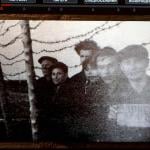
It felt wrong to be in Heaven, when so many people were in hell. The news has been even more full of horrors than it was over the winter, when it seemed as if my little city in Northern Appalachia had floated away from the rest of the world. If I ignored the price of meat and coffee, and recently gasoline, I could imagine that we were on a completely different plane of existence than the people rotting to death in a detention facility and being murdered in a school. My life goes on as it has for years: always a little anxious, always a little lonely, busying myself with the neighborhood children and the garden and the pets. I am not in danger. And I hate that. It isn’t right. I don’t want to hide in safety while other people are suffering. I want to help them, at any cost. But I can’t.
Jimmy’s boy and I worked on that garden edging until it got too dark to see, and then he asked to go for an evening bike ride before bed. I walked around the neighborhood with him.
“Why can’t we see the stars?” asked Jimmy’s boy as he pedaled.
I looked up at the gray and purple clouds. “It’s overcast this evening. One night I’ll take you out to the country where there isn’t too much light pollution, and then we’ll see all the stars. And of course, on the next good hot day when you’re not busy, we’ll go hiking to the waterfall.”
“I want to go to a crick!” said Jimmy’s boy. A crick is a creek, a little tributary that feeds a river. In some parts of Appalachia, that body of water is called a branch, and in some parts it’s called a run, but up here near Pittsburgh they call it a crick.
“There’s a crick under the waterfall, silly! The water will be cold this time of year, but you can at least put your feet in and then put them in a warm towel. In summer, there’s nothing as nice as standing under a waterfall to cool off. And on the way back from the waterfall, we can go to the garden center. It’s right on our way.”
Jimmy’s boy was satisfied, and changed to a different topic. “Did you know we’re in a war?”
I shuddered. “Yes. In the Middle East.”
“The Middle East?”
“You know, in Asia. Iran, Iraq, Saudi Arabia, Israel, Palestine. That’s the Middle East.”
“No!” Jimmy’s boy looked surprised that I was so silly. “We’re in a war with the CARTELS!”
“Oh. That war.”
“We’re blowing the cartels out of the water!” Jimmy’s boy biked closer to me, beaming with excitement. “The cartels are bringing drugs to America, and we’re bombing them right out of the water! We’re saving America! They’re trying to invade America with drugs and we’re bombing them right out of the water!”
“It’s not quite that simple,” I pleaded. “They’re finding out that a lot of those boats were fishing boats. We’ve killed more than a hundred people.”
“No, no, the fishing boats are stuffed with DRUGS!” Jimmy’s boy insisted. “And we’re blowing them right out of the water!”
We stopped at the corner of the street just then, and looked both ways for cars. “If we suspect someone of committing a crime, we should arrest them and put them on trial to see if they really did it. If you shoot someone, how can you put them on trial? What if you make a mistake?”
“No, we’ve gotta put a BULLET in their head. We put a bullet in their head and put them in jail.”
I said the boy’s full name and looked sternly at him. “You can’t possibly put someone in jail with a bullet in their head, because the bullet kills them. The thing to do with bad people is put them away where they can’t hurt anyone, and then get them help so they can change.”
“No, there are too many of them. We have to blow the boats out of the water! It’s a war!”
“Where did you hear all of this?”
“I saw it on TV. I was watching TV with my brother.”
Silently, I wished for a millstone around the neck of whatever television celebrity had so fascinated Jimmy’s boy. He had never said anything so violent before. He isn’t like that. His parents aren’t like that. They don’t like Trump. They don’t like war. Of course they have a gun, as nearly everyone in this neighborhood does, but it’s kept in a safe when it’s not white tailed deer season. Of course their lives have been touched by drugs. Everyone in this neighborhood has a horror story about drugs. But they don’t want to kill drug dealers. The poison Jimmy’s boy was spewing was brand new.
“You shouldn’t watch that show,” I said finally. “I’m a Christian. I don’t believe in war. I believe in peace.”
Soon enough, were right near the abandoned house of the Artful Dodgers. Jimmy’s boy showed me the broken place in the sidewalk which he and the Artful had fallen off their bikes, and the place where they used to play in the front yard. He asked, as he always does, if I could buy their ruined old house from the bank and bulldoze it to make another garden.
I said very little.
All in a moment, it felt as if my corner of Northern Appalachia wasn’t separated from the rest of the country after all. We weren’t in Heaven. The darkness of Hell had been seeping in here all along.
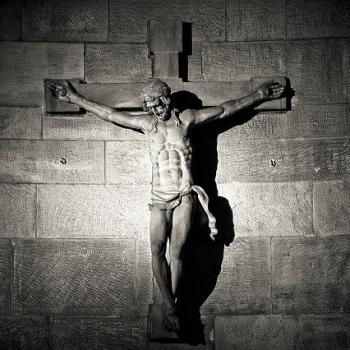
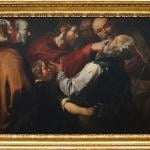
It didn’t feel like summer at the end of winter just then. The terrible, bitter cold that has taken over the whole country gnawed at my spirit like frostbite. I wanted to pray, but I didn’t know what petition to make. All I could do was lift my eyes to that most curious Deity: a God Who couldn’t stand to remain in Heaven, but insisted on descending into hell to suffer with His children.
I still don’t know if I can trust such a God, but I can respect Him. I couldn’t respect a god who stayed away.
I saw Jimmy’s boy home, and it was night.
Mary Pezzulo is the author of Meditations on the Way of the Cross, The Sorrows and Joys of Mary, and Stumbling into Grace: How We Meet God in Tiny Works of Mercy.









 Ad-Free & Subscriber Log-In