2026-02-08T13:29:13-05:00

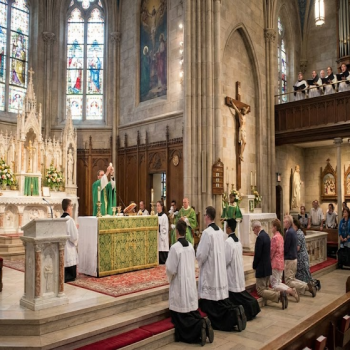
“The celebration of Holy Mass has the same value as the Death of Jesus on the Cross.” – Saint Thomas Aquinas. The Mass is often the most familiar, yet least understood, aspect of Catholic life. Nevertheless, it is the pinnacle of worship and the center of the Catholic faith. Not surprisingly, therefore, the subject of the Catholic Mass is rich and complex. For this essay, I will limit myself to examining and explaining the order of the Mass. First, however,... Read more
2026-02-01T12:34:26-05:00

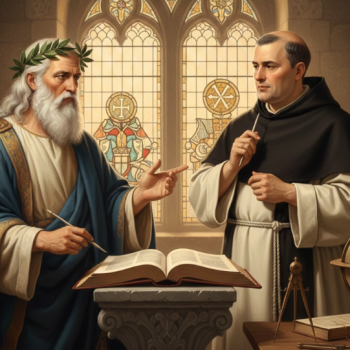
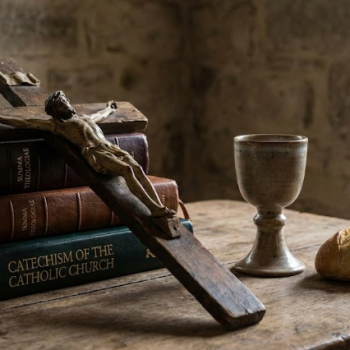
Theology has long been considered the “queen of the sciences.” Modernity is likely to scoff at such a label if it even considers theology a science at all. However, prior to the Enlightenment, science (scientia or knowledge) was considered to encompass theoretical subjects, such as philosophy and theology, as well as empirical subjects, such as the “hard” sciences. If one accepts (as most of human history has) God as the source of knowledge, it is understandable that the study of... Read more

2026-01-25T09:19:32-05:00

It is famously (or perhaps infamously) known as Hitchens’ Razor. “What can be asserted without evidence can also be dismissed without evidence.” As a simplified or condensed version of the epistemological principle of Justified True Belief, Hitchens’ Razor is an advantageous admonition for anyone engaged in critical thinking. However, skeptics and critics of faith frequently employ Hitchens’ Razor to argue that religious claims lack any supporting evidence. As such, any claims about the existence of God can be summarily dismissed. In... Read more

2026-01-18T11:55:03-05:00

The axiom “there is nothing new under the sun” is only sometimes true. In the case of heresy, however, it seems to be all but certain. One such old heresy that is proving resilient is Unitarianism. This essay will examine the beliefs and history of Unitarianism by placing it in contrast with the orthodox belief of Trinitarianism. To do that requires an explanation of the Holy Trinity. Trinitarianism And Orthodoxy Without question, explaining the Holy Trinity is a difficult task for... Read more

2026-01-11T12:52:08-05:00

Then God said: Let us make human beings in our image, after our likeness.” – Genesis 1:26. Theology is predominantly concerned with the nature of God. However, it is also concerned with theological anthropology, which is the study of human nature in the light of Divine revelation.   Within the Judeo-Christian tradition, the foundational claim about human beings, even beyond sin and redemption, is that humans are made in the image of God (imago Dei in Latin). What does it mean to... Read more

2026-01-04T12:08:02-05:00

The history of theology in the Catholic Church is somewhat like a massive mosaic intended to convey the nature of God. In extending this analogy, one may say that every Catholic theologian is like an artist who contributes a small piece that becomes part of a much larger work of art that is the mosaic. The purpose of this essay will be to examine, in part, the work of one such “artist,” the German Jesuit Karl Rahner. Rahner sought to interpret... Read more

2025-12-28T12:02:26-05:00

One need not expend much time or energy to find it. We seem to inhabit a world all but inundated with suffering. Beyond the question of why God allows suffering is the question of whether God Himself experiences suffering. In this paper, I will explore this question by examining two opposing views, those of Thomas Aquinas and Jürgen Moltmann. Finally, I will examine whether the two camps can be reconciled. First, however, it is helpful to understand what is meant... Read more

2025-12-21T10:05:58-05:00

“Can you find out the depths of God? Or find out the perfection of the Almighty? It is higher than the heavens; what can you do? It is deeper than Sheol; what can you know?” – Job 11:7-8. Theology is generally defined as the systematic study of God. As in any discipline, the terms used must accurately reflect the concepts they represent. So, while it is true that the topic of language more appropriately belongs to disciplines such as grammar,... Read more

2025-12-15T21:57:10-05:00

“Come, let us reason together.” – Isaiah 1:18. Is the Bible self-explanatory? By that, I mean, is Scripture self-contained, or can our understanding of it be augmented by philosophy? These questions are of significant interest within that subset of theology known as exegesis. This essay will argue that philosophy can be an invaluable tool in understanding God and Catholicism. To that end, I will explore the nature of exegesis and the relationship between the Bible and philosophy. Finally, I will suggest... Read more

2025-12-07T12:10:44-05:00

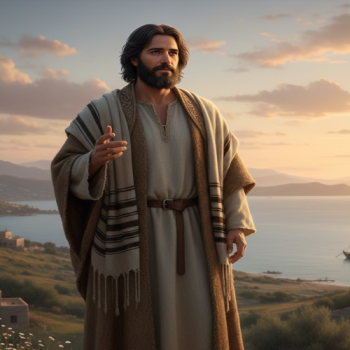
This article should not need to be written. Two thousand years ought to have been sufficient time to confirm whether Jesus existed. And, indeed, for most, the historicity of Jesus of Nazareth is a settled matter. However, doubters remain. In this essay, I will explore the evidence for the existence of a historical Jesus of Nazareth. The evidence will be drawn primarily from three sources: pagan, Jewish, and Christian. Who Do You Say I Am? It may be said that... Read more

Follow Us!


TAKE THE
Religious Wisdom Quiz

What is the meaning of "Jerusalem"?

Select your answer to see how you score.


Browse Our Archives