2026-04-26T10:07:24-04:00

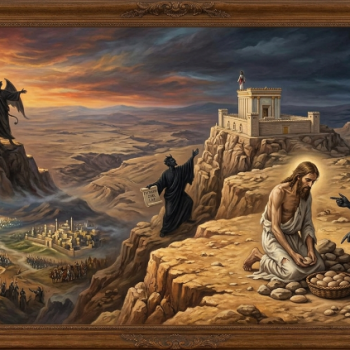
From a biblical perspective, the story of mankind begins with temptation. The Book of Genesis depicts how the serpent (i.e., Satan) tempts Eve, who in turn tempts Adam. Of course, temptation is not unknown in the New Testament, where the Apostle John writes of a triple temptation (1 John 2:16). From an individual perspective, when one considers the spiritual life, it is not long before one comes in contact with and does battle with temptation. In this essay, I will... Read more
2026-04-19T11:32:27-04:00

“The good of the many outweighs the good of the few (or the one).” – Spock, Star Trek II: The Wrath of Khan. On March 26, 2026, the Spanish Government put to death a young woman by the name of Noelia Castillo Ramos. Ms. Ramos was not a criminal – she had committed no crime. Rather, Ms. Ramos was voluntarily “euthanized” because she suffered from chronic pain and mental illness. She was twenty-five years old. Even given the distance time... Read more

2026-04-12T21:55:58-04:00

The Historical Foundation Of Catholicism One of the most enduring attacks on Catholicism is the claim that Gospel authors had little if any direct knowledge of Christ. The line of thinking is that the Synoptic Gospels are the result of “hearsay” and innumerable editorial changes, rendering them historically unreliable and of no theological value. In this essay, I will argue that the Gospels accurately depict Christ and the early development of Christianity. This will be done by examining the relationship... Read more

2026-04-05T11:10:59-04:00

When the philosopher and atheist Bertrand Russell was asked what he would ask God if he were to meet Him, Russell responded, “Sir, why did you not give me better evidence?” Russell, of course, is not alone. Many reasonable people of goodwill have asked a similar question. This paper will explore the question of divine hiddenness and whether the problem is sufficient to warrant atheism. I will also examine the Catholic tradition’s solutions to the problem of divine hiddenness. What... Read more

2026-03-29T11:26:08-04:00

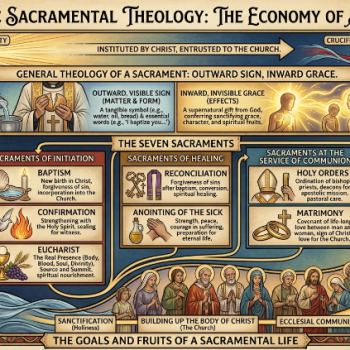
It may be impossible to overstate the significance of sacraments both theologically and doctrinally. Theologically, sacraments are signs and means by which God makes His grace available. From a doctrinal standpoint, sacraments serve as physical signs of invisible spiritual realities. In this paper, I will examine the sacraments from both aspects by placing them in dialogue with the sacramental theology developed by Saints Augustine and Aquinas. What Is A Sacrament? Following Saint Augustine, the Catholic Church defines the sacraments as visible... Read more

2026-03-22T08:19:27-04:00

Due to the complexity of its object (God), Catholic theology has given rise to several philosophical and theological traditions, or schools of thought.  While these theological traditions emphasize different concepts, they should in no way be considered denominations within the Catholic Church. Rather, each school of thought is a unique tessera that makes up the larger mosaic of Catholic theology. These schools can be categorized by their traditions. For example, one can speak of philosophical, theological, and spiritual traditions that compose... Read more

2026-03-15T14:33:12-04:00

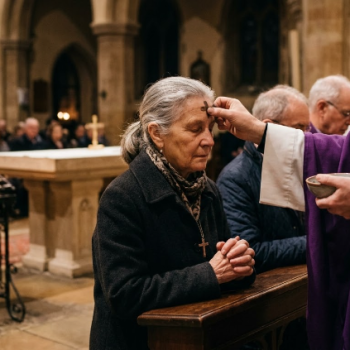
The forty days of Lent are intended to prepare Catholics for the Resurrection of Christ as celebrated at Easter. This preparation is centered on three ancient practices designed to allow the follower of Christ to die to the self so as to be reborn with Christ in the Resurrection. These three practices of charity, mortification, and penance form the foundation of the Lenten Season. Before commencing, it should be noted that the three practices of charity, penance, and mortification are cumulative... Read more

2026-03-08T10:45:06-04:00

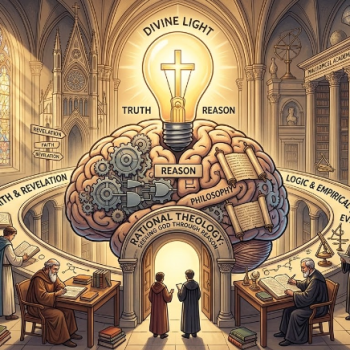
In any attempt to explore the relationship between God and man, one must be cognizant of the influences of time, place, and culture. One of the fundamental effects of these influences is to create a stress or emphasis upon one of two components of the theological enterprise. Schematically, this can be understood as a spectrum ranging from rationality at one end to mysticism at the other. Our time tends to stress rationality (albeit myopically). In this essay, I will explore both... Read more

2026-03-01T10:40:45-05:00

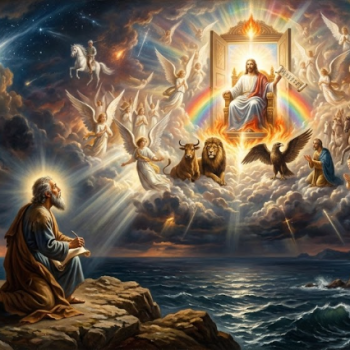
There are several ways in which the term “revelation” can be used, even within a theological framework. However, at a fundamental level, revelation refers to the transcendent Creator of the universe making Himself known to human beings. Revelation also forms the foundation of the biblical message: God has made Himself known and has interacted with His creation throughout human history. From a Catholic perspective, this message reaches its climax in the belief that God became human in the person of Jesus... Read more

2026-02-22T13:13:58-05:00

Theological epistemology is that discipline within the broader field of theology that concerns itself with how we can come to have knowledge of God. As with the other biblical faiths, Catholicism asserts that God is entirely transcendent. Such a theology stands in stark contrast to the pantheon of gods known in the ancient world. It also stands in contrast to the gods of our own devising. The problem most vexing for theological epistemology is that if God is indeed utterly... Read more

Follow Us!


TAKE THE
Religious Wisdom Quiz

Pride deceived those who dwell in the clefts of the rocks and make their home on the heights. Which nation was being addressed?

Select your answer to see how you score.


Browse Our Archives