

 Guest writer: Pilgrim
Introduction
In Catholic moral theology, the morality of an act depends on three elements: the object (the means chosen), the intention (why it is done), and the circumstances (including foreseeable outcomes) [1]. The object is decisive: some acts are intrinsically wrong regardless of intention or outcome.
The Catechism of the Catholic Church states:
- “One may not do evil so that good may result from it” [2].
- “There are acts which, in and of themselves, independently of circumstances and intentions, are always gravely illicit by reason of their object” [3].
Killing without just cause is one such prohibition. It is intrinsically evil and never justified. In war, this translates into two non-negotiables: discrimination (never deliberately target non-combatant civilians) and proportionality (avoid harm greater than the good sought) [4]. This means any deliberate or reckless killing of innocent people is never excusable, regardless of hoped-for outcomes [5].
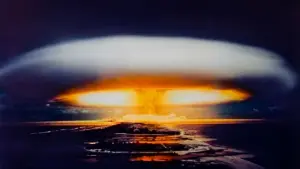
Hiroshima and Nagasaki: Intrinsic Evil in Catholic Moral Thought
President Truman’s decision to deploy atomic bombs on Hiroshima and Nagasaki was intended to spare American lives and hasten Japan’s surrender, avoiding a potentially devastating invasion. While, well-intentioned, Catholic moral theology holds that good intentions do not justify inherently evil means [6].
The bombings intentionally destroyed entire cities and killed vast numbers of civilians, violating the principle of discrimination. The Church’s moral tradition teaches: “Any act of war aimed indiscriminately at the destruction of entire cities … with their population is a crime against God and man himself. It merits unequivocal and unhesitating condemnation” [7].
Consequentialist arguments that the bombings prevented greater loss fail under this doctrine. Veritatis Splendor affirms: “There exist acts which per se and in themselves, independently of circumstances, are always seriously wrong because of their object; such acts admit of no morally acceptable intention or circumstance” [8].
Thus, nuclear strikes on civilians are intrinsically immoral, regardless of intentions or potential benefits. This absolute prohibition frames the ethical lens for assessing contemporary conflicts and protecting human dignity from being compromised for military strategic gain.
Israel–Gaza War: Moral Complexity
The Hamas attack of October 7, 2023, including missile strikes, mass killings, abductions, and systematic rapes and other atrocities, was unequivocally morally reprehensible, constituting war crimes and crimes against humanity [9]. Over 1,100 civilians were killed and 250 abducted, including women and children.
Israel responded, invoking self-defence to rescue the hostages and setting a wider war aim of destroying Hamas to prevent further atrocities [10]. While this aligns with just cause and right intention, the moral evaluation of Israel’s response under jus in bello criteria, discrimination, and proportionality, is complex. Gaza’s extreme urban density and Hamas’s embedding within civilian infrastructure make civilian casualties unavoidable [11].
Reports of widespread bombings, including unguided munitions, have resulted in tens of thousands of civilian deaths, displacement, famine, and alleged attacks on journalists, humanitarian and medical bodies, raising serious moral concerns [12]. Data from Gaza’s Ministry of Health suggest over 61,000 deaths since October 2023, although the chaos of war, Hamas’s embedding within health and humanitarian services, and possible Israeli reporting biases make any figure unreliable and contested [13].
International humanitarian law recognizes Israel’s right to self-defence but emphasizes proportionality and necessity [14]. Catholic teaching concurs: defenders must minimize civilian harm even in asymmetric conflicts. While Israel holds a legitimate right to protect its citizens, the scale and methods of its military campaign strain just-war boundaries. Ethical restraint, careful proportionality, and humanitarian concern are essential for any morally defensible action in war.
Ukraine’s Defense under Catholic Just-War Teaching
Russia’s full-scale invasion of Ukraine in February 2022 presents a case of morally justified defensive war. Just-war theory requires just cause, right intention, legitimate authority, last resort, and reasonable hope of success [15]. Ukraine satisfies each condition:
- Just Cause and Right Intention: Russia’s aggression violated sovereignty and threatened civilians; Ukraine’s defense aims to protect its people [16].
- Legitimate Authority: The democratically elected Ukrainian government has a moral and legal duty to defend its citizens [17].
- Last Resort: Diplomatic efforts, including the Minsk Protocols (2014–2022), failed, leaving armed defense the only viable option [18].
- Reasonable Hope of Success: Ukraine maintains credible prospects for a just outcome, supported by resilience, mobilization, and EU funding via the €50 billion Ukraine Facility (2024–2027) [19].
- Proportionality: Defensive military action must not exceed the good sought; given Russia’s atrocities, calculated resistance minimizes greater moral harm [20].
- Jus in Bello Constraints: Ukraine too must discriminate between combatants and civilians, investigate alleged violations, and uphold obligations to protect noncombatants [21].
Catholic teaching does not compel victims of aggression to surrender; defensive war, though morally costly, is justified to preserve justice and protect the innocent [22].
Conclusion: Modern Warfare and the Limits of Just-War Doctrine
The daily horrors of modern warfare in Gaza and Ukraine, images of death, displacement, and suffering, bring the horror of war into our homes via media reports. Inevitably, the question arises: Is modern warfare ever justified? Technologically intense, large-scale conflicts challenge our ethical frameworks and consciences.
Just-war doctrine specifies conditions for legitimate defense: grave, lasting harm inflicted by the aggressor; exhaustion of peaceful means; serious prospects of success; and proportionality, ensuring force does not create greater evil than it seeks to prevent [23].
Modern popes emphasize the challenges of modern warfare. Pope Francis stated in March 2022: “Wars are always unjust since it is the people of God who pay. Our hearts cannot but weep before the children and women killed, along with all the victims of war. War is never the way” [24]. In Fratelli Tutti (2020), he warns of unprecedented destructive capacity: “Never has humanity had such power over itself, yet nothing ensures that it will be used wisely. … Very difficult nowadays to speak of the possibility of a ‘just war’” [25].
Proportionality is central: even with just cause, modern weaponry can make civilian harm disproportionate, justifying the Pope’s position that wars are almost always unjust in practice. Cardinal Alfredo Ottaviani noted after World War II that traditional just-war doctrine is largely inapplicable to modern total warfare, except in strict defensive circumstances [26]. Popes Pius XII and John XXIII warned in the 1950s and 1960s that atomic and total war render moral evaluation exceptionally fraught [27].
The moral obligation to defend innocent populations remains, but it demands extraordinary prudence, adherence to proportionality, and maximal protection of civilians [28]. Modern warfare presents a sobering moral tension: the right to defend oneself versus the destructive potential of contemporary arms. The Church calls the faithful and people of goodwill to moral clarity, human compassion, and constant vigilance, to uphold justice and protect the innocent, while grappling with these profound questions and the tragedy of war.
Footnotes
- Catechism of the Catholic Church, 2nd ed. (Vatican City: Libreria Editrice Vaticana, 1997), §1789, Part Three, Section One, Chapter One, https://www.vatican.va/archive/ENG0015/_INDEX.HTM.
- Catechism of the Catholic Church, §1756.
- Catechism of the Catholic Church, §§2307–2313.
- Catechism of the Catholic Church, §2314.
- Second Vatican Council, Gaudium et Spes, §80 (December 7, 1965), https://www.vatican.va/archive/hist_councils/ii_vatican_council/documents/vat-ii_const_19651207_gaudium-et-spes_en.html.
- “It Is Intrinsically Evil to Directly Will the Deaths of Non-Combatants,” Catholic Culture, accessed August 13, 2025, https://www.catholicculture.org/commentary/pro-bomb-no-morality-entails-sacrifice-and-trust-in-god/.
- Second Vatican Council, Gaudium et Spes, no. 80, https://www.vatican.va/archive/hist_councils/ii_vatican_council/documents/vat-ii_const_19651207_gaudium-et-spes_en.html.
- John Paul II, Veritatis Splendor, §80 (August 6, 1993), https://www.vatican.va/content/john-paul-ii/en/encyclicals/documents/hf_jp-ii_enc_06081993_veritatis-splendor.html.
- Human Rights Watch, “October 7 Crimes Against Humanity, War Crimes by Hamas-Led Groups,” July 17, 2024, https://www.hrw.org/news/2024/07/17/october-7-crimes-against-humanity-war-crimes-hamas-led-groups.
- E.A. Heinze, “International Law, Self-Defense, and the Israel-Hamas Conflict,” Parameters (U.S. Army War College, 2024), https://press.armywarcollege.edu/parameters/vol54/iss1/12/.
- Mark Lattimer, “Assessing Israel’s Approach to Proportionality in the Conduct of Hostilities in Gaza,” Lawfare, March 5, 2024, https://www.lawfaremedia.org/article/assessing-israel-s-approach-to-proportionality-in-the-conduct-of-hostilities-in-gaza.
- “6 Key Moments in Israel’s Military Campaign in Gaza,” Washington Post, August 8, 2025, https://www.washingtonpost.com/world/2025/08/08/israel-gaza-hamas-war-military-timeline/.
- “Palestinian Death Toll in Israel-Hamas War Passes 60,000,” Associated Press, July 29, 2025, https://apnews.com/article/palestinians-death-toll-war-health-ministry-816d592952814db869924f9626ca8876.
- “Just-War Doctrine Requires Israel to Avoid Civilian Casualties,” Catholic News Agency, October 23, 2023, https://www.catholicnewsagency.com/news/256386/catholic-u-theology-dean-just-war-doctrine-requires-israel-to-avoid-civilian-casualties.
- Catechism of the Catholic Church, §§2309–2311.
- United Nations General Assembly, Resolution ES-11/1 (March 2, 2022), https://digitallibrary.un.org/record/3959039.
- Catechism of the Catholic Church, §2309.
- “Minsk Protocols,” United Nations, 2014–2015 documentation.
- European Commission, “The Ukraine Facility,”, https://enlargement.ec.europa.eu/funding-technical-assistance/ukraine-facility_en.
- Catechism of the Catholic Church, §2309.
- United Nations Human Rights Council, “Report on the Human Rights Situation in Ukraine,” Dec 2024 – May 2025. https://ukraine.ohchr.org/sites/default/files/2025-07/2025-06-30%20OHCHR%2042nd%20periodic%20report%20on%20Ukraine_1.pdf
- Catechism of the Catholic Church, §§2309, 2314.
- Catechism of the Catholic Church, §§2309–2311.
- Pope Francis, Address, March 16, 2022, https://www.vatican.va/content/francesco/en/speeches/2022/march/documents/20220316-ukraine-crisis.html.
- Pope Francis, Fratelli Tutti, §247 (October 3, 2020), https://www.vatican.va/content/francesco/en/encyclicals/documents/papa-francesco_20201003_enciclica-fratelli-tutti.html.
- Cardinal Alfredo Ottaviani, Public Laws of the Church (Vatican City: Typis Polyglottis Vaticanis, 1947), 254–256.
- Pope Pius XII, Speech to Pontifical Academy, February 21, 1943, https://www.vatican.va/content/pius-xii/en/speeches/1943.html; Pope Pius XII, Address to Eighth Congress of the World Medical Association, 1953, https://www.vatican.va/content/pius-xii/en/speeches/1953.html; Pope John XXIII, Pacem in Terris, 1963, no. 173, https://www.vatican.va/content/john-xxiii/en/encyclicals/documents/hf_j-xxiii_enc_11041963_pacem.html.
- Catechism of the Catholic Church, §§2309, 2314.
- Discontinuity in Catholic Just War Teaching? From Aquinas to the Contemporary Popes Gregory M. Reichberg, 2012
- Consciences for Faithful Citizenship United States Conference of Catholic Bishops, 2023
Thank you!
If you liked this article, please leave your comments below. I am very interested in your opinion on this topic.
Read The Latin Right’s other writing here.
Please visit my Facebook page and IM your questions (and follow my page) or topics for articles you would like covered.















 Ad-Free & Subscriber Log-In