


A bit of personal background may help frame this discussion. I grew up in Southern California as part of the working poor. For most of my childhood, my family of five moved from one small two-bedroom apartment to another. I shared a bedroom with my two sisters. The neighborhoods where I lived were majority Hispanic, so I grew up as a White minority.
I mention this because conversations about race, injustice, and racial suffering dominate much of our cultural discourse. When people discuss “systemic racism,” reparations, and anti-racism, they often argue that systemic racism produces enduring Black suffering, that reparations offer justice for historic harm, and that structural injustice creates generational consequences.
I do not deny the reality of slavery or racism. I do not deny that injustice leaves scars. But I want to ask a deeper question: Does suffering carry intrinsic moral weight, or does ideology determine whose suffering counts most?
My aim is to ground this discussion in a universal moral foundation rooted in human dignity. Suffering matters because every human person bears equal dignity. Pain does not intensify or diminish based on skin color. Justice must rest on personhood, not group narrative.
Indentured Servitude: Forgotten Suffering
Now for a brief history lesson on European suffering in early North America. Between the early 1600s and the American Revolution, roughly 300,000 to 500,000 Europeans arrived in British North America as indentured servants. In the 17th-century Chesapeake colonies (Virginia and Maryland), most European immigrants came under indenture. In some decades, indentured servants accounted for 75 percent or more of English migrants.
Given those numbers—and the exponential growth of descendants over ten to twelve generations—perhaps 25 to 35 percent of present-day white Americans possess at least one indentured servant ancestor. That represents tens of millions of people. Why does this matter?
Indentured servitude relied on the labor of poor Europeans who signed contracts in exchange for passage to the colonies. Those contracts typically required four to seven years of labor, though masters sometimes extended terms arbitrarily. Servants endured harsh conditions. Overseers administered physical punishment regularly. Mortality rates in the early colonies reached staggering levels.
While indentured servitude differed legally from chattel slavery, many servants experienced severe exploitation, coercion, violence, and family separation. The system inflicted real suffering on real people.
This history raises serious moral questions:
Did they suffer less because they were white? If a man starves, endures beatings, and dies from overwork, does melanin alter the moral weight of his pain?
Irish Suffering — Catastrophe and Ideology
Another piece of personal background informs this discussion: I possess Irish ancestry. My ancestors left the Green Isle in the late 1840s to survive. They first went to Canada and eventually settled in Vancouver, British Columbia. Why did they leave their homeland and extended family behind? The Great Famine.
Between 1845 and 1852, potato blight devastated Ireland’s staple crop. Approximately one million Irish men, women, and children died. Another one to two million emigrated during those years. At the time, Great Britain governed Ireland and maintained food exports from the island even as starvation spread among the rural poor.
Ideas shaped the British response. The theories of Thomas Robert Malthus in An Essay on the Principle of Population had already influenced British economic thought. Malthus argued that population growth eventually outpaces food supply and that famine operates as a natural “check.” Many officials absorbed this framework. Some interpreted the famine as a demographic correction rather than an urgent humanitarian crisis. That mindset limited aggressive intervention and reinforced minimal relief.
The blight destroyed the crop. Ideology shaped the response.
Once leaders framed suffering as the consequence of overpopulation rather than as a moral emergency, compassion narrowed.
This history raises serious moral questions:
Did the Irish suffer less because they were white? If an Irish child dies from starvation, does melanin alter the moral weight of that child’s pain?
Religious Persecution: Irish Catholics in America
What did the Irish experience after they arrived in America? They encountered marginalization and exclusion. Employers posted signs that read, “No Irish Need Apply.” Nativist hostility erupted into riots in several cities. Anti-Catholic sentiment fueled suspicion, resentment, and at times violence.
Many Irish immigrants found themselves shut out of political and economic power. In response, they built tight-knit ethnic neighborhoods. Within those communities, they established Catholic parishes, schools, charities, police forces, and fire departments. They organized politically and eventually gained influence in major cities—often through urban political machines that lasted well into the twentieth century.
Anti-Catholic prejudice ran deep. Many Americans questioned whether Catholics could serve the republic faithfully, claiming their loyalty rested with the Pope in Rome rather than the Constitution. When John F. Kennedy ran for president in 1960, he confronted this suspicion directly. He assured voters that his allegiance belonged to the United States and that no church authority would dictate his public decisions.
This history, too, raises a moral question:
Do we minimize this suffering because the Irish were white?
The Contemporary Implication
Today, we stand at a similar crossroads. If we grant suffering moral authority based on identity position rather than shared human dignity, we create hierarchies of grievance, foster competitive victimhood, assign permanent moral debt based on ancestry, and cultivate selective compassion that fractures social unity.
Every person’s suffering carries equal moral weight. It does not increase or decrease based on one’s location within a historical power narrative. As a descendant of Catholic Irish immigrants who grew up poor, I cannot appeal to my family’s suffering to diminish the suffering of others or demand reparations for wrongs inflicted on my ancestors.
The same principle applies to everyone living today, regardless of skin color.
Final Thought… The Measure of Suffering
History does not belong to one race or tribe. It records the suffering of many peoples—enslaved Africans, indentured Europeans, starving Irish families, persecuted Catholics, exploited laborers, and countless others whose names never entered textbooks. Each endured real injustice. Each felt real pain.
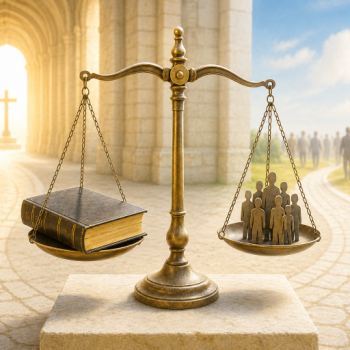
The question before us does not concern whose ancestors suffered more. That contest never ends, and it heals nothing. The real question asks whether we still believe that suffering derives its moral weight from the equal dignity of the human person—or whether we now assign its weight according to identity and historical narrative.
If suffering carries equal moral weight because every human being bears equal dignity, then justice must aim at fairness in the present, not the redistribution of inherited grievance. We cannot correct past injustice by ranking pain or by attaching permanent moral debt to descendants who did not commit the wrongs.
Compassion loses its integrity when it becomes selective. Justice loses its credibility when it becomes tribal.
A society that believes in equal human dignity must refuse to rank suffering by skin color. It must resist the temptation to convert tragedy into political currency. And it must pursue justice in a way that unites rather than divides.
Suffering is suffering because a person suffers. That truth does not change with pigment, ancestry, or narrative. If we abandon that principle, we abandon equality itself.
Thank you!
Read The Latin Right’s other writing here.
Please visit my Facebook page and IM your questions (and follow my page) or topics for articles you would like covered.












 Ad-Free & Subscriber Log-In