

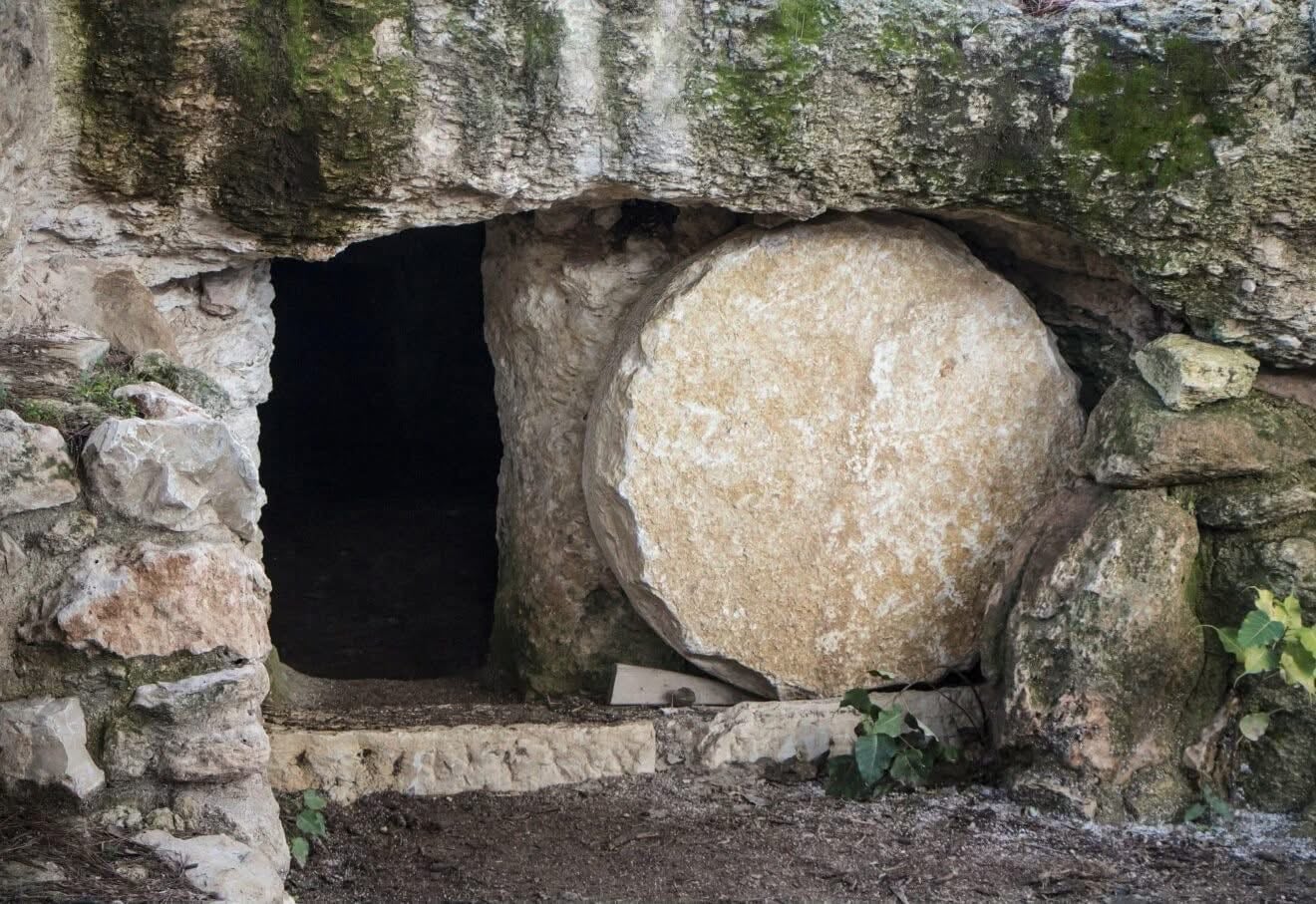
Christ is Risen. He is risen indeed!
On Good Friday, I went to watch Handel’s Messiah at the Royal Albert Hall. It was 150 years since the annual performance began there. In all that time, they have only been forced to miss two years. One during World War II because of the blitz, and one during COVID.
I’ve been to this event twice before over the years, so this was my third visit. I felt like something of a loyal returner. Imagine my surprise to discover I was sitting near someone who had been there for the last 60 performances without missing any of them. That’s dedication.

I didn’t get the opportunity to speak much to him. I would have loved to ask whether his devotion was to the music, or to the Messiah this most famous oratorio so beautifully portrays.
As I looked around at the 5000 people who filled this glorious venue I asked myself a similar question to one John Newton asked hundreds of years ago when Messiah fever gripped London. How many enthusiastic listeners also have their spiritual ears open so that they hear and rejoice in the wonderful blend of worship and fifty Bible verses?
It may well be that many people on Friday were simply enjoying the music, the exquisite singing, the fantastic orchestra, and the awesome organ. But, perhaps many missed the real point.
It takes more than music to overcome the deception of the human heart. Only when the risen Son of God pours out the life-giving power of his resurrection will our hearts be enabled to worship.
Then for sure you can approach a performance like this in the right way. The emotions that are induced become praise to God for the most wonderful story of rescue ever told. And as the entire audience stands during the Hallelujah Chorus, as is the tradition, we all stand in the presence of the King above all Kings, grateful for all that the Messiah has done for us.
The incarnation, the perfect life, the dreadful suffering and death, the glorious resurrection, the ascension, and the ongoing rule of Christ, He did it all for us.
This Easter, I wanted to share this memory of being at Messiah, and to encourage you to listen to it sometime. But more than that, to get to know the Messiah Himself, and to read about the glorious message of the gospel, and to make sure that whatever you read focuses on his resurrection.
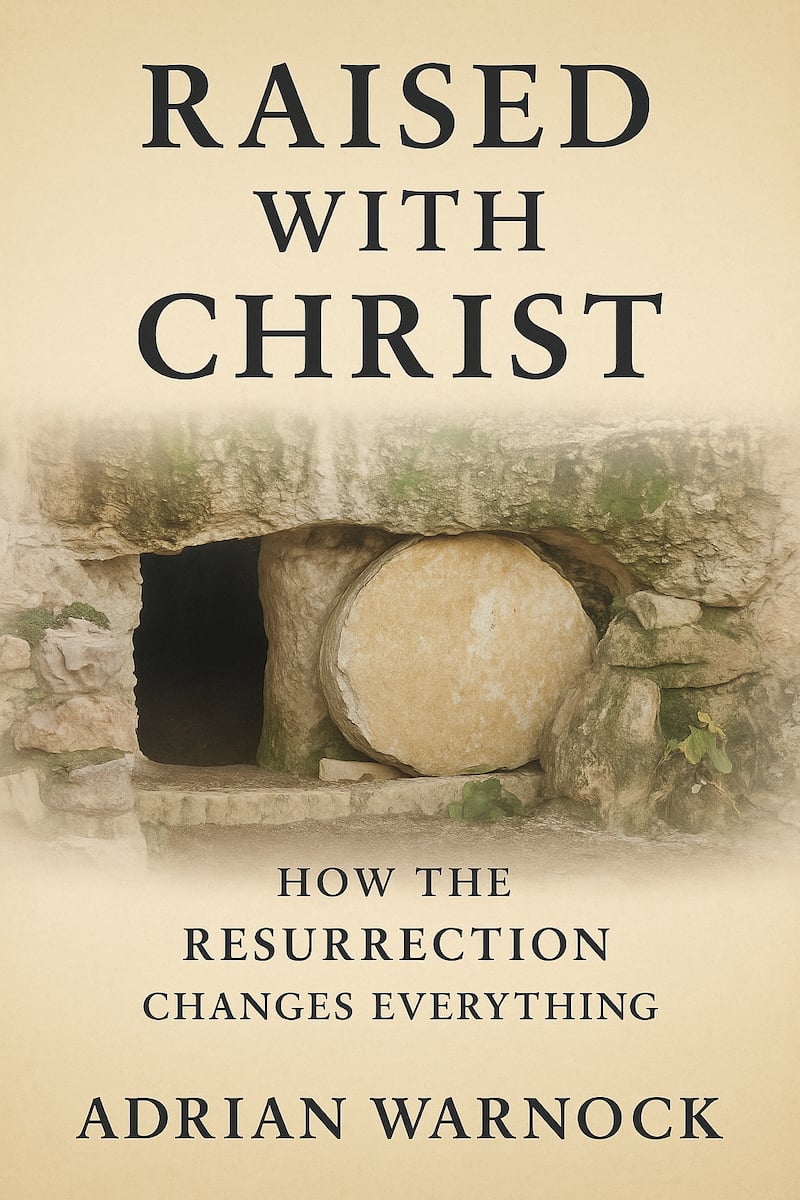
I offer you my book Raised With Christ: How The Resurrection Changes Everything if you’ve not read it yet. But if you’d rather read another book on the resurrection, go right ahead. Just don’t wait until next Easter to do it.
Ask yourself this:
Do I focus enough on the resurrection?
And if you are a preacher:
Does my preaching focus enough on the resurrection?
Both these questions should be asked all year round, and they are the natural result of thinking about the question my book addresses:
Is the Easter story true, and what does it mean?
This book, along with two others by me, are on a special offer this Easter as we celebrate the death and resurrection of Jesus.

Raised With Christ: How the Resurrection Changes Everything
https://mybook.to/raisedwithchrist
Discover the blazing center of the Christian faith and its implications for life today. Includes study guide questions and an afterword by Charles Spurgeon and John Newton, updated into modern English.
“Finally, a new generation of readers has a clear and highly readable book on the resurrection of Jesus Christ.”
—Joni Eareckson Tada
The particular verse he considers in this sermon comes from Part Three, after the Hallelujah Chorus. This whole part focuses on the implications of Jesus’ death and resurrection. We really do have a hope that goes beyond the grave.
Because Jesus rose, we can believe that we too will rise again.
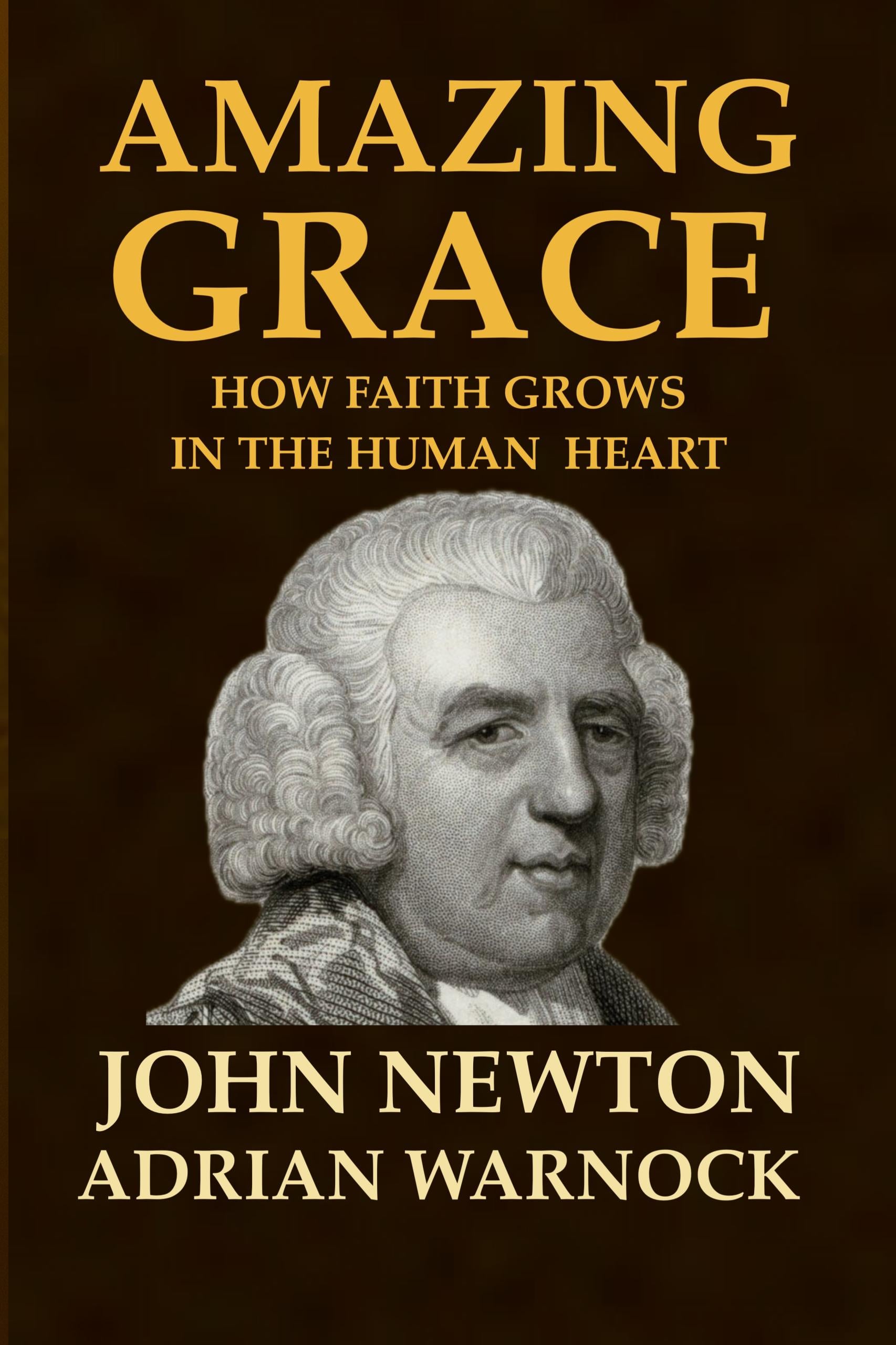
So this Easter, let’s celebrate the resurrection of Jesus. Let’s read what John Newton had to say about the glorious wonder of the resurrection of Jesus.
THE FOUNDATION OF OUR HOPE
BY JOHN NEWTON
“For now is Christ risen from the dead, the first-fruits of them that sleep” (1 Corinthians 15:20).
“But Christ has indeed been raised from the dead, the firstfruits of those who have fallen asleep” (1 Corinthians 15:20, NLT).
In the body, the action of the heart and of the lungs, though very different, are equally necessary to stay alive. Neither of them is more essential than the other.
In the same way, in the system of God’s revelation, the knowledge and belief of some truths are fundamental to the salvation of a sinner.
Though they are distinct in themselves, we cannot determine which of them is the most important to us; for unless we know, approve, and receive them all, we can have no experience of a life of faith in the Son of God.
Such, for instance, is the Biblical doctrine concerning the depravity of human nature. This is a first principle. Unless we understand our state in the sight of God, the enormity of our sins, and our inability to find true happiness until our hearts are changed by the power of His grace, we cannot properly understand a single chapter in the Bible.
The same is true of the doctrine of the atonement. If we knew how totally lost we are, without knowing the gracious method God has appointed for our recovery, we would inevitably sink into despair.
Also, if we were aware of our state as sinners, and even if we trusted in Christ for salvation, yet the apostle observes in this chapter, that our faith is in vain unless Jesus has risen from the dead:
“If Christ has not been raised, your faith is worthless; you are still in your sins” (1 Corinthians 15:17, LSB).
The resurrection of Christ, therefore, is a doctrine absolutely essential to our hope and comfort. It is a sure guarantee that those who believe in Him will also be raised from the dead because of their union with Him and following His pattern.
For “now Christ has been raised from the dead, the first fruits of those who have fallen asleep.” Let us consider His resurrection. The sure consequence of it, that His people shall be raised from the dead, the following verses will provide suggestions for meditation.
The resurrection of Christ, as a fact, is the great pillar upon which the weight and importance of Christianity rest. It has pleased the Lord to put undeniable proof of it within our power.
There is no other point of ancient history so certainly and unquestionably authenticated. It may seem unnecessary to prove it, and for many of you this is entirely true. Yet I think it right to take some notice of it, not so much on behalf of the weak and trivial objections of unbelievers, as for the sake of people who may be assaulted with temptations.
Many of us, who are not much acquainted with the subtleties of sceptics, are sometimes pestered with difficulties and objections in our own minds. These may be more shrewd and powerful than those commonly found in books or discussed in coffee-houses. For unbelief is deeply rooted in every heart; and Satan, our great enemy, can, and if permitted will, work powerfully upon this evil disposition. He endeavors to beat us off from the belief of every truth of Scripture, including this truth.
Many people, who have been so well convinced that our Lord rose from the dead, as to entrust their souls and their all, have found themselves at a loss on how to answer the enemy in a time of sharp and pressing temptation.
Let us suppose, then, that we had recently received news of some extraordinary and almost incredible event. What evidence would we require to convince us that the report was true? Let us apply the same kind of reasoning to the matter before us.
That there was, a great while ago, a person named Jesus, who gathered disciples, and died upon a cross, is universally acknowledged. Both Jews and Gentiles, who lived at the time, and afterwards not only admitted it, but urged it as a way to criticize His followers. Many accounts of this kind still survive.
The turning point between His enemies and His friends is His resurrection. This has been denied. We acknowledge that he did not appear publicly after he arose, as he did before his death, but only to a sufficient number of His followers. He showed Himself, and satisfied them, by “many convincing proofs that He was alive” (Acts 1:3, NIV), and that He was the same person they had seen crucified.
They reported what they saw, and we believe their report. We must therefore ask, who they were, and on what grounds we accept and rely on their testimony.
If they were mistaken, or if they agreed on a crafty scheme to deceive everyone, we who depend upon their account may share in their mistake or be deceived by their cunning. But if neither of these theories can possibly be true, if they were competent and impartial witnesses, then we are not only justified in giving credit to their testimony, but it must be unreasonable, and in a matter of such importance, presumptuous and dangerous to reject it.
That the disciples were competent judges of what they claimed, is evident, from their numbers. The eyewitnesses were many:
“He was seen by Peter and then by the Twelve. After that, he was seen by more than 500 of his followers at one time . . . Then he was seen by James and later by all the Apostles. Last of all, as though I had been born at the wrong time, I also saw him” (1 Corinthians 15:5-8, NLT).
Paul wrote this way when multitudes who lived at the time were still alive, and would have easily contradicted him, if he had spoken falsely. Five hundred agreeing witnesses are enough to establish the truth of a fact, which they all saw with their own eyes, provided their word may be depended upon.
We can be certain of things which we have never seen only through the testimony of others. Certainty can be gained in this way. For though some reserve the word demonstration to mathematical proof, moral evidence may in many cases be just as conclusive and compel agreement with equal force.
I am fully persuaded by the report of others, that such cities as Paris and Rome exist, though I have never seen them. I cannot seriously question their existence, any more than I can doubt a mathematical principle I have seen proved.
It is not possible that so many persons could have been mistaken or deceived. Some of them saw Him, not once only, but frequently. His appearance to others was accompanied by compelling circumstances and effects.
His disciples do not seem to have expected His resurrection, though He had often predicted it prior to His sufferings. Nor did they hastily believe the women who first saw Him on their way from the tomb.
Thomas refused to believe the report of all his brothers, to whom our Lord had shown Himself. He wanted to see for himself. He required more than visual proof, saying,
“I won’t believe it unless I see the nail wounds in his hands, put my fingers into them, and place my hand into the wound in his side” (John 20:25, NLT).
It is no wonder, that when these proofs were offered, he fully yielded to conviction, and with gratitude and joy addressed his risen Savior in the words of adoration and love, “My Lord, and my God!” (John 20:28, NLT).
His former conduct showed that he was not gullible, nor inclined to receive the report as a truth, however desirable, without enough evidence.
As they were competent judges, so they were upright and faithful witnesses. There is no more room to suspect that they had a plan to deceive others, than that they were mistaken or deceived themselves.
If we judge them by their writings, we must at least concede they were well-meaning men. They claimed to aim to promote the knowledge and honor of the true God, and through this to promote morality and happiness.
Their behavior was uniformly consistent with their faith, and their doctrines and precepts were clearly suited to accomplish their purpose.
The writers of the New Testament were ordinary men, most of them without formal education, and engaged in humble occupations until they became disciples of Jesus. Is it likely that men, who speak so honorably of God, who instill in their fellow-creatures such an entire devotedness to His will and service, should be impostors themselves?
Is it at all credible, that a few men, in obscure circumstances, should form a consistent and carefully constructed plan, strong enough to endure and overcome the prejudices, habits, and customs of both Jews and Gentiles? Could they institute a new religion, and, without the assistance of political power or force spread it rapidly and successfully in a few years throughout most of the Roman empire?
Is it possible that such men could, at their first attempt, create a system of theology and morality so vastly superior to the combined efforts of the philosophers of every age?
Some have absurdly argued that classic Latin poems were not the production of the authors whose names they bear, but gross forgeries, fabricated by monks in the dark ages of ignorance, and successfully passed off as genuine by men who could only express their own dull thoughts in barbarous Latin. They were not capable of writing with the fire and elegance of the great ancient poets.
It is also foolish to claim that the writings of Sir Isaac Newton were in reality authored by an ignorant ploughman, and only published under the pretense of a celebrated name.
These claims cannot be more repugnant to true taste, sound judgment, and common sense, than to imagine that the evangelists and Apostles were, from their own resources, capable of writing such a book as the New Testament. The whole of that book must stand or fall with the doctrine of our Lord’s resurrection.
In addition, they could not possibly have expected any personal advantage in their endeavors to spread the Christian religion, unless they were convinced that the crucified Jesus, whom they preached, had risen from the dead and taken possession of his kingdom.
They knew who they had believed and were filled with a compelling sense of His love. They depended on His promise and power to support them in the service to which He had called them. They were neither ashamed nor afraid to proclaim His Gospel, and to invite and instruct sinners everywhere to put their trust in Him.
If this was not true, they had nothing to expect but the treatment they actually received for proclaiming their belief in His resurrection, and especially for the care they took to share it first among the people who had put Him to death, and afterwards among the Gentiles.
It required no great wisdom to foresee that this doctrine would be “a stumbling block to Jews and foolishness to Gentiles” (1 Corinthians 1:23, NIV).
The disciples were in fact despised, hated, opposed, and persecuted, wherever they went; and those who embraced their cause were immediately exposed to share in their sufferings. Nor was there the least probability that events would be different.
There may have been many impostors, but we cannot imagine that any group of men would deliberately conspire to invent a lie that, by its nature, could bring them and their followers nothing but contempt, beatings, imprisonment, and death.
Even if we could, for a moment, suppose them capable of such a reckless and wicked plan as to pretend to serve God, and provoke the hatred of mankind, by declaring and spreading an offensive falsehood, it would be impossible to explain their success:
“If they are planning and doing these things merely on their own, it will soon be overthrown” (Acts 5:38, NLT).
But by preaching Jesus and his resurrection, in defiance of all the schemes and hostility of their enemies, they mightily triumphed over the established customs and entrenched prejudices of the time. They brought multitudes into the belief of their doctrine despite every disadvantage:
“The disciples went everywhere and preached, and the Lord worked through them, confirming what they said by many miraculous signs” (Mark 16:20, NLT).[1]
The miracles which were performed in the name of Jesus were numerous, public, and undeniable. The moral effects of their preaching, though too frequent and universal to be called miraculous, could only reasonably be caused by divine power.
The pillars of Greek and Roman Religion, the superstitions of idol worship, were in every country integrated with the civil government, and guarded for ages, not only by popular devotion but for the state. Despite this they were very soon shaken, and in a short period of time overthrown.
Around two hundred years after Tacitus (AD 56-120) described the Christians as the objects of universal contempt and hatred, Christianity became the established religion of the empire.
In a letter from Pliny to Trajan we have undeniable evidence that even in the time of Tacitus, although the Christians were hated, vilified, and persecuted, their religion so greatly prevailed, that in many places the idol temples were almost deserted.
But the most important and satisfying proof of the resurrection of Christ, does not depend upon arguments and historical evidence, which multitudes of true Christians are unaware of. But it is, in its own way equally convincing in all ages, and equally accessible to all people.
Those who have found the Gospel to be “the power of God that brings salvation” (Romans 1:16, NIV) to their souls “have this testimony in their own heart” (1 John 5:10, GNT). They are very sure that the doctrine, which enlightened their minds, awakened their consciences, delivered them from the guilt and power of sin, brought them to a state of peace and communion with God, and inspired them with a bright and glorious hope of eternal life, must be true.
They know that the Lord is risen indeed, because they are made partakers of the power of his resurrection. They have experienced a change in themselves, which could only be produced by the influence of the Holy Spirit whom Jesus was raised to pour out.
Many believers, though not qualified to debate with philosophers and sceptics upon academic ground, can instead put them to shame and silence, by the integrity and purity of their lives, by their patience and cheerfulness under suffering. Critics would be especially silenced if they were eyewitnesses of the composure and joyful spirit with which true believers in a risen Saviour welcome the approach of death.
This is the evidence which I would primarily recommend my hearers to seek. If the resurrection of Christ is a truth and a fact, much depends on believing it in the right way.
Though I have offered you a brief view of the external evidence for this, I am aware that I am not preaching to Jews or Muslims. If I should ask you, “do you believe the resurrection?” could I not answer myself, as the apostle did on another occasion, “I know that you believe” (Acts 26:27, ESV).
But so powerful is the effect of our depravity, that it is possible, indeed very common, for people to be fully convinced of the truth of something, so they cannot entertain any doubt about it, and yet to act as if they could demonstrate it was false. Let me ask you, for instance, Do you believe that you shall die? I know that you believe it. But do you indeed live, as if you were really convinced of the certainty of death, and the uncertainty of life?
So in this case: If Christ had indeed been risen from the dead, according to the Scriptures, then all that the Scripture declares about the necessity and purpose of His sufferings, His present glory, and of His future return, must also be true.
What a train of weighty consequences depend on His resurrection! If He rose from the dead, then He is the Lord of the dead and the living. He has the keys of death and hell. He will return to judge the world. You must see Him for yourself, and appear at his judgment seat. You must deal with Him. And unless you really love, trust, and serve him, unless he is the beloved and the Lord of your heart, your present state is awfully dangerous and miserable.
But let those who love His name be joyful in Him. Your Lord who was dead, is alive, and therefore.[2]:
“Because I live, you also will live” (John 14:19, ESV).
“Since, then, you have been raised with Christ, set your hearts on things above, where Christ is, seated at the right hand of God.
“Set your minds on things above, not on earthly things. For you died, and your life is now hidden with Christ in God. When Christ, who is your life, appears, then you also will appear with him in glory” (Colossians 3:1-4, NIV).
Notes
[1] This verse comes from the longer ending of Mark, which is now disputed by some modern textual critics as it is not included in the some of the earliest manuscripts.
[2] Updated into modern English from Newton, J. and Cecil, R. (1824) The Works of John Newton. London: Hamilton, Adams & Co., pp. 448–457.
















 Ad-Free & Subscriber Log-In