


I spent roughly 25 years in evangelicalism. I remember the prophecy charts, the altar calls after yet another hellish sermon, the constant hum of “end times” anxiety just beneath the surface of everything. We were told to be watchful. To pay attention. To recognize the signs when they came.
Because the signs were specific.
There would be a leader. Charismatic. Powerful. Deceptive. Someone who would gather a following that blurred the line between political allegiance and something closer to worship. Someone who would claim authority, bend the truth, and still be embraced by people who thought of themselves as defenders of righteousness.
As my regular readers know, I don’t believe in that system anymore. But I remember it well enough to emphatically say that if you handed evangelicals a checklist for the Antichrist (capital “A”), then Donald J. Trump would hit more of those markers than they seem willing to admit.
The Man of Lawlessness
In 2 Thessalonians 2, pseudo-Paul describes a figure defined by lawlessness and deception, someone untethered from truth altogether.
Trump’s relationship with truth has never been complicated. He says what serves him in the moment. When it’s proven false, he repeats it anyway.
Evangelicals used to say that the Antichrist wouldn’t just deceive a few people on the margins. The deception would be widespread, obvious, and somehow still effective. Watching these very people then defend claims that collapse under even minimal scrutiny, you start to understand what they (now ironically) meant.
Loyalty at All Costs
The warnings I grew up with weren’t just about a bad leader. Rather, they were about the kind of loyalty that leader would demand. Trump has always required the very same type of loyalty. Criticism isn’t merely disagreement, but a form of betrayal. Former allies become enemies the moment they step out of line (see Mike Pence, Marjorie Taylor Greene, Megyn Kelly, et. al.). The expectation is simple: stay with him, no matter what.
What’s striking is how easily this sycophantic boot licking has been accepted by people who once insisted that character mattered above everything else. The same communities that preached about sexual purity, honesty, and humility have made room for behavior they would have condemned without hesitation in anyone else.
If you were raised in that world, you were told that this kind of moral compromise would be a giant red flag.
The Strong Delusion
The language in 2 Thessalonians about a “strong delusion” always sounded dramatic to me. The idea that people would believe things that were plainly untrue, not because they had to, but because they wanted to, seemed somewhat far-fetched.
Then came the last decade.
Claims about stolen elections, elaborate conspiracies, shadowy enemies pulling strings behind the scenes… none of it holds up under scrutiny, and yet it persists at the very center of entire faith communities.
Boasting and Blasphemy
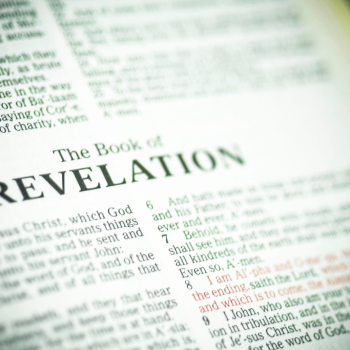
Revelation 13 talks about a figure marked by arrogance, someone who speaks in ways that elevate himself beyond any normal sense of accountability.
Trump has said, over and over ad nauseum, “I alone can fix it.” No matter the issue, this narcissist thinks he is the man for the job. Add to that the Bible photo op after clearing protesters, the constant self-aggrandizing, the AI images of Trump as Jesus, and the inability to admit fault or ask forgiveness and we’re forced to admit that there is absolutely zero repentance in this man’s life.
Blasphemy, in the biblical sense, isn’t just about saying the wrong words about God, but about assuming a place that doesn’t belong to you and acting as if you are the final authority. Evangelicals used to warn about that kind of posture in leaders. It was supposed to be disqualifying. Now, they openly embrace it and call it holy.
Power That Feels Like Salvation
The Antichrist wasn’t supposed to be obviously monstrous. That was part of the teaching. He would offer something people wanted—security, identity, a sense that things were finally being set right.
Trump’s appeal follows that same pattern. He speaks directly to grievance and promises a restoration of something from a bygone era. He tells his supporters that they’ve been wronged and that he’s the only one who can make it right. That kind of message lands because it taps into something real. People want to belong. They want to feel seen. They want things to be better.
The danger, at least in the framework I was taught, is when that desire gets attached to a single figure who can do no wrong in the eyes of his followers.
The Problem Evangelicals Now Have
If you still hold to that end-times framework, this creates a tension that’s hard to ignore. The same system that taught you what to look for is now being set aside in order to defend someone who matches the description more closely than anyone you were ever warned about. At some point, you have to decide whether those warnings meant anything. If they did, then they have to apply even when it’s inconvenient. If they don’t, then it’s worth asking why they were taken so seriously in the first place.
What This Actually Reveals
Even when I believed all of this, the Antichrist was never just about one person. It was about how easily people could be drawn in and how quickly convictions could shift when power and identity were on the line.
That part still holds.
You can walk away from the theology and still recognize the pattern. A leader who demands loyalty. A community willing to reshape its values to maintain that loyalty. Truth becoming flexible in the process.
What used to be an abstract warning is now something we have watched unfold in real time, and it makes me wonder if the Evangelicals were on to something.
You can also explore my books—including Heretic!, The Wisdom of Hobbits, and others—right here: https://quoir.com/authors/matthew-j-distefano/
Thanks for reading. Thanks for thinking. And thanks for refusing to settle for easy answers.














 Ad-Free & Subscriber Log-In