

With sixteen other friends (neighbors and former neighbors), as is our fairly regular practice, my wife and I went out to dinner last night at the Joy Luck Restaurant in Sandy and then, afterwards, to the nearby Hale Centre Theatre, where we attended a performance of the farce Peter Pan Goes Wrong. It’s not exactly Sartre, Brecht, or Anouilh, but it’s much funnier than anything any of them ever wrote Two personal highlights for me:
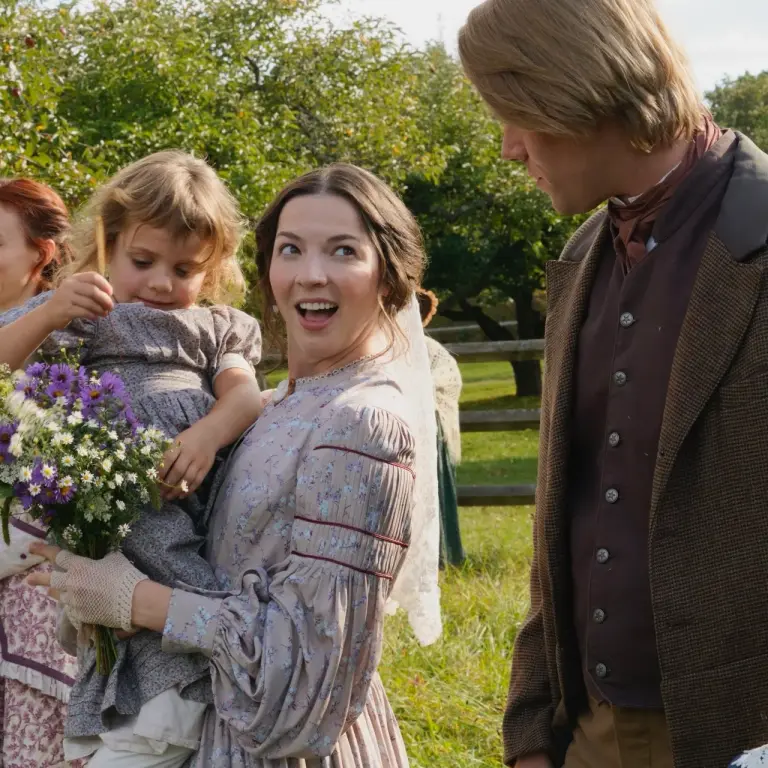
- In Monday night’s performance, the part of Wendy Darling was well played by Twyla Wilson, who portrayed Mary Ann Angell, Brigham Young’s second wife, in the Interpreter Foundation’s 2024 dramatic film Six Days in August. (Twyla also happens to be the actual wife of our Brigham Young, John Donovan Wilson, which we didn’t recognize until after she had been cast.)
- At one point in the play, an actor comically appeals to a member of the audience for help (and receives it). I was fairly far away and the theater was darkened, but I thought that I recognized the audience member who was selected last night. And, sure enough, as we were exiting the theater I ran into Blake Ostler and his wife.
Incidentally, for those who pretend to worry about such things: No Interpreter Foundation funds were used to purchase our play tickets or our egg rolls or our transportation to and from the theater.
Also of note: Becoming Brigham, Episode 6—”Young Brigham Young,” Part One is now up online for free viewing — as all of the installments are that have been posted thus far, at becomingbrigham.com. Please watch, enjoy, subscribe, and share.
In the meanwhile, the Interpreter Foundation continues to be completely dormant, as prophesied. More than thirteen years ago now, on a far-away message board, a pseudonymous critic going by the moniker Bond James Bond took it upon himself to issue a prediction. And here are the words that he uttered:
By Jan. 1, 2014 Interpreter will be dead. . . . Either totally dead or down to token “blog” style postings. (Bond James Bond, 25 January 2013)
The latest evidence of Interpreter’s long-obvious coma is today’s new installment of the concise notes for scripture study that are so kindly and generously provided each week by Jonn Claybaugh: Come, Follow Me — Old Testament Study and Teaching Helps (2026): March 9-15: Genesis 37-41 — “The Lord Was With Joseph.”

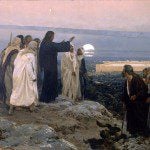
(Wikimedia Commons public domain photo) In post-Christian America, I think, most ruined churches won’t be quite so picturesque.
This is interesting, from the Gallup organization: “Americans’ Religious Engagement Holds at Lower Levels: 47% consider religion very important, religious “Nones” tick up to 24% and religious service attendance remains low”
Back on 21 February (see here), I admiringly cited a passage written by Justice Neil Gorsuch of the Supreme Court of the United States in a decision regarding President Donald J. Trump’s tariffs. I called it “an extraordinary piece of writing — clear, concise, charitable, lucid, well-targeted, and wise.” So I was pleased to see this Deseret News column about it, written for the Deseret News by Thomas B. Griffith and Joshua Topham: “Opinion: Justice Gorsuch’s powerful lesson for the United States: Tucked in the 170 pages of the justices’ opinions and dissents, Justice Neil Gorsuch teaches about the most important feature of the government”

For many years now, I’ve been puzzled by the complaint that somebody — let’s call him Francis — believes that “the end justifies the means.”
What on earth would justify “the means” if it weren’t for “the end” to which those “means” were . . . well, means?
- Why dig a big hole in the ground? Just for the sake of digging a big hole? Wouldn’t the justification of digging the hole lie in the end, the purpose, for which it was being dug? Say, in quest of essential minerals, or to construct the foundation of a hospital?
- Why spend scores of hours learning to decline Ancient Greek nouns or to conjugate Ancient Greek verbs? For the fun of it? (Then that fun would be the end that justifies those hours.) Enabling oneself to read Homer or Plato or the four New Testament gospels would justify the effort of learning to conjugate παιδεύω or to decline λόγος, but it’s difficult to see much point in doing so simply for the sake of doing so.
- Exercise makes sense as a means of losing weight or improving or preserving one’s health or, even, for those curious souls who feel this way, as a pleasurable activity. But genuinely pointless exercise, if such a thing can be imagined, seems completely pointless.
- Doing endless chemical experiments while having no interest in their results would be likewise pointless. However, doing so in order to solve a scientific problem or to further human knowledge or even in hopes of winning a Nobel Prize makes sense.
What makes a “means” a means is, precisely, that it is an action or a system by which a result is brought about. We seek a resolution by “peaceful means” because we want to solve a problem without war or violence. We seek to improve our financial condition by means of budgetary restraint or increasing our income.
It seems to me that what people are really saying, when they complain that Francis believes that “the end justifies the means,” is that he thinks that some end that he has chosen justifies any and all means, including those that are immoral, unethical, harmful, or disproportionate. Directing a nuclear missile strike against your own position in order to put an end to that pesky fly may well be effective, but it seems rather out of proportion. So, too, does avoiding too much salt consumption by foregoing all food. Fatally wounding a convenience store clerk in order to steal ten dollars from the cash register is morally unjustifiable. When criticizing the idea that “the end justifies the means,” people are actually saying that some means cannot be justified or, at least, that the price for some things is just too high.
Because the fact is that the end often does justify the means. It’s just about the only thing that can.














 Ad-Free & Subscriber Log-In