


We blogged about Spencer Klavan’s application of Psalm 115 to AI. He and his father, novelist Andrew Klavan, develop that in more detail and explain why those who think their machines have human-like minds reduce their own humanity and make themselves machine-like.
The Klavans do so in an op-ed published in the Washington Post, no less, entitled An age-old misunderstanding about technology is rearing its ugly head.
First, let’s quote the relevant passage from Psalm 115:
Their idols are silver and gold,
the work of human hands.
They have mouths, but do not speak;
eyes, but do not see.
They have ears, but do not hear;
noses, but do not smell.
They have hands, but do not feel;
feet, but do not walk;
and they do not make a sound in their throat.
Those who make them become like them;
so do all who trust in them. (Psalm 115:4-8)
“The biblical psalm is a bitingly exact description of those idolaters who confuse man-made artifacts with human souls,” they say. “In our day, we are in danger of making this age-old mistake with artificial intelligence.”
They point out that this is nothing new:
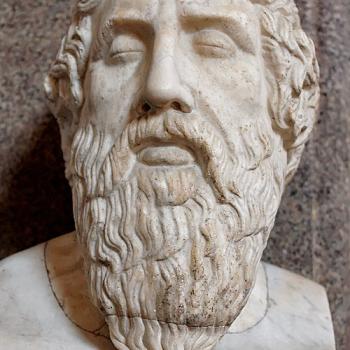
In every generation, some advanced piece of machinery comes to seem like a model of the human mind. When the written word was the cutting edge in information storage, Plato had Socrates compare the human mind to a wax writing tablet in his “Theaetetus.” In the era of the steam engine, Sigmund Freud began to think of the mind as a dynamic pressure chamber in which repressed energy returns with gathered force. And for the past several decades, we’ve come to picture the mind as a computer, hardwired to run certain kinds of software.
“But by using machines as metaphors for our minds, we fall prey to the illusion that our minds are nothing more than machines.” Some tech enthusiasts are making this very claim.
Our minds make machines. That doesn’t mean that machines are minds. And it certainly doesn’t mean that our minds are machines.
The Large Language Models of artificial intelligence are programmed to imitate our external use of language according to algorithmic patterns. To explain the difference between that machine-generated language and how the mind generates language, the Klavans employ a term with Christian resonance:
The defining feature of human language is what ancient philosophers called “the inner logos” — the unique interior apparatus we have for structuring and understanding our experience of the world. LLMs — probability functions designed to detect and mimic patterns in words — are coded to reproduce our exterior language. They have no access to the inner logos.
Despite what some people are saying today,
We are not machines at all, in fact, but organic unities — brain, heart, loins and senses — animated by spirit and collaborating with creation on unique but interconnected experiences of life.
The psalmist’s warning still applies: Those who project an inner life onto their own creations will cease to cherish the inner life unique to humankind. Those who make idols become like them.
Photograph: Bronze figurine of Baal, 14th–12th century BC, photograph by Jastrow – Own work, Public Domain, https://commons.wikimedia.org/w/index.php?curid=723538









 Ad-Free & Subscriber Log-In