


Did you know that two of the foundational figures in the development of quantum physics, Werner Heisenberg and Kurt Gödel, were believing Christians? Indeed, were believing Lutheran Christians?
I’ve been intending to post about what I learned about Kurt Gödel, but in researching yesterday’s post, I learned about Werner Heisenberg. In his discussion of how many scientists are turning to religion, Joel Kotkin gives this wonderful quotation from Heisenberg:
“The first gulp of the natural sciences will turn you into an atheist, but at the bottom of the glass God is waiting for you.”
Digging deeper, I learned that, specifically, he was a Lutheran. (See his entry on Biography Online, which includes a comprehensible account of his scientific contributions, which “marked a real revolution in physics, replacing neat certainties with a different faith in possibilities, uncertainties and likely behaviour.”) A more detailed account is Heisenberg, Thoughtful Christian by Raymond J. Seeger, who corresponded with him personally. He says that Heisenberg continued to attend the Evangelische Kirche, the state Protestant church that contained both Lutherans and Calvinists, the founding of which precipitated the immigration that would form the Lutheran Church Missouri Synod. (Though the two theological strains were forced together under one administration, congregations and pastors still generally identified as one or the other.)
Seeger gives some more quotations:
He and his wife educated their children “definitely along the lines of the Christian religion.” He was once asked by Pauli if he believed in a personal God. This was his reply: “Can you, or anyone else, reach the central order of things, or events, whose existence seems beyond doubt, as directly as you can reach the soul of another human being? I am using the term ‘soul’ quite deliberately so as not to be misunderstood. If you would put the question like that, the answer is yes.”
That is to say, knowledge of objects, including thinking of God as an abstraction or an impersonal force, is limited. (Or, he might say, uncertain!) But knowledge of another person, a “soul”, is direct and intimate. The knowledge of God is like that. So, yes, God is personal.
He also said, “If the compass… that is, the spirit of Christianity, the person of Christ, or the values of the Gospel, is lost, then the ship of our culture will be driven onto the rocks.”
In a lecture he gave on “Scientific and Religious Truth,” he said,
“I have never found it possible to dismiss the content of religious thinking as simply part of an outmoded phase in the consciousness of mankind, a part we shall have to give up from now on. Thus in the course of my life I have repeatedly been compelled to ponder on the relationship of these two regions of thought, for I have never been able to doubt the reality of that to which they point.”
Heisenberg believed that the discoveries of quantum physics undermine materialism and re-open philosophical questions that materialists had dismissed. Seeger quotes him:
“It is in quantum theory,” he claimed, “that the most fundamental changes with respect to the concept of reality have taken place, and in quantum theory in its final form the new ideas of atomic physics are concentrated and crystallized.” “Atomic science has turned science away from the materialistic trend it had during the nineteenth century.”
He wrote about these philosophical and religious issues in his books Physics and Philosophy and Physics and Beyond.
While Heisenberg believed that you can be a good Christian and a good scientist at the same time, says Seeger, “He admitted you cannot be a good politician and a good scientist at the same time.” This no doubt alludes to his struggles with the Nazis, who at first condemned him as a “White Jew”–that is, an Aryan who acts like a Jew–sending the SS to interrogate him, but later because of his scientific prowess put him in charge of their attempt to build an atomic bomb, which Heisenberg dragged his feet on, ensuring that it didn’t happen.
Then there was Kurt Gödel, described in his Wikipedia article as ranking right up there with Aristotle as “one of the most significant logicians in history.” Best known for his Incompleteness Theorem (cf. Heisenberg’s Uncertainty Principle, both of which show the limits of scientific and mathematical knowledge), Gödel developed sophisticated mathematics that have been important in both quantum physics and computer science. (Some say the Incompleteness Theorem puts limits on AI.)
The Wikipedia article goes on to say,
Gödel believed that God was personal, and called his philosophy “rationalistic, idealistic, optimistic, and theological”. He formulated a draft of formal proof of God’s existence known as Gödel’s ontological proof.
Gödel believed in an afterlife, saying, “Of course this supposes that there are many relationships which today’s science and received wisdom haven’t any inkling of. But I am convinced of this [the afterlife], independently of any theology.” It is “possible today to perceive, by pure reasoning” that it “is entirely consistent with known facts.” “If the world is rationally constructed and has meaning, then there must be such a thing [as an afterlife]. . . .
In an unmailed answer to a questionnaire, Gödel described his religion as “baptized Lutheran (but not member of any religious congregation). My belief is theistic, not pantheistic, following [the Lutheran] Leibniz rather than [the materialistic pantheist] Spinoza.” Of religion(s) in general, he said: “Religions are for the most part bad, but not religion itself.” According to his wife, Adele, “Gödel, although he did not go to church, was religious and read the Bible in bed every Sunday morning.”
Not going to church would make him a bad Lutheran, though AI reports that this was probably because of his extreme anxiety in social settings, which tallies with his mental problems that Wikipedia records. Still, his Bible reading, theism, and belief in the immortality of the soul points to a Christian worldview. I can’t find what he says about Christ, but AI says that he somewhere defends Jesus’ resurrection and lauds the New Testament, though I can’t identify the reference.
Gödel’s proof of God’s existence is very hard to follow, being grounded in mathematics and symbolic logic, but, as I understand it (which I don’t), it seems to prove the existence of a necessary being. Here is how AI summarizes it (sorry for using AI, but this is the clearest expression I have found):
Gödel used Modal Logic, which deals with “possibility” and “necessity.”
-
- Define “Positive Properties”: Define a set of properties that are inherently “good” or “positive” (like truth, beauty, or power).
- Define God: Define God as a being who possesses all positive properties.
- Existence is Positive: Argue that “necessary existence” (existing in every possible world) is a positive property.
- The Conclusion: If it is even possible for a being with all positive properties to exist, then by the rules of logic, that being must exist in every possible world.
The point is, some very smart individuals whose genius is foundational to contemporary science and technology, held to the Christian faith. And, to one degree or another, to Luther’s Small Catechism.
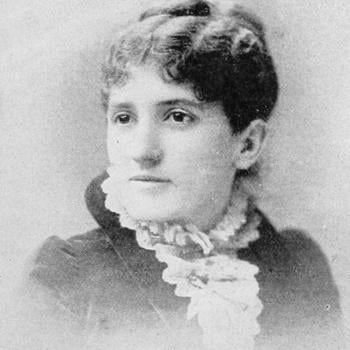
Illustration: Werner Heisenberg and Kurt Gödel, an AI image via ChatGPT [Since I succumbed to the temptation to use AI in my research, I figured I might as well use it to give me a good picture. This merges two actual photographs, separated by AI distortion.]














 Ad-Free & Subscriber Log-In