

One of the puzzles of contemporary religion is why liberal theologies, designed to appeal to the “modern mind,” gain so little traction with people who have modern minds. There is little difference between what is taught among mainline liberal Protestants and the beliefs of secularists. And yet mainline liberal Protestant churches have been diminishing almost to the point of extinction, while conservative theologies keep attracting adherents. Why is that? The Christian historian Philip Jenkins gives us some clues.
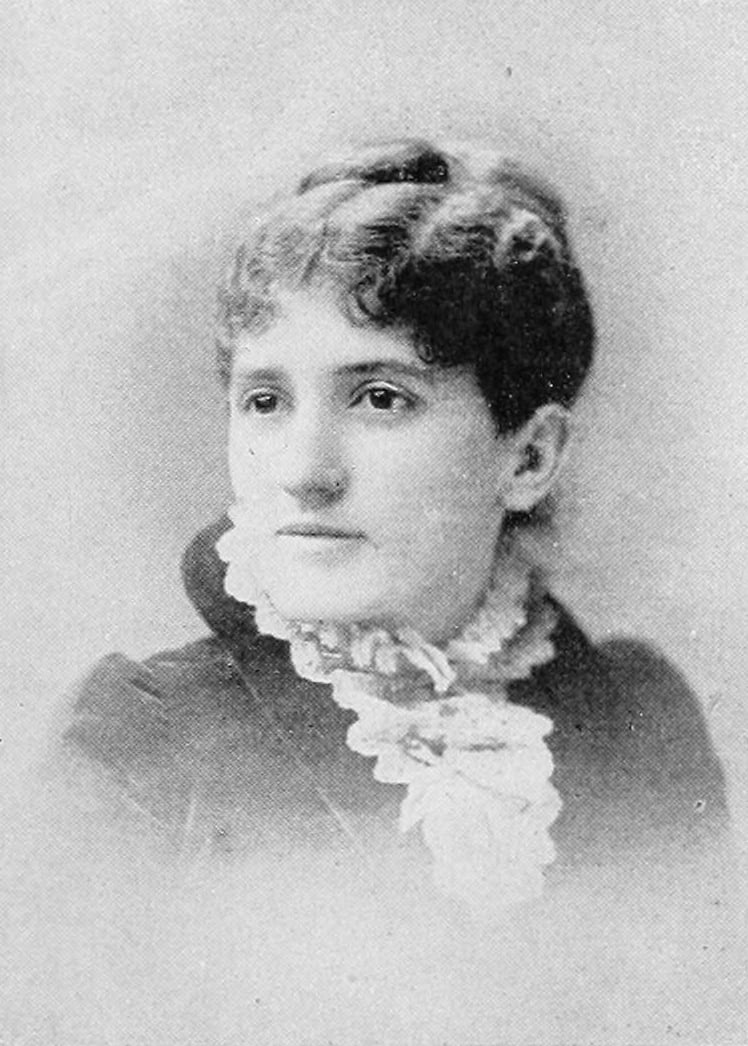
He is currently writing a book about American religion in the late 19th century, a period that he thinks is especially revealing about our religious climate today. He has written a post at the Patheos blog Anxious Bench about one of his primary sources, a novel published in 1890 by Helen H. Gardener (1853–1925) entitled Is This Your Son, My Lord?
Gardener was a social reformer and crusader for the rights of women. To her credit, she fought against the sexual double standard that was tolerant of extra-marital sex by men, while condemning the women they “ruined” for their sexual pleasure, many of whom were reduced to prostitution. One of Gardener’s legacies was getting lawmakers to increase the age of consent, which Jenkins tells us was as low as ten in most states! Unlike other reformers and suffragists of her day, many of whom were Christians, Gardener was a “freethinker“; that is, a religious skeptic.
Her novel, the title of which is from a line in King Lear (Act I, scene 1, line 8), in which Kent is boasting about his sexual prowess in conceiving his illegitimate son Edmund, making light of a moral transgression that will result in Edmund’s putting out his father’s eyes and being the catalyst for the other tragedies that unfold.
The novel explores these sexual double standards, doing so in ways that we do not usually associate with Victorian literature. She is also satirizing the Episcopal Church, especially the “broad church” liberal faction, which has so little to say about such matters. Read the entirety of what Jenkins says about the book.
Here I’d just like to focus on her critique of the broad church Episcopalians. One of her characters, Fred, decides to go into the ministry, encouraged by his mother. Gardener writes,
His mother believed that the Episcopal Church held the highest ideals in morals, religion, art, and music, to be found in this world. Fred believed that it was the organization of greatest power and influence to which a gentleman of culture could belong, and that it was a social lever and a moral screen that no man in his senses could afford to ignore.
But neither Fred nor his mother actually believe in Christianity. But that’s no problem for them. His mother writes Fred a letter, in which she says,
I do not, myself, believe in those unpleasing religious notions expressed in the creed of our beloved church. You must remember that the progressive Churchmen explain them all quite satisfactorily. The ethical beauty and exquisite taste of Dr. Broadchurch’s explanation of the crucifixion, you surely have not forgotten. I cannot reproduce it, of course, but I know it was most charming. My nerves were soothed and my artistic nature warmed for days afterward. Ask him, some day, to explain these points about the vicarious atonement theory, as you call, it (quite vulgarly, I think. You must have gotten that form of expression from young Ball. Be very careful not to use it again). Give up looking at it in this literal way, and accept it as the Broad Churchmen hold it, if you cannot take the High Church view. Its justice and harmony with natural laws ; its appeal to one’s higher nature and ideals ; its display of tenderness, are all quite a poem as Dr. Broadchurch presents it. You can close your eyes and drift into a realm of spiritual exaltation where questions and doubts are impossible; where the dear Christ touches your heart and illumines your understanding.
But Fred’s fiancé, Maude, tells him why he should not become an Episcopal priest:
“And then, Fred,” Maude added, quite seriously, ” you say, yourself, that you don’t believe the Creed and the Thirty-Nine Articles, and you believe that Christ was the son of Joseph, and you don’t believe in the justice of the vicarious atonement, and — oh, I’m sure, Fred, from what you said to father that night on the veranda, that a man who had the least self-respect, couldn’t be an Episcopal clergyman and think as you do. Why, Fred, there weren’t three grains difference between your belief and father’s, and he isn’t even a Unitarian. He’s an Agnostic.” Fred beheld the vision of his mother again, horrified and indignant. According to her belief Agnostics and Anarchists were about the same thing, and neither were persons one would ever care to meet out on a dark night.
Finally, Maude’s father, an actual freethinking Agnostic, weighs in, and he is even more dismissive of broad church Christianity:
“I should not object, if you were an Episcopalian, mind you, or any other sort of a Christian, if you were honest in it ; but I have no use for the layman who holds his creed for revenue only ; and for the clergyman who accepts a salary from honest believers for mystifying and explaining away all there is of real meaning in the plan of salvation, my contempt is simply unbounded.” This was a new theory to Fred, and it struck him as worthy of some thought ; but he smiled as he thought how this man of uncouth speech expressed what he had been taught to call “the higher criticism of progressive theology.” Obtaining money by false pretenses, indeed !
Comments Jenkins, Maude’s father sees “the skeptical approaches of liberal theology as deliberately deceptive and hypocritical.” And his “contempt is simply unbounded” for clergymen who obtain money by false pretenses, accepting a salary from “honest believers” while undermining their beliefs.
As someone who grew up in mainline liberal Protestantism, I remember a seminarian telling me that one of his professors who taught against the truth of the Bible warned the class that they probably shouldn’t tell their future congregations about what he had taught them, lest they get upset and cause problems.
A secularized religion gives secularists nothing that they do not already have. Secularists feel they do not need religion, so it’s hard for them to be attracted to a version of their secularism dressed up as religion. If they ever come to the point in their lives when they realize that they do need religion, they are going to prefer the real thing.
Photo: Helen H. Gardener by Unknown author – File:A_woman_of_the_century.djvuhttps://archive.org/stream/americanwomenfif01live#page/312/mode/2up, Public Domain, https://commons.wikimedia.org/w/index.php?curid=58726730














 Ad-Free & Subscriber Log-In