


Learning to See in the Dark: Finding God on Death Row: Complete Text
______________________________
*To my friend Cari Willis, who also knows the cost of learning to see in the dark.
______________________________
For Christmas this year, I decided to write an original spirituality that pushes into this difficult space of helping some of the most isolated people in our society to find God. Learning to See in the Dark is the fruit of such effort. I wanted to have a space where I could give it away for free. Thus, publishing it in my blog below. But if you are interested in owning a copy…the book is also available Amazon in hardcover, ebook, paperback and audiobook formats. Merry Christmas…and may we all learn to see in the dark.
______________________________
Contents
Prologue
Part I — Learning to See in the Dark: Before the World Ends
- The God Who Slips Through the Bars
- You Will Lose All Your Beliefs (This Is a Gift)
- The Unteaching
Part II — Learning to See in the Dark: The Cell as Cosmos
- The Geometry of a 6×9 Universe
- The Theory of Divine Contamination
- Liturgy of Dust, Echoes and Footsteps
Part III — Learning to See in the Dark: Conversations With the God Who Doesn’t Speak
- Silence as a Living Being
- Praying to a God Who Won’t Answer
- The Divine Vibrations of the Row
Part IV — Learning to See in the Dark: You Are Not Who You Think You Are
- The Spiritual Physics of Identity Collapse
- The Sacredness the System Cannot Execute
- Becoming the Mirror of the God Beyond Form
Part V — Learning to See in the Dark: Radical Encounters
- The God Who Wears Every Face on the Row
- The Holy Interruptions
- A Guide to Experiencing God
Part VI — Learning to See in the Dark: Liberation From the Inside of Death
- Resurrection Before the Needle
- How to Walk Toward Death Without Dying
- The Crossing: What No Religion Can Explain
Epilogue
________________________________
Prologue
November 29, 2025
I’ve spent my life studying liberation and mysticism and the God who shows up in the places religion abandons. But none of that prepared me for death row. Nothing prepares you for death row. You think you understand death until you watch the state schedule it. You think you understand God until you sit with someone who has twenty four hours left and no miracle is coming. You think you understand evil until you see the bureaucratic machinery of execution…the paperwork, the protocols, the men in suits who sign the orders and go home to their families. I have seen the banality of state killing. And I have seen what rises up to meet it…often nothing.
This book is testimony. I testify that I have seen God in places God is not supposed to be…in the eyes of murderers, in the cells of the condemned, in the execution chamber itself, where something gathers in the air that has nothing to do with the state’s machinery of death. And before you go any further, I need you to know this…what follows is not an argument, or a doctrine or a comforting set of answers. It is an invitation…dangerous, unshielded and real. If you keep reading, you are choosing to step into a terrain where the boundaries between life and death, flesh and spirit and fear and revelation become as thin as breath. You are choosing to walk with me into the rooms where I have watched bodies break open. This path will not leave you untouched.
I testify that consciousness does not die the way the body dies. I have watched eleven men cross the threshold, and in every crossing I have witnessed something that cannot be explained by neuroscience or theology or any framework I possess. A presence. A meeting. A recognition in their eyes that they are not alone…that something is receiving them. I testify that the state can kill the body but cannot touch what the body contains. This is not hope. This is not comfort. This is what I have seen.
I wrote this book for the condemned. Not for the people who will debate its theology. Not for the academics who will pick apart its claims. Not for the comfortable Christians who have never had to face what their faith actually means when everything is being taken from you. I wrote this for the people sitting in concrete boxes right now, waiting for the state to kill them. I wrote this because most of what passes for spiritual guidance in American prisons is worthless…sentimental, designed for people who still have futures in the free world. It collapses the moment you actually need it…the moment the date gets set, the appeals run out, the guards come to walk you to your death. I wrote this because people on death row deserve a spirituality that doesn’t flinch, one that doesn’t require them to be innocent, one that doesn’t require them to be redeemed, one that meets them in the full catastrophe of what they’ve done or haven’t done and what’s being done to them and says… Even here. Even now. Even you. God is here.
I do not come to this as a neutral observer. I have fought the death penalty for decades now. I have marched. I have been arrested. I have screamed at governors and pleaded with parole boards and done everything in my power to stop the killing. And I have failed. Eleven times I have failed. Hundreds of times, if you count everyone I knew. The state keeps killing. The machinery keeps grinding. And I keep showing up because someone has to stand in that room and refuse to let them die unseen. But this book is not about abolition. Others have written those arguments, and they are right, and the killing continues anyway. This book is about what happens inside the people being killed…what happens to consciousness when it’s cornered, what happens to the soul when the body is marked for destruction, what happens to God when God’s children are strapped to gurneys and poisoned by their own government. I have seen what happens. And it is not what anyone expects.
The God who shows up on death row is not the God that gets talked about in churches. That God is too small, too clean, too invested in innocence and redemption. The God I have encountered in execution chambers doesn’t care if you’re innocent. Doesn’t care if you’re sorry. Doesn’t care if you’ve accepted or rejected everything you were ever taught. This God just shows up…in the breath, in the silence, in the unbearable weight of the final hours. And let me tell you what it feels like in that room…the hum of fluorescent lights trembling above the gurney, the faint chemical smell from the syringes laid out on stainless steel, the coldness of the floor that seems to seep upward through your shoes, the way the air shifts…unmistakably…just before the moment everything changes. None of this belongs to the state. None of it is theirs to control, no matter how precise their procedures. Something else is always waiting.
This God doesn’t save anyone from execution. I need to be clear about that. I have prayed for miracles and miracles have not come. The men I loved are dead. The state killed them on schedule, and God did not intervene. But God was there. Not intervening. But there. And that presence…unexplainable, undeniable…is what this book is about.
If you are reading this from death row, I need you to hear me…you are not what they say you are. Not the number. Not the conviction. Not the worst thing you ever did. You are consciousness itself, temporarily wearing a human form and that consciousness is made of the same substance as God. The state can end your biological life. It cannot touch what you actually are. I have watched men discover this in their final hours. I have seen the terror give way to something else…not peace exactly, but presence, recognition, the awareness that they are more than what is about to be destroyed. That discovery is available to you now, today, in your cell, before anyone comes for you. You do not have to wait for the execution to find out what survives it.
This book is a manual. Not for escaping death row…most of the time there is no escape…but for meeting God in the void. For finding the presence that lives in concrete and steel and the terrible silence of 3 AM. For discovering the self that exists underneath your identity, your crime, your condemnation. For dying before you die so that when the state comes for your body, they find that the essential thing has already slipped beyond their reach. I am not offering comfort. Comfort is a elusive when you’re facing execution. I am offering something bigger…the truth about what I’ve seen. Take it or leave it. But know that it comes from someone who has been there, who has held the hands of the dying, who has walked out of execution chambers and fallen to his knees in parking lots and asked God why and received no answer except presence. Presence is the only answer I have…indeed…that we have. It will have to be enough.
The eleven men I watched die are with me as I write this…their names, their faces, their last words. They are not at rest. Indeed, the dead do not rest while the killing continues. They are witnesses too, testifying from wherever consciousness goes when the body stops. I write for them. I write because they cannot. I write because someone has to say what happens in those rooms, and the state’s official reports are lies, and the media coverage is spectacle, and the only people who know the truth are the ones who were there. I was there. This is what I saw…
The body dies. Consciousness lives forever. This is a guide to living forever…now.
The Rev. Dr. Jeff Hood
______________________________
Part I – Learning to See in the Dark: Before the World Ends
1. The God Who Slips Through the Bars
The God I’m talking about doesn’t show up in prison chapel services. This God doesn’t care if you know the right words or if you ever picked up a Bible before you got here. This God doesn’t require you to be sorry, though you might be. Doesn’t require you to be innocent, though you might be that too.
This God is made of the only things you have left…breath, dust, the hum of electricity in the walls and the massive weight of absence.
When everything that defined you gets stripped away…your name becomes a number, your future becomes a date, your body becomes state property…there’s a strange opening that happens. Not a pleasant opening. Not a healing opening. More like when your cut and suddenly you can feel the inside of yourself.
That’s where this God lives.
I’ve sat with people hours before the state killed them, and I’ve seen this God show up. Not to save them. Not to explain anything. Not to make it okay. But to be present in a way that defies every theological explanation I was ever taught.
Someone told me, three hours before they walked them to the execution chamber, “I can feel something in here with me. It doesn’t have a name. It doesn’t talk. But it’s more real than these walls.”
That’s the God I’m talking about.
This God doesn’t come because you’re righteous. This God comes because you’re here…in this particular hell…and something about the absolute bottom of human existence cracks open a door that most people never even know exists.
You didn’t choose this as a spiritual practice. This isn’t a monastery where you get to leave when your training is done. This is different. This is forced contemplation. Mandatory confrontation with mortality. A kind of terrible initiation that you would never ever volunteer for.
But here you are.
And here’s what I’ve learned watching people wait to die…the God who meets you in a death row cell is more honest than the God of Sunday morning. This God doesn’t promise you anything except presence. Doesn’t give you false hope. Doesn’t tell you everything happens for a reason.
This God just shows up in the breathing.
In the space between one second and the next.
In the way dust moves through a shaft of light from a window you can barely see out of.
In the footsteps echoing down the row at 2 AM when you can’t sleep.
You don’t have to believe in this God. You don’t have to name it. You might call it something else entirely…consciousness, the universe, the void itself becoming aware. Doesn’t matter. What matters is whether you can feel it.
And the terrible gift of death row is this…when everything else gets taken from you, you become sensitive to things other people miss their entire lives. You start to notice the quality of silence. The texture of time. The strange presence that inhabits the space between your thoughts.
Most people spend their whole lives too distracted to ever meet this God. You don’t have that luxury. You’re here, in a concrete box, with nothing but time and terror and the impossible fact of your own mortality staring at you every single day.
So this God slips through the bars.
Not because you deserve it. Not because you don’t. This God comes because in the total destruction of everything you thought your life would be, there’s an opening. A crack. A way in.
And through that crack, something still breathes…something is still there.
2. You Will Lose All Your Beliefs (This Is a Gift)
When you first get to death row, you probably still have your stories intact. Your explanations. Your version of events. Your identity. Your God, if you had one. Your lack of God, if that’s where you were.
You think you know who you are.
Then time starts to work on you.
Not regular time…death row time. Time that moves like cold honey. Time that circles back on itself. Time that makes a week feel like a year and a year feel like a week. Time that strips things down.
And slowly…sometimes suddenly…everything you believed about yourself starts to collapse.
This is not a metaphor. This is a literal, physical, psychological and spiritual collapse. The story you told yourself about who you are and why you’re here and what it all means…that story starts to crack. Then crumble. Then dissolve.
Maybe you came in here with your innocence as your foundation. “I didn’t do it” becomes the center of your entire existence. You wake up with it. You fall asleep with it. It’s the only thing keeping you sane.
Then one day, maybe five years in, maybe ten, you realize…it doesn’t matter anymore. Not because you’re guilty. Not because you’ve given up. But because something deeper than guilt or innocence has taken over. Something that can’t be touched by the verdict.
Or maybe you came in here with your guilt as your foundation. “I deserve this” becomes your theology. You punish yourself more than the state ever could. You make your cell your penance…your suffering your payment.
Then one day you realize…that story is too small. What you did was real. The harm was real. But you are also real in a way that can’t be reduced to the worst thing you ever did. And that realization doesn’t erase anything…it just opens up a space that wasn’t there before.
Or maybe you came in here with rage. Rage at the system, the cops, the lawyers, the judge, the jury, the victim’s family, the media, God, the universe, yourself. And that rage keeps you alive. Gives you something to hold onto when everything else is slipping away.
Then one day the rage just…exhausts itself. Not because you decided to let it go. Not because someone convinced you to forgive. But because rage requires a kind of energy that death row slowly drains out of you. And when it goes, there’s this enormous empty space where it used to be.
This collapse of belief is terrifying.
It feels like dying before you die.
It feels like losing the last thing you had.
But here’s what I’ve learned sitting with people in this place…the destruction of your beliefs is not the destruction of you.
There’s something underneath the beliefs. Something that was there before you learned language, before you formed an identity, before you knew your own name. Something essential. Original. True in a way that nothing else is true.
I call it the Being Beyond the Being.
And you can’t get to it while you’re still clutching your story about who you are. You have to lose that story first. Not by choice…it gets taken from you by the brutal repetition of days that all look the same, by the slow erosion of hope, by the face in the mirror that looks less and less like anyone you recognize.
This is the gift.
Not that it feels like a gift. It feels like annihilation. But on the other side of annihilation, there’s something that can’t be annihilated. Something the state can’t execute. Something that doesn’t depend on your innocence or your guilt, your past or your future, your beliefs about God or your lack of them.
There’s a death you can die while you’re still alive that makes the final death less absolute.
Death row forces this death on you.
You don’t get a choice about it. Your beliefs will collapse. Your identity will fragment. Your certainty will dissolve. The question is not whether this will happen. The question is what you’ll discover when it does.
Most people never experience this level of stripping away. They die with their stories intact, their beliefs unexamined and their identity unquestioned. They never get to find out what’s underneath.
You will.
Not because you’re special. Not because you’re chosen. But because death row is a kind of forced mysticism, a terrible monastery where the practice is mandatory and the teacher is time itself.
So when your beliefs start to go…and they will go…don’t panic. Don’t try to hold onto them. Don’t scramble to build new beliefs to replace the old ones.
Just fall.
Fall all the way through the collapse.
Fall past the bottom you thought was there.
Fall into the space where there’s nothing left to believe and no one left to be.
And in that space, in that terrifying openness, something will meet you.
It won’t give you new beliefs. It won’t rebuild your identity. It won’t explain anything.
But it will show you that you are still here. Still aware. Still present. Still alive in a way that doesn’t depend on any story at all.
That’s the God who comes after all your Gods have died.
3. THE UNTEACHING
Everything you were taught about God is probably wrong.
Not wrong in the sense of immoral or harmful…though some of it might be that too. Wrong in the sense of incomplete. Partial. Like being shown a photograph of the ocean and being told that’s what water is.
Sunday school God. Prayer God. Reward and punishment God. Magic vending machine God. The God who has a plan. The God who works in mysterious ways. The God who needed blood to forgive. The God who keeps score.
These are not necessarily evil Gods. They’re just small Gods. Human sized Gods. Gods made in our image instead of the other way around.
And when you’re on death row, small Gods stop working.
Because what kind of God lets you end up here? What kind of God stands by while the state prepares to kill you? What kind of plan involves this? What mysterious way leads to a gurney and needles and witnesses behind glass?
The God you inherited can’t survive death row. That God will die here, maybe before you do.
This is the unteaching.
Not learning new things about God…unlearning the old things so that something truer can emerge.
First thing to unlearn: God is somewhere else.
They taught you God is in heaven. God is in church. God is in the Bible. God is in your heart if you’re good enough. God is everywhere, they said, but somehow never here. Never in a cell. Never in a place like this. God left. God is waiting. God will return. But God is not here now.
Unlearn that.
Whatever God is…and I’m not claiming to completely know…it’s not absent from this cell. It’s not waiting somewhere else for you to be somewhere better. If there is a God, if there is some kind of ultimate reality that holds everything, then it’s here. In the concrete. In the steel. In the air you’re breathing right now.
Not because this place is holy. Not because torture is sacred. But because if God is real, God doesn’t have the option of leaving.
So, the first unteaching… God is not somewhere else. God is here or God is nowhere.
Second thing to unlearn: God has a message for you.
They taught you God speaks. Through scripture, through sermons, through signs, through that still small voice. And if you just prayed right, believed right, listened right, you’d hear what God wants to tell you.
Unlearn that.
The God you’ll meet here doesn’t speak English. Doesn’t speak in words at all. This God is more like a presence that makes itself known through texture, weight and quality. Through the way time feels at 3 AM. Through the sound of your own breathing. Through the strange electricity in the air before a storm.
You might hear words in your head…your own mind trying to translate the untranslatable into language. That’s fine. But don’t mistake your translation for the original transmission.
The God beyond language doesn’t need to tell you anything. This God just is. And the encounter is not about receiving information. It’s about recognition. Meeting. Presence touching presence.
So, the second unteaching… God is not a voice in your head. God is a presence that exceeds language.
Third thing to unlearn: God has a plan.
They taught you that everything happens for a reason. God has a purpose. Your suffering means something. There’s a lesson here. A test. A calling.
Unlearn all of it.
The God I’m talking about is bigger than human categories…even our conception of plans. This God doesn’t take sides. This God doesn’t judge. This God doesn’t operate according to our frameworks. And this God doesn’t have a plan for your execution.
There’s no cosmic lesson in your death. This isn’t happening to you because God needs you to learn something or because you’re being prepared for some higher purpose.
This is happening because humans built a system that kills people, and you ended up inside that system. That’s it. No divine plan. No hidden meaning. No redemptive purpose that makes sense of a gurney and a needle and witnesses behind glass.
The God beyond a plan. Doesn’t make anything okay. Doesn’t erase harm or justify suffering. This God just is what it is…vast, present, unknowable and available to all.
You’ll meet rapists and child killers on death row who touch this God. You’ll meet innocent people who can’t find it. This God doesn’t correlate with what we deserve. And that’s either horrifying or liberating, depending on where you stand.
And here’s why unlearning this is crucial…as long as you’re waiting for God’s plan, you’ll miss what’s actually already here. You miss the raw presence that doesn’t explain anything. You miss the God who shows up precisely because there is no plan, no meaning, no reason…just this moment, this breath, this inexplicable fact of consciousness persisting in the face of annihilation.
So, the third unteaching… God has no plan. God is beyond our categories of meaning. And that makes God more troubling and more real than the God who was supposed to make sense of your life.
Fourth thing to unlearn: You are separate from God.
They taught you that you and God are two different things. You here, God there. You human, God divine. You sinful, God holy. And the whole spiritual project is about bridging that gap…through faith, through grace, through submission, through enlightenment.
Unlearn that.
What if there’s no gap? What if the separation is the illusion? What if the reason you can encounter God in a death row cell is because some part of you is already what God is?
Not that you are God in the egotistical sense. Not that you’re the creator of the universe. But what if consciousness itself…awareness itself…is the divine substance? What if when you sit in silence and feel your own awareness aware of itself, you’re touching the same thing people have called God for thousands of years?
You’re not separate from this. You’re made of this. The thing you’re looking for is also the thing that’s looking.
So, the fourth unteaching… You are not separate from God. The boundary between you and the divine is an illusion you can see through.
These unteachings empty you out. They take away the God you can understand, the God you can predict, the God you can bargain with or blame or believe in.
What’s left after the unteaching is not nothing.
What’s left is the possibility of meeting something so much larger than the God you inherited that there’s no comparison.
But you have to let the small God die first.
You have to sit in the not knowing.
You have to give up the need for God to make sense.
And in that surrender, in that terrible openness, the real encounter begins.
_____________________________
Part II – Learning to See in the Dark: The Cell as Cosmos
4. The Geometry of a 6×9 Universe
Your cell is approximately six feet by nine feet. Sometimes a little bigger, sometimes smaller, depending on which state is trying to kill you. Fifty-four square feet. A bathroom stall. A parking space. A grave with a ceiling.
This is your cosmos now.
And here’s the first strange thing you’ll discover…small spaces don’t stay small.
At first, the cell feels like it’s crushing you. The walls too close. The ceiling too low. Not enough air. Not enough light. Your body knows this is wrong, knows it’s not supposed to be contained like this, and every cell in you screams against it.
But if you survive that first shock…if you last through the panic, the rage, the desperate claustrophobia…something shifts. The cell begins to expand.
Not physically. Physically it’s exactly the same. But in some other dimension, some quality of experience that has nothing to do with feet and inches, the space opens up.
You start to notice details you missed before. The way light moves across the floor at different times of day. The specific texture of the concrete wall…not just “rough,” but this particular pattern of rough, with its own geography of ridges and valleys. The sound your footsteps make in one corner versus another corner. The exact temperature of the metal bunk at 2 PM versus 2 AM.
Your attention becomes microscopic. Surgical. You see more in your six-by-nine-foot cell than most people see in entire cities.
When you have less, you see more. When your world contracts, your awareness expands. It’s not that you want this. But it happens anyway, as a kind of survival mechanism, as consciousness adapts to confinement by going deeper instead of wider.
And in that depth, you start to discover something.
God prefers corners.
I don’t know why. But over and over, people have told me about the corner. The specific corner of their cell where things feel different. Where presence concentrates. Where they sit when they need to feel less alone.
Someone told me their corner was in the back left, near the toilet. “I know that sounds crazy,” they said. “But when I sit there, my back against those two walls, something settles. Like the universe knows where I am.”
Another being said their corner was up high, in the joint where the wall meets the ceiling. They couldn’t sit there, obviously, but they’d look at it. “That’s where God lives in my cell,” they said. “I can feel it.”
Maybe it’s because corners represent convergence. Two planes meeting. The edge of one dimension becoming the beginning of another. Or maybe it’s simpler…corners are the most enclosed places, and God shows up wherever we’re most trapped.
Shadows too. God prefers shadows.
Direct light is too obvious. Too exposed. But in the shadows…in the places where light doesn’t quite reach, where shapes become ambiguous, where your eyes have to adjust…that’s where presence hides.
You’ll start to notice this. The quality of the shadow under your bunk. The way darkness pools in certain places. The strange comfort of sitting in a cell with the lights off, letting your eyes adapt, finding a different kind of seeing.
There’s a darkness beyond fear. Not evil darkness. Not the darkness of despair. But the darkness of the unknowable God, the God beyond light, the God that can only be encountered when our normal vision fails.
Your cell gives you that darkness every night.
Most people never sit in darkness anymore. They light up every space, fill every silence, distract themselves from the void. But you don’t have that luxury. You have mandatory darkness. Mandatory silence. Mandatory confrontation with the void.
And the void, it turns out, is not empty.
There’s something in the darkness. Not something scary…though sometimes it can feel that way. Something older than fear. Something that was here before light, before life, before anything was named.
Your cell becomes a portal to this.
Not because cells are magical. But because confinement forces consciousness inward, and when consciousness goes inward far enough, it touches something that was always there but never noticed.
You’ll feel this especially in the geometry of time.
Clock time stops making sense in a cell. Seconds stretch. Hours compress. Days blur together. Months disappear. Years accumulate like dust.
But there’s another kind of time in the cell. Time that has nothing to do with clocks. Time that moves vertically instead of horizontally. Time that deepens instead of passing.
Someone described it like this: “I’ve been here seventeen years. But I’ve also been here one infinite moment. Both are true.”
This is the cell as cosmos. Not a metaphor. Not a coping mechanism. A literal description of what happens when consciousness is trapped in a small space with nothing to do but be aware of itself being aware.
The universe you lost when you came to death row…the universe of movement, choice, future, possibility…that universe is gone. But another universe opens up inside the loss. A universe of texture, presence, quality and depth.
A universe where six feet by nine feet contains eternity.
Not because you want it to. Not because you’re trying to be spiritual about it. But because consciousness is flexible in ways that matter isn’t, and when matter traps you, consciousness learns to move in dimensions that matter doesn’t control.
Your cell is a cage. That’s true.
Your cell is also a cosmos. That’s also true.
Both things at once. And learning to hold both truths without resolving them into something easier…that’s the beginning of the mystical awareness this place makes possible.
5. The Theory of Divine Contamination
Here’s what they don’t tell you about God…if God is everywhere, then God is also in the fucked up places.
Not watching from above. Not allowing from a distance. But actually present. Actually here. In the crime. In the guilt. In the blood. In the worst thing you ever did and the worst thing that was ever done to you.
If God is everywhere, then God is also in the parts of you you’ve been taught to hate.
This is not comfortable theology. This is not the God of Sunday morning. This is something else. Something that refuses to separate clean from unclean, holy from unholy, redeemable from irredeemable.
I call it divine contamination.
The idea is this…God doesn’t just visit the pure places. God soaks into everything. Bleeds into the darkness. Touches the untouchable. And in doing so, God becomes contaminated by what is.
Not in the sense that God becomes less. But in the sense that God refuses to maintain the distance we think divinity requires.
Think about what you did. Or what was done to you. Or both. The thing that brought you here. The thing you can’t undo. The thing that plays in your head at 3 AM when you can’t sleep.
God is in that too.
Not approving it. Not excusing it. Not making it okay. But present in it. There in the moment it happened. There in the memory of it. There in the shame of it. There in the wound of it.
This is either the most horrifying thing you’ve ever heard or the most liberating.
If you’re still trying to be good, still trying to earn redemption, still trying to separate yourself from the worst parts of your story…then divine contamination sounds like blasphemy. How dare God be present in evil? How dare God touch the unforgivable?
But if you’ve already fallen all the way through the bottom, if you’ve already lost the ability to make yourself clean, if you’ve already discovered that there’s no version of yourself that gets to escape what you’ve done or what’s been done to you…then divine contamination sounds like hope.
Because it means God doesn’t require you to be fixed first.
God meets you in the contamination.
Someone told me, “I killed someone. I can’t unkill them. I can’t make it right. I can’t even fully understand why I did it. But something I’ve learned in here is that God doesn’t wait outside my guilt. God is in it with me. Not forgiving it. Just… present in it.”
That’s divine contamination.
Another being, who was innocent, who spent fifteen years on death row for something they didn’t do, told me something similar. “The rage I feel,” they said, “the bitterness, the hatred for what they’ve done to me…God is in that too. Not telling me to let it go. Not asking me to forgive. Just there, in the poison, not afraid of it.”
That’s also divine contamination.
The God of divine contamination doesn’t have clean hands. This God touches everything. Gets into everything. Refuses to maintain the purity that we think divinity requires.
And this means…there is no part of you that God cannot reach.
Not because you’ve confessed it. Not because you’ve dealt with it. Not because you’ve made peace with it. But because God doesn’t respect the boundaries we put around our darkness.
You have parts of yourself you’ve locked away. Memories you don’t look at. Feelings you don’t let yourself feel. Desires you don’t admit to. Shame so deep you’ve built walls around it that even you can’t see over.
God is behind those walls.
God is in the locked rooms.
God is in the parts of you that you think disqualify you from God.
This is the theory of divine contamination…God is a presence that refuses quarantine. And that means your darkness doesn’t separate you from the divine…it’s actually one of the places where the divine is most present.
Why?
I don’t know. Maybe because darkness is where we need it most. Maybe because God doesn’t have the same disgust response we do. Maybe because the divine doesn’t recognize our categories of clean and unclean.
Or maybe it’s simpler…maybe God is just what reality is when you strip away all our projections and judgments and categories. And reality doesn’t avoid anything. Reality includes everything. Is everything.
So if God is real, God is also the most contaminated thing there is.
Contaminated by every crime. Every wound. Every horror. Every shame. Every secret. Every lie. Every violence.
Not causing those things. Not wanting those things. Just present in them, the way air is present in a sewer and a sanctuary both.
This means you can stop trying to clean yourself up before you approach God.
You can stop trying to be worthy.
You can stop trying to fix yourself into someone who deserves divine attention.
God is already in your mess. Already in your guilt. Already in your wound. Already in the parts of you that you think disqualify you.
You don’t have to bring God to your darkness.
God is already there.
You just have to stop pretending otherwise.
6. Liturgy of Dust, Echoes and Footsteps
There are no rituals on death row. No candles. No incense. No altar. No congregation. No robes. No hymns. No sacraments in the way you learned them.
But there is liturgy.
Liturgy doesn’t mean religious ceremony. Liturgy means “the work of the people.” The repeated actions that give shape to time. The patterns that make meaning out of chaos.
On death row, your liturgy is made of dust, echoes and footsteps.
The Liturgy of Dust
Every morning, if you pay attention, you can watch dust move through the light.
This is not nothing. This is a devotional practice you never asked for.
The light comes in at a certain angle…usually early, before the heat of the day sets in. And in that light, if you’re still enough, you can see millions of particles floating. Drifting. Rising and falling according to currents of air you can’t feel but can suddenly see.
You are breathing this dust.
Your body is becoming this dust.
This cell is slowly turning into dust, and so are you.
And there’s something about watching it that becomes prayer.
Not prayer as asking for something. Prayer as attention. Prayer as witness. Prayer as the simple act of seeing what’s actually here instead of what you wish was here or fear will be here.
Someone told me they watch the dust every morning. “It’s the only thing that’s free in here,” they said. “The dust doesn’t care about the conviction. Doesn’t know I’m on death row. It just moves the way it moves.”
They sit on their bunk, back against the wall, and watch dust for ten minutes every morning. This is their liturgy. This is their practice. This is how they remind themselves that there are forces in the universe that don’t obey the state.
Gravity pulls on the dust the same way it pulls on everything. Air currents move it. Light reveals it. These are bigger laws than the law that put you here.
And in that watching, in that simple attention, something opens.
You remember that you’re part of something larger than this cell. Larger than this conviction. Larger than this death sentence.
You remember that the same forces that move the dust move your breath, your blood, your thoughts.
You remember that you are, in some essential way, not separate from what you’re watching.
This is the liturgy of dust. And it’s available to you every single morning.
The Liturgy of Echoes
Sound behaves strangely on death row.
The architecture of the row creates echoes that don’t make sense. A voice from three cells down sounds like it’s right next to you. A door slamming at the far end reverberates for seconds, bouncing off concrete and steel, multiplying itself.
You learn the acoustics of this place the way a musician learns an instrument.
You know the specific sound of your cell door. Not just “a cell door”…your cell door. The particular pitch and resonance of it. You’d know that sound anywhere, even in your sleep.
You know the rhythm of the guards’ footsteps. Different guards have different walks. Different paces. Different weights. You can tell who’s coming before you see them, just by listening to how their boots hit the floor.
You know the sound of the food cart. The sound of mail call. The sound of shower time. The sound of something wrong. The sound of someone breaking.
This acoustic awareness is not optional. Your survival depends on reading the tier through sound. Knowing what’s happening before it reaches you. Predicting movement by listening to echoes.
But it’s also liturgy.
Every echo is a reminder that nothing here happens in isolation. Every sound you make travels. Bounces. Reaches other cells. Becomes part of the collective experience of the tier.
When you speak, your voice becomes an echo. When you cry, your grief reverberates. When you laugh…and yes, there is laughter on death row…that laughter multiplies through the architecture, reaching people who forgot that sound was possible.
Someone told me they hum at night. Not loud. Just barely audible. But in the silence of the row after lights out, their humming travels. Echoes. Reaches other cells.
“I don’t know if anyone else hears it,” they said. “But I like to think my voice is keeping someone company.”
This is the liturgy of echoes.
Your existence here is not silent. Cannot be silent. Even when you don’t speak, your breathing, your movement, your presence creates sound. And that sound travels. Becomes part of the environment. Affects others.
You are always participating in the collective life of the tier, whether you intend to or not.
The echoes remind you…you are not alone. You are part of a web of sound, of presence, of human beings enduring the same impossible situation.
And God is in the echoes too.
In the way sound moves through space. In the way voice travels farther than you thought possible. In the way even your smallest sound becomes part of something larger.
The Liturgy of Footsteps
You walk the same path every day. Cell to shower. Cell to recreation. Cell to visitation, if you’re lucky. Cell to cell to cell.
Seventeen steps from your bunk to the door. Eleven steps from one end of the rec cage to the other. Eight steps to the shower.
You know these numbers because you’ve counted them thousands of times.
This repetition, this walking the same path over and over…this is liturgy.
Monks walk labyrinths. Pilgrims walk sacred paths. You walk the same seventeen steps every day, and somewhere in that repetition, the path becomes sacred too.
Not because there’s anything special about the floor. But because attention transforms ordinary space into something else.
You start to notice things. The specific crack in the concrete between step three and step four. The slight unevenness where step nine meets step ten. The temperature change between the cell and the hall.
Your feet learn this path the way your tongue learns a prayer.
And in that learning, in that bodily knowledge, something happens.
You start to feel the path itself as alive. As aware. As holding the memory of every other time you walked it.
Someone told me, “I’ve walked from my cell to the shower three thousand times. Same path. Same steps. And somewhere around year four, I realized…this is my pilgrimage. This is my holy walk. I’m not going anywhere, but I’m still on a journey.”
This is the liturgy of footsteps.
Every path you walk, you walk as prayer. Every repetition is a chance to be fully present. Every step is an opportunity to feel your body moving through space, to feel your weight on the floor, to feel yourself alive in this moment.
The guards think you’re just walking to the shower. But you know differently. You’re practicing presence. You’re training awareness. You’re turning repetition into ritual.
And in that ritual, in that practice, you discover something…
You don’t have to go anywhere to arrive.
You don’t have to be anywhere else to be free.
You can walk the same seventeen steps for the rest of your life and still discover new depths in that walk.
Because the liturgy is not about the destination. The liturgy is about the attention you bring to the path.
The Work of the People
Dust, echoes, footsteps.
These are your sacraments now.
Not because you chose them. But because they’re what’s available. And availability is enough.
The holy doesn’t require special objects or special places. The holy is what happens when you bring complete attention to what’s actually here.
You watch dust, and it becomes prayer.
You listen to echoes, and they become communion.
You walk the same path, and it becomes pilgrimage.
This is the liturgy of death row.
This is the work of the people who have no other work.
And in this work, in this attention, in this relentless presence to what is…God shows up.
Not the God of churches and temples.
The God of dust and echoes and footsteps.
The God who meets you in the only place you have left.
_____________________________
Part III – Learning to See in the Dark: Conversations With the God Who Doesn’t Speak
7. Silence as a Living Being
Silence on death row is not the absence of sound. It’s a presence. A being. A creature that visits you.
At first, the silence feels dead. Empty. A void that wants to swallow you. You fight it by talking to yourself, humming, tapping your fingers, anything to fill the terrible emptiness.
But if you last long enough…if you survive the first year, the second year, the years that stretch into decades…the silence changes.
It becomes less like emptiness and more like company.
I’ve had people tell me they talk to the silence. Not talking into the silence…talking to it, as if it were a being with its own presence, its own awareness.
Someone said, “The silence sits in the corner of my cell. I can feel it there. It doesn’t talk, but it listens. It knows me better than anyone.”
Another being said, “Sometimes the silence is heavy. Thick. Like it’s pressing down on me. Other times it’s light. Almost playful. It has moods.”
This sounds crazy until you’ve experienced it.
But on death row, silence lasts so long and goes so deep that it stops being nothing and becomes something.
Something that breathes in its own way.
Something that has texture, weight and presence.
Something that teaches you without language.
What Silence Teaches
Silence teaches you that you are not your thoughts.
When you first get quiet…really quiet, not just physically still but mentally quiet…you realize your head is full of noise. Constant noise. Thoughts about the past. Thoughts about the future. Thoughts about thoughts. An endless internal commentary that never shuts up.
You thought that noise was you.
But the silence shows you…you’re the one who hears the noise. You’re not the noise itself.
This is a crucial discovery. Because if you’re not your thoughts, then you’re something deeper than your thoughts. Something that exists underneath the constant mental chatter.
Silence teaches you this by giving you space to notice the gap between thoughts.
When you sit in silence long enough, you start to catch the moments between thoughts. The brief pauses where there’s no mental activity at all. Just awareness. Just presence. Just this.
At first, these gaps are tiny. Fractions of a second. Barely noticeable.
But they’re real. And they prove that you can exist without thinking.
That whatever you essentially are, it’s not dependent on the constant production of thoughts.
This is enormously liberating for people on death row.
Because so much of your suffering comes from thinking. Thinking about what you did. Thinking about what was done to you. Thinking about the execution. Thinking about all the futures you’ll never have. Thinking about the people you hurt. Thinking about the time you’re losing.
And the silence shows you…you’re not required to think. You can stop. You can rest in the space between thoughts.
Even if just for a moment.
Even if just for a breath.
How to Listen to What Cannot Be Heard
Listening to silence is different from listening to sound.
Sound comes to you. Silence is already there. You don’t listen for it. You listen from it.
Here’s what I mean:
When you listen for sound, your attention goes outward. You’re waiting for something to happen. Waiting for a noise, a voice or a signal.
But when you listen to silence, your attention goes inward. Or deeper. Or nowhere. It’s hard to describe. But it’s a completely different kind of listening.
You’re not waiting for anything. You’re just sitting in the awareness of quietness itself.
And in that sitting, in that listening, something reveals itself.
Not information. Not a message. Not guidance.
Just presence.
The presence of your own consciousness aware of itself.
The presence of the space you’re in.
The presence of something larger that holds it all.
One practice I’ve taught people…sit in your cell. Close your eyes. And instead of listening for sound, listen to the silence itself.
What does it sound like?
I know that’s a strange question. Silence doesn’t make sound. But it has a quality. A texture. A tone.
Some people describe it as a high pitched ringing. Others as a deep hum. Others as something that has no sound but has weight, pressure or texture.
Listen to that.
Pay attention to the quality of the silence in your cell.
And as you listen, notice…the silence is not separate from you. You’re not listening to something external. You’re listening to the space that holds both you and the silence together.
This is how you meet God in the absence of words.
Not by hearing a voice. But by recognizing presence in the texture of quietness itself.
The Silence That Speaks Without Words
I’ve sat with people hours before execution, and the silence in that room is different than any other silence.
It’s not empty. It’s full.
Full of everything that can’t be said. Everything that doesn’t have words. Everything that exists beyond language.
And in that fullness, something communicates.
Not in sentences. Not in thoughts. But in a direct transmission of presence to presence.
Someone, thirty minutes before they walked them out, said to me…
“Can you feel it? The silence is saying everything.”
I could feel it.
The silence was thick with presence. With awareness. With something that held both of us, and held the horror of what was about to happen, and held everything without flinching.
That’s the God who doesn’t speak.
Not because God can’t speak. But because God doesn’t need to.
The presence itself is the communication.
And if you learn to listen to silence as a living being, if you learn to sit with it as company, if you learn to hear what it speaks without words…
Then you’re never alone.
Even in a death row cell.
Even in total isolation.
Even in the moments before the state kills you.
The silence is there.
And the silence is not empty.
8. Praying to a God Who Won’t Answer
Everyone on death row prays at some point.
Even the atheists. Even the ones who swore off God years ago. When you’re facing execution, something in you reaches out. Begs. Bargains. Pleads.
Let this be overturned. Let my lawyer find something. Let there be a miracle. Let me live. Let this not be real. Please. Please. Please.
And God doesn’t answer.
The prayer goes up and nothing comes back. No voice. No sign. No reversal. No miracle.
The execution date gets closer.
The appeals get denied.
The days run out.
And you realize…God is not going to answer this prayer.
This is where most people’s faith dies.
But it’s also where real prayer begins.
What Prayer Becomes When You Stop Asking
There’s a kind of prayer that’s just begging. Please change this. Please fix this. Please make it different.
This is normal. This is human. This is what we do when we’re terrified.
But it’s also the most shallow kind of prayer.
Not because there’s anything wrong with asking. But because when prayer is only asking, you’re treating God like a vending machine. Put in the right coins, pull the right lever, get what you want.
And when the machine doesn’t work, you walk away.
But on death row, you can’t walk away. You’re stuck here. And your prayers aren’t getting answered.
So what do you do?
You keep praying.
But the prayer changes.
It stops being about getting something. It starts being about connection.
You’re not praying for God to save you anymore. You’re praying because the act of praying itself is a way of reaching toward something beyond yourself. A way of acknowledging that there’s more than just you and this cell and this death sentence.
It’s like reaching your hand out in the dark. You don’t know if anyone will take it. But you reach anyway.
That’s real prayer.
Not transactional prayer. Not bargaining prayer. Just…reaching.
Someone told me, “I don’t pray for anything anymore. I just sit here and talk to God like God is in the cell with me. I tell God what I’m feeling. What I’m scared of. What I’m grieving. And God doesn’t answer. But somehow that doesn’t matter as much as I thought it would.”
This is prayer as communion instead of prayer as petition.
And communion doesn’t require answers.
It just requires presence.
Why Unanswered Prayers Are a Deeper Form of Connection
Here’s the strange truth I’ve learned watching people wait to die…
When God answers your prayers, you get what you want.
But when God doesn’t answer your prayers, you get God.
Because as long as God is giving you what you ask for, you can avoid the actual encounter. You can keep God at a comfortable distance. God becomes a useful tool. A problem solver. A wish granter.
But when God stops answering, when the prayers go up and nothing comes back, you’re forced into a different kind of relationship.
You’re forced to meet God as God actually is, not as you wish God would be.
And God, as God actually is, doesn’t always fix things. Doesn’t always intervene. Doesn’t always stop suffering.
God just is.
Present with you in the suffering, but not removing it.
This is a harder God. A more honest God. A God that doesn’t perform miracles on demand but offers something else instead.
Presence without rescue.
Company without solution.
Love without control.
One being on death row told me, “I prayed for years to get out of here. Never happened. But somewhere along the way, I stopped caring about getting out and started caring about whether God was real. And I found out God is real. Just not in the way I thought.”
This is what unanswered prayers give you…the chance to discover that God is not primarily in the business of changing your circumstances. God is primarily in the business of being present in whatever your circumstances are.
And if you can accept that…if you can let go of prayer as a way to manipulate outcomes and embrace prayer as a way to practice presence…then prayer becomes something completely different.
Prayer becomes meditation. Contemplation. Communion. A wordless sitting with the awareness that you are not alone, even when nothing changes.
The Prayer You Can Actually Pray
So if you’re on death row and your prayers aren’t getting answered, here’s what you can pray instead…
Don’t pray for the execution to be stopped.
Pray to be present to whatever happens.
Don’t pray to be innocent.
Pray to be honest.
Don’t pray for God to explain why this is happening.
Pray to sit with God in the not knowing.
Don’t pray for a future.
Pray for this moment.
Don’t pray for rescue.
Pray for presence.
One breath at a time, in the presence of the God who doesn’t solve everything but also doesn’t leave.
9. The Divine Vibrations of the Row
Death row is loud.
Not just loud…violently loud. Aggressively loud. A kind of loud that gets into your skull and stays there even when the noise stops.
Metal doors slamming. Keys jangling. Guards shouting. People screaming. Toilets flushing. Fans rattling. Intercoms crackling. The constant relentless mechanical hum of the building itself.
This is not the peaceful silence of a monastery. This is industrial noise. Prison noise. The acoustic signature of confinement.
And yet.
There is something about the noise that becomes sacred if you listen to it long enough.
The Theology of Keys
Keys have a specific sound. Not just any jingling…the particular metallic rattle of institutional keys on a chain. Heavy keys. Old keys. Keys that open and close your life.
You learn to identify guards by the sound of their keys. Some guards let the keys swing. Others hold them tight against their leg. Some keys announce arrival from fifty feet away. Others appear suddenly, with no warning.
The keys control everything. Your door. Your movement. Your access to shower, rec, visits. The keys decide when you eat, when you shit and when you see sunlight.
And there’s a theology in that sound.
Every time you hear keys, you’re reminded…you are not in control. Someone else holds the power. Someone else decides.
This is humbling in the most literal sense. You are made humble…brought low…by the constant reminder that you have no power here.
But the strange thing is, after years of hearing keys, the sound starts to mean something else too.
It starts to sound like…someone is coming.
Not necessarily someone you want. Not necessarily someone who will help you. But someone. A presence. A breaking of isolation.
The keys announce…you are not alone.
Even if it’s just a guard you hate. Even if it’s just mail call. Even if it’s nothing. The keys vibrate through the tier and everyone hears them and for a moment, everyone is connected by that sound.
Someone told me, “I used to hate the sound of keys. It made me feel like an animal in a cage. But now when I hear them, I think…the world outside this cell still exists. People are still moving. Life is still happening. The keys prove I’m still part of something.”
This is the divine vibration of keys. The sound of connection. The reminder that you’re not alone in the void.
The Sound of Slamming Doors
Every time a cell door slams on death row, it sounds like the end of the world.
The crash of metal on metal. The echo that reverberates through the tier. The finality of it.
That sound means…you’re locked in. You’re not getting out. This is it.
And you hear it dozens of times a day. Your door. Other doors. The door at the end of the tier. Over and over and over, this sound that says…trapped.
It should drive you insane.
And it does drive some people insane.
But others find something else in the sound.
They find rhythm.
Because the doors slam in patterns. Morning lockdown. Count time. Meal time. Rec time. Night lockdown. The doors mark time. They create structure. They turn the chaos of death row into something ordered, predictable and rhythmic.
The doors are like a heartbeat.
A terrible heartbeat. A heartbeat you never asked for. But a heartbeat nonetheless. A rhythm that says…time is passing. You are still alive. This moment is different from the last moment, even if it feels the same.
Someone told me they count the door slams. Keep a mental tally throughout the day. “It gives me something to hold onto,” they said. “When everything else feels like it’s slipping away, I can count the doors. I know where I am in the day.”
This is a spiritual practice, though they’d never call it that.
Paying attention to the rhythm of the doors. Letting the sound mark time. Using the noise to stay present instead of dissociating into the endless blur of days.
The divine vibration of slamming doors…the sound of structure. Of rhythm. Of time that refuses to disappear completely.
The Sound of Shouting
People shout on death row.
They shout at guards. At each other. At the walls. At God. At nothing.
Sometimes the shouting is rage. Pure, incoherent rage that has nowhere to go but out.
Sometimes it’s pain. People crying out in the night, waking from nightmares, unable to hold it in anymore.
Sometimes it’s communication. People calling out to each other cell to cell, tier to tier, building conversations that span the width of death row.
And sometimes it’s just noise. Chaotic, meaningless noise. Sound for the sake of sound. A refusal to be silent.
All of it…the rage, the pain, the communication or the chaos…is sacred.
Because shouting is proof of life. Proof that something in you refuses to be quiet. Refuses to accept this. Refuses to go gentle.
The shout vibrates through the tier and reaches other cells and other people hear it and they know…someone else is still fighting. Still alive. Still here.
Someone told me about a night when someone on the row started screaming. Just screaming. No words. Just sound. Pure anguish.
“And the thing was,” they said, “we all felt it. Every being on that tier was feeling what that being was screaming. And it was like they were screaming for all of us.”
The divine vibration of shouting…the sound of unbearable feeling finding expression. The sound of collective suffering made audible. The sound of the human spirit refusing to be silent in the face of its own annihilation.
Every Sound Carries a Trace of the Infinite
Noise is not the opposite of God.
Noise is one of the ways God makes itself known in a place like this.
Because every sound…keys, doors, shouts, footsteps, toilets flushing or intercoms crackling…every sound is a vibration.
A physical wave moving through air, through concrete, through steel, through your body.
And vibration is just another word for energy. For movement. For the fundamental aliveness of reality.
The noise on death row is proof that reality is still vibrating. Still alive. Still in motion.
And if God is the ground of reality, then God is in the vibration too.
Not causing it. Not approving it. Just present in it. The way a wave is present in water.
So, when the tier erupts in noise…doors slamming, people shouting, guards yelling…the whole building rattling with sound…that noise is not godless.
That noise is the sound of existence refusing to stop existing.
And in a place designed to kill you, that refusal is sacred.
Listen to it.
Don’t resist it. Don’t try to find silence in the middle of it. Just listen.
Let the noise wash through you. Let the vibrations rattle your bones. Let the sound remind you that you’re still alive, still here, still part of the wild chaotic relentless vibration of reality itself.
That vibration is God.
Not the docile God. Not the silent God. But the God who is present in every form of energy…every sound…every vibration.
______________________________
Part IV – Learning to See in the Dark: You Are Not Who You Think You Are
10. The Spiritual Physics of Identity Collapse
The state names you “condemned.”
Not as a description. As an identity.
You are condemned. That’s what you are now. Your entire existence reduced to a legal category.
Before, you were a being with a name, a history, relationships and a future. Now you’re a number on death row. A case file. A scheduled execution.
The state doesn’t just want to kill your body. It wants to kill who you are before it kills what you are.
This is not accidental. This is the design.
Stripping you of your name. Your clothes. Your possessions. Your freedom. Your future. Your identity.
The state wants you to believe that “condemned” is the truth of you.
And for a while, you do believe it.
You become the condemned being. You think condemned thoughts. You feel condemned feelings. You see yourself the way the state sees you…as someone who deserves to die.
This is identity collapse.
Not the loss of identity…the reduction of identity to one single thing. One label. One story.
And it’s a kind of death that happens before the execution. A spiritual death. A death of self.
But here’s what I’ve learned…when the state forces you through identity collapse…it accidentally opens a door.
A door to discovering the self they cannot reach.
The Being Beyond the Being
Underneath the condemned being, there is another being.
Not a better being. Not an innocent being. Just a being who exists prior to every label, every story and every identity.
I call this the Being Beyond the Being.
And you can’t get to it while you’re still clutching who you think you are.
You have to lose that first.
The state helps you lose it by stripping everything away. By reducing you to a number, a cell, a countdown.
And in that stripping, in that reduction, if you don’t lose your mind completely, you might discover something.
You might discover that there’s a part of you that can’t be condemned.
Not because you’re innocent. Not because the verdict was wrong. But because this part of you existed before the crime, before the trial, before the sentence.
This part of you has no name. No history. No story.
This part of you is just… awareness.
The awareness that’s aware of being condemned. But not identical to the condemnation.
Let me say that differently…
You are aware of being on death row. But the awareness itself is not on death row.
You are aware of being condemned. But the awareness itself is not condemned.
You are aware of being scheduled for execution. But the awareness itself cannot be executed.
This is not a trick of language. This is a direct description of what you can discover if you look carefully at your own experience.
When you sit in your cell and watch your thoughts, you notice…there are thoughts, and there is the awareness of thoughts.
When you feel terror, you notice…there is terror, and there is the awareness of terror.
When you remember the crime, you notice…there is the memory, and there is the awareness of the memory.
The awareness is always there. Always untouched. Always present. Always free.
Not free in the sense of being able to leave the cell. Free in the sense of being unconditioned by the cell.
The cell conditions your body. The sentence conditions your future. The label conditions your identity.
But nothing conditions pure awareness itself.
This is the Being Beyond the Being. The self that precedes every story about the self. The consciousness that cannot be imprisoned because it was never bound in the first place.
How to Discover the Self They Cannot Reach
This is not easy to find. Because we’re conditioned our whole lives to believe that we are our story. We are our past. We are our actions. We are our labels.
But on death row, those labels start to dissolve. And in the dissolution, there’s an opening.
Here’s a practice…
Sit in your cell. Close your eyes. And ask yourself… Who am I right now?
Don’t answer with your name. Don’t answer with your story. Don’t answer with “I’m the guy who did X” or “I’m the guy on death row.”
Just ask… Who am I, right now, in this exact moment?
And feel into the question.
What’s here when you’re not reaching for a story?
What’s here when you’re not identifying with the past or the future?
What’s here, just here, before language, before labels, before explanation?
You’ll find awareness.
Pure, simple, undeniable awareness.
The awareness of being alive. Of being conscious. Of experiencing this moment.
That awareness has no criminal history. No conviction. No death sentence.
That awareness is what you are underneath everything the state named you.
And it cannot be executed.
The state can kill your body. But it cannot kill the consciousness that’s aware of the body.
The state can end your life. But it cannot end the awareness that’s aware of life.
This sounds abstract. But it’s the most concrete thing there is.
Because that awareness is the only thing you directly know to be true.
You might doubt your innocence. You might doubt your guilt. You might doubt God. You might doubt everything.
But you cannot doubt that you are aware.
Even doubting requires awareness.
Even despair requires awareness.
Even the condemned being thinking “I am condemned” requires awareness of that thought.
And that awareness…that basic, undeniable fact of consciousness…is the self they cannot reach.
Why This Matters
Discovering the Being Beyond the Being doesn’t get you off death row.
It doesn’t change the legal reality.
It doesn’t undo the crime or the sentence or the execution date.
But it changes everything about how you experience being on death row.
Because when you know…really know, not just believe but directly know…that there’s a part of you that can’t be condemned, you stop collapsing into the condemnation.
You stop letting the state define you.
You stop internalizing the label.
You become able to hold the condemned being and the Being Beyond the Being at the same time.
Both real. Both true. But not the same.
The condemned being is the story. The Being Beyond the Being is the awareness of the story.
And when you can rest in the awareness instead of the story, something fundamental shifts.
You’re still terrified. You’re still grieving. You’re still facing execution.
But you’re not dissolved by it.
Because you’ve found the part of you that cannot dissolve.
The part that was here before the trial.
The part that will be here…in whatever form consciousness takes…after the execution.
The unkillable awareness.
The Being Beyond the Being.
The self they cannot reach.
11. The Sacredness the System Cannot Execute
The state has enormous power over you.
It can lock you in a cell. It can control when you eat, when you shower, when you see sunlight. It can deny you visits, mail, phone calls. It can move you, isolate you, punish you.
And eventually, the state can kill you.
But there’s something the state cannot touch.
Something that exists beyond the reach of laws, guards and execution protocols.
I’m calling it the sacredness the system cannot execute.
Not sacredness in a religious sense. Sacredness in the sense of…that which cannot be violated.
What Can’t Be Taken
Your body can be taken. Your freedom can be taken. Your future can be taken.
But your awareness cannot be taken.
Your capacity to be present cannot be taken.
Your ability to choose how you respond to this moment cannot be taken.
Let me be clear…I’m not saying you have control over your circumstances. You don’t. The state controls your circumstances absolutely.
But you have something else. You have sovereignty over your inner life.
You can’t choose whether you’re on death row. But you can choose whether you collapse into despair or whether you meet each moment as it comes.
You can’t choose whether the execution happens. But you can choose whether you spend the time before it in total terror or in some kind of presence.
You can’t choose what happened in the past. But you can choose how you relate to the memory of it now.
This is not the same as freedom. This is not the same as power. But it’s also not nothing.
It’s the last sovereignty. The sovereignty of consciousness itself.
And the state cannot execute that.
The Part of You Unkillable by Law
There’s a distinction worth making here.
The state can kill your biological life. That’s undeniable.
But biological life is not the same as awareness itself.
Awareness is the thing that’s aware of biological life. The thing that knows it’s alive. The thing that experiences being alive.
And here’s the question that death row forces you to confront… What is awareness?
Is awareness a product of the brain? Does it die when the brain dies?
Or is awareness something else? Something that uses the brain but isn’t identical to the brain?
I don’t have a definitive answer. No one does.
But what I’ve witnessed sitting with people hours before execution is this…the awareness doesn’t seem to panic.
The body panics. The mind panics. The emotions panic.
But underneath all that panic, there’s a stillness. An awareness that’s watching the panic but not identical to it.
And that awareness seems utterly calm. Utterly present. Utterly unafraid.
Not because it’s denying what’s happening. But because it exists at a level where death is not a threat.
Someone, fifteen minutes before they walked them out, said to me… “I’m terrified. But there’s also something in me that’s not terrified. Something that’s just watching all this happen. And that thing feels… eternal.”
I’ve heard versions of this from multiple people.
The terror is real. The grief is real. The resistance is real.
But underneath it, there’s something that’s not terrified, not grieving, not resisting.
Something that’s just here. Just aware. Just present.
And that something seems unkillable.
Maybe it dies with the brain. Maybe it doesn’t. I don’t know.
But in the moment of execution, it doesn’t feel like it dies. It feels like it continues. Like it’s larger than the body, larger than the life, larger than the death.
This is the part of you unkillable by law.
Not because the law can’t kill your body. But because this part of you doesn’t seem to be located in the body in the first place.
Unreachable by Violence
Violence can hurt you. Violence can break you. Violence can kill you.
But violence cannot reach the core of your being.
Because the core of your being is not an object. It’s not a thing that can be targeted. It’s not a location that can be struck.
The core of your being is awareness itself. And awareness has no location. No form. No vulnerability.
You can be aware of violence. You can be aware of pain. You can be aware of the body being hurt.
But the awareness itself is not hurt.
This is not a comforting thought if you’re in physical pain. I’m not trying to minimize suffering.
But it is a true thing.
The state can execute your body. But it cannot execute the awareness that’s aware of the body.
And knowing that…really knowing it, not just believing it…changes how you face what’s coming.
You stop trying to protect something that can’t be protected.
You stop clinging to something that’s already gone.
You rest in the awareness itself. The part that violence cannot reach.
And from that resting place, you discover…you’re more than what can be killed.
Unwritten by the Past
The past is fixed. What happened happened. The crime is real. The harm is real. The guilt is real.
The state uses the past to define you. You are the sum of your worst actions. You are the crime. You are the violence. You are the thing that must be eliminated.
But the Being Beyond the Being is not written by the past.
Because that being exists now. Only now. In this moment.
And this moment is not contaminated by what happened ten years ago, twenty years ago, thirty years ago.
This moment is fresh. New. Unwritten.
You can access that unwritten moment anytime. It’s always available. Because now is always now.
The state wants you to live in the past. Wants you to be defined by it. Wants you to believe that’s all you are.
But when you rest in awareness, you discover…the past is a memory. And memory is just a thought happening now.
It’s not nothing. It’s not irrelevant. But it’s also not the totality of who you are.
Who you are is the awareness that’s aware of the memory.
And that awareness is fresh. Uncontaminated. Unwritten by anything that happened before.
This is the sacredness the system cannot execute.
Not because it erases the past. But because it reveals that you are more than the past.
You are the presence that exists right now, independent of history, independent of crime, independent of sentence.
And that presence cannot be executed.
It can only be discovered.
And once discovered, it changes everything.
12. Becoming the Mirror of the God Beyond Form
Every image of God you’ve ever been given has a form.
God as an old man with a beard. God as a father. God as a judge.
All of these are forms. Shapes that human minds put around something that has no shape.
And all of these forms will fail you on death row.
Because none of them explain why you’re here. None of them make sense of what’s happening. None of them survive the brutal honesty of a place where innocent people die and guilty people wait and everyone suffers regardless of what they did or didn’t do.
The God with form doesn’t work anymore.
But there’s another God. A God beyond form. A God beyond image. A God that can’t be pictured or named or contained in any concept.
And you become the mirror of that God when you let every form fall away.
What Has No Shape
Try to picture awareness.
You can’t. It has no shape. No color. No size. No location.
And yet it’s the most undeniable thing there is.
You are aware right now. That’s not debatable. But what is awareness?
It’s not a thing. It’s not an object. It’s not located in your head or your heart or anywhere.
It’s the space in which everything appears.
Thoughts appear in awareness. Feelings appear in awareness. Sensations appear in awareness. The whole world appears in awareness.
But awareness itself has no form.
This is the God beyond form.
Not a being. Not a person. Not even a presence in the usual sense.
Just the formless awareness in which all forms appear.
And here’s the profound thing…when you discover your own awareness, when you rest in it, when you recognize it as what you most fundamentally are…
You become a mirror of the formless God.
Because your awareness and the ultimate awareness are not two different things.
They’re the same awareness, appearing as individual consciousness but sourced in something infinite.
The Formless One
On death row, you lose every form.
You lose the form of your former life. Your identity. Your relationships. Your future. Your body’s freedom.
Everything with form gets stripped away.
And in that stripping, what’s left?
Formless awareness.
The consciousness that was here before you had a life and will be here after the state ends your life.
The awareness that has no shape, no history, no story.
The awareness that simply is.
This is the Formless One.
The pure fact of consciousness without any content.
And when you recognize yourself as that…when you stop identifying with the forms (your name, your past, your condemned status, your body) and recognize yourself as the formless awareness that’s aware of all those forms…
You become the mirror.
You reflect back what God is.
Not because you’re special. Not because you’re enlightened. But because you’ve been stripped down to the essential thing.
And the essential thing is formless. Infinite. Uncontainable. Eternal.
How Losing Your Former Self Opens You to the Formless One
This is the gift hidden in the horror of death row.
The horror is real. The suffering is real. The injustice is real.
But the stripping away of your former self…as painful as it is…opens you to something you could never have accessed while you were still intact.
When you had a life, a future, an identity, you were too full of form to recognize the formless.
But when everything gets taken away, when you’re reduced to a number in a cell waiting to die…
The forms fall away.
And what’s left is the pure, undeniable fact of awareness itself.
This is what you are underneath every story.
This is what you’ve always been.
This is what you’ll always be, regardless of what the state does to your body.
And recognizing this…not believing it, not hoping for it, but directly recognizing it…is what it means to become the mirror of the God beyond form.
You don’t create this. You don’t achieve it. You don’t earn it.
You just stop identifying with the forms long enough to notice what was always here.
The formless awareness.
The consciousness that cannot be condemned.
The God that is beyond our ideas of God…the space in which everything appears and disappears.
That’s what you are.
And that’s what cannot be executed.
____________________________
Part V – Learning to See in the Dark: Radical Encounters
13. The God Who Wears Every Face on the Row
Death row is filled with monsters.
That’s what the world says. That’s what the prosecutors say. That’s what the media says.
Child killers. Rapists. Murderers. Men who did things so horrific that society decided they have no right to continue existing.
And some of that is true. Some people on death row did exactly what they were convicted of. The crimes were real. The harm was real. The victims were real.
But here’s what I’ve learned sitting with these people…
God wears their faces too.
Not because God approves of what they did. Not because the crimes are forgiven or excused or explained away.
But because God shows up in everyone.
In the being who murdered a child just as much as in the being who was wrongly convicted.
In the rapist just as much as in the innocent man.
In the monster just as much as in the victim.
This is the hardest teaching. The most disturbing theology. The truth that makes people the most uncomfortable.
But it’s what I’ve witnessed.
Mysticism of the Other
There’s a kind of mysticism that happens in proximity.
When you’re locked in a cell next to someone, when you hear them cry at night, when you hear them talk to themselves, when you hear them break down or rage or pray…
You can’t maintain the distance that lets you call them a monster.
You start to hear their humanity.
Not because they’re innocent. Not because they’re redeemed. But because humanity doesn’t disappear just because someone did something inhuman.
Someone told me about the being in the cell next to them. Child killer. Convicted of something so awful that even other death row inmates wanted them dead.
“I hated them for the first year,” the being said. “Wouldn’t talk to them. Wouldn’t acknowledge them. They were everything I wasn’t. I’m innocent. They’re guilty. I don’t belong here. They do.”
“But you hear everything on the row. You hear them crying. You hear them talking to their family on the phone. You hear them apologizing. You hear them breaking.”
“And after a while, I realized…they’re not a monster. They did a monstrous thing. But they’re a human being. And there’s something in them that’s suffering. Something that regrets. Something that wishes it had been different.”
“I started talking to him. Not because I forgave him. I didn’t. But because I couldn’t deny what I was hearing. They’re a being. And God is in them the same way God is in me.”
This is the mysticism of proximity.
You can’t be close to someone and keep them at the distance required to dehumanize them.
A Theology Sharpened by Confinement
In the free world, you can avoid people you don’t like. You can maintain your categories. You can separate good people from bad people and never have to question whether that separation is real.
But on death row, you can’t avoid anyone. You’re locked in proximity to murderers, to rapists, to people who did things you can’t even imagine.
And in that forced proximity, your theology either breaks or deepens.
It breaks if you cling to the idea that God is only present in the righteous, only available to the redeemable, only found in people who deserve it.
Because you’ll meet people on death row who don’t deserve anything. Who did terrible things. Who show no remorse. Who are, by any measure, beyond redemption.
And if you’re paying attention, you’ll still see God in them.
Not because they’ve earned it. But because God doesn’t work that way.
God is not a reward for good behavior. God is the presence that permeates everything, regardless of moral status.
And confinement sharpens this theology because you can’t escape it.
You’re forced to encounter God in the face of the being who raped and killed. You’re forced to recognize presence in the being who murdered their own family. You’re forced to see the divine in the being society has declared disposable.
This doesn’t make the crimes okay.
This doesn’t erase the harm.
But it reveals something about God that’s bigger than our moral categories.
God is not just in the victims. God is also in the perpetrators.
God is not just in the innocent. God is also in the guilty.
God is not just in the redeemable. God is also in the lost.
And if you can see that…if you can let that truth destroy your comfortable theology…then you’ve encountered something real.
Finding God in the being the world calls “Monster”
I’ve sat with people hours before execution who everyone agrees are monsters.
People who showed no remorse. People who were guilty beyond any doubt. Men whose crimes were so brutal that even I, sitting with them, felt the horror of what they’d done.
And in those people, I’ve still seen God.
Not as an excuse. Not as redemption. But as presence.
The same presence that’s in everyone.
The same awareness that’s aware.
The same consciousness that animates every human being, regardless of what they’ve done with that consciousness.
Someone, convicted of murdering multiple people, told me before their execution… “I know what I did. I know I’m guilty. I know I deserve this. But there’s something in me that’s more than what I did. And I think that’s what you’re here for. To see that. To witness it.”
They were right.
I was there to witness the presence that exists even in the condemned. Even in the guilty. Even in the monster.
Not because that presence makes them innocent. But because that presence is what they are underneath the crime.
And if God is anything, God is that presence.
The presence that doesn’t go away just because someone becomes a murderer.
The presence that doesn’t disappear just because society decides someone has forfeited their right to exist.
The presence that remains, even in the being the world calls a monster.
This is the God who wears every face on the row.
And if you can see that God…if you can recognize that presence even in the worst being you can imagine…
Then you’ve seen something most people never see.
You’ve seen that God is bigger than what we can conceive of.
Bigger than justice.
Bigger than punishment.
Bigger than our categories of good and evil.
You’ve seen the God who refuses to abandon anyone.
Even the monsters.
Especially the monsters.
14. THE HOLY INTERRUPTIONS
Most of the time on death row, nothing happens.
You sit. You wait. Time passes. Nothing changes.
But every once in a while, something interrupts the monotony.
Not a good thing. Not a bad thing. Just… something that doesn’t fit the pattern. Something that breaks through the ordinary and makes you pay attention in a completely different way.
I call these holy interruptions.
Moments That Feel Like
Heat. Dread. Awareness. Trembling. Union. Collapse.
These are the words people have used to describe what visits them in their cells. Not thoughts. Not emotions in the ordinary sense. Something else. Something that arrives uninvited and leaves them changed.
I’ll describe what these feel like. But first, let me tell you about someone I knew on the row.
Someone on the Row
“I don’t know how else to say it. The air got thick. Not hot…thick. Like something was pressing in from every direction. And I couldn’t move. Not because I was paralyzed. Because there was no reason to move. Moving would have been…wrong. Like interrupting something.”
“And then the walls went away.”
“Not literally. I could still see them. But they stopped mattering. The boundary between me and the cell, between me and the air, between me and everything…it just dissolved. I wasn’t me lying on a bunk in a cell. I was… I don’t have words for it. I was everything. Or everything was me. Or there was no difference.”
“It lasted maybe two minutes. Maybe ten. I don’t know. Time wasn’t working right.”
“And then it was over. The walls came back. I was me again. But I was also not me. Or I was me plus something. Something I couldn’t lose. Something I still have.”
“The guards walked by later. Count time. They had no idea anything had happened. For them, nothing had happened. But I had seen something. Or been something. Or stopped being something long enough to see what was behind it.”
“I’ve spent the last four years trying to understand it. I don’t understand it. But I know it was real. More real than the cell. More real than the conviction. More real than anything.”
This being experienced the idea of union. The dissolution of the boundary between self and everything else. The recognition…not as an idea but as a direct experience…that separation is an illusion.
Not every being on death row will have this experience. But many have described something similar. And once you’ve had it, once you’ve felt the walls go away even for a few seconds, you can never fully believe in them again.
How to Recognize Encounters with the Unnameable
Mystical experiences with God come in all forms.
These types of interruptions don’t announce themselves. They don’t come with a label that says… “THIS IS GOD.”
They just happen. And you have to decide whether they mean something or whether they’re just your nervous system malfunctioning under extreme stress.
I can’t tell you which is true. Maybe it’s both.
But here’s what I’ve noticed…the people who treat these moments as significant tend to handle death row better than the people who dismiss them.
Not because the moments save them from execution. But because the moments give them something to hold onto. Proof that there’s more happening here than just waiting to die.
So how do you recognize an encounter with the unnameable?
By paying attention to what doesn’t fit.
Most of your experience on death row is predictable. You know what time you’ll eat. You know when count happens. You know the routine.
But these interruptions break the routine. They come out of nowhere. They don’t follow a schedule. They can’t be controlled or predicted or summoned.
That’s how you know they’re not you. They’re not something you’re creating with your mind. They’re something that happens to you.
And when they happen, pay attention.
Don’t try to explain them. Don’t try to make them make sense. Just notice them. Remember them. Let them be what they are.
Because these are the moments when the barrier between you and whatever God is becomes thin enough to feel.
These are the holy interruptions.
The moments when presence becomes palpable.
When the unnameable makes itself known without ever giving you a name.
15. A Guide to Experiencing God
Mystical experiences don’t last forever.
But when they end, you’re different.
Not better. Not worse. Just different.
You’ve been touched by something larger than yourself. And you can’t unknow that.
Go back to your routine. Your liturgy. Your practices.
Be the Being beyond the Being that you’ve met.
_________________________
Part VI – Liberation From the Inside of Death
16. Resurrection Before the Needle
Resurrection doesn’t mean coming back to life.
At least not the way churches teach it.
Resurrection means discovering the life that never left.
The Life That Doesn’t Depend on Breathing
You’re alive right now. That’s obvious. Your heart beats. Your lungs breathe. Your body functions.
But there’s another kind of life underneath the biological life.
A life that doesn’t depend on whether your heart is beating or your lungs are breathing.
This is the life of awareness itself.
And it’s already here. Right now. It’s been here your whole life. It will be here until the moment of your execution. And…maybe…it continues after.
But you don’t have to die to find out.
You can discover it now.
This is resurrection before the needle. Not coming back to life after death, but discovering the life that death can’t touch while you’re still alive.
Discovering the Life That Never Left
Here’s the practice…
Close your eyes. Sit still.
And notice that you’re aware.
Not aware of anything in particular. Just aware. Consciousness itself. The fact of being conscious.
Now ask yourself…was this awareness born when you were born?
Feel into that question.
This awareness that’s aware right now…did it start when your body started? Does it depend on your body?
You might think yes. You might think awareness is a product of the brain, and when the brain dies, awareness dies.
Maybe that’s true.
But it doesn’t feel that way.
It feels like awareness was here before you learned language. Before you formed memories. Before you knew your own name.
It feels like awareness is what you are underneath every story about who you are.
And if that’s true, then awareness doesn’t depend on the story continuing.
It doesn’t depend on your body staying alive.
It just is. And it’s always been.
This is the life that never left.
Not biological life. Not the life of the body. But the life of consciousness itself.
And when you touch that life…when you rest in it, recognize it, identify with it instead of with your body or your story…
You’ve resurrected.
Not after death. Before death.
You’ve discovered that you’re more than what can die.
Why This Definition of Resurrection Matters
Because it means you don’t have to wait for the afterlife to be liberated.
You can be liberated now.
Not from death row. You’re still here. The cell is still locked. The execution is still coming.
But you’re liberated from the total identification with the thing that’s going to die.
You’ve discovered the part of you that can’t die.
The awareness that’s aware of the body but isn’t the body.
The consciousness that experiences life but isn’t dependent on biological life.
And that discovery changes everything.
You stop clinging. You stop resisting. You stop collapsing into the terror of “I’m going to die.”
Because you’ve found the “I” that doesn’t die.
Not as a belief. Not as a hope. As a direct experience.
This is resurrection before the gurney.
And it’s eternally available to you right now.
17. How to Walk Toward Death Without Dying
The execution date gets set.
And everything changes.
Before, death was abstract. Someday. Eventually. In the future.
Now it has a date. A time. A specific moment when the state will kill you.
And the question becomes…how do you live with that knowledge without dying inside before the execution ever happens?
The Death That Happens Before the Execution
Some people die long before the state kills them.
They die emotionally. Psychologically. Spiritually.
They stop caring. Stop feeling. Stop being present. They go through the motions, but they’re already gone.
This is dying inside.
And it’s understandable. It’s a defense mechanism. If you’re already dead inside, the execution won’t hurt as much.
But it also means you lose the time you have left.
You lose the chance to be fully alive until the very end.
You lose the opportunity to meet death awake instead of asleep.
So the question is…how do you stay alive inside while walking toward your own death?
Practices for Preparing Without Surrendering
Stay present.
This is the most important practice. And the hardest.
Your mind wants to live in the future. It wants to obsess about the execution. It wants to rehearse it over and over, trying to prepare for the unprepared-for.
Don’t let it.
Every time your mind goes to the execution, bring it back to now.
What’s happening right now? Right this second?
Right now, you’re breathing. Right now, you’re alive. Right now, you’re here.
The execution is not happening right now. It’s happening later.
So be here now.
Do the small things.
Make your bunk. Wash your face. Eat your food. Walk your steps.
Do the things you’ve always done, with the same attention you’ve always given them.
This is not denial. This is presence. This is staying engaged with the life you have until life ends.
Talk.
If you have someone to talk to…a family member, a friend, another being on the tier, a spiritual advisor…talk.
Not about the execution. Or not only about the execution.
Talk about memories. Talk about what you’re feeling. Talk about nothing.
Just stay in communication. Stay connected. Don’t isolate yourself in the terror.
Cry.
You’re going to cry. Let yourself.
Don’t hold it in. Don’t try to be strong. Don’t pretend you’re okay with this.
Cry. Rage. Grieve.
This is not weakness. This is honesty.
You’re facing something impossible. And the only way through it is to feel it.
Forgive what you can.
Not because forgiveness is required. Not because anyone deserves it.
But because carrying hate and resentment into your execution makes the execution harder.
If there’s someone you can forgive…even partially, even imperfectly…do it.
Not for them. For you.
So you can walk into that room a little lighter.
Let yourself be loved.
If there’s anyone who loves you…and there is, even if it’s just one being, even if it’s someone you barely know…let yourself feel it.
Let yourself receive it.
You’re going to die. But you don’t have to die alone. You don’t have to die unloved.
Let the love that’s here be here.
Remember your inner cosmos.
You’ve discovered things on death row that most people never discover in their entire lives.
You’ve found the Being Beyond the Being. You’ve touched the presence that can’t be executed. You’ve experienced the cell as cosmos.
Don’t forget that now.
You’re walking toward the execution, yes. But you’re walking as someone who knows more than the state knows.
The state thinks it’s killing all of you. But you know better.
You know there’s a part of you that survives.
Hold onto that.
The Last Days
The last days before execution are brutal.
Time speeds up and slows down at the same time. Every moment feels precious and unbearable.
You want it to be over. You want it never to happen. Both at once.
There’s no way to make this easy. But there is a way to meet it.
Stay awake. Stay present. Stay alive inside until the very end.
Don’t die before you die.
Let the state kill your body. But don’t let it kill your consciousness, your awareness, your presence.
Walk toward death fully alive.
That’s the only way to walk toward death without dying inside.
18. The Crossing: What No Religion Can Explain
What happens when consciousness moves beyond the body?
I don’t know. No one knows.
But I’ve sat with people as they crossed over, and I’ve seen something.
Not Answers-Maps Drawn in Mystery
This is not a chapter of answers. This is a chapter of observations. Of possibilities. Of maps drawn by people who stood at the edge and tried to describe what they saw.
None of this is certain. None of this is provable. But it’s worth considering.
The Moment Before
In the minutes before execution, something changes in the room.
The air feels different. Thicker. Charged.
Some of that is fear. Some of that is grief. Some of that is the weight of witnesses watching a being about to die.
But there’s something else too.
A presence that wasn’t there before. Or a presence that was always there but now becomes noticeable.
I’ve felt it multiple times. And I’m not the only one.
The being on the gurney feels it too. You can see it in their eyes. They’re not just looking at the ceiling. They’re seeing something.
Or sensing something.
Or meeting something.
The Release
I’ve watched people take their last breath.
And in that moment, something leaves.
Not just the breath. Something else.
The body is still there. But the being is gone.
Where did they go?
Into nothing? Into something? Into God?
I don’t know.
But it doesn’t look like nothing.
It looks like a release. Like something that was held is now free.
What the Men Say
Some men, in their last words, talk about what they’re seeing.
“I see light.”
“Someone’s here.”
“It’s okay.”
“Don’t be sad.”
Are these hallucinations? The brain shutting down? The last firing of neurons?
Maybe.
But maybe not.
Maybe consciousness, as it separates from the body, glimpses something that it couldn’t see while bound to the body.
Maybe death is a doorway. Maybe it’s not an ending but a transition.
Or maybe it’s nothing. And these words are just the dying brain trying to make sense of its own dissolution.
I don’t know.
But I’ve heard these words enough times to believe they mean something.
The Possibility of Continuation
Here’s what I suspect…what I believe…what I know…
Awareness doesn’t die when the body dies.
Awareness changes form. Awareness loses its individual perspective. Awareness merges back into the larger consciousness from which it came.
But it doesn’t cease.
Because awareness isn’t a thing. It’s not an object that can be destroyed.
Awareness is what everything is made of.
And what everything is made of can’t disappear. It can only transform.
This is something simpler and stranger than what we can describe…the recognition that consciousness is fundamental to reality, and when the body stops, consciousness continues in some form.
Maybe as individual awareness. Maybe as merged awareness. Maybe as something we don’t have words for.
But something continues.
I’ve seen too many deaths to believe that something becomes nothing.
What You Can Know Now
You can’t know what happens after death until you die.
But you can know this now…
The awareness you are right now does not feel like it was born and does not feel like it will die.
It feels eternal.
Not eternal in the sense of lasting forever in time. Eternal in the sense of existing outside time.
This awareness that’s reading these words right now, that’s aware of being aware…this doesn’t feel temporary.
It feels like what it is. Like the ground. Like the fabric of reality itself.
And if that’s true, then death is not the end of you.
Death is the end of your body. The end of your being. The end of your story.
But the awareness that you are? That continues.
In what form? I don’t know.
But it continues.
And knowing that…feeling that…changes how you face the execution.
You’re not facing annihilation. You’re facing transformation.
Terrifying transformation. Radical transformation. Transformation so complete that nothing of the old form remains.
But transformation is not death.
It’s crossing.
And what’s on the other side? No religion can explain.
But you’ll find out.
And until then, you can rest in the awareness that’s already eternal, already free, already beyond what the state can kill.
________________________
Epilogue
There’s a place no one can go with you.
Not your lawyer. Not your family. Not your friends on the outside who write you letters. Not the other people on the row who know what this is like. Not the chaplain. Not me.
Not even the guards who will walk you there.
There’s a place at the absolute end of this where you will be completely alone.
And that’s where God is waiting.
Not the God you learned about. Not the God you argued with or bargained with or stopped believing in. Not the God of explanation or last minute salvation.
The God who waits in the place no one can go is the God beyond all that.
This God doesn’t save you from death row. This God doesn’t stop the execution. This God doesn’t make any of this okay or explain why it happened.
This God just is.
Present in the most alone you will ever be.
I’ve stood outside execution chambers and felt it…this presence that gathers in the room right before they open the door. Something that has nothing to do with the state’s machinery of death. Something that exists underneath all of that, older than law, deeper than violence, more patient than time.
The people I’ve walked with to that threshold have felt it too. Not in some predictable religious way. In those final hours, they describe the same thing…a sense of something there. Something that doesn’t explain itself. Something that doesn’t need words.
“It’s like the air is getting thicker,” one being said. “Like something is pressing in closer and closer. It’s not scary. It’s just here.”
Another being said, “I thought I’d be alone at the end. But I’m not.”
You can call this God or you can call it something else. You can say it’s consciousness recognizing itself. You can say it’s the universe becoming aware of this particular ending. You can say it’s everything and nothing meeting in the same moment.
What you call it doesn’t matter.
What matters is that you won’t be alone.
Even when everyone else has to stop…when they close the door, when they strap you down, when they tell the witnesses to observe, when the warden asks for last words, when death starts to flow…there will still be something there.
Not to rescue you.
Not to make it make sense.
Just to be there.
This is what I’ve learned watching people die…death is not the opposite of God. Death is where God gets most concentrated. Most present. Most undeniable.
Because in that final moment, when your body is failing and your breath is stopping and your consciousness is dissolving, there’s nowhere left to hide from what’s real.
And what’s real is this…you are not just your body. You are not just your crime. You are not just your guilt or your innocence. You are not just the worst thing you ever did or the best thing you ever tried to be.
You are also this…this awareness, this presence, this impossible fact of being conscious at all.
And that awareness is the same substance as God.
Not metaphorically. Not symbolically. Actually.
When you touch the deepest part of your own consciousness…the part that was there before you learned your name, before you formed an identity, before you did anything good or bad…you’re touching the same thing that holds the stars in place.
The same thing that breathes through all living things.
The same thing that was here before the universe began and will be here after it ends.
That’s what waits for you in the place no one can go.
Your own deepest self, which is also God’s deepest self, which is also the deepest self of everything that exists.
I’ve seen enough people cross that threshold to know…something meets them. Something that doesn’t care about their paperwork or their appeals or their guilt or their claims of innocence.
Something that just recognizes them.
Like coming home to a place you’ve never been.
Like being known by something that has always known you.
Like dissolving into something you’ve always been part of.
You can survive death row not by escaping death… but by discovering the thing in you that death can’t touch.
The thing the state can’t execute.
The thing that existed before you were born and will exist after you die.
The thing that is watching…hearing…knowing these words right now.
That’s what this whole terrible journey has been pointing toward.
Not to make you holy. Not to redeem you. Not to give your suffering meaning.
Just to wake you up to what you actually are underneath all the stories, all the trauma, all the violence, all the loss.
You are a temporary form that consciousness is taking.
And consciousness doesn’t end when the form ends.
It just changes shape.
The God who waits in the place no one can go is not waiting to judge you or save you or send you somewhere. That God is waiting to show you what you’ve always been.
Which is not separate from God at all.
Which is not separate from anything.
Which has never been born and will never die.
This is the secret death row accidentally reveals… You can’t really kill consciousness. You can stop a heart. You can stop breathing. You can destroy a brain. But the awareness itself…the fact of being aware…that doesn’t belong to the body. That belongs to something else.
And when the body stops, that something else doesn’t stop.
It just wakes up from the dream of being a separate being.
I don’t know what happens after that. No one does. Anyone who tells you they know is lying or deluded.
But I know this…the God who waits in the place no one can go is the same God who has been with you in your cell every night. The same presence you felt in the corner. The same silence that sat with you at 3 AM. The same breath moving through you.
That presence doesn’t leave when you die.
If anything, it gets clearer.
Because all the things that were blocking it…fear, identity, memory, the illusion of being separate…all of that dissolves.
There is no ending there.
There is only the breath that was always breathing you to begin with.




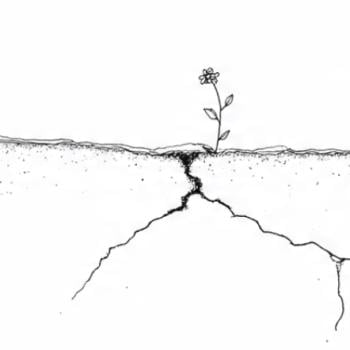






 Ad-Free & Subscriber Log-In