

 The Ryder Cup starts tomorrow. Although different, this biennial, three-day team event between the U.S. and Europe is the premier tournament in professional golf worldwide. In recent years, Europe surprisingly has won more times than the U.S. has.
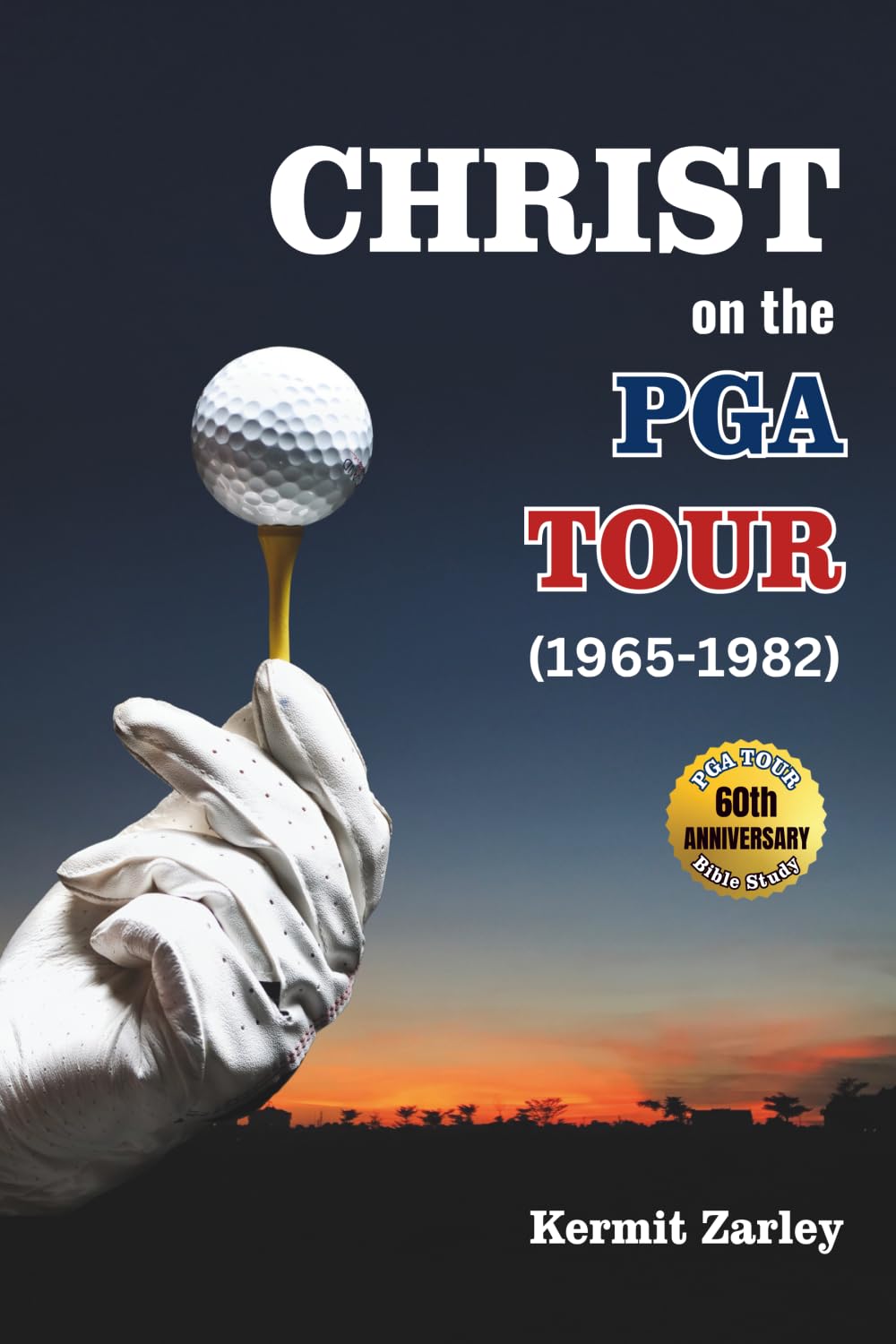
My new book was published this past week entitled Christ on the PGA Tour (1965-1982). It has a chapter about the founder of the Ryder Cup—Samuel Ryder Jr. It will come has a surprise to most golf fans, and maybe even most pros who have ever competed in the Ryder Cup, that Samuel Ryder Jr. was a devout Christian with an outstanding reputation in his community in England for helping poor people and generally being blessing to his community. Moreover, even though he is now known mostly for his influence on golf, Samuel Ryder Jr. disliked golf until he fell in love with the game at age 50 at the suggestion of his church minister as a way to aid his health.
So, I’ve decided to post here on my blog, on the eve of the Ryder Cup, my book’s brief chapter about Samuel Ryder Jr. (This 170-page book is in paperback for $15.95 at amazon.com.)
SAMUEL RYDER JR.
Christ on the PGA Tour must not leave out an important story about someone who hailed from across the pond, near to where golf originated, and it has a rather unknown and interesting Christian twist to it. I’m referring to Samuel Ryder, the founder of the Ryder Cup.
The Ryder Cup is a golf team competition staged every two years that used to be only between the U.S. and the British. The latter was later expanded to include all of Europe.
The Ryder Cup is one of the greatest competitions in all international sports. While golf tournaments worldwide consist almost exclusively of individuals competing at stroke play, the Ryder Cup is unique in that it is a three-day affair restricted to team play and individual match play. It is the brainchild of English amateur golfer and businessman Samuel Ryder.
Some History about Samuel Ryder, a Devout Christian
Samuel Ryder Jr. (1858-1936) was born in Walton-le-Dale near Preston, Lancashire, England. He was the fourth of eight children. His father had a nursery business. Sam was educated at Manchester University to become a schoolteacher. But ill-health prevented him from graduating. So, he began work in his father’s business. But Sam grew discontented since he couldn’t convince his father of his ideas on how to grow the family business. So, Sam moved to London, worked for a rival seed merchant, got married, and had two daughters.
In 1895, Sam Ryder moved his young family to St. Albans, England. There, he began his own mail-order seed business so that gardeners would no longer have to buy seeds in bulk. He sold his seeds in “penny packets” to gardeners. That had been tried before by two companies. But Sam offered his seed packets at much lower prices. With excellent rail access, he sent out catalogs and sold his seed packets through the postal service. Within fifteen years, Sam was employing 100 people who were filling 2,000 orders per day.
In 1905, Sam Ryder was elected mayor of St. Albans. It was partly because he had become known as “a Good Samaritan.” He constantly helped people, donated money generously to charities, and contributed to his community in many, different ways.
The Wikipedia article about Samuel Ryder Jr. states, “Ryder was a committed Christian. He had been a Sunday school teacher in Sale in his youth, and became president of the Mid-Hertfordshire Sunday School Union in 1911.”[1] Ryder was a churchman who tried to reconcile the two largest church groups in the British Isles: Anglicans and Non-Conformists.
Sam Falls in Love with Golf
In 1908, at age 50, Sam Ryder had a health issue that resulted in a slow recovery. His doctor recommended outdoor exercise and getting some fresh air. So, Ryder’s friend and next pastor at Trinity Church suggested that Sam play golf to improve his health. Initially, Sam Ryder had a disdain for golf. He preferred to play cricket. But the Reverend Frank Walker, a golfer himself, took Sam to the local golf course. They hit a few balls on the practice range, and Sam immediately fell in love with the game. He hired his own swing instructor, the distinguished pro golfer Abe Mitchell. Six days a week, Sam practiced what Abe Mitchell taught him. Since Sam was a Sabbatarian Christian, he would not play golf on Sundays. In one year, Sam got down to a six handicap. The next year, he was made captain of his golf club.
Also in 1908, Samuel Ryder got several church ministers together to play a round of golf. It became an annual affair which continues today, over a century later. And for that first event, Sam had a silver cup made. It is still called the Ryder Trophy. This one-day event is named the Free Church Ministers of Golf Society. Only ordained ministers may participate in it.
One of the two golf clubs where Sam Ryder was a member was Verulam Golf Club. He also was captain of the Verulam Golf Club. It claims to be the “Home of the Ryder Cup.” This golf course was built in 1905 as a 9-hole course, and it was first owned by the Earl of Verulam. Later, additional property was purchased, and the famous pro golfer and golf course architect James Braid was hired to expand it into an 18-hole course. (Braid won the British Open five times.) This renewed golf course was reopened in 1927 by staging an 18-hole match between James Braid and Harry Vardon, who won shooting a 74. (The most common grip in golf to this day is the Vardon overlap grip, named after Harry Vardon.)
The Formation of the Ryder Cup
In 1921, a few days before the British Open, a golf competition was waged at Gleneagles, Scotland. It was between British professionals and American professionals. But its purpose was to help attract more American pros to sail across the Atlantic Ocean to play the British Open.
In 1926, Sam Ryder suggested a serious golf match between the best of the British pros and American pros who participated in the British Open. The match was arranged and conducted that year at the new East Course at Wentworth near London. Sam was delighted when his teacher Abe Mitchell teamed up with George Duncan to defeat the defending British Open champion Jim Barnes and the great American pro Walter Hagen. Afterwards, while hanging out with those pros at the bar and sipping a cool one, Sam Ryder announced, “We must do this again.”[2]
No wonder Ryder said that. The British team had trounced the American team 13.5 points to 1.5 points. But half of the ten members of the American team were foreign-born players who nonetheless resided in the U.S. On this account, the competition was declared unofficial. The following four items were then decided: (1) the matches would be resumed the next year, (2) all Americans had to be native-born, (3) the event would be a biennial affair, and (4) the venue for each competition would switch across the Atlantic Ocean to be hosted by the home team.
Sam Ryder then offered to bear the expense of having a golden cup made which would be presented to the winner each year. It came to be called “the Ryder Cup.” Ironically, the earlier Ryder Trophy for the ministers’ one-day golf affair is made of silver and shaped as a cup, but the larger Ryder Cup is solid gold nineteen inches high and shaped as a trophy, with a figure of Mr. Ryder’s swing instructor Abe Mitchell on top of it addressing a golf ball with a golf club in hand.
So, the Ryder Cup competition between the best British and American pro golfers was born officially in 1927. (Pros from Ireland were later included with those from Great Britain.) The British team then sailed the ocean blue to arrive in America and suffer a trashing by being defeated 11.5 points to 2.5 points at Worcester Country Club in Worcester, Massachusetts. (During my PGA Tour career, we played a tournament at this club for many years.)
From 1927 to 1959, the Ryder Cup contest was a two-day match-play event involving both team and individual play. Winners of matches got one point. Halved matches had no playoffs, with ½ point going to each side. In 1963, the competition was expanded to three days, from Friday to Sunday, as it still is today. And nowadays, each team has twelve players instead of ten. The American pros usually consider the privilege of playing on their Ryder Cup Team a great honor in representing their country.
For a long time, the Americans dominated the Ryder Cup, often winning by lopsided margins. Then Jack Nicklaus suggested making the Ryder Cup more evenly competitive and exciting for golf fans by expanding the British Team to include continental European players. That idea was accepted and inaugurated in 1979, and it continues today. It has helped the event become immensely popular. So, nowadays the Ryder Cup is between the USA and Europe. And Europe has been defeating the USA. Since 1987, Europe has won the Ryder Cup nine times, and the U.S. has won it only four times, with one year resulting in a tie. Other than the Olympics, which reinstated golf in both the amateur and professional ranks in the 2016, there is nothing quite like the Ryder Cup in all of sports. It can be quite an emotionally competitive affair.
Sam Ryder’s Christian Influence on Golf
Sam Ryder died in 1936 at age 77. His funeral was held at his Trinity Congregational Church in St. Albans. At the nearby Hatfield Road Cemetery, his coffin was buried in the dirt with his favorite five-iron, then called “a mashie.” No joke. Heh, Sam had swung that club many times trying to dig a little white ball out of the dirt. Why not bury it in there in the dirt with him? Makes perfect sense to me. In the blessed resurrection, for those who will be called up yonder, maybe Sam Ryder will come up out of his grave just a swingin’ away with his mashie!
Samuel Ryder Jr. originally envisioned the Ryder Cup matches only as “a small friendly lunch party” with some golf mixed in. He surely never could have dreamed what it has become today—the greatest, pressure-packed golf competition in the world. And it was the idea of this successful businessman and devout Christian who only took up golf at age 50 to improve his health. Yet he became such a golf enthusiast and one of the best supporters of our beloved game.
Nothing creates international exposure to the game of golf like the Ryder Cup. Of course, it is much aided by worldwide television. Such media exposure indirectly helps increase purse sizes on the European Tour and in PGA TOUR tournaments, which benefits club professionals. Perhaps more importantly, sporting events like the Ryder Cup help bring peace to the world.
The Samuel Ryder Foundation at St. Albans, England, says of its honoree that it “aims to promote public knowledge and appreciation for the many things he achieved and the values he stood for.” These values in Samuel Ryder Jr. extended across the pond to greatly affect the PGA Tour from its very beginning to this very day. Furthermore, I think Sam Ryder will be a recipient up yonder and in the hereinafter regarding something Jesus said in his Sermon on the Mount, “Blessed are the peacemakers, for they will be called children of God” (Matthew 5.9).
[1] http: //en.wikipedia.org/wiki/Samuel_Ryder. Accessed July 27, 2024.
[2] http://www.europeantour.com/rydercup/history/index.html. Accessed January 28, 2013.








 Ad-Free & Subscriber Log-In