

In a recent interview with Reel Faith, National Geographic Explorer Bertie Gregory said the new docuseries “Secrets of the Bees,” now on Disney+ and Hulu and produced by James Cameron, aims to change the way viewers look at one of nature’s smallest yet most vital creatures.
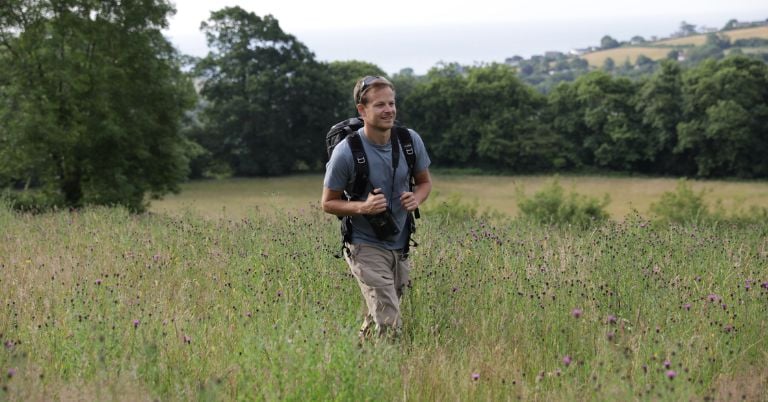
“People think they’re familiar with bees. They’re a big part of our popular culture, but actually, we know basically nothing about them,” Gregory said. “There’s a huge opportunity to deliver on the promise that we’re going to show you some secrets.”
Shot with the latest high-definition equipment that places the camera at insect level, the series offers intimate portraits of bees that Gregory said rival the charisma of larger, traditionally celebrated animals.
“Whilst they are definitely not big, they are just as charismatic and characterful as any of those, those bigger, more traditionally charismatic animals,” he said. “The key is that you need to get on their level, and we utilize some amazing new technology to allow us to do that.”
Gregory, a longtime wildlife filmmaker who has worked around the globe for National Geographic, said the project shifted his own perspective on insects.
“I’ve realized that, yes, the big, more traditionally charismatic animals, are amazing to follow around. I’ve learned a lot about the power of sitting down and just taking the time to look at, you know, even a small patch of flowers,” he said. “It’s amazing, the drama that is happening right under our noses that we walk past.”
The series connects microscopic detail to broad ecological consequences. Gregory pointed out the critical role bees play in sustaining human food supplies.
“One-third of the food we eat bees are responsible for pollinating. And so, you know, yes, we should want to look after the bees. But aside from that, if you help bees, we’re helping ourselves.”
That pragmatic appeal—protecting bees to protect human food security—runs alongside the show’s aesthetic ambitions. Gregory described footage that captured previously unseen behavior and striking close-ups of bee anatomy.
The series also blends conservation messaging with accessible calls to action. Gregory emphasized how easy it can be for individuals to make a difference: “If you do decide to help bees, is that it’s phenomenally easy. You just have to plant native wildflowers, and that can be in a little windowsill in your apartment. You will see the change that you make.”
That combination of wonder and empowerment is central to the series’ inspirational tone. Gregory reflected on his own path into wildlife media—how early photography led him to a career of sharing nature’s stories—and framed storytelling as a means of sparking stewardship.
“If you show someone a picture of something that you like, you’re actually get them excited about the thing that you’re excited about. And that basically what I do now as a job,” he said. “My job is literally to get other people excited about the thing that I love.”
Gregory’s resumé includes expeditions to polar regions and dramatic encounters with large marine species. He cited an Antarctic shoot as a career highlight.
“To see 300 whales all in a big feeding party with tens of thousands of penguins and seals and albatross in front of big 9,000-foot snowy mountains, it doesn’t get better than that,” he said.
The filmmaker also acknowledged the risks and realities of working with wild animals. He admitted to being stung during filming, a reminder that even careful contact can have consequences.
“I got stung in the face and couldn’t see out my right eye for about three days, which was suboptimal.” Still, Gregory said bees are not aggressive by nature and sting only in defense: “They’re just trying to protect their family.”
Beyond the specifics of bees, Gregory stressed a conservation ethic centered on human responsibility.
“In every case, if you want to look after animals and people, you don’t need to change animal behavior. You need to change human behavior,” he said. “We’re not separate to nature. We’re part of it, and we really need it.”
“Secrets of the Bees,” hosted by Bertie Gregory, produced by Silverback Films, and executive produced James Cameron and Maria Wilhelm for Lightstorm Earth, released April 1 and is now streaming on Disney+ and Hulu.














 Ad-Free & Subscriber Log-In