

• News item: “Evangelical Christian stars line up to read Bible aloud to wake up ‘apathetic church.‘”
Bunni Pounds, a political fundraiser-turned-activist who lost a 2018 bid for U.S. Congress from Texas, was visiting the Museum of the Bible in Washington when she says God spoke to her.
At the time, Pounds told attendees at a recent National Religious Broadcasters convention in Nashville, she’d been thinking about Ezra, the biblical prophet who read the law of Moses aloud to the Israelites as they returned to Jerusalem from exile in Babylon and began rebuilding the city’s walls.
“I had an encounter with the Lord about Ezra, and it has never left me,” she said. What’s more, Pounds said, the United States needs the same kind of spiritual rebuilding as the ancient Israelites.
That idea led her to organize a week of public Bible reading in the nation’s capital.
They’re going to read the whole thing, cover-to-cover, Genesis to Revelation, at the Museum of the Bible, with 500 “celebrities” (“pastors, politicians, authors, and other [white evangelical] leaders”) taking 10-minute shifts from 9 a.m. through 9 p.m., April 18 through 25.
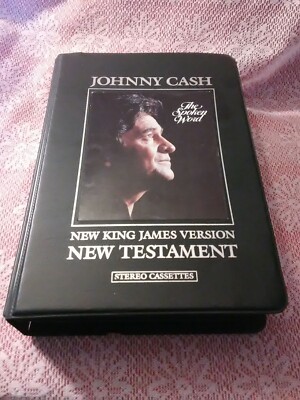
This is not going to be what Bunni Pounds expects. She does not seem to comprehend how vast and strange and confounding and disturbing and inscrutably ancient parts of the Bible are. Heck, she says she was inspired by the book of Ezra, and she doesn’t realize how disturbing parts of Ezra are, and that book is only a relatively few pages long.
The white evangelical “celebrities” here are an odious bunch, ranging from Ted Cruz to Rafael Cruz, and from Mike Huckabee to Sarah Huckabee Sanders.* Sen. Cruz will be reading the mass-divorce-and-child-abandonment sections of Ezra. No word yet on who is scheduled to read Judges 19, or the various “texts of terror” (Pete Hegseth?). Or who gets stuck with all the begats in Chronicles. Or the erotic poetry in the Song of Songs. Or the filthier bits of Ezekiel.
This is such a non-liturgical white evangelical idea. The rest of American Christianity gets to watch them awkwardly attempt to rediscover and reinvent the lectionary without realizing that’s what they’re doing. (There’s a reason that lectionaries don’t include every single verse of scripture.)
And even though lectionaries focus on the good stuff, we’ve all had the experience of getting up to read — or hearing read — a daunting passage that seems fearfully long for.this kind of recitation.
Now imagine 12 hours of that.
• I’d also invite you, as an obvious but necessary exercise, to imagine the reaction from people like Bunni Pounds if 500 prominent Muslims were invited to Washington DC to read aloud the entirety of an English translation of the Quran. Would the difficult sections of that ancient text be treated with the same dismissive charity as the odious texts of terror from the Christian Bible will be? I kind of doubt it.
• The ethnic cleansing decreed by Ezra at the end of that book — with thousands of Israelite men divorcing their Moabite wives and deporting those women, and their own children, sending them away abandoned and penniless — is terrifying, but yet it’s not strictly speaking usually categorized as one of the “texts of terror.”
That term, narrowly defined, applies to “stories in the historical books of the Hebrew Bible that describe God as commanding his people to slaughter groups of men, women, and children and ‘show them no mercy.'”
That’s how Roger Olson describes them in his recent blog post attempting to classify and catalogue “Every Interpretation of the Bible’s Texts of Terror.” Olson comes up with nine different approaches, conceding that there may be more, but that most of those could probably be fit into one of those nine. And for each of these approaches, he identifies problems, flaws, or dangers that he thinks makes them inadequate.
I appreciate this post and what Olson intends with it, which is not to offer a pat solution or explanation or apologetic, but to lay out his understanding of the very real difficulty these passages present. He writes: “As you can see, in my opinion, all have serious problems. This is almost certainly a question that will have to wait for answer until paradise or the eschaton.”
We’ll come back to Olson’s list later. For now we’ll just note that he’s so close to getting it, but can’t quite, because so many of these approaches just cannot be reconciled with belief in inerrancy and infallibility.
• The modern “doctrine” of inerrancy also comes up in a double feature of posts from Philip Jenkins, who discusses the “lower criticism” of Washington Gladden in the mid-1800s. Gladden wrote about the implications of realizing that our biblical manuscripts included countless variations, interpolations, omissions, and redactions:
… and in the mind of every man who could put two and two together, the dogma of inerrancy at once went by the board. Those who had this book in their hands knew, then, that what they had been taught concerning the absolute verbal accuracy of the Bible could not be true. A human element there must be; the theory that omniscience had guarded the Book from the possibility of error was simply blown to fragments.
In a follow-up post, Jenkins offers an example of the kind of thing that led Gladden to “put two and two together.” This is from years later, in Gladden’s 1891 book Who Wrote the Bible?, discussing when the book of Daniel was actually written:
Suppose you find in some late history of the United States a quoted letter said to have been written by President Zachary Taylor, who died in 1850,** respecting a certain political contest. The letter contains the following paragraph:–
“On receiving this intelligence, I called up the Secretary of State by telephone, and asked him how he explained the defeat. He told me that, in his opinion, boodle [ie corrupt money] was at the bottom of it. I determined to make an investigation, and after wiring to the member of Congress in that district, I ordered my servant to engage me a section in a Pullman car, and started the same night for the scene of the contest.”
Now of course you know that this paragraph could not have been written by President Taylor, nor during the period of his administration. The telephone was not then in existence; there were no Pullman cars; the words “boodle” and “wire,” in the sense here used, had never been heard. In precisely the same way the trained philologist can often determine with great certainty the date of a writing. He knows the biography of words or word-forms; and he may know that some of the words or the word-forms contained in a certain writing were not yet in the language at the date when it is said to have been written. It is by evidence of this nature that the critics fix the date of the Book of Daniel at a period long after the close of the Babylonian empire.
The weird thing about such 2+2 reasoning is that it tends to be received, by some folks, as an erosion of their “high view of scripture.” That’s weird because it equates a “high view” of the Bible with pretending the book of Daniel was written by someone it obviously was not written by at a time it obviously could not have been written.
That’s precisely like claiming to have a “high view” of history because you want to believe that Zachary Taylor had an iPhone and that anyone who denies this is a history-denying, history-hating “liberal” revisionist.
• On the subject of dating the book of Daniel’s composition, here’s Paul Davidson on “Why Scholars Date the Book of Daniel to the Second Century BCE.”
The evidence is pretty overwhelming and it has nothing to do with attacking a “high view of scripture” or “denying supernaturalism” or any such thing. Scholars date the book of Daniel to the second century BCE because that’s when it was written.
• The Daily Mail, being what it is, published this last month: “Long-lost Egyptian scroll fuels debate over real-life biblical giants.”
If you read the story, and not just the headline, you’ll find that the scroll was not “long-lost” — it’s been in the British Museum’s collection since 1839 — and that nothing about it has fueled any “debate over real-life biblical giants,” because that has nothing to do with the fantastical (and mocking) references to people “4 cubits” tall in the scroll.
The actual article also does a pretty good job of quoting a unanimous selection of biblical scholars who all note, in various ways, that, despite various stories from various ancient cultures, “there is no archaeological evidence of giants, such as skeletal remains or oversized dwellings.”
This makes me miss Deane Galbraith’s terrific old blog, “Remnant of Giants” — “The #1 Online Magazine for Biblical Giantologists (2011-2019).” Glad the archives are still there, but I miss having a one-stop link for all Nephilim-related breaking news. Can never get my fill of Nephilim.
Clickbait stories like the one from the Mail are still useful, though, because they can prompt sometimes-helpful plant-s-seed-of-understanding conversations with my fundamentalist brethren who insist they believe in both “literal” Nephilim and in a “literal” and universal flood that wiped out all living things except those aboard Noah’s ark.
* A culture or subculture is in poor shape when its most prominent leaders, heroes, and “celebrities” are all politicians. Let alone politicians like these.
But then I haven’t seen the full roster of celebrity readers yet. Maybe they’ll also get Kevin Sorbo and Dean Cain. Or, like, maybe Tim Tebow or that lady who once tied for fifth place in a swim meet.
** Taylor, the 12th president of the United States, died in office at the age of 65. Presidents sometimes die in office of natural causes. It has happened three times. So far.











 Ad-Free & Subscriber Log-In