


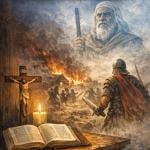
The prophet Samuel stood before King Saul, armed with prophetic authority and righteous indignation. The king, fresh from defeating the Amalekites, had disobeyed God’s command to “utterly destroy” them, instead saving the best spoils for himself under the pretext of offering them “for sacrifice.” Samuel now stood in position to declare God’s judgment on Saul and to strip him of the kingship of Israel, because “to obey is better than sacrifice.”
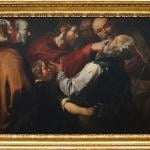
The Lord later sent the prophet Nathan to the court of King David. Nathan told a parable about a rich man with many sheep who stole a poor man’s only beloved lamb to prepare a feast for a guest. Angered, King David demanded the name of the offender. Nathan then delivered the famous line: “You are the man!” David had stolen the wife of Uriah the Hittite and arranged Uriah’s death in battle. For this sin, Nathan pronounced God’s judgment: the death of the child born from David’s union with Uriah’s wife.
Few figures in Scripture stand out as more compelling than the prophets. They stood before kings and spoke uncomfortable truths, often enduring persecution for the sake of fidelity. Prophets spoke with authority. They stood on the side of history that God Himself would ultimately vindicate.
It is therefore not difficult to see why the prophetic role remains attractive—especially in moments of political and moral crisis. To identify as a “prophetic voice” is to claim moral clarity, heroic courage, and a kind of exemption from ordinary disagreement. But the Catholic tradition places strict limits on prophecy for precisely this reason. When people ignore those limits, the prophetic mantle stops calling people to repentance and instead becomes a seductive path to power. When this happens, prophecy no longer calls sinners to conversion—it becomes a tool for claiming moral authority over others.
Lead Us Not into Temptation
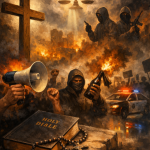
Why do I bring this biblical lesson to your attention? Recently, in the comment sections of articles dealing with social engagement and Catholic theology—especially those discussing the recent killings of Renée Good and Alex Pretti in Minneapolis—a reader justified the use of strong language. They claimed that calling these deaths “murders” without due process constitutes Catholic prophetic witness. Furthermore, they asserted that some “good” would come from these tragedies in the form of Congress defunding U.S. Immigration and Customs Enforcement (ICE), Kristi Noem facing impeachment, and ultimately—the hoped-for implosion and splintering of the Republican Party.
We all possess the freedom to wish for the downfall of our political enemies’ party. However, invoking prophetic authority for partisan ends crosses a line. Invoking prophetic authority to justify imprudent language that may incite further violence, in the hope that such violence irreparably harms your political opponent, ventures into the realm of possible blasphemy.
Finally, identifying one’s political views with prophetic authority—as if you personally possess the ability to call out contrary views as evil—removes the possibility of receiving correction. The person who does this sees themselves not merely as right, but as righteous. In their framework, if anyone resists their conclusions, those people are not simply wrong; they are morally and spiritually deficient.
Moral Authority Without Revelation
In the Old Testament, God directly called prophets. He gave them specific words to speak. Prophets did not appoint themselves. Much of the modern “prophetic” identity overlooks these realities. Instead, people substitute moral intensity for divine commission, political alignment for revelation, outrage for obedience, and sincerity for truth. In other words, they adopt a prophetic posture without prophetic warrant.
This temptation grows especially strong in moments of political tragedy that demand an urgent moral response. Tragedy often rewards moral certainty over caution and elevates voices that project confidence. In that environment, assuming a prophetic role offers instant authority. Grief turns into moral leverage, escalation feels righteous, and consequences appear justified. This dynamic explains the temptation to invoke prophetic authority in order to move quickly from tragedy to condemnation to political hopes of collapse.
Final Thoughts… Avoid Claiming Prophetic Authority for Political Ends
Old Testament prophets did not claim moral authority because they felt certain, outraged, or politically aligned. God called them. He bound their words to His revelation. They spoke hard truths, but they also stood under judgment themselves.
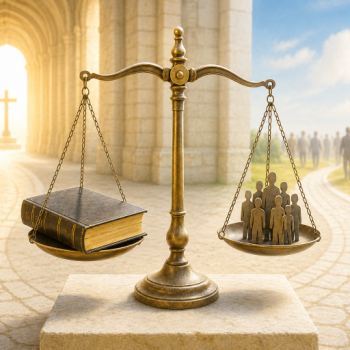
That model should give modern Catholics pause. The temptation to equate being right with being righteous runs deep, especially in times of political crisis. Yet Catholic moral theology draws careful distinctions precisely to guard against this collapse. One may hold correct principles and still speak imprudently. Or one may oppose injustice and still violate charity. One may even desire good ends and still choose wrongful means.
When Catholics claim prophetic authority for their political judgments, they risk placing their own certainty where God’s revelation belongs. When they treat disagreement as a moral defect, they trade humility for self-assurance. Finally, when they use tragedy as leverage for political outcomes, they risk turning grief into a political instrument.
The prophets called kings to repentance, not parties to destruction. They sought conversion, not collapse. They spoke truth because God commanded it—not because it advanced their preferred outcome. Before we appeal to prophetic authority, we ought to take these truths to heart.
Thank you!
Read The Latin Right’s other writing here.
Please visit my Facebook page and IM your questions (and follow my page) or topics for articles you would like covered.










 Ad-Free & Subscriber Log-In