Doubting Thomas or Honest Tom?

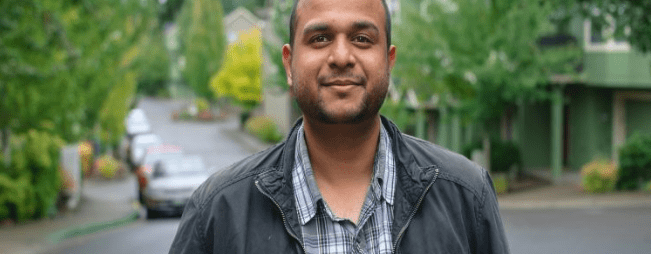
This reflection is by Seán Mullan, from Irish Bible Institute, and he reflects with us today on Thomas, the famous doubting Thomas.

Only two of the twelve apostles have names and reputations strong enough to be a part of modern parlance. “You Judas,” is a title reserved for betrayers. And the dubious sceptic is a “doubting Thomas.” No doubt, Thomas would prefer his epithet to that of his companion. But a recent reflection from the woman of my life made me realise that Thomas’ bad press is unjustified. I propose we rename him, “Honest Tom.”

Even readers who don’t know the Scriptures will probably know the Thomas story. Not part of the group who first saw Jesus alive after he was crucified, he stated that he would not believe that Jesus was alive unless he saw the crucifixion wounds and touched them.

Often read as a statement of defiance – “I refuse to believe” – it could just as easily be read as a statement of self awareness. Perhaps Thomas was saying that he knew himself well enough to know that he would require in order to believe the unbelievable. Thomas knew where he was as regards the faith issue and wasn’t afraid to say so. [Read more...]

Pentecost Prayer for the Week

Almighty God, on this day you opened the way of eternal life to every race and nation by the promised gift of your Holy Spirit: Shed abroad this gift throughout the world by the preaching of the Gospel, that it may reach to the ends of the earth; through Jesus Christ our Lord, who lives and reigns with you, in the unity of the Holy Spirit, one God, for ever and ever. Amen.

or this

O God, who on this day taught the hearts of your faithful people by sending to them the light of your Holy Spirit: Grant us by the same Spirit to have a right judgment in all things, and evermore to rejoice in his holy comfort; through Jesus Christ your Son our Lord, who lives and reigns with you, in the unity of the Holy Spirit, one God, for ever and ever. Amen.

Evangelicalism Meets Gratitude

Tim Challies thought it was his duty to defend the truth and that meant taking down Ann Voskamp. He ends up calling into question the Bible’s mysticism, the church’s mystics, and those in his own circle. Challies went too far this time.

Ann Voskamp, in grace and gratitude, offers a brief reminder that Challies’ heroes affirm what she affirms. She meets her critics with grace and gratitude. As Jesus said in the Sermon on the Mount.

Piper urges the reading of the Catholic Chesterton’s Orthodoxy, and specifically writes that this is one of Chesterton’s gems to mine for: “Mysticism keeps men sane. As long as you have mystery you have health. When you destroy mystery you create morbidity.”…

Piper writes of Joshua “who loved the glory of God! He was a kind of warrior mystic. He loved the mountain and the tent. He loved nature and church. He had a heart for God. Wherever he smelled the aroma of God he lingered.” And Piper asks where are the warrior mystics? ”Where are the Joshuas? The warrior mystics of Bethlehem—the men and women whose hearts are aflame with the conquest and who linger at the tent? Where are the men and women whose knees are as calloused as their hands?

I don’t read “mystics,” I don’t know what the word precisely means, don’t write or speak or own that word, don’t  know of mystics or mysticism—  but only of Christ and His Word and the Cross and real reality — but of Piper’s call to be a warrior mystic? To have a heart for God and have knees as calloused as hands? I pray I know this. Mama and I, we join together and pray for a ninety-one year old woman in a hospital bed. Hearts might be aflame for everything right…. [Read more...]

Three Pigs and the Faith

This post is by Syler Thomas.

One March afternoon, when I was in the process of figuring out what to write about in my new book Game Plan: Practical Wisdom for the College Experience (co-written by Nic Gibson), I got a call from a former student of mine, a freshman. She was in the middle of a Spring Break trip where the whole point was to share her faith with strangers on the beach in Florida. Her call was somewhat frantic: “I don’t know if I really believe this Christianity stuff, and I’m supposed to be telling people about Jesus. What do I do?” It was then that I knew we needed a chapter on doubt.

[Read more...]

Dublin Made Me

This reflection post is by Seán Mullan, a professor at Irish Bible Institute, and makes me wonder — and ask you today — about the connection of place to our formation. How does your location shape you?

Dublin Made Me

Dublin made me….

the Dublin of old statutes, this arrogant city

stirs proudly and secretly in my blood.

Donagh MacDonagh

Life forms and shapes us. As CS Lewis put it, “the world is a great sculptor’s shop.” You could say the same of Dublin, or any city. A day on its streets is a day of inner change – seen or unseen.

Aristotle spoke of the poverty of an unexamined life. Many of us who live in Dublin have unexamined years behind us, unaware of the changes taking place in us as the city made us.

What shapes and forms a person in the city is the interactions with people, events, work, surroundings, media, beauty and all the other stuff of life. A single day can leave you exhausted or exhilarated. A week can leave you despondent or delighted. A year of days has deeper, long term effects. We are all “becoming” but living in the city makes the forming and shaping process more intense, accelerated, pressurised – more work, less rest, more stuff, more events.

A common Christian reaction to this formation is to counteract it with periods of withdrawal – [Read more...]

Out of Body Experience

From Salon.com: (by Mario Beauregard)

What do you think this sort of experience tells us about immortality? resurrection? theology?

Pam was brought into the operating room at 7:15 a.m., she was given general anesthesia, and she quickly lost conscious awareness. At this point, Spetzler and his team of more than 20 physicians, nurses, and technicians went to work. They lubricated Pam’s eyes to prevent drying, and taped them shut. They attached EEG electrodes to monitor the electrical activity of her cerebral cortex. They inserted small, molded speakers into her ears and secured them with gauze and tape. The speakers would emit repeated 100-decibel clicks—approximately the noise produced by a speeding express train—eliminating outside sounds and measuring the activity of her brainstem.

At 8:40 a.m., the tray of surgical instruments was uncovered, and Robert Spetzler began cutting through Pam’s skull with a special surgical saw that produced a noise similar to a dental drill. At this moment, Pam later said, she felt herself “pop” out of her body and hover above it, watching as doctors worked on her body. [Read more...]

Youth Trips: Helping that Hurts?

We are doing a series on Root and Dean’s new book, The Theological Turn in Youth Ministry, and each post is written by our friend, Syler Thomas, a youth pastor of fourteen years. This post concerns the upside and downside of youth ministry trips for service.

In chapter 13 of The Theological Turn in Youth Ministry, Andrew Root offers a concise critique of the youth group mission trip. As someone who has been organizing and attending youth mission trips for over 20 years now, and who has seen the incredible benefit of such trips, I was wary of what it was he had to say.

What about you? Have you seen trips do more harm than good? Do you think there’s a better way?

Root accurately depicts the juxtaposition of youth trips well. A morning is spent in an impoverished village, while the afternoon might be spent sipping (virgin) cocktails on the beach.

Furthermore, when the trip is merely about what you are going to do there, then once you have done it, it’s a memory. It becomes just one more experience that has been consumed, like a piece of gum that has been chewed up.

When the trip is about being with the people, there is nothing to check off the list. [Read more...]

The Righteous Mind

This post is by Ann F-R, and is a series on a new and provocative book that challenges how people think — or think they think.

Jonathan Haidt’s book, The Righteous Mind: Why Good People are Divided by Politics and Religion explores how human morality develops and affects our daily choices and interactions. For most of the 20th century, developmental (moral) psychology was founded on rationalist assumptions: it was assumed morality & moral reasoning are constructed as children experience harm and negotiate fairness; to this end, they concluded that “reasoning about harm is the basis of moral judgment”. Any cross-cultural variations were assessed as violations of social conventions that exist between people groups. (p.19) Social conventions are “arbitrary and changeable …rules about clothing, food, [etc.]” (p.7). To a significant extent, rationalists privilege reasoning over bodily-based responses to situations. However, new discoveries by other social and medical scientists challenge rationalism.

Haidt sought to understand how people actually made daily, moral decisions, across cultures and classes; to trace how the assumptions of rationalists changed our perspective of others; and, to offer a new paradigm to help us understand ourselves, our moral decision-making, and our reactions to others who differ.

1) Richard Shweder, a psychological anthropologist, challenged rationalism with his studies in the Indian state of Orissa. Shweder observed Indians’ and Americans’ perceptions of morality correlated to their views that the individual or social group mattered more; i.e, morality was individually-centered or sociocentric (p.15). Rationalism is specifically suited to western goals concerning individuals’ rights. Shweder believed that, “When you put individuals first, before society, then any rule or social practice that limits personal freedom can be questioned. If it doesn’t protect somebody from harm, then it can’t be morally justified” (p.16).  The central question for societies is how to order themselves. From the perspective of societal order, religion itself can be understood as a human response to chaotic human interactions, because religions create & justify some form of order.

Does our understanding of God-in-Christ center us in particular ways which set Christians apart from being either individually or socially centered? If so, how? [Read more...]

Where do we go from here?

This is the 3d part of my presentation to BioLogos this March.

Where do we go from here?

As a professor I teach my students at least two things about method: face the facts and do not fear the facts. I believe this means we have to face both what the New Testament teaches and what science teaches. So we are right back with our two facts: science’s view that human DNA goes back to more than two people and the Bible’s view that sin goes back to Adam (and Eve).

So we face the facts. The Bible really does make it look like Adam and Eve are humans from whom we descend, sin and death entailed. But scientists are going to tell us straightaway that Adam and Eve themselves had ancestors, one of whose millions of years old grave I walked into just outside Johannesburg South Africa in what is called “The Cradle of Humankind.” Here I encountered hominid fossils dated at 2-4 million years. (Well, not the fossils themselves but the places they found them and the pictures.) Others are going to tell us that the DNA make-up of humans today goes back to thousands and on and on… so we come to this point and it is for me the most significant pastoral question pastors need to ask in tandem with scientists is this one: What if we are wrong in our interpretations of the Bible? [Read more...]

Are Atheists Compassionate?

From LiveScience:

Atheists and agnostics are more driven by compassion to help others than are highly religious people, a new study finds.

That doesn’t mean highly religious peopledon’t give, according to the research to be published in the July 2012 issue of the journal Social Psychological and Personality Science. But compassion seems to drive religious people’s charitable feelings less than other groups.

“Overall, we find that for less religious people, the strength of their emotional connection to another person is critical to whether they will help that person or not,” study co-author and University of California, Berkeley social psychologist Robb Willer said in a statement. “The more religious, on the other hand, may ground their generosity less in emotion, and more in other factors such as doctrine, a communal identity, or reputational concerns.” [Read more...]