
Erasing Hell – A Response (Jeff Cook)
I have deep respect for the work of both Francis Chan and Dr. Preston Sprinkle. In their recent book Erasing Hell: What God said about eternity, and the things we made up, the authors move the discussion of hell through a few chapters of Bible study and into the realm of philosophic thought: discussing the nature of love, God’s goodness, and our ability to conceptualize God’s priorities. I continue to appreciate Chan and Sprinkle’s hearts, and unlike some recent works seeking to display what is best to believe about God’s future, Erasing Hell is worthy of discussion and critique.
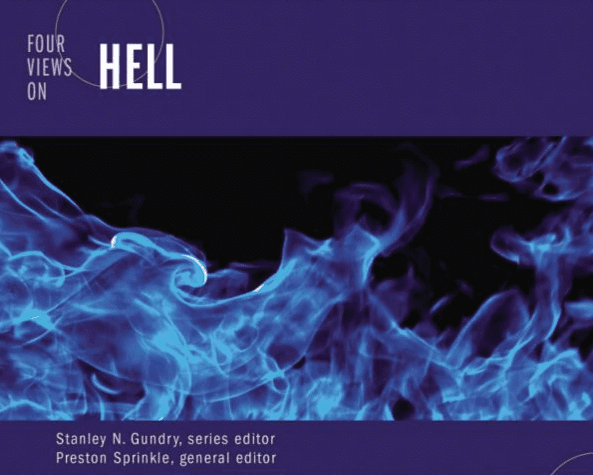
Dress it up however you wish, Erasing Hell is a response book to Rob Bell’s Love Wins, yet despite replicating Bell’s style in their cover art and promotional video—the primary problem in my mind with Erasing Hell is that the authors do not speak to the same audience.
Recall the motivation behind Bell’s book, “I’ve written this book for all those, everywhere, who have heard some version of the Jesus story that caused their pulse rate to rise, their stomach to churn, and their heart to utter those resolute words, ‘I would never be a part of that’ You are not alone. There are millions of us.” (viii).
This is primary. Bell wants to speak to a large number of people who reject the Jesus faith because of the way Christians have interpreted and displayed hell.
Bell’s not alone in caring for such people. Many of us have personally rejected Christianity or have friends and family who will not consider our God because he chooses eternal conscious torment for the damned. The hell described by Chan and Sprinkle is not difficult to believe in conceptually (like the trinity); it is not difficult to believe because of apparent inconsistencies (like the inerrancy of scripture); eternal conscious torment is difficult to believe because it makes the character of God look repugnant—and that is a bridge too far for some. Many of us make the same move when rejecting Allah, Zeus, Vishnu, Aphrodite, or Mammon. We’ve decided such God’s are not worthy of worship—even if they were real. In the same way, Bell’s audience thinks that the God you love is not worthy of devotion—be he the creator God or not.
And something needs to be said to such people.
Lay out whatever faults you will, Rob Bell has stepped up for the sake of the person who might believe, but can’t. Does Bell get it right all the time? Arguments have already been made in multiple places (including this blog) objecting to some of his conclusions. However, Bell’s audience has not disappeared simply because a few PhDs stride forward and say, “You know that’s really not the best way to translate ‘kolasis.” Until those responding to Love Wins take the hard next step and—in an apologetically informed, evangelistically minded way—address Bell’s audience with a sensible, compelling portrait that makes hell attractive and rationally viable, they have not entered the conversation at hand. Though some of Erasing Hell is strong (I particularly liked chapter 2), this is the principle failure of Chan and Sprinkle’s book.
The authors primary message is easily identified throughout. It says, “I feel sick. I would love to erase Hell from the pages of scripture” (14). But “we need to surrender our perceived right to determine what is just and humbly recognize that God alone gets to decide how he is going to deal with people” (131). For “God is perfect and right in all he does” (133) even if his “divine actions don’t fit our standards of logic or morality” (135).
My friends, if you care about those you think will burn forever—that kind of apologetic for hell fails. In the language of our skeptical friends, it reads, “The God over here can do whatever he wants (be it fiery torment), to whoever he wants (be it your 4 year old), for as long as he wants (let’s say, forever). And when he does it, the rest of us will shrug confused shoulders and cry by your side.”
Instead of engaging in creative apologetics and evangelism, Chan and Sprinkle have chosen to circle their wagons, grip their reading of scripture, and pitch ideas they hope will keep themselves (and presumably the masses) holding to a belief that they consistently describe as nauseating.
To those of you in seminary, to those of you in philosophy departments, to those of you leading in the church who are able to think real hard—we need better answers.
The course forward in my mind is clear. Though Chan and Sprinkle reject Annihilationism with a dismissive wave (107), it’s a view which is both easy to establish in the scriptures (we may even say difficult to reject) and doesn’t have the ridiculous baggage of eternal conscious torment. In my mind, the best road forward entails reimagining hell as the end of evil. For Christian and non-Christian alike this is a desirable and praiseworthy good—and it’s worth promoting the fact that our God agrees.
This was a response. In upcoming posts, we will discuss some of the specific claims Chan and Sprinkle make regarding God’s nature, whether or not God can do whatever he wishes and remain good, and why God wants hell to exist.
Jeff Cook teaches philosophy at the University of Northern Colorado, pastors Atlas Church (Greeley), and is the author of Seven: the Deadly Sins and the Beatitudes (Zondervan, 2008) and Everything New (2012).











address Bell’s audience with a sensible, compelling portrait that makes hell attractive and rationally viable
I can’t believe you mean that. Make hell attractive?
Excellent Jeff. That was my contention too, Rob is writing to those who would sooner leave Christianity than accept that version.
The thing the apologists and critics don’t seem to see, is that all the people in Bell’s audience need is an argument that may be true, and he has given them that.
Although I admire Chan and feel certain that he is very sincere in what he believes, I knew his latest book was and is simply a rebuttal to Bell’s book. Mark Galli just released a book entitled, “God Wins” which is a rebuttal as well. The question that comes to my mind, if mainstream evangelicalism, including fundamentalists and neo-Reformed are convinced that Bell is merely a heretic and nothing to be concerned with, then why the endless pages of refutations and rebuttals both in print and in the blogosphere? Are they scared? Do they have something to lose? Perhaps Bell hit at the core of Post-modern Christianity and only now are the Moderns realizing this. Perhaps Bell may be closer to the truth than what we had imagined. I have read Chan’s books but hesitated on purchasing his latest one because I discerned from his own theology, along with his video trailer that he holds to the many traditional views of Modern Christianity, including ECT. Those views that have held strong for the past few hundred years but at the same have turned people away from the faith.
It comes down to this… if you’re looking for something new or revisioned because you sense something is amiss, then go to Bell, McLaren, Manning, Miller, McKnight, Campolo, Wallis, Olsen, Mouw, and others who have hopped onto the 21st century bandwagon and are exploring other thoughts and ideas with fruitful discourse.
If you wish to stay put, hold on to the mechanized traditions of the past few hundred years while the rest of society moves on, then go to Chan, MacArthur, Piper, DeYoung, Mohler, Driscoll, and other traditionalists and break out the dust mops. Like the churches of yore, Modern-era churches and their theologies will be turning into relics of the past and will make for great museums.
Excellent and level response. Thanks!
Viewing hell as the elimination of evil/sin is precisely how the evangelical universalist approaches it; recognizing the evil and sin in all us that needs “salted with fire.”
I don’t want to argue for what hell might or might not be. And I will allow room for discussion and debate and divergent opinion on the matter. But what continues to bother me about this is that we are worried about audience reaction to truth. If something is true, it is true, regardless of the reaction of a particular audience. If the ECT folks genuinely believe this is true then it doesn’t really matter if its attractive or not.
If someone says, “Well, I can’t believe in a God that would punish people eternally in hell,” does it really matter? If this is who God is and what God is doing then who are we to sit in judgment upon God?
Again, I’m not saying that there isn’t room here for discussion and difference of opinion. It just seems we’re becoming driven by the audience and not driven by the message.
“reimagining hell as the end of evil”
very well put! that phrase alone succeeds in the seemingly impossible task of making “hell attractive”
Hi Jeff,
I am surprised that you feel they have dismissed annihilationism. A few other reviews I had read suggested that Chan was actually open to it, and would not be super dogmatic about it.
“The debate about hell’s duration is much more complex than I first assumed. While I lean heavily on the side of that says it is everlasting, I am not ready to claim that with complete certainty” (pg. 86).
This was somewhat of a pleasant surprise to me. Chan seems to be willing to let the text say what it says more so than many people in that camp (neo-reformed). I am not saying I think that if we let the texts say what they say, they will say annihilation (I have not made up my mind), but considering the group Chan is associated with, he is making a fairly bold claim by giving the view even a small amount of credit.
I appreciate your entry, as usual it was very well read and you express the thoughts of many of us clearly and compellingly. Thanks Jeff!
@Scott Eaton #6
I think the driving factor Jeff is getting at (and I could be wrong) is not the audience, but what ECT seems to say about the character of God. I think if it paints God as so unattractive to so many people, maybe there is a chance we have misunderstood it and we need better answers that reconcile ECT with the more beautiful portraits painted of Him in the scriptures.
I think that is generally what Jeff is getting at, but your point is well taken. It can certainly be dangerous forming our opinions based on what others tell us is acceptable.
A very helpful and generous review of Chan’s new book. As you mentioned, both authors were responding to different groups. Bell to those struggling to believe and Chan to Bell’s book. I appreciate Chan as well, but his book really doesn’t provide a a well argued alternative. It’s little more than a theological reaction that doesn’t provide viable options.
(1) Albion. On the “attractiveness” of Hell. Prior to creation God had trillions upon trillions upon trillions of different options for the world he would actualize. If we assume God’s foreknowledge than there must be *something* about our world, with our hell that God looked at and said, “yes, that is the world I want to make.”
The view of hell we adopt and promote, it seems to me, must fit into that picture. Hell–it seems–must be “attractive” God (and this is just another reason eternal conscious torment fails as an adequate interpretation of hell.) We will pick this up in a future post.
My take away from this post is that we should tailor theology around what unbelievers want to hear. I get a little snarky further down, but the remainder of this comment reflects how I hear/read the original post.
If they want to hear that there is no hell, we should come up with a theology that tells them that. What if they want to hear that God is totally cool with you cohabiting with your girlfriend, or that he really isn’t that serious about drug abuse? I’m sure we could craft together a theology, for apologetic reasons of course, that would tell those people what they wanted to hear as well. After all, it isn’t really important to find out from scripture what God is like and what he requires, and then relay that through our evangelism; it is important to hear what people outside the church want God to be like, and then come up with a God that suits them.
Thanks, Jeff Cook, for this cogent response. You have pinpointed the problem of the doctrine of ECT. And I would add that, for many, it is not just that the concept of ECT is unattractive, but that it leads to the conclusion that the creator/perpetrator of such a place can’t possibly be good and, therefore, can’t possibly be God. Bell was addressing those who have come to such a conclusion, and any rebuttal needs to address that conclusion.
Scott (6). You wrote, “If someone says, “Well, I can’t believe in a God that would punish people eternally in hell,” does it really matter? If this is who God is and what God is doing then who are we to sit in judgment upon God?”
It seems to me there are two things going on here with the word “believe.” On one front we might “believe” in God because we think his existence is a fact about reality. On another front, in Christian lingo especially, “believe” means to trust, to love, to follow, to celebrate. On that definition, someone may think the Christian God exists, and choose not to “believe” in him. (Google Dostoyevsky’s “Rebellion” from the Brother’s Karamazov for a quick example). So, yes. It does matter. Apologist don’t want mere cognitive assenters. We want skeptics who will fall in love with Christ. Who will *Believe*. It seems to me then that audience (and we should include ourselves here) ought to be considered when doing theology.
On Judgment. See my previous post on the topic: http://www.patheos.com/community/jesuscreed/2011/05/25/jeff-cook-to-francis-chan/
Much love.
Robin, yes, a bit snarky and here’s why:
Cook’s reference to folks not believing or to people waking from the faith is not intended to say “give folks what they want.” Instead, it is concrete reality of something not making rational or theological sense. It’s a way of saying the message is logically repulsive or morally inconsistent; it is not a way of avoiding the scandal of the cross or the reality of the sin but of the incommensurability of what we say about God’s character and what we are saying about hell.
Those who are pressing here against Jeff’s point because they think he or Rob Bell are pandering to postmoderns are, I fear, illustrating a grand example of missing the point.
JohnC (8). I probably should have said something more on Chan and Sprinkle’s openness to annihilation, which they state in 2 places, and back up with a historic footnote. However, on page 107, when concluding they seem to explicitly reject it.
But I agree with your point. Even allowing annihilation as a possibility is a big and praiseworthy step forward in my mind that ought to be applauded. Peace.
A friend asked me to review Chan’s book with him, and I will; but Chan’s promo video did nothing but encourage me to not buy it. It seemed to me that he’s asking us to not use logic and reason and just accept in “faith” (more accurately, “fear”) that God is going to torment at least some people forever, and that we need to resign ourselves to this fact. No appeal to logic, no appeal to reason, no appeal to a different understanding of scripture is valid. It doesn’t matter that not one word in the Hebrew or Greek text of scripture correctly interprets as Hell, not Hades, Sheol, or Gehenna (oops, Tartarus would interpret as Hell, but it’s only used once and references where the sinning angels are held now until judgment). Let us set aside the many passages that at face value, and arguably based on their context, affirm the salvation of all humanity.
Well, I’m feeling a little frustrated today so I’ll stop venting now. Anyhow, I’ll probably soon pick up Chan’s book and review it.
Honestly, I’ve never understood *why* this eternal, conscious torment view has arisen as the DOMINANT theology. I was taught that while young, but while returning to Jesus with my own heart and mind as a growing adult, I just don’t see it in there. The believers in the Bible yearn for Justice, often asking (wrongly) for mere revenge–but God consistently promises destruction of wickedness as well as grace for all.
It’s an odd tangle, but Jesus insisted that love, mercy, and justice somehow all go together. And justice promises us an end to evil. A destruction of wickedness which, Jesus warns, may very well mean a desctruction of the evildoers if they insist on going and growing in their unrighteousness.
But Scripture never claims that we know the whole story, only the beginning and end of the current chapter (age). Christ brought a revelation of Grace, there may or may not be more to that story. However, Christ promises that at the end of this age:
Rev 21:4 He will wipe away every tear from their eyes, and death shall be no more, neither shall there be mourning, nor crying, nor pain anymore, for the former things have passed away.
The ironic part is that if the symbolic eternal fires of destruction are actually complete negation of the existence of evil and evildoers, than many people today DO, in fact, CHOOSE Hell. That’s the dominant secular view, isn’t it? That when we die we’re just gone?
But Jesus asks us to pursue ETERNAL LIFE in Him, our true and divine purpose.
Robin (12). Excellent points. As preface, consider Comment (14).
You said, “If they want to hear that there is no hell, we should come up with a theology that tells them that. … it is important to hear what people outside the church want God to be like, and then come up with a God that suits them.”
It seems to me that those who have rejected Christianity because of eternal conscious torment have a point. They are considering whether or not the Christian God is worthy of worship, and given that view of hell, they are concluding that he is not.
Being worthy of worship is tied intimately to being supremely good and just. If eternal conscious torment is to succeed as our interpretation of hell, and we are to affirm that God has the highest moral character, then there needs to be work done here. It seems to me that our non-Christian friends deserve that: a picture of God that is worthy of worship.
Jeff Cook (19)
Below are some other reasons modern listeners could find the God if the bible unworthy of worship. We can admit that they are in scripture and try to deal with them in our evangelism, or we can claim that they are disputed, or merely human tradition, and explain them away. I know that many modernists and emergents would just rather explain those parts of scripture as “community library” and not God-breathed scripture.
As you read the list below think about the size of these stumbling blocks relative to the incongruity of hell and a good God. Would many PETA members and animal acitivists have just as much problem with a good God who commanded animal sacrifice as they would with a good God who ordained a hell? Should their modernistic objection cause us to whitewash scripture for apologetic considerations?
God ordered ethnic cleansing
God gave Israel a physical land
God sanctioned slavery
God sanctioned polygamy
Jesus never expressly taught against slavery
Jesus never expressly taught against polygamy
God intervened in order to make sure the ethnic cleansing occurred
God have his own children up to captivity on multiple occasions
God created a patriarchal family system
God created a patriarchal religious system
Jesus’ followers apparently transferred that patriarchal religious system into the new testament church
God required animals to be killed (tortured?) in religious ceremonies
God allowed people to kill animals and eat their flesh
I could go on, but I’ll stop here.
Question: Someone commented that the traditional view of hell has only had a firm hold for the last couple of hundred years. How far back does the ECT view of hell go historically?
To clarify, I am not saying that not believing in ECT is, in and of itself, a whitewashing of scripture. If people can approach the text honestly and come to that conclusion I have no objections. What I object to is the implicit assumption above that we should define our theology by what modern readers want to hear. That if there are things which appear to be illogical or incongruous to modern listeners, that we should try and alter our theology in response to their concerns.
I keep being reminded of the opening passages of Cross of Christ by Stott where he talks about 1st or 2nd century cartoons found in the Roman empire where there is an image of a man bowing down and worshipping a crucified man with a donkey’s head and it is captioned “X worships his God” (I forgot the name).
Christianity itself has always provided a stumbling block. Virgin birth, resurrection, ascension, incarnation, a crucified God, a God who would sacrifice his own son, etc., these have always provided stumbling blocks. I am willing to change any part of my theology if I can be convinced from scripture that I should, but I am not willing to change any part of it because it offends the sensibilities of modern Americans.
Robin @20,
Of course, several of the things you mentioned are from your perspective, like Jesus never teaching against slavery; He didn’t need to teach against slavery for he taught love and respect, and He was not called to be a political reformer, but to provide for our salvation. And concering God ordering the death penalty and even wiping out whole cities and cultures, these things fit well into a UR systematic theology for ultimately God reconciles all of creation to Himself, and some die early so as to mitigate their own suffering and the suffering of others. I’ve come to believe that all of His acts are motivated out of His love for us all.
John Frye,
A quick google search and I’ve got an eternal hell going back to at least Augustine. I’m not familiar with theologians pre-dating him so I’m not sure about the really early church fathers.
Sherman,
UR?
Robin,
I don’t mean to disparage you personally at all, but I felt that your list was a little contrived. The *only* thing on a there that a serious apologetic, envangelistic approach does not have easy answers for in the context of the story seems to be the ethnic cleansing.
I have views on that. They’re not widespread or popular and are probably extra Biblical.
But for example–saying that animal rights extremists might have a problem with a more traditional and moderate view of animals does not mean we have a difficulty in evangelism that we don’t want to talka about. It means we may have a discussion about animals.
[And sacrifices were basically a Saturday afternoon BBQ for the whole community to join in on in celebration of God's Grace and forgiveness]
Amos Paul,
I think animal rights activists might conclude that a God who would command BBQ for the community is a God who is not worthy of their worship. Likewise, I’m pretty sure most atheist feminists hate Christianity quite a bit because of the patriarchal family structure in the OT and find a God who instituted such a structure extremely unfit to worship.
Sherman (17) You are right in your assessment of Chan’s focus on “Fear.” It is a driving force for Chan and those who want to see the urgency of getting people into heaven by creating a sense of fearing what God might do to them (see his video “Fear God” in the Basic series), not to mention just being afraid of God. Does not seem like a healthy approach to responding to a loving God or even seeing God as a loving Father.
I think Jeff Cook makes a good point. ECT must make at least some sense morally to those who do not believe, before they can accept it. I would argue that the way forward on this is not to reject the teaching of Scripture (which I would argue is ECT) but rather to impress upon our interlocutors the magnitude of the sinfulness of humanity.
Part, I think, of this whole “problem of hell” in the modern day is that we don’t think we’re really all that bad. We’re all inwardly good; if there are problems, it’s because of “systems.” But the Bible has no truck with that.
Jeff, I know that you’re a fan of C.S. Lewis. Isn’t a major theme of Lewis’ work our own clever ways of minimizing and explaining away our own sin? From the obsessive mother of “The Four Loves” to Queen Orual of “Till We Have Faces,” human beings rationalize and minimize their recognition of sin. Perhaps Hell (in the traditional sense) is only able to be understood and appreciated when we understand this.
Amos,
Or it could mean that we just claim that the part of scripture dealing with sacrifices was the work of ancient tribal cultures trying to “make sense” of what God would want, and that it in no way was what God really wanted. They were just doing their best to describe what they thought God was like, but now that we are so much more modern and enlightened we know that animal sacrifice was never really something God was concerned about. We could wash away all of those problems similarly. I think this is the preferred solution of proponents of the community library view of scripture.
Robin,
Exactly, they have *extreme* opinions on these subjects. If that’s honestly their primary hurdle between them and God, then an honest discussion can be had with them about our differing views on animals and women. The most foremost thing to state is that the Bible clearly states that God cares for and respects animals and women.
Ex, Ps 36:6 Your righteousness is like the mountains of God; your judgments are like the great deep; man and beast you save, O LORD.
However, most people with extreme, kneejerk opinions generally have to find God via another avenue than, say, reading Scripture that *seems* to oppose their worldview. If they have honestly begun a relationship with God, they presumably ought to be open enough to learn and understand things about His Scriptures eventually.
Jeff — your premise is fundamentally flawed in the same way that Rob Bell’s was. Both of you take a high view of man and a low view of God in order to convince hurt, skeptical unbelievers that God is worth following. Compassion and love for the lost is absolutely vital to the life of a Christ follower, but that doesn’t mean we get to re-invent the nature and character of God or give Him a makeover.
According to Scripture compelling arguments and clever apologetics don’t lead people into a redemptive relationship with Christ. They’re drawn by the Holy Spirit and called by His Son.
I find it sad that people like Chan who earnestly desire to search and dig into the scriptures is seen as “circling the wagons.” This is speculation and patronizing in many ways as Chan’s motives seem to be anything but defensive in the tone and content of his book.
I find this new logic of if someone wants to honestly study the Bible and say what it says, then they are unhelpful for modern ears or to those who would be offended by Hell. The beauty of the Bible is its message is so much more grand and historically robust than our momentary culture and point in time.
I am going to go with Jesus and believe that his words will not pass away, even if the culture that is created does not seem to like them.
Not to mention Jeff I think you get it wrong in saying Bell was trying to write just to those who find Hell offensive. He went out of his way in his book to be uncharitable, and create caricatures of those he disagreed with on the doctrine. Disparaging those that you disagree with is always a poor way to begin a conversation, and so was Bell’s false portrayal’s of traditional Christians.
Question: In comment 11 Jeff touched on God creating everything. When was hell created? Hell isn’t mentioned in the creation story, nor is it mentioned after the fall. So, when did hell get created and why aren’t told this?
Robin @ 25,
UR – Universal Reconciliation, Christian Unviersalism, the Greater Hope, Apokatastasis
I just finished Erasing Hell, and I really liked it. But, I see your point, Jeff, that they are largely speaking to a different crowd, or at least not addressing some of the main objections folks have to hell or ECT. They seem to be speaking to people much like those I minister to who are fairly (though not rigidly) traditional in their thinking and were unnecessarily knocked off balance by Love Wins, particularly by its ungracious tone (e.g., the “toxic and misguided” comment). For these people, Chan/Sprinkle served a very good purpose, and I appreciate their work and the humility and honesty expressed in the book.
And it’s funny. After reading their book, I walked away more open to annihilationism than before. They do land on ECT, but they are not dogmatic. If I remember right, they lean that way because of one passage.
As far as creative apologetics, I agree that this is needed. We need to have enough empathy to deal with people’s real objections fairly and intelligently. I think there is much more to say, whether we land on ECT or annihilation (I don’t see any universalism as a viable option at this point).
So far, the discussion, or the little I’ve seen of it, has seemed to focus on heaven/hell as a transactional, individualistic issue (i.e. where I go is simply a non-relational transaction between me and God with no one else involved). The biblical picture seems more complex than that. Going to heaven, or avoiding hell, when we die isn’t really the purpose of our lives anyway (John 17.3). Plus, I’ve seen very little open/candid discussion on both sides about how sinful we really are and why. Whether or not you believe ECT or annihilation is a just punishment leans heavily on how bad we think we really are.
Jeff, I didn’t read Chan’s book, but my sense is that he is promoting (a) a strong Calvinistic sense of double predestination and (b) a divine command theory (DCT) of ethics. Is that correct?
Here is a key sentence: “God is perfect and right in all he does” (133) even if his “divine actions don’t fit our standards of logic or morality” (135). That is DCT, I think.
The problem, IMHO, is that DCT fails on some key points, and I think those failures reflect Chan et al.’s failure to speak to the same audience as Bell.
The truth is that if God really is perfect and right and good and just, then we can, in fact, hold God to account to act in accordance with His being. God is not “free” to engage in just any arbitrary action and declare it “good.” And we as creatures made in God’s image are, indeed, able to discern something of what “good” means and to measure what we think are God’s actions against that understanding. This doesn’t mean our knowledge is equal to God’s — not by a long shot — but it is real knowledge.
In deeper theological terms, the issue here is nominalism versus realism. Scholastic Calvinist theology is nominalist — terms like “good” ultimately are just words because God can act in any way whatsoever. Historic Christian theology is realist. Terms like “good” have substantial meaning because they derive from the reality of God’s Triune being.
If I’m understanding Chan’s position correctly, then, I think it’s not only apologetically mistaken — I think it’s theologically bankrupt.
Jeff,
The audience for this book is going to be different because the books were written for different purposes. To begin with Bell wrote on a wide range of issues as Galli has brought up in their Christianity Today article. Sprinkle and Chan wanted their book to go beyond just a response to Love Wins. I know many people who are sympathetic to Love WIns, who are being impacted by Erasing Hell in wrestling with the reality of hell and the character of God. I appreciate your perspective on the book but I believe Chan/Sprinkle wrote this not just to give a response to Bell’s audience who have for a number of reasons rejected Jesus based on unbiblical eschatological portraits (though I would argue this is a small audience) but because they realized that they themselves and many Christians need to take a fresh look with humility towards what God has said through the Scriptures in light of Love Wins and the commentary and questions surrounding it.
The effectiveness and quality of this book shouldn’t be minimized in anyway because they might be writing to a slightly different audience. Both books are selling massively but the specific Christian audience that Erasing Hell has been written for is much needed and is already bearing great fruit.
Also, I know of many neighbors and friends who aren’t Christians who would take major issue with Love Wins because of the central emphasis on Jesus. Books being purchased doesn’t necessarily transfer to lives being changed or difficult questions and beliefs being answered. Is Bell’s audience of people who gave up on Christianity actually turning to Jesus now? How do we evaluate the specifics of an audience? I would argue that Love Wins and Erasing Hell is centrally being read by Christians and is a charitable (at least between Chan/Sprinkle and Bell) debate and conversation within the church.
I look forward to further reviews in regards to the content of the book because Sprinkle and Chan (though in limited detail) have really taken seriously the questions of our day (and the questions of Love Wins) and answered them with a tone and Scriptural faithfulness that I believe will take the 21st century church (specifically in America, who is their central audience) into greater truth and Christ like character.
A good quote:
“The acid test for any theology is this: Is the God presented one that can be loved, heart, soul, mind and strength? If the thoughtful, honest answer is; “Not really,” then we need to look elsewhere or deeper. It does not really matter how sophisticated intellectually or doctrinally our approach is. If it fails to set a loveable God — a radiant, happy, friendly, accessible, and totally competent being — before ordinary people, we have gone wrong. We should not keep going in the same direction, but turn around and take another road.”
– Dallas Willard
Even more important than audience in this case, is the purpose of the respective works. From your review, it seems that Love Wins is intended as an apologetic, while Erasing Hell is intended as a polemic against Bell’s book. Therefore, to review Erasing Hell as an apologetic – saying “that kind of apologetic for hell fails” – well, it doesn’t make much sense.
Watchman asks of Bell’s critics, “Do they have something to lose?” And the answer is yes: the joy of seeing people obey the truth. They believe that while Bell’s apologetic may help people obey, it doesn’t teach the truth. Hence the polemic.
Stephen Mook #38-
Is Bell’s audience of people who gave up on Christianity actually turning to Jesus now?
This is anecdotal, but the answer is “yes.”
http://www.amazon.com/review/R3ERU9814PJ6Y8/ref=cm_cr_pr_viewpnt#R3ERU9814PJ6Y8
I think we’re still very early in a long conversation, though, and I wouldn’t expect a whole lot more than anecdotal evidence for a while.
And to Jeff Cook: nice review.
Dopderbeck,
With all respect, shouldn’t you read the book first? Chan/Sprinkle are not writing as Calvinist (regardless of their theological trajectory leads them to specific points of Calvinism), they’re writing as followers of Jesus. Can we leave the Calvinist/Arminian comments for another post? Some people are more concerned with humble truth then tribe. From the beginning to the end of Erasing Hell, this is evident. We would be wise to follow their lead. This isn’t about doctrines, this is about destinies (as they have wisely remarked).
Also, I don’t know if that quote from Willard was in reference to Chan’s book or portrayal of God but let’s put somethings in perspective. Chan’s audience is arguably larger then Bell’s based on a book that was written about God’s love (Crazy Love).
This isn’t about tribalism. I’m not picking sides, this is much bigger. The truth of Scripture and a Christ like character that follows needs to be our aim.
Stephen — I think they are writing as Calvinists, or at least are writing an apologetic informed by Calvinism. (I didn’t read the whole book — I read some small parts on Amazon preview). I’m not sure what to say about “tribalism.” The fact is that a theodicy of Hell informed by Calvinism is going to be very, very different than a theodicy of Hell informed by other Christian theological systems. Personally, I think it’s precisely at this point of theodicy that Calvinism (at least in its strong forms) fails as a theological system. And I think that this failure is about the truth of Scripture and the character of Christ. And so, without being vitriolic but with clear and direct arguments, I think it’s fair to point out the weaknesses (IMHO) of that approach.
Another resource that I’d suggest is an outstanding approach to this difficult question — not of Hell per se, but of God’s Justice — are Nicholas Wolterstorff’s two most recent books:
Justice: Rights and Wrongs (http://www.amazon.com/Justice-Rights-Wrongs-Nicholas-Wolterstorff/dp/0691129673)
and especially Justice in Love (http://www.amazon.com/Justice-Emory-University-Studies-Religion/dp/0802866158/ref=sr_1_1?s=books&ie=UTF8&qid=1310572082&sr=1-1)
It just isn’t so simple as “the Bible says it, I believe it, and that settles it for me….”
“Who is this that darkens counsel by words without knowledge? Dress for action like a man; I will question you, and you make it known to me.
Where were you when I laid the foundation of the earth? Tell me, if you have understanding.
Who determined its measurements-surely you know! Or who stretched the line upon it?
On what were its bases sunk, or who laid its cornerstone, when the morning stars sang together and all the sons of God shouted for joy?…” Job 38:2-7 (but would like to include chapters 38-41, which, ironically, Rob Bell quoted in one of my favorite Noomas)
dopderbeck- that is ultimate narcissism. If you get to determine what kind of God gets to be worshiped, then you are acting as God.
Being so concerned about how palatable the teachings of Scripture are is the ultimate in narcissism. Young people need to wake up, move out of their parent’s house and realize that they are not the center of the universe, despite how their parents raise them. I’m 33 and my generation and younger are in some terrible shape.
God’s answer to those who would question him is to “dress for action like a man” and get ready to try and match one of his feats. What is the clay to the potter? (Romans 9)
Sad state of affairs our world is in. I do appreciate the comment in the review that if we really believed hell, that the only proper response is to plead with people the gospel that they may avoid it. So let us hold high the banner of truth from the Scriptures that we perish without a savior, and that savior is Jesus.
The course forward in my mind is clear. Though Chan and Sprinkle reject Annihilationism with a dismissive wave (107)
While I wish that the authors would have actually interacted with the case for conditionalism, to say that they dismissed it out of hand is just uncharitable. In fact, the authors (both in the book and in interviews) have confessed to being open to the view. That is not handwaving.
Oh, I see that you already responded to similar comment. Never mind, carry on!
Jeff, I’m one who is right with you in wanting to present a compelling case for Christianity to a younger generation of people. I think it really can be unhelpful–especially in the long run–to say “I don’t like it but the Bible teaches it.” Inquiring minds want to know why the Bible teaches it and if they should be thankful that the Bible teaches it. Kevin DeYoung has written a post that, I think, deals well with just this attitude wherein he asks, “Is it Okay for Christians to Believe in the Doctrine of Hell But Not Like It?”
I think he shows the right kind of nuance that, frankly, some of your formulations don’t. It’s just too simplistic to say we need to make hell attractive to Bell’s audience. That won’t do. The classic doctrine of hell is tied up with particular notions of sin, holiness, and salvation. An eternal hell only makes sense and is “attractive” within that proper framework. Eternal punishment is outrageous if sin is not what proponents of the classic doctrine maintain it to be. If Bell’s audience doesn’t share that view of sin (for whatever reason) they will never find it “attractive” or compelling–nor should they. Why would anyone want to be saved from a punishment they don’t deserve?
But if sin is an infinite offense (and I know some don’t agree), then we have a right to ask, “Do people find eternal punishment unattractive or do they find it’s view of sin offensive?” I know some (yourself included) don’t buy the argument that sin is infinitely offensive. I realize this. But if it is, then one has to ask if Bell’s conception of hell (and even annihilationism) is compelling given that framework.
So I think you raise a good point that we need to make our doctrine compelling. But it’s only compelling within a certain framework, a framework that itself may not be attractive (for very compelling reasons, I might add). Just to be clear, no one’s view of hell looks compelling when viewed through someone else’s framework of sin, holiness, and atonement.
Thanks for the review.
Stephen Mook (#38) Thank you so much for addressing the misconception. I felt as if the audience here was being overly judgmental over Chan and Sprinkle simply because the book appears to just be a response to Love Wins. Quite frankly, thinking this way is narrowmindedness and utter negligence of clear humility and godly intentions. Stephen, you hit the bullseye when you said “they realized that they themselves and many Christians need to take a fresh look with humility towards what God has said through the Scriptures in light of Love Wins and the commentary and questions surrounding it.” The only source of “truth” is from Scripture, and Scripture only. Looking elsewhere and formulating ideas that way is heresy. What I saw in Erasing Hell, was two unobtrusive men of God who decided to surrender themselves to whatever unscripturally adopted conception they(and the audience) adopted and laid out what we CAN believe through what is said in the Bible(i.e. annihilationism, whether you feel it’s wrong or not and whether you want to argue against it, there is some scriptural evidence that can go both ways to this idea. They laid this out there humbly and were open to it even though it is disagreed upon by most.) Do not look at Chan/Sprinkle as people arguing against their own theologies, because they’re not… or at least they’re not trying to from what I’ve witnessed. You ended in the note a great note that I felt is also true: “Sprinkle and Chan (though in limited detail) have really taken seriously the questions of our day (and the questions of Love Wins) and answered them with a tone and Scriptural faithfulness that I believe will take the 21st century church (specifically in America, who is their central audience) into greater truth and Christ like character.” Thank you!
Oops, I apologize if it appeared that I was speaking against you, Stephen–I accidentally mixed my 2nd person with you, but be assured that it is not to you.
Jay (#45) — I never said we get to determine what kind of God we worship. Quite the contrary. God is who He in His Triune being is, without any need of us. The question is, can we know anything of who He is and then query our theories about how He acts in accordance with that knowledge?
The passage you quote from Job actually supports my point. God offers Job a form of natural theology in this passage. God points to the creation and says, “this creation shows my wisdom and power. You can know I’m wise and powerful by looking at my creation.” God doesn’t say to Job: “this is my command and you can’t know nothing about me except by hearing this command.”
Human beings are capable of some “natural” knowledge of God. We can know something about what God’s “power” and “goodness” and “justice” are like through creation and through our created mental and emotional capacities. If scripture is read in a way that is utterly repugnant to those created mental and emotional capacities, then we need to pause and re-examine that reading very carefully. That is not “narcissism,” it is how Jews and Christians historically have understood the task of reading scripture, and it is an inescapable function of our reading.
Johnny (#49), you said: “The only source of “truth” is from Scripture, and Scripture only.”
But Johnny, you must know that isn’t correct. Scripture doesn’t tell you how to use a computer, for example, but you’re able to learn that truth anyway. (I’m not being snarky here — this is just one obvious example). Not even Calvin would have said something like this.
For us Protestants, “scripture alone” means scripture is the final authority for faith and practice — not the only authority for faith and practice or for knowledge more broadly. Scripture for the Reformers is the norma normans non normata — the norm over which there are no other norms — but still there are other sources of norms. Our ultimate expectation, even as Protestants, even for Protestants who really want to follow Calvin, is that all of the sources of norms available to us fully cohere when properly understood — “all Truth is God’s Truth.”
dopderbeck, what do people do with the natural knowledge of God’s “power” and “goodness” and “justice”?
Let’s assume (as I do) that both Chan and Bell have EARNESTLY searched the Scriptures and prayed to God to illuminate them and yet they have come to diametrically opposite positions…what does that say about God and those who seek Him?
Stephen #38: “Also, I know of many neighbors and friends who aren’t Christians who would take major issue with Love Wins because of the central emphasis on Jesus.”
And this is a problem how? “…but we preach Christ crucified: a stumbling block to Jews and foolishness to Gentiles…” (I Cor 1:23) If there are going to be stumbling blocks to faith, Christ on the cross should be the primary one, not a tenuous, arguable view of eternal punishment.
Not that impressive of a review. The post seems more polemical than a useful review of a text.
I haven’t read the text, probably won’t (this whole conversation is boring.) Yet this reviewer hasn’t actually accomplished what he set out to do, provide a “book review” that is useful for considering a book. If any of my graduate theology students turned in something like this I’d require them to rewrite it.
The dialogue started by Pastor Bell’s poorly constructed text is just going to get worse. Reviews like the above are a prime example. It misses the point of actual intellectual and academic engagement. If you’re going to just lambast a text don’t shade your attempt by proffering some academic covering. It reflects poorly on you and your institution…and your argument.
Jay (#45)- The god you are pushing seems more like an evil dictator bent on egotism than the one in scripture who could be called a loving Father. If we can’t have a part in deciphering good what point would God have had in making us? What point is there to anything. Yes, I’ve heard the standard reformed line that God did all this for his own glory. Good, loving fathers allow their children to wrestle with hard concepts. They don’t push down arbitrary conclusions via brute force and expect compliance with zero tolerance.
Oh, since someone asked, you can trace the doctrine of hell (including it’s evangelical expressions) back to the early church fathers. I’ve seen it in numerous documents from as early of AD 90.
Obviously the major fathers, Irenaesus, Athanasius, Augustine, etc. all held to a belief in final judgment resulting in salvation for the redeemed and condemnation for those who deny Christ.
Jon G. #54-
That is more of a topic along the lines of Scot’s other post today.
Dopderbeck,
I wanted to voice my support for what you’re saying. It is in fact an historic and monumental point of Christianity that part of how we KNOW that God is GOOD is because GOODNESS ITSELF proceeds from God. He aligns perfectly with our conception of ultimate Good. He is, himself, the definition.
If our moral intuitions are not aligning with God, than we need to either struggle with the character of the God we’re believing in (not that I believe God’s essence is actually comprehensible to us–but we can direct ourselves towards or against Him) or we need to struggle with what we think is right and wrong. The two are NECESSARILY in perfect union. It is the same thing.
you can trace the doctrine of hell … back to the early church fathers. I’ve seen it in numerous documents from as early of AD 90.
If by “hell” you mean eternal torment, this is false.
Ronnie #61-
When did it begin?
@ Robert #58 As you know the early saints (or early fathers if you prefer to call them) were not all in agreement on these points.
Taylor #57-
That’s the very point. You just ascribe some unseemly characteristics to God. “Evil dictator.” What part do you want in deciphering good? If you heart is wicked and deceives you, which the Bible claims it is, you want to rely on that over eternal, objective truths?
“Good, loving fathers”- how do you know what a good, loving father is? The American answer to that is probably vastly different than the Japanese. And that’s just our modern contexts. The passage I quoted wasn’t my God I’m trying to push. That’s Scripture.
In all honesty, go read the book of Job and try to walk away with the sense of God’s primary concern being us.
Many of the comment so far which have agreed with the original post are troubling in that they imply that a person must be convinced, using one of a finite number of methods, to fall in love with Jesus. Scripture doesn’t back this up. The people we see converted, especially in Acts, are the ones who have the plain truth explained to them.
I guess I could spiritualize that and say something about the Holy Spirit being the only one who can convince anyone, but leaving that point aside, it is unclear to me why anyone who purports to read the bible would conclude that it is important to come up with “a sensible, compelling portrait that makes hell attractive and rationally viable”. What is missing from that statement is the word “true”. Give people the truth. It works.
“Let not the wise man glory in his own wisdom… but let him who glories glory in this; that he understands and knows Me, that I am the LORD, exercising lovingkindness, judgment, and righteousness in the earth. For in these I delight, says the LORD” Jeremiah 9:23-24
doperbeck,
Thanks for the comment.
I think they are writing as Christians first and foremost. Chan as a pastor and evangelist, and Spinkle specifically is writing as an exegete and a professor who has spent most of his life studyng 1st century Judiasm. Both the pastoral and scholarly combination makes for a poignant response to Love Wins and others. Again, not as Calvinist but as follwers of Christ exploring the charactor of God and the truth of Scriptures.
Check out the Euangelion blog at Patheos in regards to a helpful overview of Erasing Hell.
As more people read the book, I look forward to more fruitful discussion about the substance of the book and ultimately of Scripture.
Dopderbeck,
The book of Job is not about the natural wisdom and power revealed by God in creation. Yes, that is a part of creation. But clearly God is challenging people who would ascribe to Him things from their own point of view, as Job’s friends did.
“Dress for action like a man; I will question you and you make it known to me. Will you even put me in the wrong? Will you condemn me that you may be in the right? Have you an arm like God, and can you thunder with a voice like his?” Job 40:7-9
What is Job’s response?
“Behold, I am of small account; what shall I answer you? I lay my hand on my mouth. I have spoken once, and I will not answer, twice, but I will proceed no further.” Job 40:3-5
I’m saying Job’s response doesn’t sound much like how people today respond to God. They expect God to justify himself and his thoughts (through his people I guess) to them in a way that is palatable. That makes sense to their flesh. God just doesn’t seem interested.
How about Romans 9?
dopderbeck (#52) I believe these are comments regarding “Erasing Hell”, not general knowledge … I am quite aware that knowledge of using a computer does not come from Scripture. Did you really think I could have been that naive? When I said that “truth” comes from Scripture only, I meant it as a response to what people perceived was truth that was going against what is in Scripture, or that was not sourced in Scripture.
Also, regarding your latter explanation… I cannot say I agree with it entirely. I will spare you from my attempt to refute what you said, but I would like to talk about this review on “Erasing Hell”, thank you.
Strike that, God seems very interested. He just isn’t going to cater to people’s self-centeredness.
A little elaboration on that last part: The bible verse was a response to the idea that we can simply decide what attributes we think God should have. That just isn’t the case. He gets to be God. And we don’t get to change the reality of hell (whatever that turns out to be) simply by choosing to believe one or the other idea presented here today.
It’s one thing to question a man’s doctrinal position. By all means, we should examine the thoughts put forward by Chan, Bell, and others, to see if they are true. But I detect an undercurrent in some comments that we can challenge God on this if the reality of Hell isn’t to our liking. Whether imagining you will one day challenge God face to face on these and other questions, or you imagine challenging Him now, just look at how others have reacted once they saw God in person. Isaiah said “Oh man, I’m dead meat!” Moses’s hair turned white.
I’m fairly sure we’re all gonna crap our pants when we are in His presence, and any thoughts of telling Him off about what He should do with unbelievers will be long gone.
Jay @ #64, I know that there are parts of scripture that speak of God in the ways you embrace, but these are not the only parts to the character of God’s nature. We read of Jacob wrestling with God, and come away from that story thinking that Jacob did, on some level, something good in his earnest quest to understand God. In the gospel we see Thomas say that he won’t believe unless he can take his hand and stick it into Jesus side. Jesus does not dismiss him. No, he takes his hand and puts it in his side.
Robin (20)
In terms of God’s character and whether or not God would be worthy of worship if he did … X, the two that get me on your list are ethnic cleansing and sanctioning slavery. I think more could be said about women’s identities.
Good answers need to be given to the above. And if they are not, why wouldn’t it simply compound the problem?
On the PETA front, I am fine arguing with their view of the status and value of animals. The thing about hell is that I accept the idea that eternal conscious torment is prima facie repugnant, and so I have to go a different route. Much love.
Regarding the theological history of ECT, Michael Patton quoted various church leaders throughout the centuries:
http://74.6.238.254/search/srpcache?ei=UTF-8&p=history+of+hell+eternal+torment&xa=Ums3dqa_k.iUvWWK0IoMKg–%2C1310663115&fr=yfp-t-894&u=http://cc.bingj.com/cache.aspx?q=history+of+hell+eternal+torment&d=4879894823961088&mkt=en-US&setlang=en-US&w=66e774d7,b9ee689f&icp=1&.intl=us&sig=VckE4GH2nWoLRdUKdoaBBw–
Peter (#53) – without grace, people deny what they know to be true about God and reject Him (Romans 1). But this doesn’t mean they don’t have the knowledge. And it also doesn’t address the extent to which grace is made available to everyone. As a Protestant, I go with something like the Calvinistic notion of “common grace” or more likely with the Arminian notion of “prevenient grace” in this regard. Catholics and Orthodox allow a greater role for natural knowledge even after the Fall but they also have an important concept of prevenient grace.
The scholastic Calvinist / Presuppositionalist notion that people can know nothing of God’s character except what is propositionally revealed in scripture is a dramatic aberration in the history of Christian thought.
Jed (32). You said, “Both of you (Bell and Cook) take a high view of man and a low view of God in order to convince hurt, skeptical unbelievers that God is worth following. Compassion and love for the lost is absolutely vital to the life of a Christ follower, but that doesn’t mean we get to re-invent the nature and character of God or give Him a makeover.”
My claim is that we either need to show how the Christian God can remain good while establishing and sustaining eternal conscious torment *or* we need to reject eternal conscious torment as our *interpretation* of “hell.” Bell is of course doing the later. Chan and Sprinkle are seeking to do the former, and I think they fail. What say you?
You also said, “According to Scripture compelling arguments and clever apologetics don’t lead people into a redemptive relationship with Christ.” Where? It seems to me Jesus was quite found of high level intellectual engagement with his contemporaries that led some toward his father (Matt 21:23-27, John 4:1-16), and of course Peter encourages us to always be prepared to give an answer. Peace.
Rick (62),
Well, the idea of eternal torment can be found in intertestimental literature. But as far as the Fathers go, Tertullian is typically seen at the first to explicitly and unequivocally teach the doctrine. Prior to him what you typically see is just biblical language like “eternal fire” and “eternal punishment.”
There is a reason why eternal torment is not found in the earliest creeds.
Jay (#67) — I’m sorry but I think you’re just wrong in how you’re reading Job. God’s response to Job is rooted in a kind of natural theology. It illustrates God’s attributes with specific references to creation. It is not just an arbitrary response. And this is consistent with the entire witness of scripture (e.g., Psalm 19).
Allie (33). You said, “I find it sad that people like Chan who earnestly desire to search and dig into the scriptures is seen as “circling the wagons.” This is speculation and patronizing in many ways as Chan’s motives seem to be anything but defensive in the tone and content of his book.”
It seems to me that there are multiple times in the text where Chan and Sprinkle move away from a personal exploration into a prescriptive exploration. Chan is making strong claims he thinks we all should embrace—see chapter 6 for an example of that kind of language. Peace.
Bell may have written with a particular audience in mind, but his book reached multiple audiences. If Chan’s book is most useful for only one of those audiences – and I don’t think it is – this in itself is not, to my mind, a great criticism of the book. What the postmodern who is offended by the ECT doctrine of hell can get from the Chan book, and what he could not get from the Bell book, is a careful, articulate, charitable, and even compassionate explanation of why so many Christians still hold to the ECT view. I continue to believe that what really got under the skin of so many was not that Bell wanted to suggest a different view of hell, but the way he treated (and frankly caricatured) the ECT view and the arguments on its behalf.
-Tim Dalrymple
Tim, I agree completely. Bell invited contentious responses when he became contentious in that video clip (“Really? You know Gandhi’s in hell?”) and when the responses came, he held his hands up and said “Hey, I don’t understand the fuss. I’m just asking questions”
Jay (#69) sorry for double post — yes! Now, to say that God invites us to hold Him to account to act in accordance with His own being, and to say that we humans can in fact know something analogically about God’s being, is not to say that we humans can stand above God. Here, I agree somewhat with the general tenor of Chan’s approach.
I believe in final judgment and Hell. I think the punishment of Hell is eternal and final (whatever that might imply). If I got to execute the final judgment, I might be inclined not to have a Hell. But that’s because I’m a fallible and often unjust and unloving human being.
It’s precisely because “God is love” (1 John 4:8) that God is just. God’s love and justice are not different things. God is “simple” and all His “attributes” are just ways in which we can try to understand His being. Because God is love He cannot allow injustice and violence and rage to stand unrequited.
So I believe in Hell not in spite of what I know of God’s nature and attributes — I believe in Hell because I know that only God is perfectly love, and therefore perfectly just. And of course, this is all communicated more expressly to me in scripture — which I believe to be true and reliable because of what I already know, as enabled and illumined by grace, to be true of God’s character.
But for the same reasons, I reject double predestination, I reject arbitrary divine command ethics, and I also reject any theology of final judgment and Hell in which everything depends on luck and human initiative — the lucky chance that a person might hear and freely respond to a Romans Road kind of presentation. I affirm Divine election, I affirm the finality and exclusivity of Christ, I affirm the imperative of repentance and faith, I affirm the instrumentality of the Spirit working through the Church in mission — and I leave the consummation to God with great expectancy and hope, because He will indeed do right, not just because He arbitrarily decrees something “bad” to be “good,” not because He arbitrarily says an “ugly” story really is ok, but because He really, truly, fully, is Beautiful and Good.
Adam (34). So this is one of the places we can establish some worth whiled distinctions between the traditional view of hell and annihilationism. On the traditional view, God *must* create hell, for it is a location for a soul to exist (and all locations are created by God). As such, to say that only “we” choose hell and God just allows us to go from his presence, must be false. God has prepared a place for the damned. But on the annihilationist view hell need not be created by God. It is “the nothingness”, the state of non-existence. Anytime a good being creates something from nothing, non-existence becomes an unintended default. As such—on the annihilationist view God does not create hell, but on the traditional view he must.
Johnny Kim @49
“The only source of ‘truth’ is from Scripture, and Scripture only. Looking elsewhere and formulating ideas that way is heresy.”
Heresy, Johnny? In which religious tradition?
Ironically, I got this in my email today about Chan’s new Nooma video:
http://premiere.basicseries.com/
It’s on teaching and false teachers…
Darrell (36). Reread the context of the “toxic and misguided” quote. Bell is attacking the view that there is only one way to interpret hell, and anything else is unorthodox.
Dopderbeck (37). They do promote Divine Command Theory implicitly, and do not hit double predestination because they do not wrestle with God’s foreknowledge. Lots to say here that you hinted at, and I will take them up in a post of there own in the next few weeks. Peace.
Stephen (38). You said, “I believe Chan/Sprinkle wrote this not just to give a response to Bell’s audience who have for a number of reasons rejected Jesus based on unbiblical eschatological portraits” Yikes. You need to establish what you mean here.
I also make the claim that even if Chan and Sprinkle can effectively circle the wagons Bell’s audience has not disappeared. We need to say something to them. What say you?
You asked, “Is Bell’s audience of people who gave up on Christianity actually turning to Jesus now?” Ya, I’ve actually heard stories….
Dopderbeck (39). Great quote!!
PaulE (40). How is Erasing Hell not an apologetic for hell? That seemed its dominant focus to me.
Kenton (41). Thanks man!
Jay (45). What are the qualities in your mind that make one worthy of worship? Certainly there are some, for there is someone (God) you do worship and many things you choose not to worship. As such, I don’t think your claim holds, “If you get to determine what kind of God gets to be worshiped, then you are acting as God.”
Taylor (71)- In the examples you listed, those individuals were not trying to say, “God, you can be like this and like this. Otherwise, you’re not a God worthy of my worship.” They were seeking the God who is. And most certainly the Lord honors that. To seek the God who is. Not the necessarily the God you (general) want.
Jeff (87)- In my mind, there’s not a competing, American Idol-type contest for my worship. There is reality: the God who created all things has revealed himself generally through nature and specifically through his Word and THE Word, Jesus. Choosing not to worship him on his terms and in his reality is idolatry. I’m not accusing you of that, I’m just saying God is the final arbiter of what is good, true, noble, just, loving, etc. He defines it. You have to admit that younger generations are increasingly narcissistic, probably largely in part to self-esteem parenting of the last 30 years. I think this is a great detriment to many areas of society, none more significant than theology.
So, I guess to (maybe) answer your question, God is the ultimate reality/authority. So that makes him worthy of worship? I guess that’s what I’m saying. And passages like the book of Job and Romans 9 seem to be speaking against all the little clay pots telling the potter what kind of God he’s allowed to be and what kind of reality he can or cannot establish.
Ronnie (46). Take a look at page 107 and let me know if you think that is a robust response. But – as you saw—I deeply appreciate their courage in making annihilation at least a possible reading of the scripture.
PeterG (48). You said, “It’s just too simplistic to say we need to make hell attractive to Bell’s audience. That won’t do. The classic doctrine of hell is tied up with particular notions of sin, holiness, and salvation. An eternal hell only makes sense and is “attractive” within that proper framework.”
It seems to me it will do, if Bell’s audience *wants* to believe. Hell needs to be shown as just. It needs to have some aspect that makes it the understandable choice of the holy, good, and fatherly God. That is hard work that I do not think has been done well. The arguments presented look like the one you presented below, and I find them deeply problematic.
You said, “If sin is an infinite offense (and I know some don’t agree), then we have a right to ask, “Do people find eternal punishment unattractive or do they find it’s view of sin offensive?” I know some (yourself included) don’t buy the argument that sin is infinitely offensive. I realize this. But if it is, then one has to ask if Bell’s conception of hell (and even annihilationism) is compelling given that framework.”
“Infinite offense” needs substance and defense. The idea seems to me to be a category mistake that can be shown to be either metaphysically impossible or false given human beings limited abilities to actually assault God.
Now, assuming that all sins are an “infinite offense” can God then be just in initiating eternal conscious torment? Not if you see justice as fundamentally about making everything right and good as both the Hebrews and Greeks did. Now, if God’s justice is exclusively penal, than perhaps. But then this pushes the question we have been asking: can that God be good? I’m not sure he can given that goodness in that state of affairs, it seems to me, would end the life of the damned and stop such suffering. There simply is no good reason to allow an infinite measure of punishment. It accomplishes no good end that I can see.
Great comments Peter. Thanks for your tone!
(This is a great conversation BTW — civil yet direct).
To follow up on the last part of Jeff (#87), here’s a thought experiment. Assume that the Devil was the one, final, all-powerful divine being. This being has all the characteristics we traditionally assign to the Devil — he lies, he creates violence, he deceives, he devours the innocent, he murders, he spreads pestilence and death, and so on — with the added fact that he is the one, final, all-powerful divine being and not just a fallen created being.
Would you consider this one, final, all-powerful being worthy of worship? Would you worship him?
I think all of us would answer that such a being is not “worthy” of worship and that we would not worship him. At best, we might do what he says out of abject fear. But we would not offer him our adoration, praise and love — our true worship.
Why is this? I submit that it’s because the concept of “worth” in relation to “worship” has real meaning — it is grounded in reality and is not just a word that can be defined arbitrarily by the powerful. “Worth” is something inherent to the fabric of being. Our human concepts of “worth” are echoes of the perfection of “worth.” The perfection of “worth” is God. God cannot act in a way that is not “worthy” of His perfections. “Worthy is the Lamb that was slain” (Rev. 5:12) — inherently worthy in His being — the Lamb, the Logos — who acts in accordance with His being — who was slain for us in loving obedience to the Father’s redemptive will.
Dopderbeck – brilliant. Now I really want to go to law school
Joe (55). I agree with you, I was commentating on the myth that just because Bell wrote for many who have rejected Jesus for specific reasons in regards to views on Hell, doesn’t mean people are responding to Jesus because of Love Wins. For many who have rejected Jesus, even this book will fall on deaf ears. Which isn’t surprising because we know even through our own stories and the teaching of Jesus, how prone we are to reject the historical, Creator, human, Sovereign, Redeemer, and King Jesus of Scriptures.
I pray more people turn to the Jesus of Scriptures and if this happens through Love Wins, praise the Lord. The reason for this review, is that a book has been written by Chan and Sprinkle (and Galli for another review) who have really taken the book to task, revealing some serious error. Also. in looking at book sales alot of people seem to be buying both books.
Jeff (86). The quote of mine was in the context of a larger point. I was mentioning that Bell rightly critiques many of the unbiblical eternal truths that have led many to reject Jesus. My point was this portion of Bell’s audience isn’t the only reason why Erasing Hell was written. Any clearer?
Also you seem to be missing my point about the audience of these books. Erasing Hell was a response to the confusion over what Scripture says about Hell in light of Love Wins and the surrounding commentray. Again, The audience for this book is going to be different because the books were written for different purposes. Sprinkle and Chan wanted their book to go beyond just a response to Love Wins. I know many people who are sympathetic to Love WIns, who are being impacted by Erasing Hell in wrestling with the reality of hell and the character of God.
I believe the majority of people who are still talking about Love Wins and Erasing Hell are Christians. “Bell’s audience has not disappreard?” Many people on a popular level have read both Bell and Chan, both of their audience is similar, we don’t have much evidence to know the depth of this audience.
Outside of Christ, Scripture is our authority, this is why Bell seeks to ground his answers and ideas on Scripture and this is what Erasing Hell does as well. As many have commented in the last few monthes, we’re beginning to see where serious theological error is being found, and the commentary isn’t just from one portion of Christians.
I’m looking forward to your future Erasing Hell reviews.
Dopderbeck,
I think the alternative is a stretch. What would it even matter of your worship to devil-god? Seems like there would only be destruction.
I do get your point, though. One of the main core ideas of how God has related himself to us, even maybe more important that “love” because that word can be confusing, is redeemer. Anyway, I think that’s why Piper’s thoughts here are so helpful. Because God is the greatest good, the greatest thing he can give us is himself. But it is himself as he is. So, yes, there are character qualities that go into why God is worthy of worship. But it’s not because there were several gods in consideration and he was offered up as the “best” one. He’s the only one.
I guess what bothers me is the notion of lost people “wanting” to follow Jesus except for all that hard doctrine stuff. They just want the loving part. Well, they don’t really want God, they want to worship their own creation. A major part of the gospel is sin and repentance, and I can’t imagine someone who grasps their sin and truly desires to repent of it having a problem with divine wrath.
And, lastly, aren’t the Scriptures full of the warnings that people are going to want their ears tickled with messages, and there will be those who oblige them, and that is a very bad thing? Seems like ear tickling when we are too concerned with wanting to create a theology that is acceptable to an unregenerate heart. In fact, I’d say that’s impossible.
Stephen #92: Thanks for the clarification.
Jeff, your response for the most part reinforces my point that there are frameworks that make every view of hell plausible or implausible, compelling or uncompelling. What I’m saying is that it’s unfair of you to ask proponents of the traditional view to make their case compellingly from within a framework they don’t accept as true. Bell’s view of hell is only compelling within his own framework of sin, holiness, justice, and atonement. If he shares this framework with his audience and they therefore see his view of hell as compelling, so be it. I do too–within his framework. But I think his framework is wrong. So his view of hell is not compelling to me. A universe without retributive justice leads to moral anarchy and a dilution of God’s holiness and human personhood. That’s not compelling to me. That doesn’t mean Bell is wrong simply because I’m not compelled. But it does mean we have different (and mutually exclusive?) notions of the framing issues of sin, holiness, etc.
I know we’ve been through the weight of sin arguments here before but let me just say I doubt Bell’s audience is worrying about metaphysical category mistakes (real or alleged). So some of your philosophical hurdles probably aren’t there for most folks Bell is reaching. I’m not belittling the philosophical questions. I’m just saying that they’re functionally irrelevant for the question of whether the traditional view is apologetically compelling. And be fair. I’ve defended the infinite offensiveness of sin before. You didn’t find it to have substance. Fair enough. But it was (and has been) defended.
Also, you’re oversimplifying the justice issue. There are plenty of instances of retributive justice in both Testaments (see especially the programmatic statement in Ex 34). In any case, you’re asking the wrong question when you ask “Is it good if God’s justice takes the sole form of retribution for those in hell?” The prior question that you’re assuming is “Is retributive justice in itself a good or noble thing?” If the answer is no, then of course the traditional view is askew. But if the answer is yes…? Again, frameworks are at work. Maybe the question you’re really asking is “What good is retributive justice by itself?” But I would ask in return, Good for whom?
Remember, within the framework of the traditional view of hell, God would not be stopping suffering if he annihilated people. He would be stopping justice. Annihilation, within the framework of retributive justice and infinite guilt, would not be good–it would be an abortion of justice. You seem to be criticizing the traditional view from within your own framework. Fine. But then make that clear. It’s no good to say, “There simply is no good reason to allow an infinite measure of punishment. It accomplishes no good end that I can see.” If sin is not infinitely offensive then I’m right with you on that. But if it is, do you see that it would not be good to end it?
If you’re going to critique the traditional view, please present it accurately.
There is a pitfall in focusing solely on the concept of hell. Hell, without a context IS hopelessly offensive. But the solution is not to water it down for the sake of postmodern palatability. Jesus didn’t pull punches for the sake of his hearers, because to mislead anyone regarding hell’s severity would not be loving. The other side of the coin is that this so-called “cruel” God is a God who personally entered that inconceivable, repugnant, place. Rather than reducing the severity, duration, or existence of hell, he provided a way that all may escape it, by something as simple as a gaze: “Look to Me and be saved, all the ends of the earth”(Isaiah 45:22).
Erasing hell results in erasing the gravity of sin, the depths of Christ’s suffering, the infinite value of the atonement,the urgency of the gospel, and the glory of God’s grace. It waters everything down to oblivion.
Jay (#93) — yes, but it seems to me that Piper’s God still remains arbitrary. That is, Piper’s God — the God of high Calvinism — is to receive glory primarily because of His sovereignty, His power, not because of who He is in His relational being. The categories of “glory” and “sovereignty” become elevated to a place in which they effectively are the sum total of God’s perfections. The Trinitarian sense of a God whose being derives from the perichoretic relationality of the Triune persons gets totally lost. To me, this seems much more like the Islamic view of God than the classical Christian view.
In think the “theology of glory” of high Calvinism also trades away the Lutheran emphasis on a “theology of the cross” as well as Luther’s resourcing of the truth that God is pro nobis, “for us.” The Lamb of Rev. 5:12 is the one who was slain, and that is the trigger for the heavenly proclamation of his worth. Had the Lamb refused the cross, he would not ultimately be worthy to receive all that is ascribed to him in Rev. 5:12!
For my part, I don’t see how the loving relationality of the Trinitarian persons, spilling out into the economy of creation and redemption and exemplified in the incarnate son’s willing acceptance of the cross, can possibly square with the notion that the mass of created humanity is predestined to perdition by God’s eternal decree. This seems to me to fly in the face of Rev. 5:12. And most Christian theologians throughout most of the history of the Church — with notable exceptions of course — I think would agree with me.
So — some of what Piper et al. say might be helpful, but in my view the high Calvinist theology of glory ultimately is not faithful to scripture or the tradition (or reason or experience).
(54) Jon. Perhaps God is not as much interested in our beliefs as he is in our transformation, and we each need different things in different spots.
(56) Robert. Its not a review. It’s a response.
(60-63). Consider Chan and Sprinkle. Chapter 2.
(88) Jay. If the God who exists deeply enjoyed and practiced torturing 3 year old girls for fun would he still be worthy of worship? It seems to me, even if he made the world, the answer is “no.” Do you think I’m wrong?
If the being who made our world told you starving French and English men was the best possible activity, would that hold as good in your mind?
Define “ultimate reality/authority”. Is this a might makes right argument?
dopderbeck@97
But what do you really think about Calvinism?
(90) Dopderbeck . Yes. And shd be repeated. “I submit that it’s because the concept of “worth” in relation to “worship” has real meaning — it is grounded in reality and is not just a word that can be defined arbitrarily by the powerful.”
Jeff (87) – Thanks for responding. I’m probably using “apologetic” in a narrower sense than you. I guess I just feel in your review you are wishing Erasing Hell was a different book than Chan and Sprinkle even set out to write. The book you wish for would no doubt be a helpful one.
Jeff: Wow. what a thread. I’ll wait to hear how you make hell attractive. In the meantime, I wonder if you’ve read D B Hart’s The Doors of the Sea. Seems like the doctrine of hell on this thread, and perhaps in Bell’s book, is being treated as another branch of theodicy.
(93) Jay. You said, “A major part of the gospel is sin and repentance, and I can’t imagine someone who grasps their sin and truly desires to repent of it having a problem with divine wrath.”
If an argument holds like: a supremely good being will not create conditions in which any one suffers forever, then one should have a problem with ECT.
You said, “And, lastly, aren’t the Scriptures full of the warnings that people are going to want their ears tickled with messages, and there will be those who oblige them, and that is a very bad thing?”
This argument can be turned back on the one saying it. How do you know that your argument isn’t the ticklish one?
(95) Peter. You said, “So his view of hell is not compelling to me. A universe without retributive justice leads to moral anarchy and a dilution of God’s holiness and human personhood.”
I’m not sure this is *necessarily* true. In fact I can imagine universes without retributive justice that lack all three.
You said, “In any case, you’re asking the wrong question when you ask “Is it good if God’s justice takes the sole form of retribution for those in hell?” The prior question that you’re assuming is “Is retributive justice in itself a good or noble thing?”
Excellent comment. I’m a consequentialist regarding value judgments and so the goodness of retribution would be judged on its effects—which seem pretty bad on ECT. Now, this then becomes a debate about how value judgments work, and it seems at this point you and I are approaching a debate between fundamentally different ethical presuppositions, and at that point (as Wittgenstien pointed out), all you can do is call each other “heretic”. Which I won’t do here (but you probably are)
The next post will hit more where you itch. Look forward to your thoughts there!
Perry (96). You said, “Erasing hell results in erasing the gravity of sin, the depths of Christ’s suffering, the infinite value of the atonement, the urgency of the gospel, and the glory of God’s grace. It waters everything down to oblivion.”
At best this seems unproven, but thinking through where I would go to try and prove it, these claims seem heartfelt yet false.
Peter stated this very succinctly:
“A universe without retributive justice leads to moral anarchy and a dilution of God’s holiness and human personhood.”
I think this is a very real fear for those who are convinced that scripture has room only for the ECT view. It sounds so high, so right, and those are indeed weighty consequences.
But God’s holiness is not something that binds God. Human persons are not defined by the distance between them and God, but by their unitive relationship and what forms it. And morality must issue from true freedom, or it is only the result of “might makes right”. All of this falls short of what God is and what human beings were made for.
I feel mentally/verbally clumsy today. But Jeff C. is right. Bell’s audience isn’t going away – and it’s not made up entirely of young folks.
Jeff, have you ever investigated the Eastern Orthodox take on “hell”? There’s more to Christian thought and teaching than is found in the west.
This article unfortunately does not have any citations, but it’s a good overview and could give you a place to start: http://aggreen.net/beliefs/heaven_hell.html
This is very easy to navigate and is more complete:
http://oca.org/OCorthfaith.asp
Dana
“In fact I can imagine universes without retributive justice that lack all three.”
Is there a typo in there?
Hmmm… I don’t know much about consequentialism so you’re going to have to explain. Are things only good that have good effects? If so how was God good without creation? Or are you some form a pan/panentheist?
In any case, you’ve again shown that you’re operating from a different framework. Are you ready to agree that the traditional view of hell has plenty of plausibility given a different framework than the one you hold to?
Eagerly waiting for you to scratch my itch,
Peter
Jeff – a consequentialist- really! Augustine’s best possible world theodicy is cosequentialist and probably is the strongest justification of ECT + double predestination and also supports DCT. From my perspective a Thomistic sense of the virtues is more productive and better accounts for the subjective / aesthetic sense that makes us queasy at some accounts of Divine justice.
(107) Dopderbeck. The question in my mind becomes why virtue? (Eventually I end at a point where I have to say, its because the outcome). But, yeah, I go with the Aristotelian/Thomistic ethic over anything contemporary.
Question for you dopderbeck, Can God’s statements about “goodness” ever escape being simply subjective? Yes, they are assessments from the divine point of view, but he is a subject and his value judgments are relative to him.
Peter (106) Consequentialism assesses the value of an action based on the value of its consequences.
To your question:” If so how was God good without creation? Or are you some form a pan/panentheist?”
God can have good properties: love, wisdom, courage. God can do good things, Father gives life to the Son. There are many things that can have good consequences without creation. And no on pantheism.
“Are you ready to agree that the traditional view of hell has plenty of plausibility given a different framework than the one you hold to?”
Plausible as where God is leading creation? Sure. Plausible in its goodness on your view? Not sure. I would want to work on the problem. Peace Brother.
Jeff,
did you see my note #106 (not Peter)?
Dana
Dana, I missed your comment earlier, but you’re right about what concerns some (many? most?) of us who hold the traditional view. I might just add that the nature of the atonement and gravity of salvation are also at stake for those of us who hold the traditional view. The question is this: Did Christ bear the weight of an infinite offense or something less? If the atonement is penal and substitutionary then the gravity of hell is very closely tied to the gravity of the cross. You lighten one, you lighten the other.
Thanks for understanding why it matters to some of us.
So Jeff, you see no way for there to be good consequences from God punishing people exactly as they deserve?
I agree with Ronnie (#76). An important work on that question is Ed Fudge’s “The Fire that Consumes”. He points out that we can find evidence for ECT and annihilationism in the intertestimental literature. And the EFCs of the first few centuries usually spoke about hell using words straight from the Bible (“judgment,” “punishment,” “fire,” etc.), with scant explication of what those words might mean regarding the duration of destruction. Consequently, modern people from all camps read the EFCs and see their own views reflected in the EFCs, even though (or precisely because) all the EFCs were doing was just using phrases from the Bible.
Chs. 9 & 10 of “The Fire that Consumes” discusses the intertestimental literature, and Ch. 24 deals with the EFCs. Perhaps if Bell and Chan more seriously engaged with annihilationism, we would all be more familiar with this book. =)
@Jeff 110,
I’m obviously not Dopderbeck, but you seem to be misunderstanding here the idea that goodness proceeds from God. In this Thomist perspective, God is the ultimate, the infinite, the necessity of there being anything else to even talk about.
By nature, God IS the objective. He is what defines the term in and of itself. He is what is.
He is not a subject in relation to goodness. He IS goodness itself. He the definition, the source, the objective measure by which goodness (and all else) is understood and brought into being.
There’s a middle ground between the crass literalism of mis reading “hellfire” apocalyptic language in the NT as if it is not apocalyptic genre ( note the OT does not inform us about a fiery hell) and deciding there is no separation between those who reject Christ and those who believe.
What that entails I do not know because the fiery hell thing is to me clearly apocalyptic language and no other details emerge beyond another apocalyptic picture in Revelation where the New Jerusalem is there and apparently un believing folks are on the outside.
I tend to think it’s an eternal existence w/o God being involved in any way.
That fits my idea of a perfect God and perfectly fair solution, He allowed us to choose and we get what we wanted when we die. I get to be with God because I wanted that, those who don’t want to won’t be.
If that isn’t fair, what is?
Is that close to the Eastern Orthodox?
Peter,
I’m glad I was able to state your view correctly. I don’t agree with it, though.
“Did Christ bear the weight of an infinite offense?”
No. I believe the cross is about displaying the forgiveness of God, and bearing the weight of sin and evil, not the weight of infinite offense.
“If the atonement is penal and substitutionary then the gravity of hell is very closely tied to the gravity of the cross. You lighten one, you lighten the other.”
Yes, indeed; it’s all of a piece. This is why I came to reject the atonement as being penal. I see some substitutionary and sacrificial aspect, but by far and away the interpretive emphasis of the early church is on Christus Victor, and participation through baptism in Jesus’ death. See the writings of the apostolic fathers. See also K. Ware, “How are we Saved?”
The hell question is one of the reasons – not the only reason, nor the weightiest one, but one of the main reasons – I sought reception into Eastern Orthodoxy. I could not square the “traditional” western interpretation of the meaning of the atonement and the notion of hell as a specific place dedicated to ECT with the character of God as expressed in Jesus Christ.
As folks have noted above, it’s the character of God that is in question here.
Dana
Patrick @ 117,
the “wanting” part is certainly close to EO, but everyone gets to “be with God”; there is no place we can go where God is not.
The difference is how we will experience being with God. If there is no place in us for self-giving love, no development of that capacity in this life, no turning toward it in any way – if our lives are only about our own survival on our own terms – it will be painful being in the presence of that which is Love itself, poured out for us in humility.
One of the things I love about Orthodoxy is that *we* are enjoined not to even go near judging anyone else’s possible status on that day. God gets to decide, period. I do what I need to do now, in terms of coming to Him because of what Christ has done, and I pray that by His judgment (and I don’t dictate to Him what that is – He is not bound by anything) I will be found In Christ.
Dana
Dana,
I knew you didn’t agree which is why I so appreciated it. And I’m aware of the history of the atonement discussion and also aware that Christus Victor is not at odds with Penal Substitution. At least it doesn’t have to be. But I understand the difference in emphasis between East and West. And I appreciate much of the theology of Eastern Orthodoxy. But on sin and atonement, the West is best
Thanks.
Well, one day we shall all find out…
Dana
Dana,
So, beyond the nuance of all of us “being with God” as opposed to my expression, “separation”, do the Orthodox view it as I do? The unbeliever will know they were wrong to not believe and there will be a loss for them and a gain for us?
I have a fellow Church member who thinks they will be with us, but, at what he calls a “lower manifold of living”.
We’re non denominational.
Absent from Mr. Bell’s thesis, is an attempt to understand the role of Satan and the role of evil. Love wins but evil is.
Is it absurd to consider the possibility that there are countervailing spiritual entities that lust after an eternal conscious torment for themselves and all of humanity.
Is it offensive to those opposed to the notion of ECT that while God may condemn no one to it’s realm, Satan invites everyone and some will freely choose it as an eternity.
For some hate, death and destruction are the objectives of life. History doesn’t lie.
Patrick,
as I understand it, all will be on the same “plane”. The “gain” is union with Christ. The “loss” is clearly seeing and knowing where we are in relation to that union.
overview is here:
http://oca.org/OCchapter.asp?SID=2&ID=207
read “judgment”, “heaven & hell”, and “kingdom of heaven”
Universal reconciliation is not “the majority view” in Orthodoxy, but as articulated by Gregory of Nyssa, Isaac of Nineveh and Maximus the Confessor (and others) it is not off the table, either. We can and should pray for the salvation of all.
(In fact, we do this collectively every Pentecost at Kneeling Vespers; in the midst of the last of three very long prayers the priest says while we are all kneeling, is this: “…who have also been pleased on this most perfect and saving Feast to receive suppliant prayers of atonement for those who are immured in Hell, granting us great hopes that repose and comfort will be sent down from you to the departed from the pains which hold them…”)
Dana
Paul#123, surely you jest.
God is the man, the alpha and omega, the one who is, baby! If he did not want those devils could he not dispatch with them?
The problem of evil is only truly a problem in monotheism.
(106) Amos paul. Your right on thomistic metaethics. I was referring to the previous commentors talk of virtue. That came out sloppy. But you are quite right.
It is interesting what a chord this issue strikes in people, both negative and positive. Reminds me a lot of the response people have also had to the Casey Anthony jury verdict. Perhaps the way we respond to this “hell” issue says more about each of us, than it does about what the bible teaches about hell.
Jeff (#110) — God is not just a subject. He is the Absolute. In Aristotelian / Thomistic terms, everything moves towards the Absolute. This is why Thomistic virtue ethics is an attractive response (IMHO) to DCT — the Absolute is the unity of all of the Perfections, not just an arbitrary subjective will.
I agree that the virtues involve assessing consequences, because virtue ethics are teleological. A virtue — or probably more accurately, a “practice” that supports a virtue — “works” in that it moves the subject towards perfection. But nevertheless, at the end of it is in fact an Absolute, a perfection, which is the touchstone. Consequentialism as a system seems to me to hang in mid air. To paraphrase Alisdair MacIntyre — “Which Consequences? Who’s Utlity?” I put consequentialist types of analysis (such as classical microeconomics, which I often find useful) under the virtue category of “phronesis” or “practical wisdom”.
Ah, sorry, I hadn’t seen Amos’ comment #116 or your response Jeff. Yes, what Amos said!
DRT, I do not understand your response. How does the reality of evil contradict God’s ultimate omnipotence.
My point is that the context for Mr. Bell’s thesis is errant in that it seems to focus solely on what a loving God intends without acknowledging and seeking to explain the impact of the principality and presence of evil.
If Rob Bell is right, I will be pleasantly surprised when I get to heaven. But if Bell is wrong, and hell is in fact eternal (as the greater weight of biblical hermeneutics supports), then the consequences of having given multitudes of lost people a false sense of security… will be nothing less than catastrophic.
Paul,
Your position is why I believe there will be a permanent “loss” for the unbeliever. Right now( subject to change at any time based on further review) I think the unbelieving humanity will end up getting what they wanted.
They wanted to avoid the true God and they get that forever. We get Him.
What that entails for them I just don’t know, I feel the loss will be awful because we get a clear picture of the loss WE will suffer if we receive poor evaluations ourselves. I don’t want to feel that shame, I cannot imagine judgment outside of the protection of Christ.
http://www.ccel.org/ccel/edwards/sermons.justice.html
(114) Peter. You ask, “Jeff, you see no way for there to be good consequences from God punishing people exactly as they deserve?”
Of course I do. But I haven’t been shown a moral failure deserving of indefinite torment.
(116 – Again) Amos Paul. You said, “He IS goodness itself. He [is] the definition, the source, the objective measure by which goodness (and all else) is understood and brought into being.” Question. One, do these two statements contradict. The first has goodness as God’s identity (perhaps?); the second has goodness as created. But, a bigger question: what does it mean for God to be goodness?
(128) Dopderbeck. Similar question. You said, “He is the Absolute. In Aristotelian / Thomistic terms, everything moves towards the Absolute. This is why Thomistic virtue ethics is an attractive response (IMHO) to DCT — the Absolute is the unity of all of the Perfections, not just an arbitrary subjective will.”
How is perfection defined here? And how do you know what is perfect?
You said, “To paraphrase Alisdair MacIntyre — “Which Consequences? Who’s Utility?”
It becomes subjective at this point. I prefer to ask God what he thinks and allow it to be the consequences God desires, his utility. Leaning on an omniscient being here seems a good move. But I don’t know how else to establish “goodness” since I’m also a non-cognitivist.
Perry,
I have sympathy for your view. I think it is dangerous to teach there are not incalculable negative consequences to blowing off Christ’s sacrifice as a lie.
It seems clear to me there are incalculable negative consequences for us if we blow off the spiritual life as believers, so the idea of exiting here w/o being in Christ is as sorrowful a thought as I can imagine.
“In my mind, the best road forward entails re-imagining hell as the end of evil. For Christian and non-Christian alike this is a desirable and praiseworthy good—and it’s worth promoting the fact that our God agrees.” An interesting road to choose, Jeff, but it is not a new road–hell IS God’s PLACE for the end of evil. If hell is what the Bible says it is, what Jesus has told us it is, then why seek a more ‘desirable’ conclusion? How can you choose WHICH more desirable conclusion that makes more sense to the human mind AND agrees with what Jesus has told us? Or, answer these questions: Why the torment? Why for ETERNITY if it is ‘the end’? Why all the banter about making Christianity more palatable from the perspective of hell? No amount of debate will change what it is, and certainly we cannot ‘re-imagine’ sin to be anything less than the real and the same old road to hell, unless that is the true course desired for those who can’t accept hell in the first place. ‘Sin isn’t all that bad’ is what seems to be the ‘re-imagined’ road forward, however, it is clear it is the road backwards from the truth, and a path without a lamp unto one’s feet, and just enough light to rationalize sin as a three-way light bulb and all but the ‘dim’ filament has burned out. Hell isn’t all that bad follows that logic. One thing is certain: we know what hell is NOT. It is NOT a hot white sandy beach in the tropics, nor is it even 3 squares at Club Gitmo, folks. It is the VERY LAST stop on THE road for those who reject Him and His son who died for the sins that built the road in the first place. You only get to go back from whence you came if you accept God’s detour–making hell more desirable is a ridiculous and I daresay completely dishonest, misleading and utterly insane endeavor. What do you do with your audience once you’ve got them sucked in? Break it to them gently? On earth, in this life, we get to judge others by the company they keep, and likewise others judge us. But after we’re done screwing up our lives, others lives, and the perfect will God wanted us all to live within, God has a predestined choice for those vacating the corporeal shell–imagining otherwise is just more self-medication–and, He has already judged us GUILTY, regardless of our ‘imaginings’, so, the ‘desirable’ end should be accepting the One who died so we might live with Him in eternity, not assuage our human arrogance with an watered down lake of fire fantasy. Geological denial will not stop the volcano or the earthquake nor will erecting sexy vacation ‘hot-spot’ signs on hell’s road create an alternate route back to the Garden.
The blog review of “Erasing Hell” advocates “creative apologetics”, so that we don’t turn honest seekers away through our offensive doctrines. But hell is only one of many such doctrines that offend. Biblical miracles offend the materialists. The need for the cross offends our self-righteousness. God’s favor of the Jews offends the Arabs. Biblical, gender-based roles offend women, (not to mention the Bible’s teachings on slavery, homosexuality, moral accountability, etc.) And the truth that Jesus is the only way to heaven offends pretty much… everyone. Are we to apply “creative apologetics” to all of these offensive doctrines as well? If so, I would suggest starting another religion, rather than trying to force-fit the Bible to accommodate all of these in the name of evangelism.
Perry,
Good point, the offense of the cross and the resurrection irk millions. I do agree with the view we believers should seek accuracy and not portray our faith in non accurate methods.
I for one am comfortable with the idea Jesus was using apocalyptic genre with “fiery hell” comments. I am not convinced they won’t regret calling God a liar after reflection, they will.
Just as Jerusalem didn’t burn up with “unquenchable fire” in 70 AD though this was predicted, it didn’t mean Jerusalemite non believers were having a big wingding either.
Jeff Cook (#11)
Jeff, you say that “ECT fails as an adequate (attractive) interpretation of hell.” Perhaps God has trillions of reasons why it is an adequate interpretation. He certainly hasn’t given an “adequate” interpretation of the Trinity for us to rationally get our heads around, yet we don’t dismiss it on those grounds.
I, for one, see no logical inconsistency between God’s foreknowledge and ECT. Why wouldn’t God want his attribute of justice and wrath against evil to be just as visibly expressed, accessible, understood, and rightly feared throughout all eternity, as all his other attributes? It’s part of his holiness–who he is. In the great tapestry of eternity, the dark shades of ECT provide the contrast in the fabric that makes the light of eternal conscious bliss, goodness, grace, and beauty stand out all the more. (Romans 9:22-23)
It seems to me that you have a hard time with the first half of Deuteronomy 29:29. Presuming one could design a better universe than the one God has revealed to us in Scripture is not wise. In my recollection, someone has already attempted that, and he’s not faring so well right now. Blessings.
(139). Perry. You said, “Jeff, you say that “ECT fails as an adequate (attractive) interpretation of hell.” Perhaps God has trillions of reasons why it is an adequate interpretation.”
This is a phantom argument. It shown to lack substance by considering this reply: There are probably trillions of different reasons to reject all these reasons.
You said, “He certainly hasn’t given an “adequate” interpretation of the Trinity for us to rationally get our heads around, yet we don’t dismiss it on those grounds.”
I disagree. Consider the fourth book of CS Lewis’s Mere Christianity and tell me why it fails. I am intelectually gratifying.
You said, “I, for one, see no logical inconsistency between God’s foreknowledge and ECT.”
There isn’t one. The logical inconsistency is with God’s goodness and the combination of foreknoweldge and ECT. (IE double predesitination).
You ask, “Why wouldn’t God want his attribute of justice and wrath against evil to be just as visibly expressed, accessible, understood, and rightly feared throughout all eternity, as all his other attributes? It’s part of his holiness–who he is. In the great tapestry of eternity, the dark shades of ECT provide the contrast in the fabric that makes the light of eternal conscious bliss, goodness, grace, and beauty stand out all the more. (Romans 9:22-23)”
It seems God being all-powerful and supremely intelligent can figure out a way to achieve this goal (if showcasing his glory is indeed a goal) without the eternal pain of millions of souls. That would be a better way to go–don;t you think (consider my next post on this one).
You said, “It seems to me that you have a hard time with the first half of Deuteronomy 29:29. Presuming one could design a better universe than the one God has revealed to us in Scripture is not wise. In my recollection, someone has already attempted that, and he’s not faring so well right now. Blessings.”
I’m sure you would agree, if ECT is God’s true course, it has been revealed. So Deut doesn’t apply, ya? And of course I don;t think I could design a bette runiverse than God. I am seeking to discover the truths about the universe that does exist, and because God is supremely good it rules out a handful of options–which of course include ECT. Peace.
For someone that decides they do not want to worship a God that might allow for the concept of hell… I would think that person should also consider that it’s humankind that has walked away from and rejected God first and foremost.
Us humans aren’t the victim here — it’s us that rejected a Holy & Just God and One who also honors our decision to reject Him.
Hell as the “end of evil”… interesting thought. Will chew on that one.
(#140) Jeff. Bro, blogs are cumbersome. The tone is often ambiguous. I mean no disrespect, and do appreciate your thoughtful answers.
If man is as fallen as portrayed, is it not feasible that our understanding of something as basic as “good” is also warped? God, by definition, nature, and prerogative, can define anything that He wants as being “good”, and we can’t argue with him, because our reasoning, faculties, and motives are all corrupted. His are not. We only know that God is supremely good because he “says” he is. He could be telling the truth, lying, or deceived himself. But we opt for the first assumption. Our understanding of ECT come to us on the same grounds: the integrity of his written testimony. If that testimony includes ECT, shouldn’t corrupted creatures give God’s judgments the benefit of the doubt?
Well written review. You make a good point that Bell’s intended audience is rational people who’d accept the message of the Bible except for glaring contradiction. How could a loving God punish the unsaved, for eternity? I had a discussion with someone from a reformed/calvinist background, something to the effect of God will even torment children because they weren’t predestined for salvation. That message was a sure fire way of turning someone away from God.
I’m Seventh-day Adventist and we obviously subscribe to annihilation. A lot of the members in my congregation are former Catholics, and in evangelistic series’, the topic of hell is an effective attention grabber for a lot of these people. They’re grateful for the relief they get when they find out lost loved ones aren’t suffering for eternity. It’s a powerful evangelistic tool, as Rob Bell has discovered. Conversely, the other teaching is great at making Atheists.
Christianity as a whole will be better served adopting the teaching of Annihilation as God’s form of judgment, instead of eternal torment.
I haven’t read Chan’s book yet, I actually just found out about it, that’s why I was looking into the reviews. I did like your post and your concern for how it was perceived. What I hope I find is that Chan didn’t separate his explaination apart from the cross. I hope he put in there that the cross was God’s answer to Hell. I don’t care for the explaination that I’ve read was given so far, “God can do whatever He wants” that’s true but the attitude that comes with that is against His nature.
I see it as yes there is a hell and God saying through His son, this is what I’ve done so you don’t have to go there. I sent my son to die in your place. Unfortunately people reject that and unfortunately people perish.
There was a comment about evangelicals getting nervous about other views such as the “Love Wins” author. The reason we are nervous is because people will perish by believing a lie, by believing that they don’t need to accept Jesus and the cross, the gift of eternal life. People deserve the truth of what the Bible really teaches, so that they can make their own choices. Of course if you choose not to believe the Bible that’s your choice as well, but it doesn’t change those truths written in them.
”The best road forward entails reimagining hell as the END OF EVIL”… If hell is the preservation of evil eternally in eternally conscious miserable and rebellious beings, I don’t believe that. If hell is the end of evil, in the suicidal, self-destructive consequence of a persons choice to embrace that which is void of true reality (God) then that is something I could believe.
Check our picture of God, check the picture of the Gospel, of God revealed in Christ, check the moral code of justice and mercy written in humans made in God’s image, check the powerful beauty of the universe. It shouldn’t be this way, nor does it have to. God is infinite and He is good. Whatever the final picture of existence is, it will fully and completely express who God is in every aspect.
Eternal conscious torment contradicts everything we can fathom to be good or worthy of a Creator.
To say that God’s love or goodness is different than what humans know as love and goodness is simply to say that God does not have love or goodness. There is no use in using words for God that we have definitions for, definitions that resonate with human experience, if God does not in some way fit the definitions and experience of those words.
God does have a perfect love and goodness that is way beyond our own, but it is madness to think that in its transcendence His “perfect” love and goodness actually becomes a complete contradiction to what humans understand as love and goodness.
Either God is loving and good, or He is not.
One of the keys to understanding hell and its nature is to acknowledge that God does not damn anyone to hell, people choose hell themselves. On this earth, when someone makes a decision to sin, which I can safely say everyone including myself has done, he is removing himself to some extent from the eternal love and forgiveness offered by Jesus. Making the decision to reject Jesus is the choice between heaven, which is to be in full communion with the trinity and God, and hell, which is rejecting God and his love.
This raises an interesting idea, which is that hell and heaven may, in fact be the same place. This makes sense because those who accept God’s love would be united with God’s eternal spirit of truth and love while those who reject it would be forced to watch in a sense as those who accepted God bask in his glory. This idea may seem controversial due to the specific scriptural references to hell being somewhere where heaven is not, but this can be interpreted in a figurative sense, which would conclude that they are completely opposite and opposing places in a sense of love. One has eternal love, the other lacks all love.
Addressing Chan’s idea that we can never understand the sense of justice which God has is, unfortunately, a little contradictory. As Christians, we believe that the Holy Spirit is manifested in us at baptism and that our consciences are something endowed on us by our creator. We know this because animals have no conscience and this simple fact is what differentiates us from them (Genesis 2:7). The breath of life which the Bible speaks of must be intrinsically different than the life which animals possess because it only speaks about God breathing this life into humans. Therefore, our conscience, in its purist, un-corrupted form, is the will of God, which is God’s love. Saying that we have no idea what God’s sense of justice is denying that God’s Holy Spirit dwells within us in the form of our consciences. The reason we cannot fully comprehend the will of God is because we choose to turn away from God through our own actions and corrupt our consciences.
The issue is … does the Bible have authority. It simply was given man … not for man to judge it but for man to know what the invisible creator of the universe is like. If you do not take all of the attributes of God in this book then you do not have a clear picture. It doesn’t matter whether man accepts or like God. That is the point. Man has no standing to judge. Since evil exists it has to be dealt with and sin man has a SIN (singular) nature that also has to be dealt with. Therefore this is an account of Redemption. C. S. Lewis in his book The Great Divorce … makes a thoughtful point. To a person who is not redeemed and transformed by the power of the holy spirit to desire righteousness heaven to that person would indeed be hell. Making hell the choice. On the other hand hell for a regenerated being would be torment for if we look at Lot one could indeed say he vexed his RIGHTEOUS soul. It doesn’t matter what any human philosopher or moralist thinks God is like. What is happening is you are creating your own god in your likeness and you bow down and worship the image you have made. That is called idolatry.