Special Offers
Buddhist
Catholic
Contemplative
Evangelical
General Christian
Hindu
Jewish
Latter-day Saint
Muslim
New Visions
Progressive Christian
Beliefs
Buddhist
Catholic
Contemplative
Evangelical
General Christian
Hindu
Jewish
Latter-day Saint
More Voices
Muslim
New Visions
Pagan
Progressive Christian
Topics
Religion News
Food and Religion
Sports and Religion
Religious Art
Religious Music and Entertainment
Religious Events
History and Religion
Style and Religion
Politics and Religion
Women in Religion
Recreation Outdoors and Religion
Business Finance and Religion
Careers Workplace and Religion
Education and Religion
Family Parenting and Religion
Health Fitness and Religion
Home and Religion
Relationships and Religion
Technology and Religion
Travel and Religion
Columnists
Buddhist Columnists
Business Finance and Religion Columnists
Careers Workplace and Religion Columnists
Catholic Columnists
Contemplative Columnists
Education and Religion Columnists
Evangelists Columnists
Family Parenting and Religion Columnists
General Christian Columnists
Health Fitness and Religion Columnists
Hindu Columnists
History and Religion Columnists
Home and Religion Columnists
Jewish Columnists
More Voices Columnists
Latter Day Columnists
Muslim Columnists
New Visions Columnists
Nonreligious Columnists
Pagan Columnists
Politics and Religion Columnists
Progressive Columnists
Recreation Outdoors and Religion Columnists
Relationships and Religion Columnists
Religion News Columnists
Religious Art Columnists
Religious Events Columnists
Religious Music and Entertainment Columnists
Sports and Religion Columnists
Style and Religion Columnists
Technology and Religion Columnists
Travel and Religion Columnists
Women in Religion Columnists
Resource Library
Library of World Religions
The 100 Most Holy Places on Earth
Patheos Answers
Podcasts
Videos
Faith Leaders Database
Anglican Episcopalian
Bahai
Baptist
Buddhism
Christianity
Confucianism
Eastern Orthodoxy
Hinduism
Holiness and Pentecostal
ISKCON
Islam
Judaism
Lutheran
Methodist
The Church of Jesus Christ of Latter-day Saints
New Age
Paganism
Presbytarian and Reformed
Protestantism
Religion Behind the Scenes
Roman Catholic
Scientology
Shia Islam
Sikhism
Sufism
Sunni Islam
Taoism
Zen
See all religions
Research Tools
Comparison Lens
Preacher Resources
Teacher Resources
Video
Podcasts
Thought Readers
E-Books and Other Special Offers
God's Cheat Sheet to Finances
Books of the Bible Study series
History of the Bible
7 Day Prayer Challenge for Spouses
A Different Kind of Christian
Jesus is Love
Prayer Devotional
The Saints We Love
FaithChatter Conversation Cards
Newsletters
Special Offers
Ad-Free & Subscriber Log-In
Subscription Support
Trending:
Easter
|
Lent
|
Forgiveness
|
Resurrection
|
Joy
|
Feminism
Slow Church
Home
About
The Book
Speaking
Chris Smith
John Pattison
Group Resources
Connect
Progressive Christian
About
John Pattison
Follow Me
All Posts by John
Looking for Enemies
The March 2015 issue of Charisma magazine includes an article entitled "Here's...
read more
An Interview with Tim Suttle
Tim Suttle's Shrink: Faithful Ministry in a Church-Growth Culture was one of our...
read more
Three Ways We Can Foster Gratitude in Our...
Note: The last three days we've been focusing on gratitude as a...
read more
Cultivating Gratitude in Our Communities
Note: In Slow Church, Chris and I describe gratitude as the vital bridge that...
read more
Gratitude and Justice
Note: Researchers have found that the happiest people also tend to be the most...
read more
Slow Church Shares the Stage with Slow Food...
Friends of Slow Church, The last four months have been almost magical....
read more
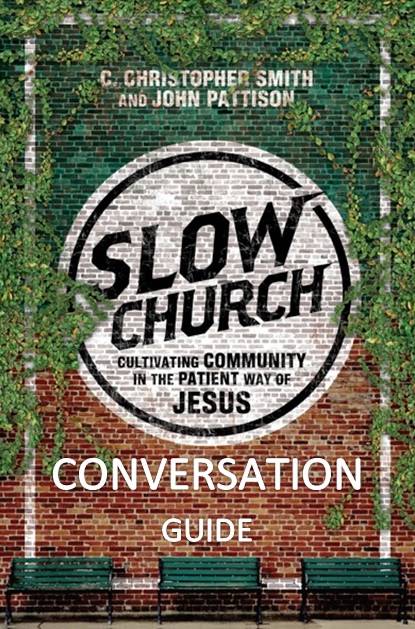
Slow Church Conversation Guide - Beta Version
Though each chapter of Slow Church ends with "conversation starters," questions meant to help...
read more
«
1
2
3
4
5
»
Browse Our Archives
Select a Category
Abundance
Advent
Books
Community
Conferences
Conversations
Ecology
Economics
Emergent
Eucharist
Family
Food
Gratitude
Happenings
Health
history
Hospitality
Justice
Lent
Meditations
Neighborhoods
News
Peace
Place
Poetry
Politics
Sabbath
Scripture
Stories
Technology
The Table
Theology
Uncategorized
What is Slow Church?
Youth
Select a Month
January 2017
December 2016
November 2016
March 2016
June 2015
March 2015
February 2015
December 2014
November 2014
October 2014
September 2014
August 2014
July 2014
June 2014
May 2014
April 2014
March 2014
February 2014
January 2014
December 2013
November 2013
October 2013
September 2013
August 2013
July 2013
June 2013
May 2013
April 2013
March 2013
February 2013
January 2013
December 2012
November 2012
October 2012
September 2012
August 2012
July 2012
June 2012
May 2012
April 2012
March 2012
February 2012
January 2012
December 2011
November 2011
October 2011
September 2011
Follow Us!
OTHER
RELATED CONTENT
1
The Prophecies - Are False.
The Holy Kiss
2
Unveiling the Lies Behind Christian Nationalism...
Woman to Woman
3
How Far Does the “He Gets...
The Latin Right
4
The Unbiblical Ministry of Jesus and...
UNenlightenment
TRENDING AT PATHEOS Progressive Christian
The highway to hell needs chauffeurs for the...
We're gonna need a lot more bees. Plus: Animal-torturers for Trump, and...
Preaching about Climate Change? Scientists Can Help!
Earth Day is right around the corner! Science and religion can collaborate...
LBCF: My favorite character so far
"Left Behind" gives us a thin sketch of a Drunk Business Man...
INNER CIRCLE: Fasting For What?
Saying 104 They said to Jesus, “Come, let us pray today and...
Why We Need a New Atonement Theology
This is the second article of a three-part series proposing a brand-new...
Buckets of Reasons People Are Leaving Christianity
In my last column, I wrote that we (the United States) are...
view all Progressive Christian blogs



 Slow Church









 Ad-Free & Subscriber Log-In