International Holocaust Remembrance Day

by scotmiller on January 27, 2012

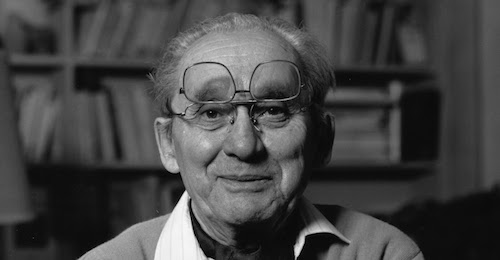
“God Is God Because He Remembers”

An essay read by Elie Wiesel on NPR’s All Things Considered, April 7, 2008

{ 0 comments }

Good Reasons

by scotmiller on January 26, 2012

I have to admit, I was surprised when Tony asked me to guest blog while he takes a brief break. After all, nobody really knows me, I’ve never written a book, I don’t have my own blog, and I only comment after somebody else says something. But I have to admit I was flabbergasted to see the comments welcoming me to Tony’s blog. Thank you for your warm welcome!

Good Reasons

One of the things I try to do in my comments on Tony’s blog is to give good reasons for what I believe. I suppose my fondness for good arguments comes from my training in philosophy and my having taught philosophy to undergraduates for several years. I insisted that my students give good reasons for their beliefs, reasons that can withstand rational scrutiny. That means that they had to be as critical of their own ideas as they were of ideas they disagree with. (The difference between a partisan thinkers and critical thinkers is that partisans can only criticize their opponent’s ideas, while critical thinkers are as worried about their own beliefs as they are about the beliefs of others.)

I also think that having good reasons should apply to my religious beliefs. For example, is there a difference between God and what I think about God? Almost all believers think so, especially those who speak of being in a relationship with God. But if God is not identical to what I think about God, are all ways of thinking about God equally good? No, some ways of thinking about God are better and worse than others. When we engage in rational discourse about religious matters, we are really trying to evaluate our ideas in order to arrive at beliefs which are more adequate to express the “reality” of God.

But should all of a believer’s reasons be rational reasons? Was Pascal right when he said, “The heart has reasons that reason cannot know”? To answer these questions, let me distinguish between the “rational” and the “nonrational.”

Rational

At a minimum, the “rational” is a sphere of pubic discourse which uses generally accepted rules of ordered thought to reach conclusions based on the best evidence from logic, history, experience, and nature. Further, what is “rational” is publicly justifiable and open to evaluation by other members of the rational community. Finally, rational beliefs and actions are always open to revision based on new knowledge and understanding.

It’s important to emphasize that being rational is no guarantee that one’s beliefs are true or one’s actions are correct. For thousands of years it was rational to believe that the earth was a sphere at the center of the universe around which the moon, sun, planets, and fixed stars moved. Not only did Aristotle and Ptolemy give arguments for the earth-centered universe, but the Bible seemed to confirm this belief, too (see Josh. 10:12-13, Ps. 19:4-6, Ps. 93:1, Ps. 104:5, Eccl. 1:5). This rational belief was proved to be false during the scientific revolution of the sixteenth and seventeenth centuries by better observations and better mathematical models to explain the data. We now understand that the earth revolves in an elliptical orbit around the sun, and we no longer interpret the poetic accounts of the movement of the sun in the Bible as if they were scientific descriptions.

In addition, both Plato and Aristotle offered rational justifications for slavery (the differences between people justified the enslavement of “inferior” people), and Christian slave-holders found ample justification for slavery in the Bible. (Southern slave holders were especially fond of Gen. 9:18-27, since the sons of Ham, who lived in Africa, were cursed to be slaves, and the southerner’s slaves came from Africa.) These arguments for slavery have not withstood rational scrutiny.

So having a rational belief is not the same thing as having a true belief. A rational belief is always open to revision when confronted with better evidence and better arguments.

Nonrational

But what about the heart’s reasons that reason can’t know? Do all of our reasons have to be rational and publicly debatable? Consider falling in love (or falling in deep infatuation). Lovers don’t always act in ways that make rational sense: they spend time and money on their lover when (rationally) they ought to use their time and money for other things. (“I couldn’t study for the test because I had to spend time with my girlfriend.”) Moreover they claim to know things about their lover that nobody else seems to recognize (“You just don’t know him the way I know him.”) Love may not be rational, but it isn’t irrational, either. So we can recognize that sometimes we have beliefs or actions that are non-rational, and that the non-rational may open us to truth that reason can’t fully comprehend.

Nonrational appeals to authority, feeling, intuition, religious experience, mystical experience, etc., demonstrate the limits of the “rational” and suggest that “the rational” is only one kind of consciousness. But the nonrational is only privately justifiable: only the people who share the same authority, feeling, intuition, etc. will buy the justification for nonrational reasons. For example, let’s say that you are a Christian who believes that the Bible is the Word of God. Quoting the Bible may be persuasive to someone who is predisposed to accept the Bible’s authority, but it’s not quite as convincing to someone who does not accept the Bible’s authority. After all, would a Christian be inclined to accept a claim as true if it came from the Koran?

Questions

Is there a good reason to distinguish between rational and nonrational beliefs? And is there a rational moral argument against same-sex marriage, or is the objection really norational because it is based on the authority of the Bible?

{ 31 comments }

Please Welcome Scot Miller

January 25, 2012

I’m taking a 6-day digital sabbath, my first in a long time. I’m spending a long weekend with Courtney and some friends, and I’m bringing nothing with me but books. I couldn’t be more excited. I’ve got a few posts set up for my absence. But mainly I’m handing the reigns over to Scot Miller. [...]

Read the full article →

Happy Birthday, Theoblogy!

January 25, 2012

On this day in 2004, I wrote my first post.  It wasn’t much of anything.  In the eight years since — 1,747 posts and 22,683 comments later – I’ve become less snarky. I hope I’m a better writer — I know I’m a better blogger. In celebration, I’m taking a digital holiday until the middle of next [...]

Read the full article →

Precipitating the Death of the Mainline

January 24, 2012

David Henson says, Bring It On! I do not fear the death of the mainline church.In fact, as a postulant for the priesthood in the Episcopal church, it excites me, and it is the precipitous decline of the mainline that, in part, draws me to ministry.Death can be a fertile ground for the Gospel. Indeed, [...]

Read the full article →

Slacktivist Asks SCOTUS a Question: Who’s a “Minister”?

January 24, 2012

Fred asks the questions that lower courts are going to be figuring out for years to come: Who’s a minister? And what’s a church? Say you’re the owner of a pizza place and you’re looking to hire a new delivery driver. You can’t put up a sign that says, “Jews Need Not Apply.” And you [...]

Read the full article →

A Mockumentary on the Emergent Church

January 23, 2012

What do you get when you mix a bunch of YouTube videos, interviews with a few ultra-conservative Christians, and some scary Danny Elfmann knock-off music? This:

Read the full article →

The Silence of Jesus (on Homosexuality)

January 23, 2012

I’ve been thinking more about the post I wrote last week about Daniel Kirk‘s new book, Jesus Have I Loved, but Paul?: A Narrative Approach to the Problem of Pauline Christianity. Daniel takes a generous but conservative posture toward homosexual behavior in chapter nine of his book, the chapter that I was asked to review. He gets [...]

Read the full article →

A Flat Church in Action

January 22, 2012

If I had the chance to do my dissertation research today, instead of 2005, there are a few other churches I’d use in the study. One of them would surely be Common Table in Washington, D.C., where Mike Stavlund and Co. are doing what they can to embody the flat church that I hope for [...]

Read the full article →

A Pentecostal Pastor Thinks Mark Driscoll Is Wrong about Women

January 21, 2012

Jonathan Martin weighs on Real Marriage and the Driscoll interview: To be clear, my reason for taking this on has nothing to do with Mark Driscoll personally, per se.  I have been just as passionate about defending women in ministry inside my own tradition.  (Those are other stories for another time—I just think its important to [...]

Read the full article →