
https://www.cnn.com/videos/us/2023/10/25/bear-trapped-vehicle-officers-affil-vpx.wsoc Read more


https://www.cnn.com/videos/us/2023/10/25/bear-trapped-vehicle-officers-affil-vpx.wsoc Read more

William Butler Yeats, one of the great Irish poets at the turn of the 20th century once wrote a poem entitled ‘The Second Coming’. which begins as follows….. Turning and turning in the widening gyre The falcon cannot hear the falconer; Things fall apart; the centre cannot hold; Mere anarchy is loosed upon the world, The blood-dimmed tide is loosed, and everywhere The ceremony of innocence is drowned; The best lack all conviction, while the worst Are full of passionate... Read more
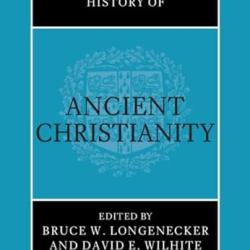
Q. What sort of audience are you hoping these essays will reach? A. These are research essays that will attract attention from researchers in particular — Masters students through to established scholars. But the interested life-long learner can also delve in with profit. Q. In view of the fact that Cambridge had already, twice over, produced the Cambridge History of the Bible, how does this volume help us fill in the gaps that are evident in those volumes?... Read more
Q. In reading through and editing all these essays, did the idea emerge of something called ‘mainstream’ or ‘orthodox’ Christianity as opposed to the heterodoxy of the many diverse variants—Gnostic and otherwise? A. David Wilhite addresses this question directly in his opening essay, and there are others that deal with particular aspects of the issue along the way — such as the essays on Marcionism and gnosticising forms of Christianity. In my view, the so-called “Christianities” of the pre-Constantinian... Read more
Q. Why just the period up to Constantine? Why not include the transition period when Christianity was a licit or legal religion from the beginning of the early 4th century up to and including Julian the Apostate who tried to turn back time and rejuvenate pagan religion? A. We use Constantine as a mile-marker rather than as a boundary, and allowed contributors to negotiate that mile-marker as they deemed most appropriate to their subject matter. In some aspects, the... Read more
Q. How long was this project in gestation? Having done this sort of editing for Cambridge commentaries I know that the more essays involved, the harder it becomes to get all the essay writers to meet the deadlines. A. We started moving forward with real intent in the Spring of 2017 — when we reached out to a number of scholars, giving them the vision for the volume and proposing that they join the project by writing a specific... Read more
What follows in this and the next few blog posts is a dialogue with Bruce Longenecker about this important volume– Q. What actually prompted the production of this volume, which I assume had to go through the usual process of approval by the Cambridge Syndics—right? A. In March 2016, Beatrice Rehl (Publishing Director in the Humanities and Social Sciences at Cambridge University Press) approached me to see if I would be interested in putting a volume of this kind... Read more
Cambridge University Press has a remarkable record of not only being the very first press in the English speaking world, but of publishing literally hundreds of volumes of high scholarship in many different fields for hundreds of years, and this wonderful volume edited by my old friend Bruce Longenecker, and his colleague David Wilhite is just such a volume as well. We have some 725 pages of careful research and writing by some 27+ scholars producing 27 chapters, which does... Read more

https://newbooksnetwork.com/pauls-letter-to-the-romans Read more
Long ago, I chronicled the spiritual experience I had in running the Boston marathon on this very blog. It really was about learning the limits of myself, and the need to rely on the Lord in life. During the last several miles I was repeating the phrase ‘are you running with me Jesus’, and he was. He got me to the spot you see above in April 1993 where I fell into the arms of my besty, as they say... Read more

Select your answer to see how you score.





 Ad-Free & Subscriber Log-In