

I searched through The Catholic controversy (1600) by St. Francis de Sales, doctor of the church, who lived after the Council of Trent and found what he had to say about the interpretation of scripture interesting and insightful for the Catholic apologist. I choose a few scattered passages from the big, long document assembled by the Very Rev. H. B. Canon Mackey O.S.B. in 1909 under the direction of the Right Rev. John Cuthbert Hedley O.S.B. Bishop of Newport. I did this for the edification of my fellow Catholics and other Christians and seekers of truth who hold scripture in high regard and want to follow the word of God wherever it leads them.
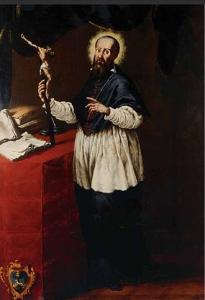
Here’s what I found that stood out…
Is Jesus Christ divided? No, surely, for he is the
God of peace, not of dissension, as S. Paul taught
throughout the Church. It cannot then be that the
true Church should be in dissension or division of
belief and opinion, for God would no longer be its
Author or Spouse, and, like a kingdom divided
against itself, it would be brought to desolation. As
soon as God takes a people to himself, as he has done
the Church, he gives it unity of heart and of path
the Church is but one body, of which all the faithful
are members, compacted and united together by all
its joints: there is but one spirit animating this
body:
God is in his holy place: who maketh men of one manner to dwell in a house (Ps. Ixvii. 7) ;
therefore, the true Church of God must be united, fastened
and joined together in one same doctrine and belief.
————————————————————-
S. Paul teaches calls the Church the pillar and ground
of truth (i Tim. iii. 15). Is not this to say that truth
is solidly upheld in the Church? Elsewhere truth is
only maintained at intervals, it falls often, but in the
Church it is without vicissitude, unmovable, unshaken,
in a word steadfast and perpetual. To answer that
S. Paul’s meaning is that Scripture has been put under
the guardianship of the Church, and no more, is to
weaken the proposed similitude too much. To
uphold the truth is a very different thing from guarding
the Scripture.
——–
I WELL know, thank God, that Tradition was before
all Scripture, since a good part of Scripture itself is
only Tradition reduced to writing, with an infallible
assistance of the Holy Spirit.
——————
The Jews guard a part of the Scriptures,
and so do many heretics; but they are not
on that account a column and ground of truth. The
bark of the letter is neither truth nor falsehood, but
according to the sense that we give it is it true or false.
The truth consists in the sense, which is, as it were, the marrow.
And therefore, if the Church were guardian of the truth, the sense of the Scripture
would have been entrusted to her care, and it would
be necessary to seek it with her, and not in the brain
of Luther or Calvin or any private person. Therefore
she cannot err, ever having the sense of the Scriptures.
And in fact, to place with this sacred depository the
letter without the sense, would be to place therein the
purse without the gold, the shell without the kernel,
the scabbard without the sword, the box without the
ointment, the leaves without the fruit, the shadow
without the body.
But tell me, if the Church has the care of the Scriptures, why did Luther
take them and carry them away from her?
And why do you not receive at her hands the Maccabees,
Ecclesiasticus, and the rest, as much as the Epistle to the Hebrews?
For she protests that she has just as jealous a care of those as of these.
In short, the words of S. Paul cannot suffer this sense that you
would give them: he speaks of the visible Church, for where would
he directs his Timothy to behave himself.
He calls it the house of Our Saviour; therefore
it is well founded, well ordered, well sheltered against
all storms and tempest of error. It is the pillar and
ground of truth; truth then is in it, it abides there, it
dwells there, who seeks it elsewhere loses it. It is
so thoroughly safe and firm that all the gates of hell,
that is, all the forces of the enemy, cannot make them
selves’ masters of it.
And would not the place be taken by the enemy if error entered it, with regard to the
things which are for the honor and service of the Master?
Our Lord is the head of the Church,
—are you not ashamed to say that the body of so holy a head is
adulterous, profane, corrupt? And say not
that he is head of an invisible Church, for, since there
is only a visible Church our Lord is the head of that;
as S. Paul says: And he hath made him head over all the Church (Eph. i 22)
not over one Church out of two, as you imagine, but over the whole Church.
I pray you, reformers,
tell me whence you have taken the canon of the
Scriptures which you follow?
You have not taken it from the Jews,
for the books of the Gospels would
not be there; nor from the Council of Laodicea, for
the Apocalypse would not be in it; nor from the
Councils of Carthage or of Florence, for Ecclesiasticus
and the Maccabees would be there. Whence, then,
have you taken it? In good sooth, like canon was
never spoken of before your time. The Church never
saw canon of the Scriptures in which there was not
either more or less than in yours. What likelihood
is there that the Holy Spirit has hidden himself from
all antiquity, and that after 1500 years he has disclosed
to certain private persons the list of the true Scriptures ?
For our part we follow exactly the list of the
Council of Laodicea, with the addition made at the
Councils of Carthage and Florence. Never will a man
of judgment leave these Councils to follow the
persuasions of private individuals. Here, then, is the
fountain and source of all the violations which have been made of this holy rule ;
namely, when people have taken up the fancy of not receiving it save by
the measure and rule of the inspirations which each
one believes and thinks he feels.
If the Scripture be the subject of our
disagreement, who shall decide ?
whoever says that Our Lord has placed us in
the bark of his Church, at the mercy of the winds
and of the tide, instead of giving us a skillful pilot
perfectly at home, by nautical art, with chart and compass,
such a one says that he wishes our destruction.
Let him have placed therein the most excellent compass
and the most correct chart in the world, what
use are these if no one knows how to obtain from them
some infallible rule for directing the ship? Of what
use is the best of rudders if there is no steersman to
move it as the ship’s course requires?
But if everyone is allowed to turn it in the direction he thinks
good, who sees not that we are lost?
For we do not ask whether
God understands the Scripture better than we do, but
whether Calvin understands it better than S. Augustine or S. Cyprian.
S. Hilary says excellently:
” Heresy is in the understanding, not in the Scripture,
and the fault is in the meaning, not in the words.”
and S. Augustine: ” Heresies arise simply from this,
that good Scriptures are ill-understood, and what is
ill-understood in them is also rashly and presumptuously given forth.”
———————————–
For, by supposition, let us say that there was never
Church, nor Council, nor pastor, nor doctor, since the
Apostles, and that the Holy Scripture contains only
those books which it pleases Calvin, Beza, and Martyr
to acknowledge; that there is no infallible rule for
understanding it rightly, but that it is at the mercy of
the notions of everybody who likes to maintain that
he is interpreting Scripture by Scripture, and by the
analogy of the faith, —as one might say he would get
to understand Aristotle by Aristotle and by the
analogy of philosophy. Only let us acknowledge that
this Scripture is divine. And I maintain before all
equitable judges that if not all, at least those amongst
you who had some knowledge and ability, are inexcusable,
and cannot defend their choice of religion from lightness and rashness.
And here is what I come to. The ministers will only fight on Scripture.
I am willing. They will only have such parts of Scripture as they chose.
I agree. And still, I say that the belief of the Catholic
Church beats them completely, since she has more
passages in her favor than the contrary opinion has,
and her passages are more clear, more simple, more
pure, interpreted more reasonably, more conclusive, and
more apt. This I believe to be so certain that every
one may come to know and recognize it.












 Ad-Free & Subscriber Log-In