

Pope Leo XIV@Pontifex (May 31, 2026) In the Mystery of God – Father, Son and Holy Spirit – we are at home, just as Nicodemus felt at ease when he was in Jesus’ presence. The life of God is marvelous and captivating. It gives peace to our heart, which is often very restless, and it allows us to encounter our brothers and sisters in the joy of the Spirit. #GospelOfTheDay (Jn 3:16-18)
We are in a position to learn from the Church the truths Christ entrusted to her, and these truths cover not only the bare minimum of necessary things —purpose and law—but also much besides for the further enrichment of man’s mind and man’s life.
All that is set forth in the book small Map of Life by Frank Sheed (1933) is simply the general outline of it. It contains the great mysteries of the Trinity, the Creation, Grace, the Redemption, the Mystical Body, the Sacraments, Hell and Heaven. In this small sampling of this book that according to Internet Archive is a Public Domain text, I will share part of the book that talks about of mystery in general and of the greatest of all mysteries,
THE MYSTERY OF THE TRINITY
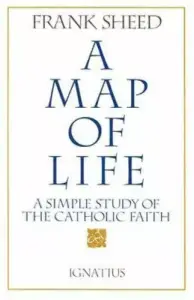
‘Map of Life’ good is a short and clear explanation of the Catholic faith. It takes the complexity of theology and brings it down to a level that the average Catholic or inquirer into the Catholic faith can understand without having his brain hurt too much. It lets him know there is a purpose in learning about the Catholic faith, which bears great relevance to his life. “God who made us and knew what he made us for has told us what he made us for. Accepting his Word, we know the purpose of our existence, and we can proceed to live intelligently according to it. Short of this knowledge, intelligent living is not possible for us.” (pg. 12) Map Of Life Is A Good Explanation Of The Catholic Faith | A Book Review Of Map Of Life By Frank Sheed.
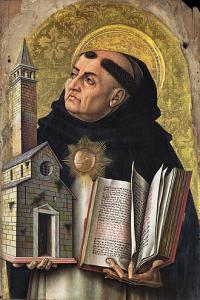
Mystery
We are finite, measured, limited on all sides. It is impossible that we should totally contain God in our minds so as totally to comprehend Him. But by His loving kindness we are endowed with a nature that can know something of Him some little by its own powers, vastly more by what He tells us of Himself in the mysteries He has revealed.
But a mystery is not merely a truth about God which we cannot discover for ourselves and can know only if God reveals it. If it were only that, the subject would present no difficulties. There is the further fact already suggested: that, even when God has revealed it to us, it remains a truth about an infinite being and is therefore not fully comprehensible by us.
And the trouble is that it first presents itself to the mind as an apparent contradiction in terms. Thus the mystery of the Trinity appears as a statement that there are three Persons, each of them God, yet not three Gods. Transubstantiation appears as a statement that what, by every test known to man, is bread is yet the Body of Christ. And so with the others.
But in these mysteries of religion, it soon becomes clear that the truths concerned plunge rapidly into depths where the mind cannot follow them. Mystery then is not the prohibition of thinking, but actually an invitation to think. The mysteries revealed by God are revealed as food for the mind,not as dangerous things that should be left alone. Every mystery contains a central nucleus of truth that is comprehended, surrounded on all sides bythings that we do not comprehend.
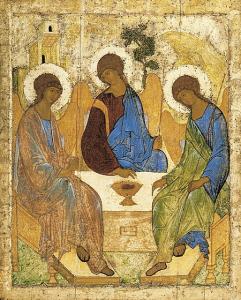
Doctrine of the Trinity
Thus the doctrine of the Trinity, at first seen only as a sheer challenge to Faith grows steadily more luminous to the mind which accepts it and comes humbly to the study of what the Church has seen in it. This truth that the Godhead is absolutely one essence, one single concrete Something: yet that there are three Persons owning the one Nature—the one self-same identical Nature: this truth not only grows more luminous as the ideas of Person and Nature are studied, as the relation of Father and Son and the Spirit proceeding from both is meditated on; but throws a flood of light on the whole of our understanding of life.
The doctrine that in the unity of the Godhead there are three Persons truly distinct is the Supreme mystery revealed by Christ. Beyond it is no further mystery, for it deals with the innermost life of God. In a sense, man need never have been taught it apart from the Incarnation: for it is God in His unity who acts in relation to created beings, the threefold Personality being a fact of His own inner life, of His own internal activity, of that activity which remains within His own nature and does not directly affect the beings He has created. But it is a property of love that it wants not only to know but also to be known by the person loved.
God loving us, wants us to know Him in His deepest and most secret life, and so gives us here upon earth a glimpse of that truth which it is man’s proper destiny to spend eternity in contemplating. And, apart from that desire of God’s to be known by man, the distinction of Persons has in fact a direct bearing on man’s life since it was the Second Person, and not God in His threefold Personality, who became man for our salvation.
It is the supreme mystery.
The mind of man may say, “I cannot see the possibility”: it dare not say, “I see the contradiction.” To the mind thus faltering comes the revelation of God that it is so: and contained within the revelation are certain truths which help the mind to progress in it. God has not simply revealed to us a handful of words.
Sometimes an analogy helps.
The Three Persons
The Three Persons—the Father, the Son, the Holy Ghost—each” possess the one Divine nature: they do not share it: they each possess it in its totality, It is important to grasp exactly what this means. Men, we say, have one nature, in the sense that they all are
human and human nature is one thing. But though Brown and I are of one nature, I cannot think with Brown’s mind nor love with Brown’s will. I must think with my own mind and love with my own will. So that, although in a general sense human nature is one, in the concrete each man has his own nature and acts in it.
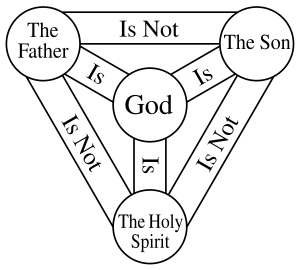
With the Three Persons of the Trinity this is not so. There is but one Divine nature,one Divine mind, one Divine will. The three Persons each use the one mind to know with, the one will to love with. For there is but the one absolute Divine nature. Thus there are not three Gods, but one God. The Christian revelation cannot allow the faintest derogation from pure monotheism. The three Persons, then, are not separate. But they are distinct. The Father is God, the Son is God, the Holy Ghost is God. But the Father is not the Son, nor the Son the Holy Ghost, nor the Holy Ghost the Father.
Conclusion
In thus setting down some of the elements of what God has revealed to us of His own innermost life, it is clear that the mystery remains, but it is mystery in the sense —the reconciliation remains invisible to us, but it is rather the invisibility that comes from too much light than from sheer darkness. Thus it is an invitation to the mind.
Already, the mind is freed by it from the awful weight of God conceived as solitary in infinity, with no adequate object of His infinite love. And new richness comes into our contemplation of human thus human fatherhood is an immeasurably greater thing as a shadow of the Divine Fatherhood than it could ever be in its own right: the human soul is only the more like to God for its faculties of intellect and will, since in God Thought and Love not only exist, but subsist as Persons: and the Unity of the Church takes on a new immensity when Christ proposes as its model the Unity of the Triune God






 Ad-Free & Subscriber Log-In