

On this day November 13, 1940, Walt Disney’s classic piece of animation Fantasia first came out for the world to see. It came out in a year in which serval cultural cartoon and comic book characters first entered the public consciousness. A lot of them are still viewed and watched in new forms 80 years later.
Bugs Bunny, Tom and Jerry, Woody Woodpecker, The Flash, Captain America, Archie Andrews, Lex Luther, Robin and the Joker, Abbot and Costello on film, the first Anti-Nazi comedies and more all made their first appearances in this year of world transition. There are so many media cultural characters and important historical events that appeared in the start of the 1940s during the outbreak of World War 2, that its’ worth taking a look at all that happen during this year of turmoil and creativity with a more in-depth look.
85 Years Ago
1940
Picture This
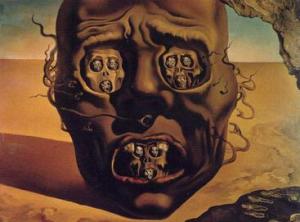
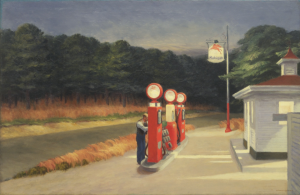
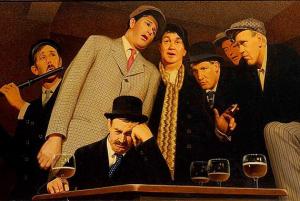
Grant Wood – Sentimental Ballad
Hot of the Press
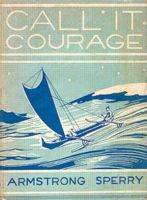
Armstrong Sperry – Call It Courage
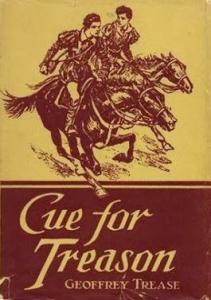
Geoffrey Trease – Cue for Treason
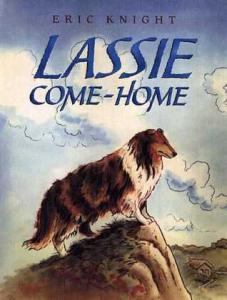
Eric Knight – Lassie Come-Home
Polish sculptor and artist Xawery Dunikowski is deported to Auschwitz concentration camp, where he survives until 1945.
Youth For Christ (YFC) is a worldwide Christian movement working with young people, whose main purpose is evangelism among teenagers. It began informally in New York City in 1940, when Jack Wyrtzen held evangelical Protestant rallies for teenagers.
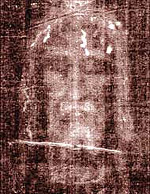
1940 – Shroud of Turin Questions The first official modern association between the image on the Shroud and the Catholic Church was made in 1940 based on the formal request by Sister Maria Pierina De Micheli to the curia in Milan to obtain authorization to produce a medal with the image. The authorization was granted and the first medal with the image was offered to Pope Pius XII who approved the medal. The image was then used on what became known as the Holy Face Medal worn by many Catholics, initially as a means of protection during World War II. In 1958 Pope Pius XII approved of the image in association with the devotion to the Holy Face of Jesus, and declared its feast to be celebrated every year the day before Ash Wednesday. Following the approval by Pope Pius XII, Catholic devotions to the Holy Face of Jesus have been almost exclusively associated with the image on the shroud.
January 1940
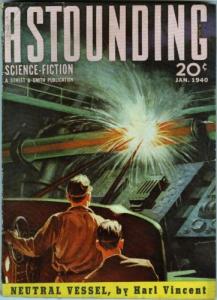
Requiem by American writer Robert A. Heinlein, a sequel to his science fiction novella “The Man Who Sold the Moon“, although it was in fact published several years earlier than that story, in Astounding, January 1940. The story was also performed as a play on October 27, 1955, on the NBC Radio Network program X Minus One.
January 2, 1940 (Tuesday) The Irish government introduced emergency powers to incarcerate members of the Irish Republican Army without trial.
January 3, 1940 – Flash (Jay Garrick) in Flash Comics #1 (January), created by Gardner Fox and Harry Lampert, published by National Periodical Publications

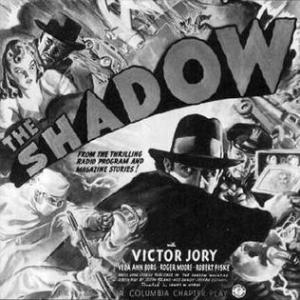
January 5, 1940 – The Shadow, starring Victor Jory, directed by James W. Horne
Elvis Aaron Presley (January 8, 1935 – August 16, 1977) turns 5.
January 6, 1940 – “When You Wish Upon a Star sung by Glenn Miller and his Orchestra US BB 1940 #4, US #1 for 9 weeks, 19 total weeks, 1,000,000 sold
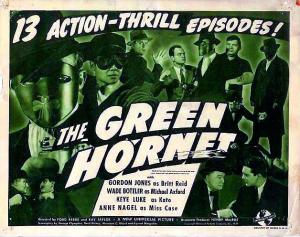
January 9, 1940 –The Green Hornet, starring Warren Hull
January 12, 1940 – The Invisible Man Returns, starring Cedric Hardwicke and Vincent Price
The Shop Around the Corner, directed by Ernst Lubitsch, starring Margaret Sullavan and James Stewart
January 14, 1940 (Sunday) – Hitler ordered that no one would be allowed to know more than he did about any secret matter.
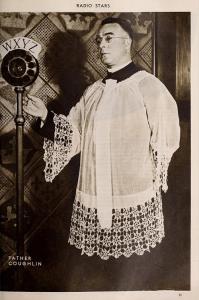
FBI agents arrested 17 members of the Christian Front for planning a vast plot to overthrow the U.S. government and establish a fascist dictatorship. The charges were described as “a bit fantastic” by the Attorney General, Robert Jackson, and eventually dropped. The Christian Front was a far-right anti-Semitic political association active in the United States from 1938 to 1940, started in response to radio priest Charles Coughlin. The Christian Front was mainly based in New York City and many of its members were Irish and German American Catholics.
January 18, 1940 –His Girl Friday, directed by Howard Hawks, starring Cary Grant, Rosalind Russell, Ralph Bellamy
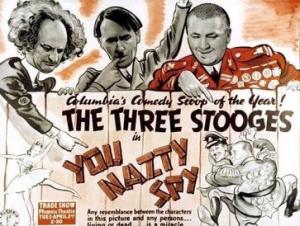
January 19, 1940 – The Three Stooges‘ You Nazty Spy!, the first Hollywood anti-Nazi comedy film, is released.
January 22, 1940 (Monday) – Pope Pius XII made a radio broadcast condemning Germany’s actions in Poland.
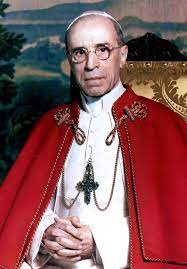
The United States Treasury published a list of Americans who made salaries of more than $75,000 in 1938. The list revealed that Claudette Colbert was the highest-paid star in Hollywood that year with a salary of $301,944, followed by Warner Baxter who made $279,807

January 23, 1940 (Tuesday) Britain lowered the speed limit at night in populated areas to 20 miles per hour due to the sharp increase in the rate of auto accidents during blackouts.
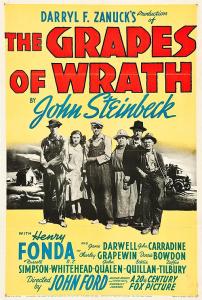
January 24, 1940 (Wednesday) -The drama film The Grapes of Wrath premiered in New York City.
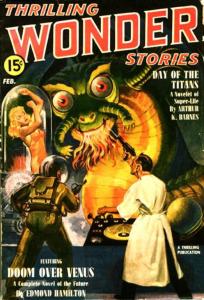
February 1940
Doom Over Venus • novelette by Edmond Hamilton – Thrilling Wonder Stories, February 1940
February 1940 – After ten-year expedition at Tanis, “Silver Pharaoh” tomb uncovered by Pierre Montet. It is the first ever intact tomb found
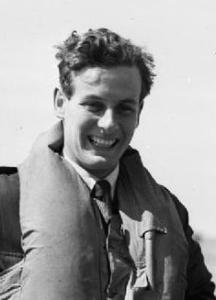
February 3, 1940 (Saturday) A German plane crashed on English soil for the first time in the war when a Heinkel He 111 was shot down near Whitby. Flight Lieutenant Peter Townsend of 43 Squadron was credited with the air victory.
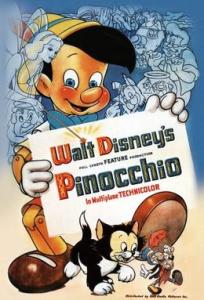
February 7, 1940 – Walt Disney‘s second animated feature film Pinocchio premieres at the Center Theatre in New York City. Although not a box office success upon its initial release (due to being cut off from international markets due to World War II), the film receives critical acclaim and wins two Academy Awards, including one for Best Original Song for “When You Wish Upon a Star“. Through a reissue after the war, Pinocchio becomes profitable and gains a cult following; eventually, it is considered one of the greatest films of all time.
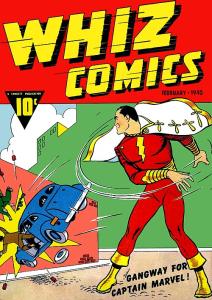
Whiz Comics #2, the first appearance of Captain Marvel — Fawcett (This is actually #1 due to Whiz Comics #1 doesn’t exist)
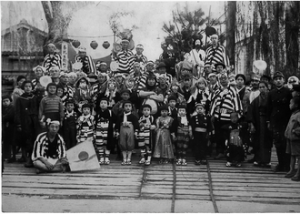
February 10, 1940 – To mark the 2,600th anniversary of the traditional founding date of Japan, Pope Pius XII sent Emperor Hirohito a telegram that said in part: “We ask God that may you cease hostilities and that through Divine aid may the Japanese people and their sovereigns attain greater glory and happy years.”
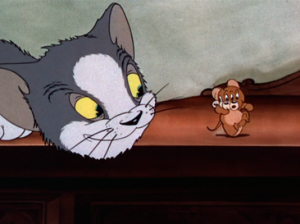
Tom and Jerry make their debut in the animated cartoon Puss Gets the Boot. The characters are initially known as “Jasper and Jinx” for this cartoon only.
The U.S. Supreme Court decided Chambers v. Florida, an important case dealing with the admissibility of coerced confessions.
The radio serial The Adventures of Superman, adapted from the comic book character Superman, premiered as a syndicated show.
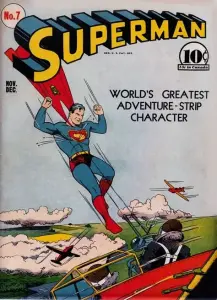
February 14, 1940 –The character Perry White was created for the radio serial The Adventures of Superman, voiced by actor Julian Noa. He first appeared in the second episode, “Clark Kent, Reporter”. The character was introduced into the comic books later that year, appearing in Superman #7 (November 1940).
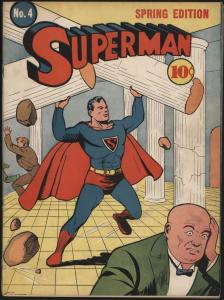
February 15, 1940 (Thursday) Superman #4 was published, marking the first appearance of the villain Lex Luthor.
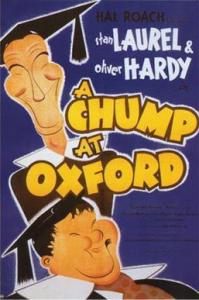
February 16, 1940 – A Chump at Oxford, starring Stan Laurel and Oliver Hardy, featuring a young Peter Cushing.
February 21, 1940 (Wednesday) Concentration Camps Inspectorate head Richard Glücks recommended a lcation for a “quarantine” camp in Poland. The site was a former Austro-Hungarian cavalry barracks near the town of Oświęcim, known in German as Auschwitz.
February 22, 1940 – In Tibet, province of Ando, 4-year-old Tenzin Gyatso is proclaimed the tulku (rebirth) of the 13th Dalai Lama.
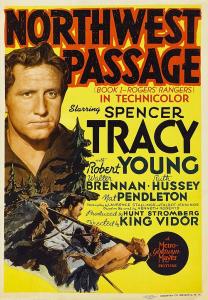
February 23, 1940 –Northwest Passage, directed by King Vidor, starring Spencer Tracy and Robert Young
February 24, 1940 (Saturday) Hitler made a speech in Munich on the 20th anniversary of the founding of the Nazi Party in which he declared that Germany must be and would be victorious.

February 25, 1940 (Sunday) The first hockey game televised in North America was broadcast on W2XBS from Madison Square Garden between the New York Rangers and Montreal Canadiens.
February 29, 1940 (Thursday) The 12th Academy Awards were held in Los Angeles, hosted by Bob Hope for the first of what would be nineteen times. Gone With the Wind won eight awards including Best Picture. Hattie McDaniel became the first African-American to win an Oscar when she was named Best Supporting Actress. The Los Angeles Times published the names of the winners in its 8:45 p.m. edition, so most of the attendees already knew the results ahead of time. The Academy would respond by starting a tradition the following year in which the winners were not revealed until the ceremony itself when sealed envelopes were opened.

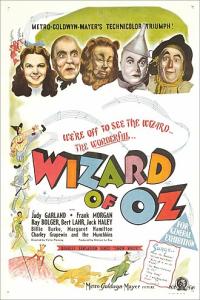
The Wizard of Oz was a critical success and was nominated for five Academy Awards, including Best Picture, winning Best Original Song for “Over the Rainbow” and Best Original Score for Stothart; an Academy Juvenile Award was presented to Judy Garland.
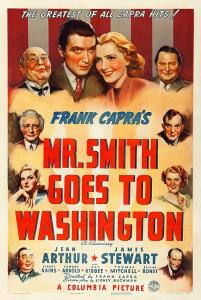
Mr. Smith Goes to Washington was nominated for eleven Academy Awards, including Best Picture, Best Director and Best Actor, winning Best Original Story directed by Frank Capra, starring Jean Arthur and James Stewart, and featuring Claude Rains and Edward Arnold.
March 1940
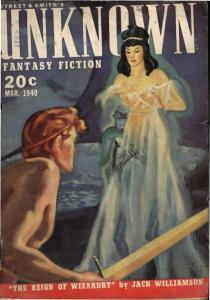
Derm Fool by Theodore Sturgeon Unknown Fantasy Fiction, March 1940
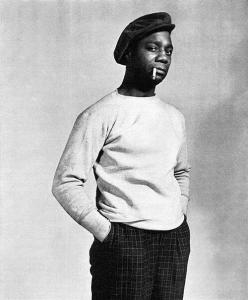
March 1, 1940 (Friday) The novel Native Son by Richard Wright was published in the United States.
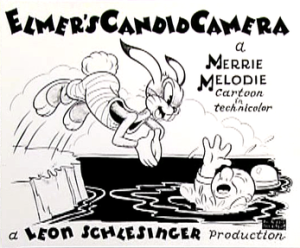
March 2, 1940 (Saturday) The character of Elmer Fudd first appeared in the Warner Bros. animated short Elmer’s Candid Camera. It an early Bugs Bunny prototype.
March 3, 1940 – Flash Gordon Conquers the Universe, starring Buster Crabbe
“Frenesi” sung by Artie Shaw and His Orchestra US BB 1940 #1, US #1 for 13 weeks, 29 total weeks, Grammy Hall of Fame 2000, 1,000,000 sold
March 4, 1940 (Monday) The Home Office announced that women would not be asked to work more than 60 hours a week in British factories, and youth under 16 would not be required to work more than 48. In World War I, women were frequently working as many as 70 hours a week.
March 5, 1940 – Fibber McGee and Molly – Cleaning Out the Hall Closet”
March 10, 1940 (Sunday) Joachim von Ribbentrop arrived in Rome for a two-day meeting with Benito Mussolini. It was agreed that Mussolini would have a face-to-face meeting with Hitler soon to discuss Italy entering the war.
March 11, 1940 – Ed Ricketts, John Steinbeck and six others leave Monterey, California, United States, for the Gulf of California, on a marine invertebrate collecting expedition.
March 12, 1940 (Tuesday) Sumner Welles met Winston Churchill. In Welles’ account of the meeting he wrote that “Mr. Churchill was sitting in front of the fire, smoking a 24-inch cigar, and drinking a whiskey and soda. It was quite obvious that he had consumed a good many whiskeys before I arrived.” For almost two hours Welles listened to Churchill deliver “a cascade of oratory, brilliant and always effective, interlarded with considerable wit.
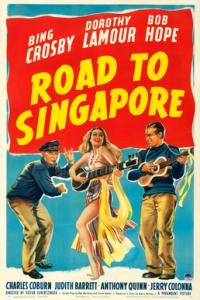
March 14, 1940 (Thursday) The comedy film Road to Singapore, starring Bing Crosby, Bob Hope and Dorothy Lamour was released. It was the first in the series of the popular Road to … movies.
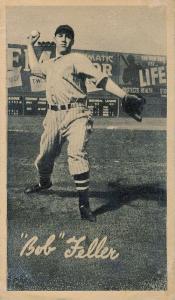
March 17, 1940 (Sunday) Major league baseball held a special spring training all-star game in Tampa, Florida to support the people of Finland. The exhibition raised more than $20,000 for the Finnish Relief Fund. The National League won the game 2-1 when Pete Coscarart of the Dodgers hit a walk-off single off Bob Feller in the bottom of the ninth.
March 18, 1940 (Monday)
Hitler met with Mussolini at the Brenner Pass in the Alps. Hitler made it clear that German troops were poised to launch an offensive in the west and that Mussolini would have to decide whether Italy would join in the attack or not. Since Italy was still not ready for war, Mussolini suggested that the offensive could be delayed a few more months, to which Hitler replied that Germany was not altering its plans to suit Italy. The two agreed that Italy would come into the war in due course.
Sumner Welles and Myron Charles Taylor met Pope Pius XII. Taylor asked the pope if there would be revolution in Italy should Mussolini bring the country into the war. The pope seemed surprised at the question and after careful consideration replied that Italian public opinion was overwhelmingly against joining the war, but that there would not be any rebellion for at least some time if Italy did enter.
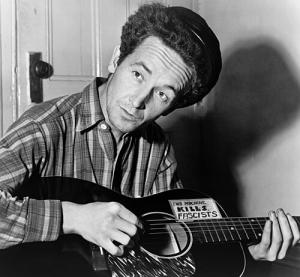
March 21, 1940 (Thursday) Woody Guthrie was recorded for the first time, in an interview with Alan Lomax for the Library of Congress during which he also performed some original and traditional songs.
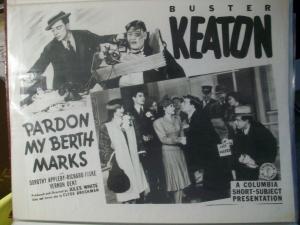
March 22, 1940 – Pardon My Berth Marks starring Buster Keaton is released.
March 23, 1940 (Saturday)
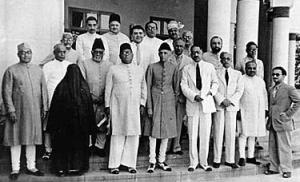
The Lahore Resolution was adopted by the All-India Muslim League.
Twelve Irish Republican Army convicts rioted in HM Prison Dartmoor. The inmates took two warders prisoner, locked a third one in a cell and started a fire that took 90 minutes to put out.
The quiz show Truth or Consequences premiered on NBC Radio.
April 1940
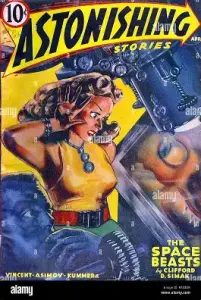
The Space-Beasts • novelette by Clifford D. Simak Astonishing Stories, April 1940
April 1940 – Let the People Sing sung by Geraldo and The Savoy Hotel Orchestra
April 1, 1940 (Monday)
The 1940 United States census was taken.
The BBC broadcast what appeared to be a speech by Adolf Hitler, in which the Führer reminded the audience that Columbus had discovered America with the help of German science and technology, and therefore Germany had a right “to have some part in the achievement which this voyage of discovery was to result in.” This meant that all Americans of Czech and Polish descent were entitled to come under the protection of Germany and that Hitler would “enforce that right, not only theoretically but practically.” Once the German Protectorate was extended to the United States, the Statue of Liberty would be removed to alleviate traffic congestion and the White House would be renamed the Brown House. CBS contacted the BBC in something of a panic trying to learn more about the origin of the broadcast, not realizing that it was an April Fools’ Day hoax. The voice of Hitler had been impersonated by the actor Martin Miller.
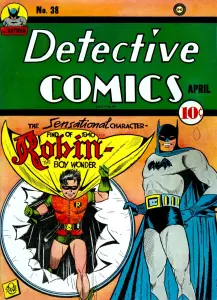
April 3, 1940 – Detective Comics (1937 series) #38 – DC Comics, first appearance of Robin.
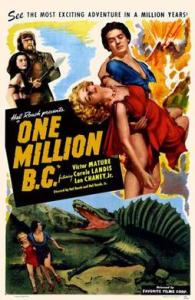
April 5, 1940 – One Million B.C., directed by Hal Roach and Hal Roach Jr., starring Victor Mature, Carole Landis and Lon Chaney Jr.
April 7, 1940 – Booker T. Washington becomes the first African American to be depicted on a United States postage stamp.
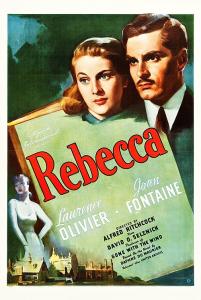
April 12, 1940 – Alfred Hitchcock‘s first American film Rebecca is released, under the production of David O. Selznick. It would go on to win the Academy Award for Best Picture.
During a press conference at the White House, reporters asked President Roosevelt whether a violation of the integrity of Greenland, such as a German invasion, would raise the question of applying the Monroe Doctrine. The president called the reporters “very, very premature” and “awfully hypothetical,” explaining that the U.S.’s primary interest in Greenland was currently in providing relief for its 17,000 inhabitants if their supply ships from Denmark were cut off. The president also took a question about television. He said that while it had “a great future”, the FCC still needed to work out the matter of monopoly prevention to ensure that no single company would control it.
April 13, 1940 – The New York Rangers win the 1940 Stanley Cup Finals in ice hockey. It will be another 54 years before their next win in 1994.
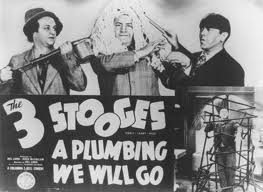
April 19, 1940 – A Plumbing We Will Go with the 3 Stooges
April 20–24, 1940 – Plan Kathleen, an Irish Republican Army (IRA) plan for a Nazi German invasion of Northern Ireland, was presented to the Abwehr (German military-intelligence service).
April 23, 1940 (Tuesday) The Norwegian Nobel Institute in Oslo was visited by a German officer who expressed his intention to take over the building, but was told that it belonged to the Nobel Foundation in Stockholm and was therefore Swedish property. Nevertheless, the wartime situation made the Nobel Committee’s regular activities difficult to conduct and so there would be not be any Nobel Prizes awarded for 1940, 1941 or 1942, and no ceremony until 1944 when a special one was held in New York City.
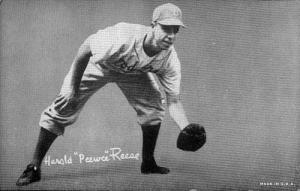
Pee Wee Reese made his major league baseball debut for the Brooklyn Dodgers, going 1-for-3 against the Chicago Cubs.
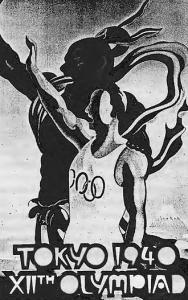
Helsinki forfeited the 1940 Summer Olympics. The games were ultimately cancelled because of World War II alongside the 1940 Winter Olympics in Sapporo, Japan, and were the third games to be cancelled due to war.
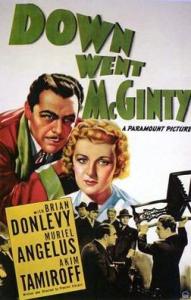
The Great McGinty, directed by Preston Sturges, starring Brian Donlevy
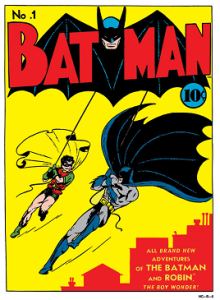
April 24, 1940 – Batman (1940 series) Issue #1 of the comic book Batman was published, starring the character of the same name who was already popular from his appearances in other comics over the previous year. This first issue marked the first appearances of the Joker and Catwoman (initially called The Cat).
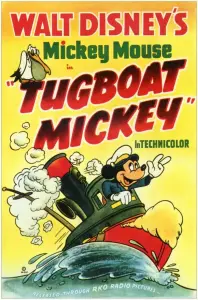
April 26, 1940 – with Mickey Mouse, Donald Duck, Goofy
May 1940
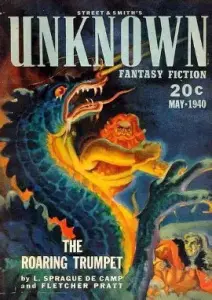
The Roaring Trumpet by L. Sprague de Camp–Unknown Fantasy Fiction, May 1940
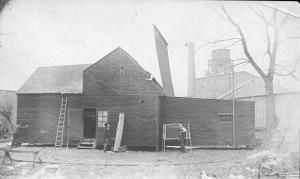
May – A reproduction of “America’s First Movie Studio”, Thomas Edison‘s Black Maria, is constructed.
May 2, 1940 (Thursday)
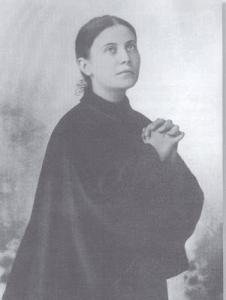
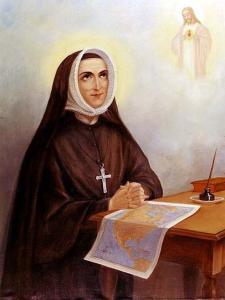
Italian mystic Gemma Galgani and French nun Mary Euphrasia Pelletier were canonized by Pope Pius XII.

The International Olympic Committee formally canceled the 1940 Summer Olympics.[
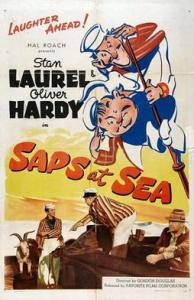
May 3, 1940 – Saps at Sea, starring Laurel and Hardy
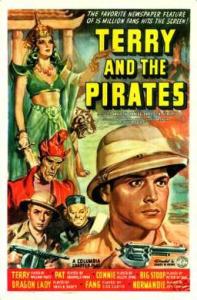
May 5, 1940 – Terry and the Pirates, starring William Tracy, directed by James W. Horne.
May 6, 1940 (Monday)
Pope Pius XII shared intelligence with the Princess of Italy Marie José of Belgium that had been gathered by Vatican agents indicating that Germany was planning an attack on the Low Countries.[1]
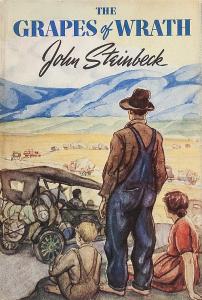
John Steinbeck won a Pulitzer Prize for his novel The Grapes of Wrath.
May 12, 1940 (Sunday) Rose Philippine Duchesne was beatified by Pope Pius XII.
May 15, 1940 – Brothers Richard and Maurice McDonald founded McDonald’s in San Bernardino, California, in 1940 as a hamburger stand.

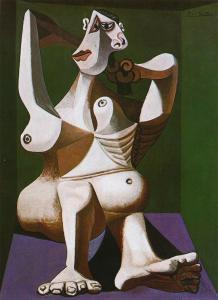
May 16, 1940 – Picasso rents a studio in Royan and, after numerous trips to Paris, arrives there on this date along with Dora Maar. In June, finishes the work on the painting Woman Combing Her Hair one of the most important works of the “Royan period.” Pablo Picasso — 1940
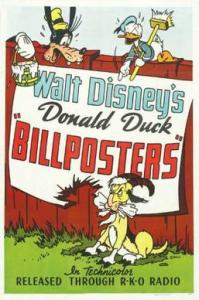
May 17, 1940 – Billposters starring Donald Duck and Goofy.
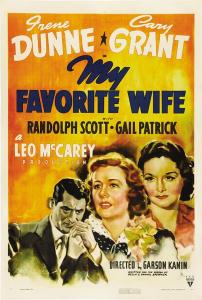
My Favorite Wife, directed by Garson Kanin, starring Irene Dunne, Cary Grant, Randolph Scott and Gail Patrick
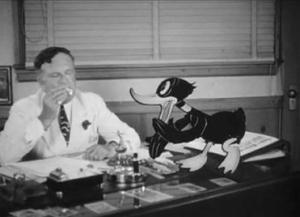
May 18, 1940 – You Ought to Be in Pictures with Porky Pig and Daffy Duck. The film combined live-action and animation, and features live-action appearances by Leon Schlesinger, writer Michael Maltese, animator Gerry Chiniquy and other Schlesinger Productions staff members.[3] The title comes from the popular 1934 song “You Oughta Be in Pictures” by Dana Suesse and Edward Heyman, which plays several times throughout the film.
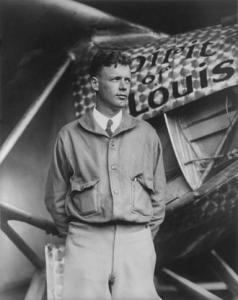
May 19, 1940 (Sunday) Charles Lindbergh made another nationwide radio address in favor of American isolationism. “We need not fear a foreign invasion unless American peoples bring it on through their own quarreling and meddling with affairs abroad,” Lindbergh said. “If we desire peace, we need only stop asking for war. No one wishes to attack us, and no one is in a position to do so.”
May 22, 1940 – The George Burns and Gracie Allen show aired on the CBS Network. This show is during Gracie’s famous 1940 “campaign” for the presidency.
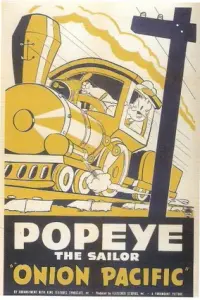
May 24, 1940 –Onion Pacific is Popeye‘s 80th theatrical short by Fleischer Studios.
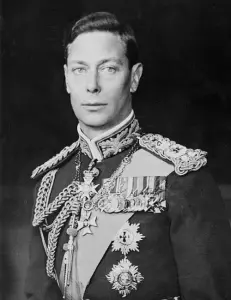
On Empire Day, King George VI addressed his subjects by radio, saying, “The decisive struggle is now upon us … Let no one be mistaken; it is not mere territorial conquest that our enemies are seeking. It is the overthrow, complete and final, of this Empire and of everything for which it stands, and after that the conquest of the world. And if their will prevails they will bring to its accomplishment all the hatred and cruelty which they have already displayed.
May 26, 1940 – First free flight of Igor Sikorsky‘s Vought-Sikorsky VS-300 helicopter, in the United States.
May 31, 1940 (Friday) Poor weather over Dunkirk allowed the British to conduct the day’s evacuations with reduced fear of German air attacks. This day was the high point of the evacuation, with a total of 68,014 rescued.
June 1940
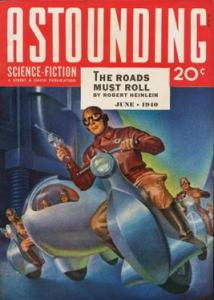
The Roads Must Roll published in the June 1940 issue of Astounding Science Fiction.
June 2, 1940: First publication of Will Eisner‘s “The Spirit Section”, featuring debuts of the series The Spirit, Lady Luck and Mr. Mystic. In The Spirit both The Spirit and Ebony White make their debuts.
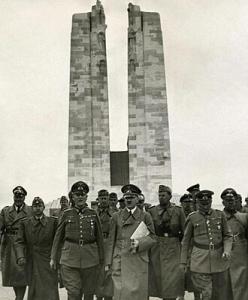
Adolf Hitler entered French territory for the first time in the war and visited the Canadian National Vimy Memorial, where photographers took his picture as he walked around the site with his entourage. The photos, showing the memorial intact, were then published in German newspapers to refute stories in the Canadian media claiming that the Germans had bombed it
June 3, 1940 (Monday) – The U.S. Supreme Court decided Minersville School District v. Gobitis. This was a decision by the Supreme Court of the United States restricting the religious rights of public school students under the First Amendment to the United States Constitution. The Court ruled that public schools could compel students—in this case, Jehovah’s Witnesses—to salute the American flag and recite the Pledge of Allegiance despite the students’ religious objections to these practices. This decision led to increased persecution of Witnesses in the United States. The Supreme Court overruled this decision three years later in West Virginia State Board of Education v. Barnette (1943).
AMERICAN LEGATION
Monrovia, Liberia
June 11, 1940
Dear Doctor Mann:
With reference to the desire you expressed
the other day, I have to inform you that the
Liberian Government states that they have no objection
to your proposed visit to Wreputa in the interest
of the Smithsonian-Firestone Expedition.
I shall be pleased if you will call to see me
when next you are in Monrovia.
Very truly yours.
Clifton R Wharton
American Charge d’Affaires ad interim
Dr. William M, Mann, Director,
Smithsonian-Firestone Expedition,
Harbel, Liberia.
Smithsonian-Firestone Expedition to Liberia, 1940
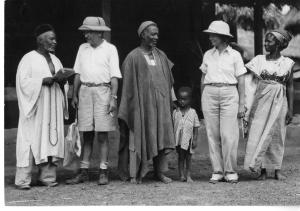 From 1925 to 1956, William M. Mann (1886-1960) was Director of the National Zoological Park. His wife, Lucile Quarry Mann (1897-1986) often accompanied him on collecting trips. In 1940 the Mann’s were on the Smithsonian-Firestone Expedition to Liberia. He wrote, “At Bendaja, we made friends with Boima Quae (center), a famous old Gola chief, the Mohammedan priest of the village (far left), and Fermetah, the chief’s favorite wife (far right).” William M. Mann is second from left; Lucile Quarry Mann is second from right. A science writer, Lucile Mann would produce the popular accounts of their expeditions. She also became skilled at care of exotic animals, feeding and caring for animals on expeditions and raising several big cat cubs in their home.
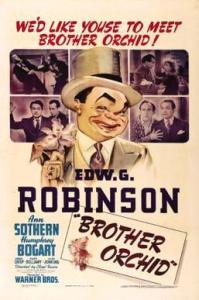
June 8, 1940 –Brother Orchid, directed by Lloyd Bacon, starring Edward G. Robinson, Ann Sothern and Humphrey Bogart
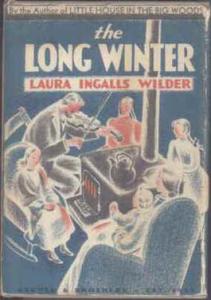
June 15, 1940 – Laura Ingalls Wilder – The Long Winter
June 18, 1940 (Tuesday) Hitler and Mussolini met in Munich to discuss the French armistice request. Mussolini hoped to present Hitler with a list of spoils that Italy wanted to get from the French, but was embarrassed when Hitler displayed no interest in discussing the matter at the time. Hitler also politely but firmly denied Mussolini’s request to sit at the same table to sign the armistice with the French, leaving the Italians to seek out a separate one.
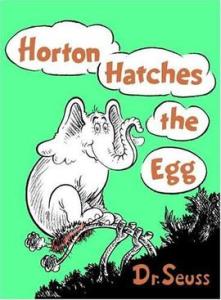
June 19, 1940 – Dr. Seuss – Horton Hatches the Egg
June 23, 1940 (Sunday) – Adolf Hitler flew to Paris and visited sites including the Eiffel Tower, the Arc de Triomphe and Napoleon‘s tomb at Les Invalides.
June 26, 1940 – Soviet calendar: The Soviet Union reverts to a seven-day week for all purposes.
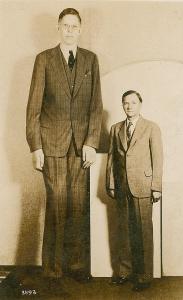
June 27, 1940 – Robert Wadlow passes John Rogan as the tallest person ever recorded (18 days before his death). He was measured by doctors at 8 ft 11.1 in (2.72 m).
June 28, 1940 (Friday)
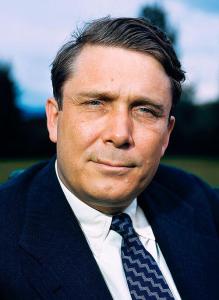
At 1:02 a.m. the Republican Party nominated Wendell Willkie of Indiana as its candidate for President of the United States. A dark horse candidate with a background in business, Willkie had never held public office before but won the nomination because he was seen as a moderate whose views were the closest match to those of the electorate.
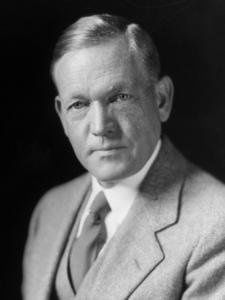
Charles L. McNary of Oregon received the nomination for vice president at the Republican convention.
Willkie made his acceptance speech before the Republican convention, declaring, “I stand before you without a single pledge or promise or understanding of any kind except for the advancement of your cause and the preservation of American democracy.
General Charles de Gaulle is officially recognized by Britain as the “Leader of all Free Frenchmen, wherever they may be.”
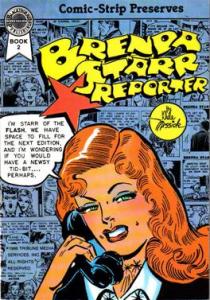
June 30, 1940 (Sunday) – The comic strip Brenda Starr, Reporter first appeared.
July 1940
Lester del Rey – Dark Mission •Astounding Science-Fiction, July 1940
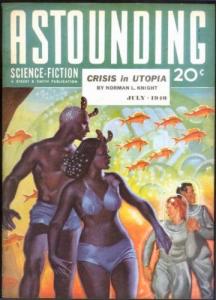
July 1940 – “Maybe” Sung By The Ink Spots US BB 1940 #12, US #2 for 6 weeks, 17 total weeks
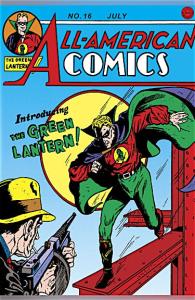
July 3, 1940 – All-American Comics (1939 series) #16 – DC Comics, first appearance of Green Lantern (Alan Scott)
The Abbott and Costello Show debuts on NBC
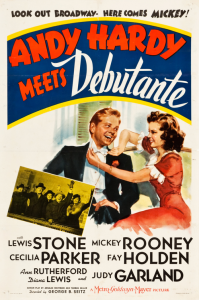
Andy Hardy Meets Debutante, directed by George B. Seitz, starring Lewis Stone, Mickey Rooney, Cecilia Parker, Fay Holden and Judy Garland
July 18, 1940 (Thursday) –Franklin D. Roosevelt was nominated almost unanimously at the Democratic National Convention to run for an unprecedented third term as President of the United States. Henry A. Wallace of Iowa was selected as Roosevelt’s running mate.
July 19, 1940 (Friday)
Hitler made a speech to the Reichstag reviewing the course of the war and then warned, “Mr. Churchill, or perhaps others, for once believe me when I predict a great empire will be destroyed, an empire that it was never my intention to destroy or even to harm. I do realize that this struggle, if it continues, can end only with the complete annihilation of one or the other of the two adversaries. Mr. Churchill may believe this will be Germany. I know that it will be Britain.” Hitler then appealed “once more to reason and common sense”, saying, “I can see no reason why this war must go on.” He said if Churchill brushed aside this appeal, “I shall have relieved my conscience in regard to the things to come.” BBC German-language broadcaster Sefton Delmer unofficially rejected it at once.
Roosevelt gave his acceptance speech to the Democratic National Convention. The president listed his reasons for running again and stated, “my conscience will not let me turn my back upon a call to service. The right to make that call rests with the people, through the American method of a free election. Only the people themselves can draft a President. If such a draft should be made upon me, I say to you, in the utmost simplicity, I will, with God’s help, continue to serve with the best of my ability and with the fullness of my strength.
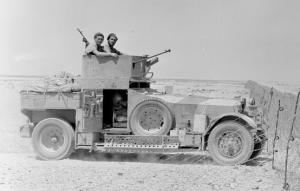
July 26, 1940 – The British Army in North Africa 1940 IWM caption: “A Rolls Royce armored car passing through Italian barbed wire on the Egyptian-Libyan frontier, ” “A 1924 Rolls-Royce Armoured Car with modified turret, in the Bardia area of the Western Desert, 1940”
July 26, 1940 – A movie adaptation of Jane Austen‘s Pride and Prejudice is released, with Aldous Huxley as a screenwriter.
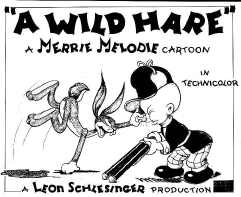
July 27, 1940 – Bugs Bunny makes his official debut in the animated cartoon A Wild Hare.
This week’s issue of Billboard magazine began publishing a top ten list of the best-selling retail records in the United States. The first official #1 single in Billboard history was “I’ll Never Smile Again” by Tommy Dorsey and His Orchestra.
May 31, 1940 -Bud Abbott, as the manager of Madame La Zonga’s School of Dance, tries to make an easy mark of Lou Costello by persuading him to take conga lessons.
August 1940
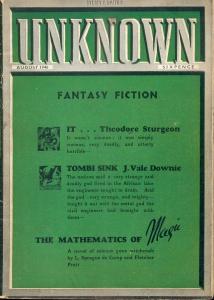
2 The Mathematics of Magic (1940) [SF] by L. Sprague de Camp and Fletcher Pratt
It • novelette by Theodore Sturgeon
August 1940 – Only Forever sung by Bing Crosby US BB 1940 #3, US #1 for 9 weeks, 22 total weeks
August 1940- Construction of the first airplane made in Argentina, a curtiss 75 in Argentina.
August 8, 1940 (Thursday) The adventure film Boom Town starring Clark Gable, Spencer Tracy, Claudette Colbert and Hedy Lamarr premiered at Grauman’s Chinese Theatre in Hollywood.
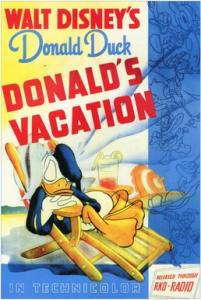
August 9, 1940 – Donald’s Vacation
August 12, 1940 (Monday) It became a crime in the United Kingdom to waste food.
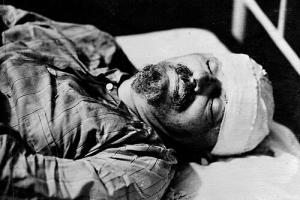
August 20, 1940 – Russian revolutionary, Soviet politician, and political theorist Leon Trotsky was fatally attacked by NKVD agent Ramón Mercader with an ice axe at his residence in Mexico City. Despite initially surviving, Trotsky died at a nearby hospital the next day from his injuries.
August 21, 1940 (Wednesday) The “tree of liberty”, planted in Saverne after Alsace was restored to France at the end of World War I, was chopped down by members of the Hitler Youth
August 26–27, 1940 – After a hiatus, Tolkien evidently returns to the writing of The Lord of the Rings, writing a new outline for the “New Plot”.
September 1940
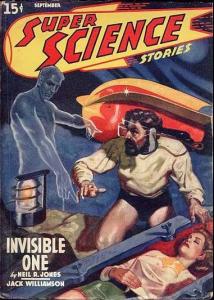
Isaac Asimov -“Robbie” – Super Science Stories, September 1940
September 1940 – “We Three (My Echo, My Shadow and Me) sung by The Ink Spots US BB 1940 #17, US #3 for 1 week, 15 total weeks
September 4, 1940 (Wednesday) Hitler told a crowd at a rally in Berlin: “When the British air force drops two or three or four thousand kilograms of bombs, then we will in one night drop 150, 230, 300 or 400 thousand kilograms – we will raze their cities to the ground.
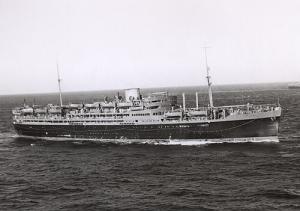
September 6, 1940 – The British prison ship HMT Dunera docks in Sydney, carrying refugees and prisoners of war considered a danger to British security, for internment in Hay and Tatura.
September 7, 1940 (Saturday) The Blitz began when the Luftwaffe shifted its focus from bombing British airfields and aircraft factories to conducting terror raids on London and other major cities in response to British bombing of Berlin.[9] This proved to be a mistake, as it would give RAF Fighter Command much-needed time to regroup.
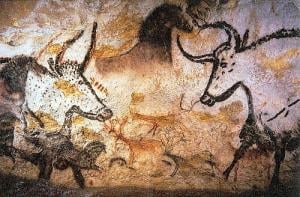
September 12, 1940 (Thursday) 17,000-year-old cave paintings prehistoric cave paintings were discovered in the Lascaux Cave near Montignac, France by a group of young Frenchmen hiking through Southern France. The paintings are mostly of animals and are some of the finest examples of art from the Upper Paleolithic age in the Stone Age.
September 15, 1940 (Sunday) The large-scale air battle known as Battle of Britain Day was fought. Believing the RAF was near its breaking point, the Luftwaffe mounted an all-out offensive, sending two huge waves of about 250 bombers each to bomb London and surrounding areas. The RAF managed to scatter many of the German bomber formations and shoot down 61 planes while losing 31 in return, inflicting a clear and decisive defeat on the Germans.
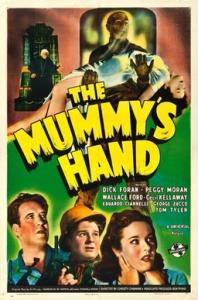
September 20, 1940 (Friday) The Universal Horror film The Mummy’s Hand was released.
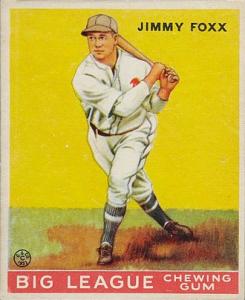
September 24, 1940 (Tuesday) Jimmie Foxx of the Boston Red Sox became the second member of the 500 home run club, hitting the historic round-tripper off George Caster in the sixth inning of a game against the Philadelphia Athletics. Foxx was only 32 years old and many observers expected him to surpass Babe Ruth‘s record of 714, but he would hit just 34 more in his career.
September 27, 1940 (Friday) Germany, Italy and Japan signed the Tripartite Pact.
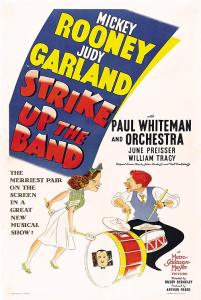
Strike Up the Band, directed by Busby Berkeley, starring Mickey Rooney and Judy Garland.
October 1940
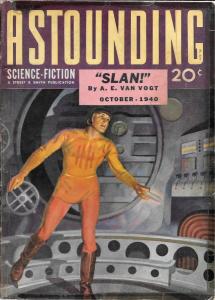
Astounding Science Fiction October 1940 – Farewell to the Master -The novelette was loosely adapted for the film The Day the Earth Stood Still (1951)
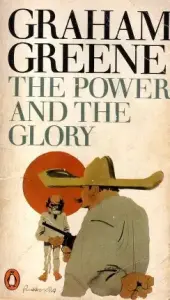
October- Graham Greene‘s London house on Clapham Common Northside is destroyed by bombing, an event reflected in his novels The Ministry of Fear (1943) and The End of the Affair (1951). Sometime in 1940 he published The Power and the Glory.
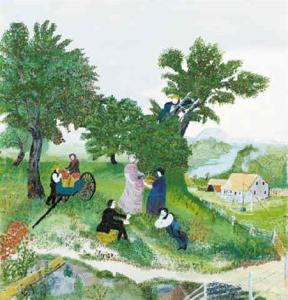
October – Grandma Moses‘ second solo exhibition, “What a Farm Wife Painted”, opens at Otto Kallir’s Galerie Saint-Etienne in New York City.
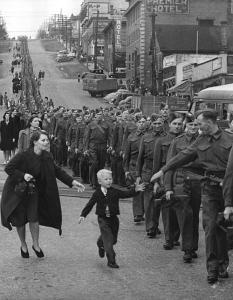
October 1, 1940 (Tuesday) The Wait for Me, Daddy photo was taken of The British Columbia Regiment (Duke of Connaught’s Own Rifles) by Claude P. Dettloff in New Westminster, Canada.
The first section of the Pennsylvania Turnpike, the United States’ first long-distance controlled-access highway, is opened.
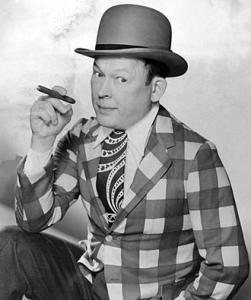
October 2, 1940 – The Texaco Star Theatre with Fred Allen premiered on Allen’s home station of CBS airing Wednesdays at 9.
Forward in Time
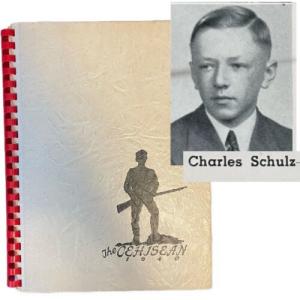
The comic strip Peanuts by Charles M. Schulz is first published in seven U.S. newspapers.
Sometime between 1939–1940: Schulz enrolls in a correspondence cartoon course with Federal Schools (later known
as Art Instruction Schools) during his senior year in high school.
1940: Schulz graduates from high school. The drawings he contributes to the school yearbook are
not included in the publication.
October 9, 1940 – The Lead Singer of The Beatles, John Lennon was born.
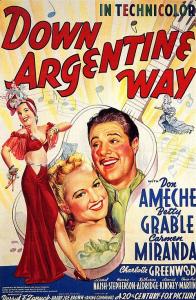
October 11, 1940 – Portuguese-born performer Carmen Miranda makes her American film debut in Down Argentine Way, one of the first films produced to promote the Good Neighbor policy.
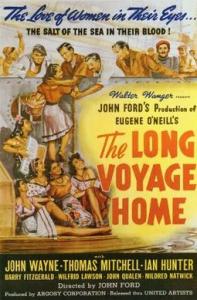
October 8, 1940 (Tuesday) The John Ford-directed drama film The Long Voyage Home starring John Wayne, Thomas Mitchell and Ian Hunter premiered at the Rivoli Theatre in New York City.
October 13, 1940 (Sunday) 14-year old Princess Elizabeth made her first public speech, a radio address to the children of the British Commonwealth. Her ten-year-old sister Princess Margaret joined in at the end.
October 14, 1940 (Monday) With the United States presidential election three weeks away, Charles Lindbergh made a radio speech attacking the Roosevelt Administration’s record and appealing for the election of leaders “whose promises we can trust, who know where they are taking us, and who tell us where we are going.” Lindbergh did not directly endorse Wendell Willkie or even mention him by name, but his position was unmistakable.
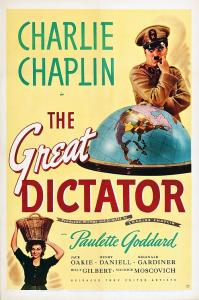
October 15, 1940 – Charlie Chaplin‘s The Great Dictator, a satirical comedy starring him, premieres in New York City. It is a critical and commercial success and goes on to become Chaplin’s most financially successful film.
Backwards/Forward in Time
October 16, 1950
10 Years from Today C.S. Lewis will publish The Lion, the Witch and the Wardrobe
2 Years Ago, He Published Out of the Silent Planet
Sometime in 1940 The Problem of Pain

October 19, 1940 (Saturday)”Only Forever” by Bing Crosby hit #1 on the Billboard singles chart.
October 21, 1940 –
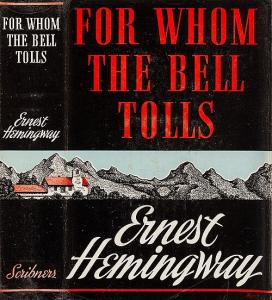
Ernest Hemingway – For Whom the Bell Tolls is published.
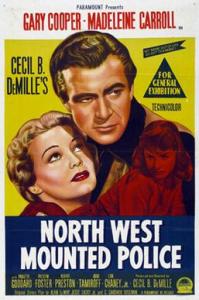
North West Mounted Police, directed by Cecil B. DeMille, starring Gary Cooper, Madeleine Carroll and Paulette Goddard
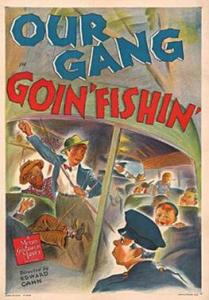
October 26, 1940 – Goin’ Fishin’ is an Our Gangcomedy short film directed by Edward Cahn. It was the 191st Our Gang short to be released.
Double-decker buses replace the last cable trams in Melbourne.
October 29, 1940 – The Selective Service System lottery is held in Washington, D.C..
November 1940
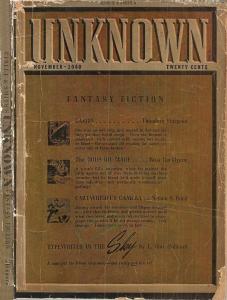
Typewriter in the Sky (Part 1 of 2) L. Ron Hubbard–Unknown Fantasy Fiction, November 1940
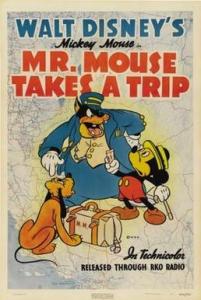
November 1, 1940 – Mr. Mouse Takes a Trip
November 1, 1940 – Shortly following Adrienne von Speyr reception into the Catholic Church at a liturgy celebrated by Hans Urs von Balthasar began reporting intense experiences in prayer, including visions of Christ’s Passion and encounters with various saints. In Balthasar’s words, “A veritable cataract of mystical graces poured over Adrienne in a seemingly chaotic storm that whirled her in all directions at once.”[39] He began to accompany her as a spiritual director, in order to help evaluate the experiences. After he became convinced of the authenticity of Speyr’s mysticism, Balthasar and Speyr both began to believe that they had a shared theological mission.
November 2, 1940 (Saturday) One of the most extraordinary aviation incidents of the war took place. Greek Air Force pilot Marinos Mitralexis, after running out of ammunition, rammed an Italian bomber. Mitralexis then landed his plane and captured the Italian crew who had parachuted to safety
November 3, 1940 (Sunday) After enduring 57 consecutive nights of bombing since the Blitz began, London went a night without being bombed.
November 5, 1940 (Tuesday) The United States presidential election was held. Franklin D. Roosevelt won an unprecedented third term as President of the United States, carrying 38 of 48 states.
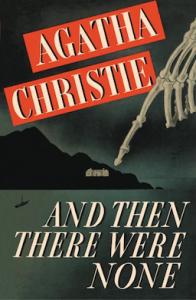
November 6, 1940 – Agatha Christie‘s mystery novel And Then There Were None is published in book form, in the United States.
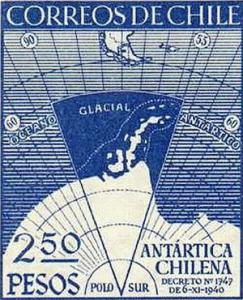
The Chilean Antarctic Territory covers the South Shetland Islands, the Antarctic Peninsula (called O’Higgins Land—Tierra de O’Higgins—in Chile), and the adjacent islands of Alexander Island, Charcot Island and Ellsworth Land, among others. Its boundaries are defined by Decree 1747, issued on 6 November 1940 and published on 21 June 1955 by the Ministry of Foreign Affairs.
November 7, 1940 (Thursday) Irish Taoiseach Éamon de Valera rejected a British request that strategic naval ports and air bases on Irish territory be rendered or leased to Britain
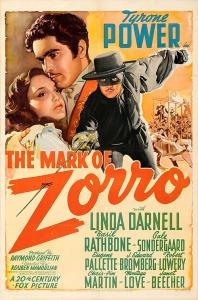
November 8, 1940 – The Mark of Zorro, starring Tyrone Power and Linda Darnell.
November 10, 1940 (Sunday)
Fala the Scottish terrier, one of the most famous presidential pets in American history, moved into the White House.
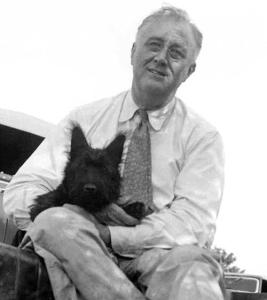
The Copacabana nightclub opened in New York City.

Nov 11, 1940 – 308 children from Britain arrive in South Africa to be welcomed by the British High Commissioner and the Mayor of Cape Town. Afterwards they attend a party at Westbrooke, the home of the Governor General.
November 13, 1940 – World premiere of Walt Disney’s animated film Fantasia at the Broadway Theatre in New York City, the first film to be released in a multi-channel sound format (see Fantasound). The film also marks the first use of the click track while recording the soundtrack, overdubbing of orchestral parts, simultaneous multitrack recording and is cited as a key chapter in the conception and development of the multi-channel surround system. The film is a bigger box office failure for Disney than Pinocchio was, though it recoups its cost years later and becomes one of the most highly regarded of Disney’s films.
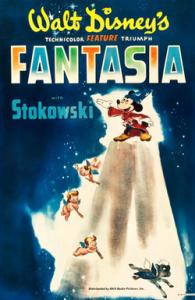
November 14, 1940 (Thursday) The Nazis legalized the human consumption of dog meat within the German Reich, effective January 1.
November 15, 1940 -The comedy team of Abbott and Costello made their screen debut in the comedy film One Night in the Tropics.
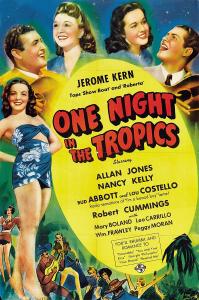
November 22, 1940 (Friday) The “Murder of Marlhill‘ took place in Knockgraffon near New Inn, County Tipperary.
All Star Comics #3 was published, marking the debut of the first team of superheroes, the Justice Society of America.
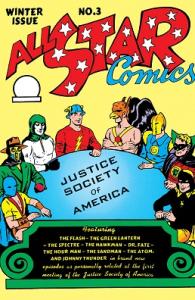
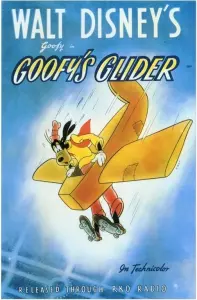
Goofy’s Glider debuted.
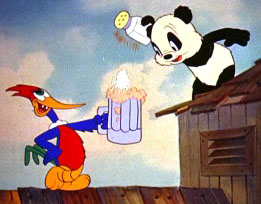
November 25, 1940 – Woody Woodpecker makes his debut in the Andy Panda cartoon Knock Knock.
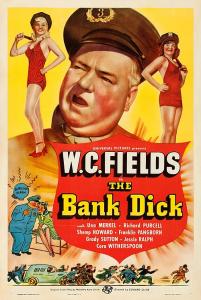
November 29, 1940 (Friday) The comedy film The Bank Dick starring W. C. Fields was released.
December 1940
Darker Than You Think by Jack Williamson –Unknown, December 1940
Typewriter in the Sky (Part 2 of 2) • serial by L. Ron Hubbard
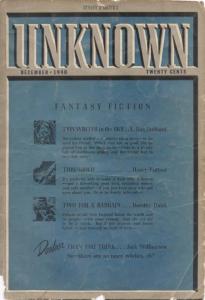
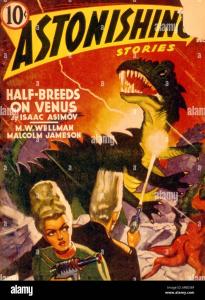
Trouble in Time (1940) C. M. Kornbluth and Frederik Pohl –Astonishing Stories, December 1940
Perry White in Superman #7 (November), created by Jerry Siegel and Joe Shuster, published by DC Comics
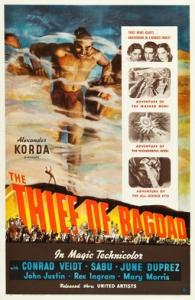
December 5, 1940 – Release of The Thief of Bagdad, pioneering the use of chroma key effects.
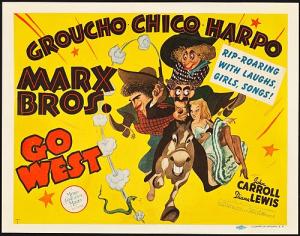
December 6, 1940 – Go West, starring the Marx Brothers
December 15, 1940 (Sunday) The ashes of Napoleon II were brought from Vienna to Paris, exactly one hundred years to the day since the retour des cendres when Napoleon Bonaparte‘s repatriated remains were interred at Les Invalides. The move was meant as a gesture of reconciliation on the part of Hitler, but a popular joke among the French went that the Parisians would have preferred coal to ashes.
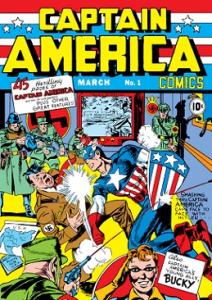
December 20, 1940: Captain America and Bucky Barnes debut in Captain America Comics #1, cover-dated Spring 1941.
December 23, 24, 1940 – Father Christmas writes a letter to J.R.R. Tolkien‘s children.
December 24, 1940 (Tuesday) Mahatma Gandhi wrote his second letter to Hitler, addressing him as “Dear Friend” and appealing to him “in the name of humanity to stop the war. You will lose nothing by referring all the matters of dispute between you and Great Britain to an international tribunal of your joint choice. If you attain success in the war, it will not prove that you were in the right. It will only prove that your power of destruction was greater. Whereas an award by an impartial tribunal will show as far as it is humanly possible which party was in the right.”
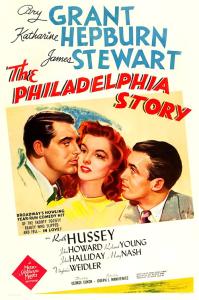
December 26, 1940 (Thursday) The romantic comedy film The Philadelphia Story starring Cary Grant, Katharine Hepburn and James Stewart was released.
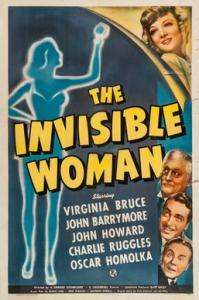
December 27, 1940 –The Invisible Woman, directed by A. Edward Sutherland, starring Virginia Bruce and John Barrymore
December 29, 1940
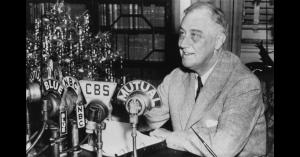
Franklin D. Roosevelt, in a fireside chat to the nation, declares that the United States must become “the great arsenal of democracy.”
WWII: “Second Great Fire of London” – The Luftwaffe carries out a massive incendiary bombing raid, starting 1,500 fires. Many famous buildings, including the Guildhall and Trinity House, are either damaged or destroyed.













 Ad-Free & Subscriber Log-In