

[While I’m in Ecuador, I’m posting columns and articles that I wrote in the early 2000’s for Tabletalk Magazine, which kindly gave me permission to do this. We’ll get back to the Monday Miscellanies when I get back.]
This column is about the important, but much-misunderstood concept of freedom. I play off the conventional understanding with what the Bible says, going on to discuss Luther on the subject, then showing that even political freedom must be grounded in that theological understanding.
Sweet Land of Liberty
America is mad for liberty. Ours is a free country. We enjoy freedom of speech and of religion, the freedom of the press and the freedom to bear arms. And rightly so. But though Americans love freedom, many of them have forgotten what it means.
Today many of us assume that freedom means getting to do whatever we want. Any restrictions on our behavior—whether from the state, the church, or some other person—violate our freedom. And, for many of us, freedom above all means the liberty to sin.
But, according to the Bible, this is the opposite of freedom. Sin has nothing to do with liberty. Sin destroys freedom. Sin enslaves.
Jesus Himself makes that point: “Truly, truly, I say to you, everyone who commits sin is a slave to sin” (John 8:34). The Apostle Paul also talks about how sin turns us into slaves (Romans 6:16-22).
If we are honest, we can see this truth in our own experience. An alcoholic may want to be free to get drunk. A drug addict may demand his liberty to take drugs. But alcoholics and drug addicts are not free. Their appetites enslave them. The same is true of people addicted to pornography or in thrall to some other sexual compulsion. As the sin takes away the sinner’s self-respect, his money, and his happiness, the sinner may even want to stop doing what he has been doing. But he cannot.
On some level, all sins are like this. Anger takes us over. Pride prevents us from treating others as we should. Stealing, lying, disrespect, hate, or you name it, they all enslave us.
Though we might learn to control our worst impulses through external constraints—whether of shame, fear of discovery, or self-discipline—sin continues to lurk deep inside. We try to exert our will power. But what if the problem is precisely with our will?
Luther wrote a book entitled The Bondage of the Will. His point is that our will is in bondage to sin. What we want to do, if we give in to our primal desires, is to sin. The laws of church and state, our rational awareness of consequences, our conscience and other restrictions on our external conduct can make possible a social order made up of sinful human beings. But morally and also spiritually, we are slaves to sin.
But after Jesus talked about how sinners are enslaved, he gives the good news: “If the Son sets you free, you will be free indeed” (John 8:36).
Jesus, through the power of His sacrificial death and resurrection, frees sinners from the bondage of sin. By the power of the Holy Spirit through the Gospel, we are set free. Though while we are still in the flesh we may still struggle with sin, we are free from sin’s dominion. To the extent we are in Christ, through faith, we no longer even need the law to keep us in line. We voluntarily—freely—do God’s will, not out of compulsion or threats, but because we really want to please Him, and, because we are in God’s love, we really do love our neighbors.
Luther also wrote a book entitled The Freedom of the Christian. “A Christian is a perfectly free lord of all, subject to none,” he wrote. At the same time, “A Christian is a perfectly dutiful servant of all, subject to all.”
In the gospel, the Christian is spiritually free: “With respect to the kingship, every Christian is by faith so exalted above all things that, by virtue of a spiritual power, he is lord of all things without exception, so that nothing can do him any harm. As a matter of fact, all things are made subject to him and are compelled to serve him in obtaining salvation.” And yet, in the Christian life, the man of faith voluntarily makes himself a servant to his neighbors:
This is a truly Christian life. Here faith is truly active through love [Gal. 5:6], that is, it finds expression in works of the freest service, cheerfully and lovingly done, with which a man willingly serves another without hope of reward; and for himself he is satisfied with the fullness and wealth of his faith. . . . Hence, as our heavenly Father has in Christ freely come to our aid, we also ought freely to help our neighbor through our body and its works, and each one should become as it were a Christ to the other that we may be Christs to one another and Christ may be the same in all, that is, that we may be truly Christians.
The Bible exalts freedom. “For freedom Christ has set us free,” says the Apostle Paul. Stand firm therefore, and do not submit again to a yoke of slavery” (Galatians 5:1). Notice that He has set us free “for freedom.” Freedom is an end in itself. Furthermore, freedom is a sign of the Holy Spirit’s presence. “Where the Spirit of the Lord is, there is freedom” (2 Corinthians 3:17).
Is there a connection between our spiritual freedom in Christ and the civil freedoms we enjoy as Americans?
According to the American founders, people cannot govern themselves politically unless they can govern themselves morally. Said James Madison, “If men were angels, no government would be necessary” (Federalist 51). Of course, we aren’t angels, so government is necessary. “If angels were to govern men, neither external nor internal controls on government would be necessary.” Politicians aren’t angels either, so they too must be brought under control. A free country requires a rule of law, both to keep citizens in line and to keep the government in line.
Ultimately, even political freedom rests on personal virtue. As John Adams said, “Our constitution was made for a moral and religious people; it is wholly inadequate for any other.” People who are slaves of sin require laws, authorities, police officers, and government control to prevent them from harming other people. But people who have been freed from sin do not need external controls on their behavior. They internalize the moral law. They voluntarily—of their own free will—do what they should. They govern themselves, freely directing their own behavior; therefore, they are capable of governing themselves in a free political order.
That free political order is not just for Christians, of course, and others who can, by whatever external means, govern their desires can also enjoy its liberties. But laws—and prisons—will still be necessary for those who refuse to govern themselves.
Meanwhile, those who wish to preserve their freedom must be on guard against both tyrants and their own sin.
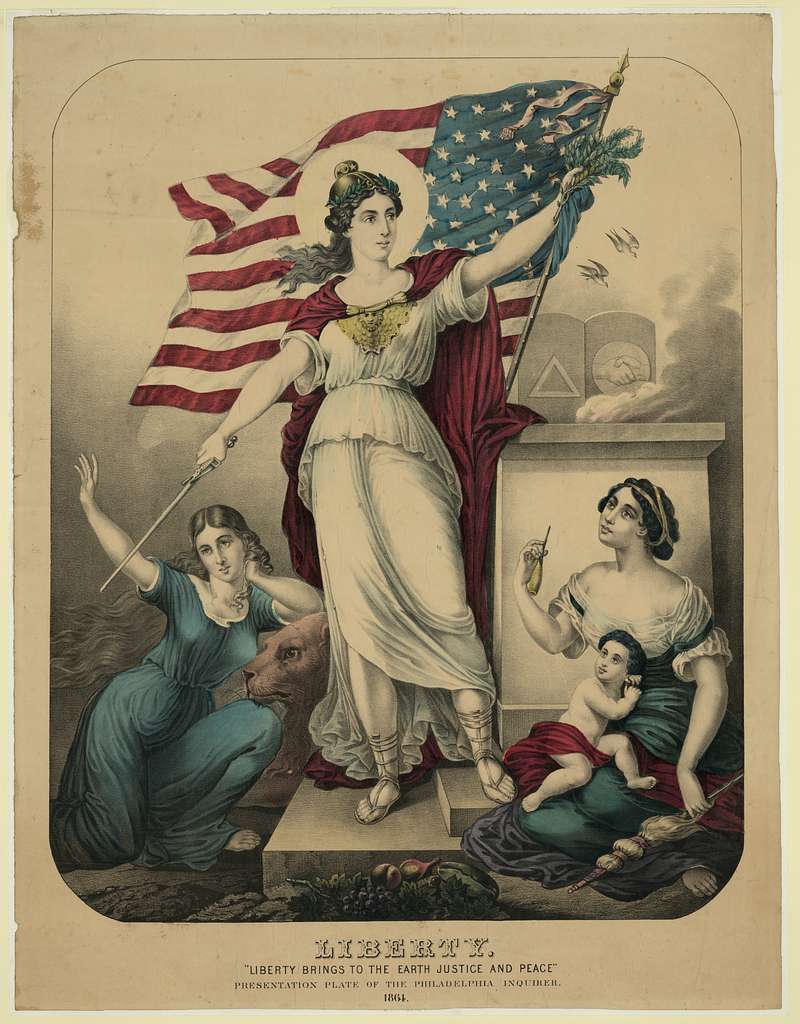
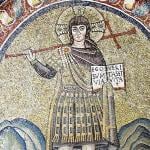
Illustration: Liberty. “Liberty Brings to the Earth Justice and Peace,” by Christian Inger (1863/1864) via Picryl, public domain.











 Ad-Free & Subscriber Log-In