


The Beatitudes
Matthew 5:1-12a
The Empire and the Word
When Jesus saw the crowds, he went up to teach… it is important to remember what those crowds were living under. They were not free. They were managed. Counted. Taxed. Watched. Their language was monitored, their movements noted, their labor extracted, their suffering normalized. Rome did not only rule with soldiers; Rome ruled with narratives. Rome told people who they were, what they were worth… who they should fear. And most people learned to survive by adjusting themselves to the story empire told about them.
Jesus walks into that world and does not begin with a strategy meeting or a fundraising campaign. He begins by looking at human beings who have been reduced to statistics and saying, in effect, I see you. He sits because he is claiming a different kind of authority…an authority not rooted in domination but in reality. And then he speaks words that do not stabilize the system. They destabilize it.
He calls the poor in spirit blessed, which is a quiet revolution.
Beatitudes (1): Blessed Are the Poor in Spirit
Because poor in spirit are those who have run out of illusions. They are the ones who no longer believe the nation will save them, the market will save them, the party will save them, the strongman will save them. They have seen promises weaponized and faith turned into branding. They know that when leaders demand absolute loyalty, they are not asking for unity…they are asking for worship. Jesus blesses the ones who refuse to worship the machinery that is grinding them down.
Beatitudes (2): Blessed Are Those Who Mourn
He calls those who mourn blessed… mourning becomes an act of resistance. Mourning is what happens when you refuse to call cruelty “policy” and lies “opinion.” Mourning is what happens when you look at families separated by borders drawn in fear, at communities targeted because of skin or language or identity, at women told their bodies belong to legislatures, at truth treated like contraband… you do not numb yourself. Empire needs numbness. Numb people do not organize. Numb people do not question. Numb people do not change history. Jesus blesses those who refuse numbness because grief keeps the soul awake.
Beatitudes (3): Blessed Are the Meek
He calls the meek blessed… this is where the definition has to be reclaimed. Meekness is not submission. Meekness is disciplined strength that refuses to mirror the violence it confronts. It is the refusal to let outrage be turned into spectacle or hatred be turned into identity. In a culture addicted to humiliation as entertainment, meekness becomes radical because it cannot be easily manipulated. It will not chant for cruelty. It will not cheer for dehumanization. It insists that dignity is not negotiable, even for opponents. That kind of strength is terrifying to systems built on division, because it cannot be conscripted into their wars.
Beatitudes (4): Blessed Are Those Who Hunger and Thirst for Righteousness
He blesses those who hunger and thirst for righteousness… suddenly faith is no longer private. Hunger is physical. Thirst is urgent. Righteousness is not nostalgia for a past that excluded so many; it is the demand that truth shape public life. It is the refusal to accept corruption as normal, to accept disinformation as inevitable, to accept the erosion of rights as the price of stability. When courts become battlegrounds for control instead of justice, when elections become arenas of suspicion instead of trust, when public discourse becomes a marketplace of outrage, hunger for righteousness becomes dangerous. Dangerous not because it destroys society, but because it insists society live up to its own promises.
Beatitudes (5): Blessed Are the Merciful
He blesses the merciful… mercy becomes a form of defiance. Mercy does not mean the absence of accountability. It means refusing to let punishment become entertainment or vengeance become policy. It means seeing migrants as neighbors, not threats; seeing political opponents as human beings, not enemies; seeing prisoners as more than their worst act. In an age that profits from outrage and thrives on scapegoats, mercy interrupts the economy of hatred. It says that dehumanization is not strength. It is surrender.
Beatitudes (6): Blessed Are the Pure in Heart
He blesses the pure in heart, those whose resistance is not a performance. These are the people who tell the truth when cameras are off, who defend the vulnerable when it costs them status, who refuse conspiracy even when it flatters their fears. Purity of heart is clarity of intention. It is the decision that justice is not a brand and faith is not a prop. These are the people who see God not in spectacle but in the faces of those pushed aside.
Beatitudes (7): Blessed Are the Peacemakers
He blesses the peacemakers… this is where the radical edge becomes unmistakable. Peacekeepers maintain order; peacemakers transform it. Peacekeepers protect the calm of the powerful; peacemakers protect the dignity of the powerless. Peacemakers stand where tension is highest and say that silence in the presence of injustice is not peace…it is permission. They refuse to let unity be defined as the absence of conflict when the conflict is over whether some people count less than others.
Beatitudes (8): Blessed Are Those Who Are Persecuted for Righteousness
Then Jesus speaks the line that exposes the cost of all of this. Blessed are those who are persecuted for righteousness. Not persecuted for cruelty or arrogance, but for insisting that truth is not optional and dignity is universal. When voices are smeared, when protest is labeled disorder, when dissent is called disloyalty, Jesus does not say retreat. He says rejoice, because persecution reveals what power fears. Power fears people who cannot be bought with comfort or silenced with intimidation.
The Beatitudes Beyond Borders
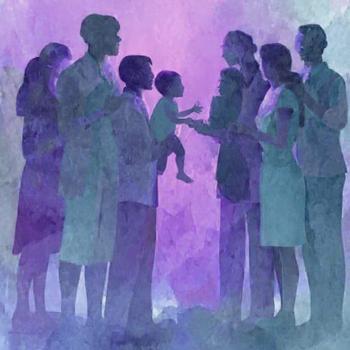
An ecumenical gathering means we come from different traditions, languages… liturgies, but these words erase those borders. The blessing does not belong to one denomination or ideology. It belongs to anyone who refuses to let fear define their neighbor, who refuses to let lies define their nation, who refuses to let hatred define their faith. The radical edge of the Beatitudes is not that they call us to chaos; it is that they call us to courage. They call us to build communities where truth is practiced, where mercy is policy, where dignity is defended… where peace is made, not merely kept.
Jesus was executed by a state that felt threatened not by violence but by a different vision of reality. The radical invitation of the Beatitudes is not to burn the world down, but to refuse to kneel to any power that asks us to betray our humanity. In every age, empire insists it is eternal. In every age, this vision reminds us it is not.
The Beatitudes Rising Today
And if these words were only ancient history, we could leave them there…safe, poetic, distant. But this vision keeps rising in every generation… today it rises in a nation where power again asks for devotion instead of accountability. It rises in a moment when the name of God is draped over political ambition, when cruelty is marketed as strength… when truth is negotiated like a business deal. We have lived through years where Donald Trump did not merely govern but demanded loyalty as identity, where public life was saturated with suspicion, where neighbors were taught to fear one another as a civic duty. This vision rises wherever immigration agents become symbols of terror for families who have lived and labored here for decades, where children learn the sound of a knock on the door as a threat instead of a welcome. It rises where the death penalty is expanded or celebrated as justice while evidence of wrongful convictions piles higher, where the machinery of execution is treated as routine instead of tragic. And it rises wherever injustice is renamed “order,” wherever exclusion is called “security,” wherever vengeance is baptized as righteousness.
Jesus’ blessing does not float above these realities…it presses directly into them, insisting that no leader, no agency, no court… no policy stands beyond moral scrutiny… that the measure of a nation is how fiercely it protects the most vulnerable standing in its shadow.
The Question Before Us: Will We Go Down With It?
So let us name what we are watching without flinching: America may be going to hell. Not the hell of fire and brimstone mythology, but the hell that nations create when they choose domination over dignity, when they elevate cruelty to policy and call it patriotism, when they worship power instead of truth. This hell is not waiting in some distant afterlife…it is being constructed right now in detention centers and courtrooms, in the erasure of history and the engineering of fear, in the normalization of lies and the criminalization of compassion. America may be going to hell… that is not a prophecy…it is an observation.
But the only question that matters is this: will we go down with it?
Will we baptize injustice with our silence? Will we offer our complicity as tribute to a system that devours the vulnerable and calls it necessity? Will we comfort ourselves with the fiction that we are powerless, that the machinery is too vast, that our resistance means nothing? Or will we hold to this vision, even as the nation descends? Will we bless the poor in spirit while empire demands we worship its illusions? Will we mourn what is being destroyed while others celebrate the destruction? Will we hunger for righteousness when we are told to accept corruption as the cost of order?
These words do not promise safety. They promise vision. They do not promise victory. They promise witness. And they do not ask whether the nation will save itself…they ask whether we will let the nation’s descent pull us from the truth we know. America may be going to hell. But those who hold to this vision do not have to make that journey. We can refuse. We can resist. We can remain human even when the nation forgets what that word means.














 Ad-Free & Subscriber Log-In