

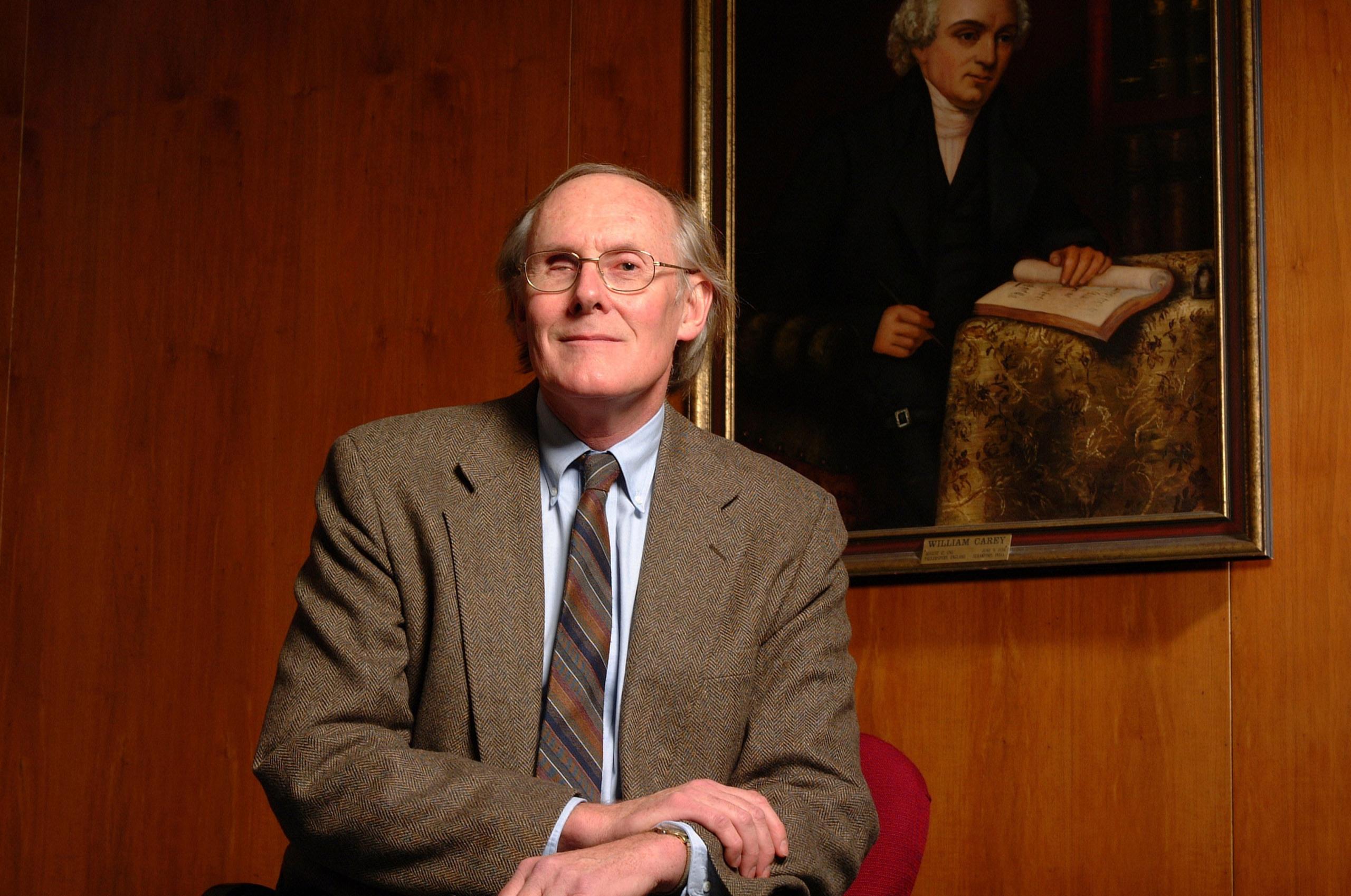
Clark Pinnock was a leading evangelical theologian who died in 2010. I followed his career, learned from him through his books and articles, and finally got to know him personally in the 1990s. When I first read him he was a strong inerrantist and Calvinist. But he was a good writer and apologist for the Christian faith.
Yesterday I read a book manuscript that mentioned that Clark departed from strict inerrancy. It didn’t mention his change from Calvinism to Arminianism. The two changes happened at the same time. I know that from personal conversations with Clark.
Eventually Clark adopted what came to be known as “open theism.” I first became aware of that when I read a book about five views of God’s foreknowledge. Clark wrote the final chapter and there expressed his new view that God does not know the future in absolute detail or with absolute certainty.
Eventually, of course, as most of us know, open theism became a flashpoint of controversy among evangelicals. I stood near the middle of the controversy because I publicly defended open theists as not heretics. I never endorsed open theism, but I was accused of that by some conservative evangelical critics of open theism. I’ll tell more about that here later, in another blogpost.
I well remember a conversation over dinner at a restaurant during the annual meeting of the American Academy of Religion. Clark sat across from me. I asked him about his conversion to Arminianism and non-inerrancy. He said he still believed in inerrancy but interpreted it differently from most inerrantists. Having read his book The Scripture Principle I wasn’t at all sure he really believed in inerrancy.
Anyway, on with my story. Clark told me that his two conversions were linked to his conversion to charismatic Christianity. He said it liberated him from the need for rational certainty and from Calvinism. He continued by saying that he attended the Toronto Vineyard church, the center of what later became known as the “Toronto Blessing.” He told me he was convinced it was a genuine work of God.
Many, many evangelical notables have told me secrets but without swearing me to secrecy. I don’t know what they would think if they knew that I am now revealing some of those. I will only reveal names of living individuals when I know they would not or could not contest what I reveal.
Clark shared with me a cassette tape of a recording of a public conversation between John Piper and R. C. Sproul. The conversation took place before an audience. I discerned the audience was probably evangelical college students. During the conversation Sproul said that he did not believe Clark was a Christian and would not have fellowship with him. John was much less strong in his criticism of Clark. The issue was open theism, so, by extrapolation, it seemed to me that Sproul would have to say the same about other open theists. In other words, they are not Christians. Sadly, when Sproul said that he did not believe Clark was a Christian, the audience laughed. I’m not sure why.
*Note: If you choose to comment, make sure your comment is relatively brief (no more than 100 words), on topic, addressed to me, civil and respectful (not hostile or argumentative), and devoid of pictures or links.*





 Ad-Free & Subscriber Log-In