

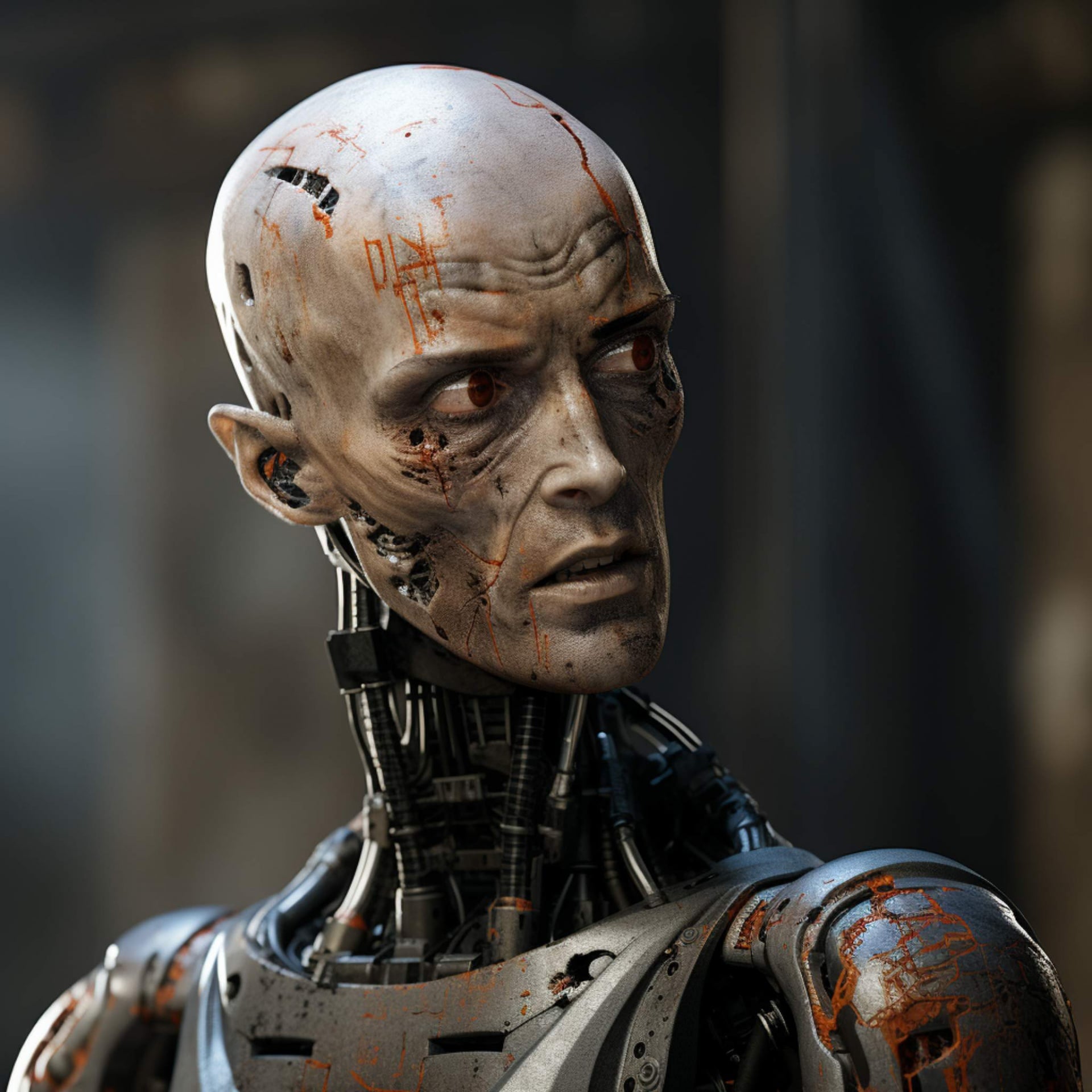
The Roman Catholic church has been scrutinizing the implications of AI and other technology in a way that Protestants too can find useful. The Vatican’s International Theological Commission (ITC) has released a study document on the anthropology–that is, the doctrine of man–that is being promulgated by the new technology.
The document is entitled Quo Vadis, Humanitas? [Where Are You Going, Humanity?]: Thinking Through Christian Anthropology in the Face of Certain Scenarios for the Future of Humanity. It identifies two specific heresies–that is, false teachings–associated with many of the assumptions and goals of the high-tech industry. These are transhumanism and posthumanism.
From Quo Vadis, Humanitas? (my emphasis):
Transhumanism is a philosophical movement that operates on the belief that human beings can and should use the resources of science and technology to overcome the physical and biological limitations of the human condition, in particular ageing and even death, thus shaping their own evolution and maximising their own potential to the point of redesigning human beings to make them fitted to ‘go beyond’. With its programmatic emphasis on increasing individual human capabilities, it develops a distinctly anthropocentric perspective, subscribing to an ideological and naively uncritical view of scientific and technological progress.
Transhumanism imagines a future in which human beings will perfect the current biological form that defines human nature, in order to achieve the goal of individual immortality, supported by technology. In the utopian scope of its quest for immanent immortality, transhumanism can be interpreted as the existential expression of a presumption that is both naive and arrogant.
I would note that this anthropological heresy goes far beyond issues of technology, of course. Though tech billionaires are investing vast sums of money on research to cure death, we also see the assumptions of transhumanism that we should “go beyond” our biological bodies in the transgender movement. Also in genetic engineering, whereby we design our own children, and in the reproductive technologies that conceives babies apart from sexual relationships. The study goes on:
Posthumanism, understood in the strict sense, criticises traditional humanism, questioning the specificity of human beings and the existence of a ‘human form’ that, as such, deserves to be preserved because it carries a universally valid meaning. It therefore emphasizes the ‘hybrid’ (cyborg) to the point of deconstructing the human subject, making the boundary between humans and machines completely fluid, and rejecting the anthropocentrism that remains characteristic of transhumanism. Ultimately, posthumanism in the strict sense can be understood as an existential expression of escapism, which starts from a radical devaluation of the human.
“Humanism,” in this context, is not the ideology of “secular humanism,” but the valuing of created human nature. Posthumanism looks for the synthesis of human beings with machines. Here we get transplanting AI chips into human brains, building robots with human-like consciousness, achieving immortality by downloading human minds into the internet, etc.
Kevin Gallagher discusses the International Theological Commission (ITC) document in Commonweal. He makes the point that a major problem with these heretical anthropologies is that they change the way people view themselves:
Whereas much of the discourse about developments in artificial intelligence assumes that technology can or will replace or surpass the human race, and either celebrates or denounces that prospect, the ITC counsels us to reject the premise that what is important about humanity can be replicated by machines. In the ITC’s view, the imagined obsolescence of humanity is not a historical prospect to be welcomed or feared, but an intellectual error to be avoided. The danger is not that humanity might actually be replaced or surpassed by any developments in artificial intelligence, but rather that people might be persuaded that it can or ought to be replaced. . . .
A related concern that also comes to the fore in Quo vadis, humanitas? is the fundamentally individualistic notion of “intelligence” in most discussions of artificial intelligence, which risks bleeding over into our understanding of the human person as well. In the posthuman promise of ever superior forms of intelligence and power, the ITC sees a “dream of individualistic and elitist perfectionism,” in which the worth of both machines and human beings is measured by their capabilities and attainments. Against this, the Church asserts the infinite and unconditional dignity of persons, which precedes any functional assessment of their capabilities.
Looking behind these new heresies is the ancient heresy of Gnosticism, which taught that knowledge is everything and that the body is irrelevant. From Quo Vadis, Humanitas? (my emphasis):
Christian anthropology can identify in these contemporary philosophical and cultural trends many features of the mentality that [Pope] Francis has described as a form of ‘neo-Gnosticism’. These are ways of thinking and attitudes that are to be understood in a sense analogous to the ancient forms of Gnosticism. Such an approach, in considering human persons and their salvation, seeks to free them from all dependence and limitation, separated from the body, the cosmos, community and history. It “puts forward a model of salvation that is merely interior, closed off in its own subjectivism. […] It thus presumes to liberate the human person from the body and from the material universe, in which traces of the provident hand of the Creator are no longer found, but only a reality deprived of meaning, foreign to the fundamental identity of the person, and easily manipulated by human interests.”
Why can’t Christians believe in transhumanism, posthumanism, or Gnosticism? Let me attempt an answer: Because of the doctrine of Creation, both of the material realm and human beings in the Image of God. And because of the doctrine of the Incarnation, in which God entered His material creation and became a human being, “not by the conversion of the divinity into flesh, but by the assumption of the humanity into God” (Athanasian Creed).
God made us in His image. Transhumanism tries to make machines in our image. In doing so, posthumanism tries to let machines make us in their image.
Illustration: AI Machine Portrait by Circe Denyer via publicdomainpictures.net, CC0, Public Domain.








 Ad-Free & Subscriber Log-In