Mitt Romney’s Commencement Speech at Liberty University

Great news for evangelical Romney supporters – you are not alone!

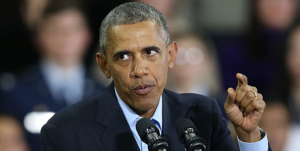
Despite primary struggles with evangelical voters evidenced by losses in southern Bible Belt states, Mitt Romney has a large lead over President Barack Obama among white evangelical voters, a poll released Thursday showed.

The Public Religion Research Institute poll showed Obama carrying Catholic and mainline Protestant voters, as well as voters who did not identify a particular denomination.

Romney’s lead among white evangelicals was nearly 50 percentage points, as 68% chose him and 19% chose Obama in the survey.

This weekend, he even addressed the graduating class at Liberty University.

Watch it here:


Read more on the Faith and Family Channel

Also, follow me on Twitter and Facebook!

Transracial Adoption, Hair, and What I’ve Managed So Far

After my family returned home from Africa with our little bundle of joy, we settled into our new routine with our child in rural Tennessee. The orphanage had shaved her head, so she was practically bald. This is what my two and a half year old daughter looked like the first moment she was placed in my arms… more like a baby than a a toddler.

As you can see, I didn’t have to worry much about hair care.  I simply oiled her head and stuck a bow on.  Everyone oohed and ahhhed over her. Thankfully, as time went on, she began getting healthier, stronger, and bigger.  Plus, her hair started growing so quickly!

Within months, I started getting stares from other black women in public.  If they were brave — and many  were – they’d casually mention good hair stylists I could use, tell me which websites had good information, and suggest effective products I should buy.  One lady at the store,  actually walked me to the hair style aisle and showed me exactly what I should do.  Another very kind woman sent product to school and left them in my older kids locker to help me learn how to care more effectively for her hair.  And these were not isolated incidents.  Far from it.

A very bold black cashier at the mall asked, “Why do white people go to Africa, pick up kids, throw a headband on them, and think that’s okay?”

I took a look at my cute little baby, with her little fro and her pink bow.

“I fixed it,” I said.

“No, that’s not a style,” she said.  “She’ll never know how to fix her hair if you don’t.”

Another cashier took one look at Naomi and asked, “Who’s doing her hair for you?”  Her look of contempt told me that I needed to get someone to do her hair for me.  I wasn’t having a good day, and I almost burst into tears.  When she saw my face, she said, “I mean, you’re doing an okay job, you just might want to fix it.”

This never stopped.  It got to the point that I’d try to scoot through public places in order to avoid letting other people see Naomi, for fear that I wouldn’t respond to their criticism in a Christ-like manner.  (It’s not their fault. They, after all, didn’t realize they were the sixth person to come up to me at the grocery store.)

Finally, I had a heart to heart with a couple of black women who were honest enough to tell me the truth about the different perceptions of hair between white and black women.  It was eye-opening, perplexing, and troubling.  One friend told me that black women invariably make fun of white women with adopted black children because of the “hair issue.”  Another told me that the afro I was letting Naomi wear was “not age appropriate.” All of these awkward social situations caused me to really start thinking about Naomi’s hair.  After all, I certainly don’t want to create an “us versus them” mentality between my daughter and other people we happen to meet. A website called “Chocolate Hair, Vanilla Care” helped me realize how important it is to help develop a healthy and fun relationship between my child and her hair.

The above trailer for In Our Heads About Hair, which is directed by Hemamset Angaza, “examines with candor and humor [of] Black women’s issues regarding hair and self-esteem, and advocates for the acceptance of all hairstyle choices.”  After seeing that video, one night I realized I wanted Naomi to grow loving her hair, and that I’d do whatever it takes to make sure that happens! I’m totally still learning and am making many mistakes.  However, I wanted to show some photos of what I’ve done so far!

Natural, with a Bow

(Believe it or not, this is the type of hairstyle that caused raised eyebrows if I took her out in public.)

“Poofs” with Bows and a Protective Braid


Valentine’s Day  (The main body of the hair formed a heart shape!)

Twists

Knots


Knots: Top View

Here’s a “Before” Photo from Last Night (after her bath!)


And I decided to do braids with beads!

And lastly, the Afro, with a bow:


Anyway, I just wanted to encourage you moms with adopted kids that you can do it!  Last night, I even learned to corn row! Though I’m far from proficient — and am even a little embarrassed to show you my initial efforts — I think I’m proof that you can learn a great deal by visiting her site!

Chocolate Hair / Vanilla Care is evidence that if I can do hair, anyone can do it! The blog started as my way of helping other adoptive/foster parents learn to care for chocolate hair, but has grown into so much more. In addition to chronicling everyday activities such as growing hair, products, and step-by-step instructions, I also talk about what it means to be a vanilla mama of a chocolate girl, and how we explore identity, respect, and empowerment, using hair as our common language.


Read more on the Faith and Family Channel

Also, follow me on Twitter and Facebook!

The Battle of Vanderbilt: Is Tennessee’s Republican Governor Turning His Back on Religious Liberty?

On Tuesday I reported that the Tennessee legislature had overwhelmingly voted to protect religious liberty at Vanderbilt University. Vanderbilt, a non-religious private school and recipient of massive amounts of state and federal taxpayer dollars, had implemented a policy that required religious student groups to open themselves to non-religious leadership. In response, the legislature passed a bill that did two things: (1) protected religious liberty at all public universities in the state to prevent any policies similar to Vanderbilt’s, and (2) provided similar protections to students at non-religious colleges that were significant recipients of state funds (but with a one-year sunset provision).

But now it appears that Tennessee governor Bill Haslam will use his first veto as governor to throw thousands of Christian students under the bus and hand a state-funded secular, leftist institution a critical public-policy and public-relations victory. And why is he doing this? In the name of “limited government.” Here is the core of his statement:

Although I disagree with Vanderbilt’s policy, as someone who strongly believes in limited government, I think it is inappropriate for government to mandate the policies of a private institution.

But this makes no sense in context. As stated above, Vanderbilt is a massive consumer of taxpayer funds. Its HHS grants alone add up to over $300 million per year, and that’s simply one category of government spending. When you add all the federal, state, and local funding together, the average Vanderbilt student will see as much as $2 billion in taxpayer funds pass through Vanderbilt’s accounts during the course of his college career. Walk through Vanderbilt’s sprawling campus, and you’ll see building after building, academic program after academic program, that was made possible in part through taxpayer money.

”Limited government” would yank that funding rather than strip cost-free religious liberty protections from Tennessee students. Governor Haslam’s potential veto doesn’t represent small-government conservatism; it treats Tennessee taxpayers as an ATM for a university system that sneers at their core values and suppresses the religious liberty of their own kids — kids it recruited to campus with promises of academic freedom and vibrant religious life.

Some have misguidedly compared the Tennessee legislature’s religious-liberty protections with Obama’s intrusive HHS guidelines. Yet the two policies are dramatically different: The HHS guidelines infringe upon religious-liberty rights specifically protected by the First Amendment, while the Tennessee legislature exempts religious universities and protects religious rights. The HHS guidelines apply even if the private employer receives no state funding; the Tennessee legislature applied its policy only to those institutions receiving significant taxpayer support (more than $24 million per year). Finally, there is nothing conservative about a wholly invented right to free contraceptives, while religious liberty, free speech, and the marketplace of ideas implicate and advance core conservative values.

As I type this post, the governor has not yet vetoed the bill, so there is still hope. But if he does not listen to the pleas of his fellow Tennesseans and the overwhelming majority of his own legislature, he will — in the name of “limited government” — give a blank check to the radical university Left. That’s not conservatism; it’s exploitation.

(This article originally appeared on NRO here.)

NANCY ADDS:

What can you do?  Here are some action items:

CALL the Tennessee Governor’s office now at 615-741-2001 and say: “Please let Gov. Bill Haslam know that I am against vetoing the bill protecting campus ministries.”

TWEET him at @BillHaslam and say: Please don’t give a blank check to the radical university Left! http://ow.ly/aGyBh #Vanderbilt #freedom


Read more on the Faith and Family Channel

Romney Responds to a Woman Asking for Free Birth Control

Well, this video clearly shows the difference between the philosophies of President Obama and — hopefully soon — President Romney:


Read more on the Faith and Family Channel

Also, follow me on Twitter and Facebook!

Race, Politics, and Adoption — Following Up

Naomi and Austin hanging out at CPAC 2012.

Nancy wrote her post last week in part because she was angry.  We’re not important in the world of politics, but — as she mentioned — we are “out there” in the public eye on occasion.  We have the privilege of writing for widely-read websites, have publicly supported Mitt Romney for more than six years, and I’ve been involved in numerous legal battles over the First Amendment and abortion while Nancy has worked closely with Bristol Palin.  So we’re pretty darn familiar with the wild and wooly world of Internet hate — where there is no comment too vile, no statement too outrageous, and no conspiracy theory too wild . . . so long as it’s directed at your political opponents.

And believe me when I say that we’ve gotten hate from more than one side. During our years supporting Mitt Romney as “Evangelicals for Mitt,” we’ve had our Christianity questioned, our conservatism mocked, and my job threatened.  On one occasion we even received a telephoned physical threat.

My experience with hate from the Left goes back further.  In 1991 — as a first-year law student at Harvard — I wrote a letter to my fellow students describing how they could get a refund of a portion of their health services fee if they had a conscientious objection to abortion.  In response, a few fellow students wrote delightful comments like, “Die, you f**king fascist!” or “Why don’t you go die!”  Keep in mind these comments came from students at (arguably) America’s most “elite” law school.

To top all those stories, I even received a direct threat from al Qaeda.  Yes, you read that correctly.  I was in Iraq during my deployment, and I stupidly forgot to take off my name tape while working with detainees.  We released the detainees because of insufficient evidence.  Two nights later I was Skyping with Nancy, and I got a direct Skype message in Arabic.  I took it to our intel shop, and they translated it as a threat to behead me for supporting the “Sons of Iraq” (local friendly militias that helped turn the tide during the Surge).  It was a chilling moment, but not all that frightening since a lot would have to go wrong (like the total defeat of our armored cavalry squadron) for al Qaeda to actually capture me.

That’s a long (very long) way of saying that we’re used to hate.  In fact, while it hurt initially (especially the “friendly fire” from other Christians), we’ve grown quite thick-skinned.  In hindsight, perhaps too thick-skinned.  Perhaps we left too much pass without a response.

Then we adopted Naomi.  For those who have not adopted, it’s difficult to fully communicate the immediate intensity of the connection.  I remember looking at her sleeping in her crib the night we arrived back in America and feeling indescribably blessed — the same feeling I had with our older, biological kids (just with more jet lag).  And she is one incredible, joy-filled little girl.  Healthy (one cold in two years), growing like a weed (six inches last year!), and in love with every member of her family, I grow more thankful for Naomi every day.  She is a light of our lives, and we pray every night for the strength and wisdom to be the parents God intends for us to be.

When Nancy and I travel together, the kids are usually by our sides.  Six years ago we organized a pro-Mitt Romney effort at the Memphis Southern Republican Leadership Conference.  We intended for our (then) two kids to stay home, but Austin got pink eye, and it would have been rude for him to stay with his friend.  So we took him and we took Camille, and they had the time of their lives.  They wore Romney t-shirts, handed out Romney buttons, and posed for media pictures.  They got to hear speeches from leading national figures and experienced a great triumph and “big surprise” as Mitt beat all expectations and finished second in the straw poll.  It was a wonderful time, and that clinched it — when we go to political events, so do the kids.

They went with us to “Values Voters” in 2007 and to the Southern Republican Leadership Conference again in 2010 (two months before we brought Naomi home), and then we brought all three kids to CPAC 2012.  That’s where the Huffington Post briefly interviewed Nancy, and she showed off Naomi’s funny (at least I thought it was funny) little t-shirt.  By now all three kids have heard me speak so many times they can almost recite my lines by heart.

But while our kids had always been involved in our lives — and Nancy had written about them extensively in blog posts (she’s a memoirist and editor of Patheos’s faith and family portal) — we began to experience a different kid of hate after we adopted.  In her post, Nancy pointed out the Huffpo story only because it’s one-stop shopping for examples of the kinds of comments we’ve gotten elsewhere.  But we largely ignored those comments (the Huffpo piece was several months ago, after all) when they were on internet comment boards.  After all, we try to follow the internet conventional wisdom of “don’t feed the troll.”

Then the personal messages started to arrive.  Nancy’s post was motivated not by the Huffington Post but by a Facebook message aggressively questioning her ability as a white conservative to raise a black child.  The personal messages were more intrusive, more disturbing, and — ultimately — enraging.  The personal messages weren’t mere venting at a political opponent but also came from a mindset, a hateful dangerous mindset, that not only dehumanizes political opponents but also exemplifies a thoroughly unbiblical identity group-based world view that is in its own way as vile and race-based as its skinhead alternative — only it gets a respectful hearing in the academy and other leftist bastions.

That’s when the calculus of response changed.  It no longer seemed right to ignore the hate, to pretend that it doesn’t exist, and go about our lives.  Sometimes you just have to push back, to expose the intellectual and spiritual bankruptcy of vile ideas, and impose at least some small cost on those who would question a mother’s bond with her child based merely on race and politics.

Here are the bottom-line facts: During years of activism prior to adoption, no one questioned our suitability to raise our biological children.  But we treat Naomi exactly the way we treat Camille and Austin and we get hateful messages claiming that we can’t raise her, threatening to call child protective services, and accusing us of actually adopting her as some kind of perverse trophy or symbol.  Why do they single out Naomi?  On reason: her race.  You’re asking too much of a mother if you’re asking her to ignore that kind of hate.  So Nancy was angry, she wrote an angry post, and I agree with every syllable.

From the foundations of the Earth, a sovereign God ordained his people, gave us our very lives, and established our family.  Naomi is our daughter through an act of God’s immeasurable grace, and no amount of racism will break a bond that God has forged.
Read more on the Faith and Family Channel

A Poignant Moment for Me

The Joy of Pretty Things

What It Was Like to Co-Write Bristol Palin’s Memoir

A Military Wife’s Letter to her Local Church

I’m a White Republican Raising a Black Child: Deal With It

My husband and I – and consequently, my children – live a little bit in the public eye.  As a writer and memoirist, I’ve chronicled funny and poignant stories from our family’s lives in two books, and as a conservative activist I’ve taken my children to various political events across the Southeast.  In 2006 at the Southern Republican Leadership Conference in Memphis, a reporter for Newsweek interviewed my son and discovered he was skipping kindergarten for the conference.  “Mitt Romney, however, is pro-education,” I made sure to note. In 2008, my kids heard speeches by all of the GOP Presidential candidates – they were so young then, I had to distract them when the candidates talked about hot button cultural issues like abortion and gay rights.  (We hadn’t had those talks yet.)   Now, four years later, they’re far more aware of the issues and are frequently the only school aged children at these conferences.

(It’s not that I necessarily want my kids to live and breathe politics, rather I simply would prefer to have them with me than with a babysitter.)

The first photo we have of our daughter (taken in her African orphanage) and a photo taken at church on Sunday (she buttons her sweaters herself!)

The first photo we have of our daughter (taken in her orphanage)

This Presidential campaign cycle is very different for our family than the one in 2008.  This time around, we have a four-year-old daughter we adopted from Ethiopia two years ago.  Now that she’s a part of our family, she too has been to political gatherings with a big bag of crayons and coloring books to get her through the speeches.  For example here is her CSPAN debut when my husband won the Ronald Reagan Award at CPAC, here she got to meet Gov. Romney, and she’s attended book signings with the Palins.

Because we’ve had the audacity to appear in public with our family, we’ve been getting hate mail from liberals who are deeply offended that a white family would raise a black child (the Huffington Post posted a video of Naomi and me at CPAC and it generated more than 1,000 comments, many of them utterly vile). Usually, I laugh at baseless criticism and it inspires me to work even harder at artfully annoying my critics.  But when I get accused of actually harming my daughter by daring to raise her, it infuriates me.  See, for example, an excerpt from tonight’s Facebook message:

“I feel so sorry for your little girl! She has a hard complex life ahead of her! She should not be raised by people who vote against her best interests.”

(It was longer and much more offensive.)

What is that, dear reader?  You don’t understand how my family traveling to a poverty stricken African tribal area to take a starving, abandoned girl into our American family and loving her as fiercely and deeply as we love our biological children could be considered a bad thing?  Well, see, you don’t realize that my family is….  how can I put this politely….  Republican.  We are white conservatives, and the little girl we got from Africa is black.  While most won’t come out and say they wish we’d left her in Africa to starve rather than be exposed to conservatism, I’m not sure what other conclusion to draw.

She now has two parents, a brother, and even a sister!

As Christians, we believe we should take care of orphans, to give fathers to the fatherless.  We didn’t adopt to save the world, or to politically clone ourselves, or to annoy Democrats.  We did it because children need loving parents, a warm bed, and good food (and, yes, a Happy Meal counts).  We did it because as a two-year-old she weighed only 14 pounds.  (Of course, as is frequently the case with adoption, we got her thinking we were preserving her life, we soon discovered that we’re the ones who are blessed by her presence.)

Are my husband and I Republicans?  Yes.  And we also love our little black child.  I’m learning, for example, how to braid hair with colorful beads, I’m learning which colors look good against her chocolate colored skin tone, and I’ll teach her about her country of origin right after she learns her ABCs.

But to all of you liberals who are concerned I’m going to indoctrinate our children with conservative ideas?  Rest assured I’m doing everything within my power to make sure all three of our kids grow up in the party of Abraham Lincoln and Ronald Reagan.

You can’t limit or dictate her political options or her cultural values just because of her skin color, and your constant criticism shows that you are less concerned about the truly poor and more concerned about propagating your narrow and destructive  identity politics.

So, yes, I’m a white Christian conservative Republican raising a black child whom I love with my whole heart.

Deal with it.

UPDATE:  David’s been reading my article, the comments, and the other online discussions it’s spawned and has weighed in with his own thoughts.  Check out Race, Politics, and Adoption — Following Up.

Read more on the Faith and Family Channel

A Poignant Moment for Me

The Joy of Pretty Things

What It Was Like to Co-Write Bristol Palin’s Memoir

A Military Wife’s Letter to her Local Church


A Love Letter to Times Square Church in New York City

I wrote this article the day after David Wilkerson was killed in an accident in April of 2011, but was reminded of it on when I introduced my daughter to the church last week.  It’s still an amazing church, where Pastor Wilkerson’s legacy lives on!

In New York, I attended an interdenominational church located at 51st and Broadway called Times Square Church, even though the blue awning over the entrance proclaimed “The Church that Love Is Building.” I mean, honestly. Love? In a church? It seemed a little far-fetched to me, but over 8,000 people gathered to worship in the old Broadway theater every week, some of them driving more than two hours and staying for all three services. Being in New York was so spiritually disorienting for this southerner that had there been tire swings instead of pews or jugglers instead of a preacher, I wouldn’t have noticed.

Times Square Church is a “charismatic” church, meaning they believed in healing, visions, prophecy, etc. Over a hundred nationalities worshipped there, however, and I couldn’t tell the “tongues of angels” from Swahili. My high-school Latin didn’t help — since no one was singing Happy Birthday — and the disparate languages melded into what I imagined to be the very sound of holiness. It contrasted jarringly with the neon decadence of the surrounding Times Square. In some churches, people arrive early to shake hands, talk about work, and drink coffee. But these congregants came to pray, books embossed with the words Heilige Schrift or Santa Biblia opened in their laps. In fact, a half hour before the opening song, only balcony seats would still be available. I never saw the main floor up close.

But what I could see startled me. The faithful were down there, crowding the stage, raising their hands in prayer. There was an elderly black man who stood on the floor to the left of the podium who simply yelled “Jesus! Jesus! Jesus!” over and over until the service began. (And even intermittently through the sermon.) His staccato chant combined with the anguished prayers of women either terrified me or electrified me, but either way I was content to observe from the balcony.

Pastor David Wilkerson had founded the church, but he was also famous for his 1963 bestseller The Cross and the Switchblade and for founding Teen Challenge. The first time we were there, he said, “Ladies, when we stand to sing, please don’t leave your pocketbooks on the ground. Some thieves are here in the sanctuary, so keep an eye out on your belongings. And for those of you who came here expressly to steal,” he said, “we welcome you. You came here thinking you’d leave with a few bucks, but you’ll leave knowing the life-changing love of God. Stay as long as you’d like.”

A hundred people would respond to his messages by crowding the stage where Pastor David gently prayed, arms outstretched like he was receiving his grandchildren. Every week, his sermons caused mobs of weeping people to come forward, from the balconies, from the main floor, and even from the “overflow” room where people watched him on television screens. Times Square Church emphasized giving aid to the poor, the hungry, and the addicted, so the congregation was always full of strange-looking people. One Sunday you might sit between an investment banker who graduated from Princeton on the right and an unemployed garbage collector on the left. In the middle of one sermon, Pastor David asked anyone who had attempted suicide or been addicted to drugs to stand. Hundreds, from every economic level, got out of their seats — men in ties, men in short-sleeved polyester blends, and men with hair so greasy it stained their already soiled shirts. This church did not overlook sin in order to maintain the appearance of godliness. It was after the real thing, challenging you to look deep into your soul and extricate hidden vice. If Jesus was the Great Physician, then this church was the hospital, filled with hurting people staggering under the weight of their problems.

I used to think that if anything deserved contempt in the church, it was “emotionalism” — a catchall phrase to describe anything that deviated from the standard two hymns, a prayer, another hymn, and a 22-minute sermon. Certainly, you could be thankful Jesus died for your sins, but showing it in any way other than a furrowed brow during communion demonstrated nothing but a weak mind. Even though Times Square Church was miles away from my Tennessee church — in more ways than geographically — I felt at home there, in my red velvet seat, sitting in the sometimes uncomfortable presence of God. I closed my eyes during “Amazing Grace,” heard people all around me singing in their native tongues, and knew exactly what Heaven would sound like.

I went to church twice a week, and sat in the balcony, straining my eyes to see Pastor David in his little blue suit. Many years later, I saw a headshot of him in a magazine and had no idea who he was; I only knew his voice.

That voice. It exuded the goodness of God for almost 70 years, boiling down abstract theological concepts into practical help for thousands of New Yorkers. In its soft timbre, you could imagine it soothing mourners, reprimanding children, and advising hopeful newlyweds. Pastor David frequently forgot to turn off his lapel microphone, broadcasting his voice over the whole sanctuary while people rushed forward for prayer — eager to repent or keen on getting him to stop singing. His voice skipped notes, butchered lyrics, and fumbled over Bible passages. It wasn’t silky like a newscaster’s, and frequently cracked under the strain of compassion. When angry, it split open your soul, like a disappointed grandfather who finds you smoking behind the barn. It was strong and commanding, yet delivered the Gospel with the delicacy and tenderness of a child. And when it erupted into laughter, it was like rain on window sills, as light and sweet as cotton candy.

Though that voice will still be heard on the thousands of sermons recorded over his years at the church, Pastor David’s time on earth ended when he was killed Wednesday in a car accident on U.S. 175 in Texas. He veered his car, also carrying his wife Gwen, into the pathway of a tractor trailer going westbound. (She was taken to the hospital, as was the driver of the tractor trailer.) Before he died, the 79-year-old blogged:

To those going through the valley and shadow of death, hear this word: Weeping will last through some dark, awful nights — and in that darkness you will soon hear the Father whisper, ‘I am with you. I cannot tell you why right now, but one day it will all make sense. You will see it was all part of my plan. It was no accident. It was no failure on your part. Hold fast. Let me embrace you in your hour of pain.’ Beloved, God has never failed to act but in goodness and love. When all means fail — his love prevails. Hold fast to your faith. Stand fast in his Word. There is no other hope in this world.

Nancy French blogs on National Review, where this column originally appeared.

See more on the Faith and Family Channel

Letter to the Church from a Military Wife

Three Theological Questions about Christianity, Orthodoxy, and the LDS Church


Mitt Romney Being Actually Funny


See more on the Faith and Family Channel

Letter to the Church from a Military Wife

Three Theological Questions about Christianity, Orthodoxy, and the LDS Church

(h/t BuzzFeed)

Letter to the Church

The Patheos Book Club, is now featuring the new book:  Letters to a Future Church, an inspiring collection of 25 letters from some of the biggest names in the Christian landscape.   To participate in this conversation, I was asked: If you could say anything to the Church right now, what would it be?   Here’s my response:

Dear Church,

In my life, I’ve been afraid to be a part of you. For example, when I was in college and wrangling with various political ideas I didn’t feel fit within acceptable political church thought.  (I was wrong – your average suburban mega-church has more political diversity than Manhattan where I attended NYU.) Or, when I was was pregnant and some of your members asked, “Are you sure you’re not having twins?” and “You’re due in December?  Really, but you’re already so big!”  Or later when my husband was deployed to Iraq, and even casual greetings between the pews immobilized me. “How are you” people asked politely, but frankly, I lied when I responded with “just fine, thanks.”  I was trying to avoid your niceties, which was easy enough between the sermon and Sunday School.  But some of you, actually pursued me further.  Some of you caught me during coffee hour and approached me with furrowed brows and low tones of voice.  “Is David in a dangerous place?”

Later, your well-intentioned but overheard questions would reemerge in my children’s dreams. Consequently, “how are you” led to deception either way… whether I answered a reassuring “fine” because you wanted to hear it or because the kids needed to. I skipped church, but my plan backfired. Within hours, the phone rang off the hook, and I could tell my church friends half-expected to talk me down from a ledge.

“How are you?”

When I worked with youth at a rural Pentecostal church many years ago, we had a “Soul Repo Van” — a dilapidated vehicle we drove to retrieve church-skipping, troubled, teenagers. We showed up on doorsteps of trailers and dragged their hides to church, whether their hides wanted saving or not. A real sense of urgency propelled us — Satan wouldn’t keep our friends from the balm in Gilead. But Presbyterians don’t operate that way — if we skip church, people assume it has less to do with Satan than golf at the country club. Nevertheless, my church-skipping raised eyebrows, because the church vowed to keep an eye on our family in David’s absence.

The next week, I put on my best dress and steeled my nerves. After all, if David could survive military service, I could survive a Sunday 9:30 service.

“How’re ya doing?” a man asked me as soon as I walked in.

“Awful.”

He smiled and kindly left me alone.

I sat in front of the congregation in the choir loft and winked at my kids sitting on the hard, wooden pew several feet away… alone. A conspicuously vacant space beside them testified to how their little lives had changed too. However, a kind, no-nonsense lady reached over and gently pulled my son up when he wasn’t standing for the Scripture reading, just as David would’ve done had he been there.

It was Veteran’s Day and the service weakened my composure. Maybe it was how the Pastor Don explained to the kids in the “mini-sermon” we don’t worship the flag, but it represents values that enable us to worship God. Maybe it was the Revolutionary soldiers graves I passed as I entered the sanctuary, or the tired eyes of the WWII veterans who sat in the pews. But as the choir sang, “Fairest Lord Jesus,” my lips quivered.

I tried with every syllable to steady my voice, but one lyric pierced my soul.

“He makes the woeful heart to sing.”

I didn’t cry in the elegant way a leading lady might as she dabs her delicate tears with a starched linen handkerchief, but in the mildly disturbing way Tammy Faye might’ve had someone stole her mascara.

Soon, many congregants were crying too, the first sign of emotion since a visitor said “amen” in the summer of ’97.

In the media, church-goers are frequently portrayed as hypocritical, self-righteous rubes. But as a military spouse, I’m very grateful for you — for the busy-bodies who called when I missed sermons, for the woman who wouldn’t let my 6 year-old be disrespectful, for my jogging buddy who wouldn’t let me cancel our workout (“it’s only sprinkling!”), for my Small Group Leader who fixed my garage door, for a deacon who fixed my leaky dishwasher and pulled my son’s tooth on the same day, for the other deacons who promised David they’d bug the daylights out of me until he returned… I mean, to prayerfully watch out for me in his absence.

In one of my brief conversations with David, I complained church friends wouldn’t let me wallow in my sadness. “Christians are the worst people in the world,” he said, as both a good Presbyterian and a fan of Winston Churchill. “Except for everyone else.”

And he’s right. Friendships come and go, money’s made and lost, therapists hired and fired. But one thing will never change — in a time of need, a lady from church will show up uninvited on the doorstep with a casserole dish with her name written on the bottom. She’ll smile and say the soothing words every soul needs to hear: “Preheat the oven to 350 degrees and bake until it’s brown on top.” But before she leaves, she’ll add, “Just bring the dish back… at church on Sunday.”

That’s just how they operate.

Over the next year, I finally adjusted to my husband being gone, the kids celebrated their birthdays without him, and we sent letters detailing the day’s complaints and joys. And, yes, we attended church where someone invariably asked me how I was doing.

“Fine,” I said, like everyone else.

And guess what? Because of my church, it was actually true.

This letter is an adaptation from the book I co-authored with my husband David French called “Home and Away: A Story of Family in a Time of War.”

You can submit your own “letters to the church” for a chance to win an InterVarsity Press gift package and get your letter published at Patheos!  For more information, click here.

Remembering Chuck Colson


You might also enjoy:

Jon Stewart Discusses Rick Santorum’s Future

How does Tim Tebow Do Easter?

Santorum’s “Concession Speech” Wasn’t Perfect, But Neither Are We

What is up with this Easter sign?

Love, Marriage, Baby Carriage, Cancer?

If You’re an Evangelical, You Should be Outraged at MSNBC