


For most of my life, I saw disability in primarily medical terms. As a doctor, I was trained to think about conditions, diagnoses, treatments, and outcomes. Doctors tend to think of disability as being directly caused by medical diagnoses that we aim to treat. Yet I have learnt that disability is not as simple as that over the past eight years of living with chronic illness, including blood cancer, severe asthma, autonomic dysfunction / POTs, chronic fatigue. The medical model is only part of the story.
Nany of the hardest to deal with aspects of being “disabled” are not caused by any illnesses, but by the way society is built in favour of the able bodied and to the detriment of those who are different in any way. When I am exhausted, unable to climb stairs, or vulnerable to infections, I am not just battling my body, I’m also battling a world that simply isn’t designed for people like me. The social model of disability resonates strongly here. It argues that disability is largely about the barriers, both physical and those caused by the attitudes of others, that are placed in front of people with health conditions or impairments.
Help When Life Hurts
This article is part of a growing collection, drawing from Adrian Warnock’s medical and psychological expertise, lived experience, and Christian faith.
Click the type of pain you or a loved one are experiencing right now
General suffering & disappointment
Financial difficulties
Feeling disqualified
Chronic illness & disability
Divorce & family pain
Depression & mental health
Bereavement & end-of-life
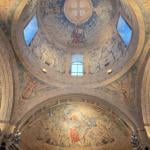
The social model of disability asks: what would happen if society changed, rather than always expecting disabled people to adapt? If buildings had ramps and wide doors as standard, wheelchair users would be less “disabled.” If workplaces embraced flexible hours and remote working, some of those of us with fatigue or chronic pain might still be able to work. If buildings had better ventilation, and higher ceilings (old style churches had something right!) then the risk of catching an infection would be reduced. For the immunosuppressed, elderly, or medically fragile this can literally be a matter of life and death. It upset me greatly that in the UK our parliament have installed a top of the range ventilation and filtration system in their own place of work but have made no requirement for other buildings to do anything to bring about the step change in indoor air quality that COVID should have prompted.
None of this is to say that the medical model is wrong. My illnesses are real and often brutal. I have blood cancer, which needed chemotherapy. I rely on regular immunoglobulin therapy (SCIG) to keep infections at bay. I am dependent on steroids, biologics like Tezepelumab, and for several months needed carefully balanced insulin to stay alive. The medical interventions I receive from the NHS are life-saving, and I am immensely grateful for them.
However, I have also experienced how the health system can itself disable people when it fails to see beyond the diagnosis. Too often, patients are treated as a set of symptoms to be managed rather than as whole people with social, psychological, and spiritual needs. This is why I’ve become such an advocate for the biopsychosocial–spiritual model of health. It acknowledges that medical (biological) issues are real but only one piece of the puzzle. Our psychological resilience, social environment, and spiritual beliefs are equally crucial to our well-being. Without addressing all these dimensions, healthcare risks being incomplete.
The Christian faith should give us all a lens through which to see issues of disability very differently. Jesus consistently demonstrated love and acceptance towards all those his society sidelined, this included the sick, the disabled, the poor and those labelled as “sinners”. He valued their dignity and humanity, not just their “problems.” When he healed people, it wasn’t merely about fixing their bodies; it was about restoring them to community, breaking the social and religious barriers that excluded them. He stated that ““Healthy people don’t need a doctor—sick people do. I have come to call not those who think they are righteous, but those who know they are sinners.” (Mark 2:17, NLT)
Churches today need to take a much more active role in acting like Jesus in this matter. We must play our part in building communities, workplaces, and churches that don’t just tolerate disabled people, but actively empower and include them. Too often, faith communities have echoed the medical model — focusing on “healing” rather than inclusion. But Jesus demonstrated that every person, whatever their condition, bears the image of God and has something vital to offer.
If I could ask one thing of Christians, it would be this: stop seeing disabled people through a lens of pity or heroism. We don’t need to be patronised, nor do we need to be put on a pedestal for doing everyday things. What we need is understanding and structural change — better public health measures, accessible environments, flexible work options, and a culture that values contribution in all its forms. Disability has taught me that suffering is not something to be romanticised, but it can be redemptive when it opens our eyes to the needs of others. My illnesses are real, but much of what disables me comes from the world’s failure to make space for people like me.
If we shift our perspective — from “What’s wrong with you?” to “What’s wrong with the world that makes life harder than it needs to be?” — we can begin to build a society that is truly inclusive. It is a travesty that some Christians see diversity and inclusion as dirty words that must be resisted.
More from Adrian








 Ad-Free & Subscriber Log-In