

I interviewed my friend and hero Peter John Smyth (“PJ”) who many of my connections will remember fondly as a passionate preacher and Christian leader. Among other things we spoke about his experience of blood cancer, and what it was like being the son of the man whose scandal led to the Archbishop of Canterbury resigning. This covers some of the same same territory as the recent See No Evil documentary. It is full of hope and will help trauma survivors as well as those who want to help them better, or learn the lessons of the past. Worth a watch for everyone. This is a conversation unlike any I’ve had before.
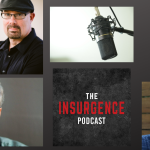
We speak about trauma, deception vs truth, and the “rescue ropes” which helped him heal. You can listen to or watch this interview right here on this page. The transcript is also available below, and information about his two books.
I’ve previously posted twice about this:
-
John Smyth: PJ & Andy Morse on Good Morning Britain
-
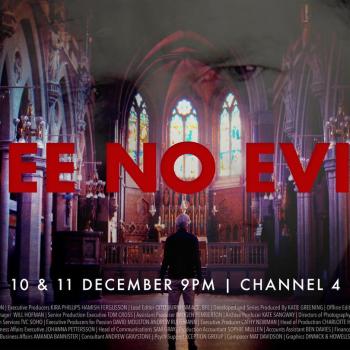
John Smyth, shame, his son PJ, & a big Channel 4 documentary
If you are looking for help with a specific kind of pain visit
There are some interviews you approach knowing you can’t treat them like just another podcast. This is one of them. I’ve known PJ for around twenty years. We first met in the Newfrontiers world, and I still remember sharing steaks together in Johannesburg fourteen years ago, in the week we were both turned forty. Life has moved on a lot since then.
This interview touches themes that are painful—trauma, the long shadow cast by abuse, church failure, and the kind of story that ends up shaking institutions at the highest level. But we didn’t begin with headlines. We began with the person: the PJ many of us knew. A gifted, energetic, fruitful church leader and preacher. in ministry, and in church planting across Zimbabwe, South Africa, and beyond.
After the video and podcast I continue to explain what we covered, there are links to his books, and a full transcript.
Video
Also available on YouTube.
Podcast
Also available on Spotify and everywhere you get your podcasts.
PJ describes how his life and ministry were hit by a “tidal wave” when his father’s abuse story broke in the media, just as PJ was beginning a new chapter in the United States. What stood out to me was how honestly he describes the power of denial, manipulation, and the way Scripture itself can be weaponised—especially the misuse of “honour your father and mother” as a tool of control.
But this interview is also about healing. PJ shares the things that helped him climb out of the pit: counselling, community, and Christianity.we discussed the biopsychosocial-spiritual model of wellbeing.
PJ also spoke movingly about the unique power of other survivors standing with you—how healthy community can help dismantle shame, and how telling the truth to safe people can begin to rewire the heart.
One of the moments I found most striking was PJ’s insistence that the church must learn humility: to partner with medical and mental health professionals, to stop pedestalising leaders, and to become a safer place for wounded people to be seen, heard, and helped. His vision isn’t cynical. It’s hopeful.
We end looking forward: PJ speaks about the work he feels has been thrust upon him—supporting survivors, helping churches, and building something he calls “Survivor to Survivor.” Increasingly PJs focus is less on looking back in hurt, a more on looking forward in hope.
I’m grateful PJ was willing to have this conversation, I am confident it will help both those who have suffered, those who want learn how to better support others.
I strongly recommend both PJs books
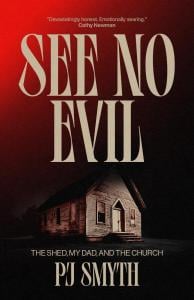 See No Evil: The Shed, My Dad, and The Church
The name John Smyth is now infamous in the UK, South Africa, and Zimbabwe. His “career” led to a Church of England cover up. As the news has unfolded over the last couple of years the Archbishop of Canterbury had to resign as a direct result.
And for his son, PJ, the demolition of his decades of denial let to the destruction of his own pastoral career. He was the youngest victim of his father, and experienced the trips to the shed for longer than any of the others who have come forward. And as his life imploded, PJ deconstructed, but has reconstructed.
This story is suitably harrowing and shocking, but also full of defiant hope that he will not allow his past and his father define his future. This is a book is a must read for everyone concerned about how we prevent things like this happening, and how people can emerge with a measure of healing.
We must learn how to better understand and care for those with a trauma history. And we must learn the lessons of the past. It will be hard to put down, but unless you find it a trigger for your own trauma you will end the book encouraged not discouraged.
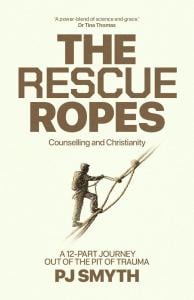 The Rescue Ropes: Counseling and Christianity
Practical. Compassionate. Not glib. Just tools that have helped the youngest victim of the UK’s most prolific Church of England child abuser, who also happened to be his father.
His world came crashing down as documentaries demolished his denial. His career took a hit. He deconstructed.
But he reconstructed and counseling, Christianity, and community helped him climb out of the pit of trauma. This book could help you do the same, or help you understand how to help others.
TRANSCRIPT
Adrian Well, hi there, I’m Adrian Warnock and I’m here with Peter John Smyth, known to me and many others as PJ, and today’s conversation is probably going to be a little bit different to anything I’ve had before. We will touch on some painful themes, trauma and a story that eventually led to the Archbishop of Canterbury having to resign, but we’re not going to start there.
I just want to start by saying up front that you and I have known each other for around 20 years now and I would call you a friend. I mean, we’re not, I wouldn’t want to over-egg that, we’re not close friends necessarily, but we are friends. I do remember that time we had steaks together in Johannesburg and it’s very strange because that was 14 years ago.
You had just turned 40 and I was just about to turn 40. I turned 40 in the air coming back from Johannesburg to the UK. We had lovely steaks together and I visited your church and can you believe it was that long ago? How’s the time flown by?
PJ Yeah, it’s flown. Two old boys reminiscing now Adrian, so nice to be with you and I appreciate you giving voice to important themes and just staying connected with me as a friend over the years.
Adrian Yeah, that’s good. So, I just wanted to talk a little bit about that PJ that I knew back then, but there’s another funny connection. We turned 40 around the same time but now we both got this crazy goal now of releasing two books at once, except you’ve just done that.
You released two books at once as a self-published author and I’m just in the process of doing that as well. Mine are available for pre-order and yours are available for order and it’s kind of crazy. I mean, I should know better and so should you because we’ve both published books in the past. So what brought you to bring two at once and how’s it been just about doing it rather than the topic of the books at the moment. We will get to the books themselves later.
PJ Yeah, much respect to you Adrian. I’m looking forward to reading your books. You must tell us about that in just a moment. But yes, doing two at once I figured compress the pain into one project, you know, and my two books are kind of a series. They’re broadly on the same theme but one is memoir and story and the other one is very much my sort of practical healing journey and helping others. It’s a sort of 12-step healing journey that’s more workbook so to speak. So it made sense for me to do them parallel to each other and, you know, I wasn’t too concerned.
I didn’t do a big launch for either of them. I’ve just got them out there and people can access them as they want.
Adrian Yeah, I guess that’s one advantage of doing it yourself in a way, the self-publishing route, because you can start off with Kindle and then once you’re happy with it, put out some more physical books because people do like the physical books, don’t they, I think?
PJ Yeah, I got a text just this morning, someone saying, oh I can only access the audiobook. Is something wrong with the Kindle download on my computer? Can you mail me a print version? And the answer is no, not yet.
Adrian Not yet, but it won’t be long I hope. That’s not too painful, actually. The hardest thing is getting the cover right, but there we go, that’s a whole other story.
PJ I just wanted to ask, you’ve written a bunch of books. Do you agree with Churchill, who said it’s your friends, then your mistress, then your everything and, you know, do you get totally how do you cope?
Adrian Yeah, it can be a bit like that. Certainly, I mean, Raised with Christ, believe it or not, is fifteen years old this year. So, I brought out my own self-published second edition of that. But that book is very much the first one because that kind of, that really lived with me. It became something of a life message, as I suspect perhaps these two books that you’ve just written will be more than the ones you’ve done before, I suspect. I don’t know, we’ll see.
That really was something that God just put on my heart as resurrection and it’s fighting with me. I’m probably going to update it again next year. But it still seems to be blessing people, so that’s good.
Then I wrote a book called Hope Reborn on how to become a Christian, a kind of transition book. I didn’t feel there were many like that. There were lots that either assumed you’re already a baby Christian, now how can we disciple you, or assumed that you weren’t yet a Christian and needed help to understand, but we were trying to aim for people who maybe put up their hand. I love what Terry Virgo says about this. He says that people often get saved on a fragment of truth. So they might have come along, seen something in people. We wanted just to help people in that transition phase. So I wrote that one with my pastor at the time, Tope Koleoso.
Now these other two are sort of fighting within me a little bit, because they’re like twins, pregnant. I think I’m pregnant with books now. One of them is about John Newton: Amazing Grace: How Faith Grows in the Human Heart. The other is called The Traitor Within: Understanding and Healing Our Deceitful Hearts, partly inspired by The traitor’s phenomenon. I don’t know if that’s reached you where you are in the US, but over here one in four people have been watching that. You can watch The Traitor Within in the US, I just don’t think it’s quite as popular, although it’s getting that way. It’s beating all the other reality things. It’s all about lies and deception, so it’s all good fun.
PJ Excellent, and when are you releasing them?
Adrian Okay, so the two that are coming out next year, they’re both available for pre-order now, at least in Kindle form. Probably as a sort of, I’m told to not say as an incomplete form, I’m told to say it’s an early preview form. On the 1st of January for one of them. And the 29th of January for the other, so I feel like a fool. Who does that at this time of year?
PJ But anyway, I look forward.
Adrian Yeah, and I’ve obviously read your two books, because you are that little bit further ahead. We’ll come back to them later on, but I wanted to say they’re fantastic, but I’m not greatly surprised by that, because you’re a fantastic communicator and always have been, PJ. So well done for that, and we’ll talk about the subjects of those a little bit more later on. But enough of me and my books. I just wanted to start the interview proper, if you like, with just exploring a little bit about the PJ that I met all those years ago.
When we met, you were a Christian conference preacher, and I was covering that event online. I think we met in the coffee room behind. They were gracious enough to let me in with all the speakers, which I guess just helped me, you know, have a feel for the event behind the scenes as well. I was blogging about it online.
Back then, that was quite a common thing. Most conferences had a blogger. They didn’t always record their messages, although I think that one did, but a lot of conferences had a tame blogger there, and that was me. We chatted a little bit.
You were a passionate preacher, there’s no question about that. You loved Jesus. You had a reputation for building a large church and planting lots of other churches. You trained other leaders. I would say you had what, well, I say other people call, but I think it’s me that tends to call it this, the Christian Midas touch, i.e. everything you touch seemed to be turned into gold, or that’s how it looked from the outside anyway.
You were, in my mind anyway, one of those “perfect Christians”, without meaning that as an insult, just like everything seems to be working wonderfully for you. Clearly, you couldn’t have any problems going on behind the scenes that none of us knew about, and you were on the move for Jesus and very successful. Obviously, we’re going to come on later to how that perhaps wasn’t an entirely accurate view, and how that sort of changed, but I just want to start by getting into the mind of that man back then.
What drove you at that time, and is there anything you think about looking back?
PJ Yeah, I had a run from the age of about 26 to 46, so about 20 years of planting and leading churches, and early on when our first church in Harare, Zimbabwe grew, we didn’t quite know what to do with it because we were running out of space, so we went multi-meeting.
We had a school hall that could probably seat 250, 300, and we were outgrowing that, so we started to do a meeting at 9 and 12 and 3 and 6, and it was great fun. People would say, yeah, I go to River of Life 3, which means I’m part of the 3 p.m. congregation on a Sunday, and those were heady, wonderful days, all squashed into a school hall four times on a Sunday.
Then the question was, well, are we going to be a four-meeting church or a four-congregation church, and it made sense to raise up leadership teams for each congregation to pastor and preach in the moment on the Sunday, but also to pastor Monday through Saturday and oversee small groups and create community and care for people. So we set up four different leadership teams, and I can’t remember, I probably preached 50 or 60 percent of the time, and other preachers, and each one began to come through.
Then it was beginning of a wild season in Zimbabwe, political unrest, and for various reasons we got kicked out of the school that we were meeting in, so the question then is, what do you do? Do you build your own big building? Do you stay together? And we were already on a trajectory because of the multi-meeting to go multi-site.
It wasn’t called multi-site back then in the 90s, but it was a case of we didn’t really have any other options, so we transitioned into four, I think it was actually five different churches just in the space of one month, and by God’s grace we held together as a family of churches, but really transitioned from multi-meeting to multi-site to multi-family of churches.
So that was Zimbabwe, and then we did it again in Johannesburg. I literally felt God say do it again in Johannesburg, so we started with a small group and over the course of 10 or 12 years a very similar thing happened. We went multi-meeting and then multi-site and then transitioned to a family of churches.
I was always part of New Frontiers, very grateful for that, a sort of umbrella of movements that you’re very familiar with of hundreds of churches, and then when Terry Virgo transitioned out of leadership, he released different people to be fathers of their own clusters of churches. I was one of those, but it was actually a few years before I started Advance with some dear brothers, and Advance was really a network within the wider New Frontiers movement.
It was all, Adrian, I mean you understand ministry, day to day it felt hard, and year to year it felt hard, but I do appreciate as you zoom out and look at it, we seemed to have a lot of fruit by God’s grace. I had personal challenges with cancer along the way, and sickness, and just all the thrills and spills of ministry.
I wouldn’t have used the phrase everything I touch turns to gold.
Adrian I’m glad, because usually that’s something someone else uses!
PJ Yeah, and then we moved to the States for a new season, we were saying to the Lord, you know, what’s the next phase of the adventure, and we felt, you know, a door opened up in America, and actually from the moment we set foot in the States, just about, that was when my dad got out in the British press, and things have been very difficult, you know, certainly on a ministry front since then.
Adrian Yeah, we’ll come back to that, but I just, I guess I wanted just to underline that sense that, you know, so much good came out of your ministry, and I hope you’re still able to see that from the standpoint of today. I know that there are many people, myself one of them, who are very thankful for what they’ve learned from God through you and your ministry at that time. I guess it turns out that God does use imperfect broken people to advance his kingdom, because there’s no other sort, is there?
PJ Absolutely, yeah, and I think that’s to the praise of his glorious grace. I regularly have had and still do get notes of appreciation from people, you know, being encouraging, because they know that my ministry now is different, I still consider myself in ministry, even though it’s not that sort of form of ministry. I’m very grateful for that and also trusting the Lord for ongoing fruit in the future. I’m so proud of others who have picked up various batons that I passed or dropped or fumbled, you know, and praise God his kingdom moves forward.
Adrian No, I think that’s right. For me that’s one of the things that’s really drawn my heart to John Newton, if you just forgive me for a moment on that. The fact that he himself was obviously far from the perfect man, having been a slave trader, a violent man, aggressive man. It took him 40 years from his conversion before he ever actually spoke out against the slave trade. We might be forgiven for saying, well, that’s a long time, but we might also like to remember he was the first person to actually go into print on that front, so it’s kind of like, it was very easy for us to say, well, why didn’t you get there quicker. I think clearly God does give us the grace, you know, to change, whether that’s, you know, our brokenness or our sin. He was so, so compassionate towards his friend William Cowper (pronounced Cooper), who had severe mental health problems, and he literally sort of moved in with him, or had him move in with him for months, just to try and support the guy. You look at that and you sort of think, wow, that’s the kind of ministry we want, huh?
PJ Absolutely, maybe you should consider writing a book about it, have you thought about that?
Adrian Yeah, I am actually! I’m going to let him speak, that’s what I want to do. A lot of people update Spurgeon, but they don’t update Newton much. So I’m going to do that, let him speak.
Enough of that, you mentioned your brush with death, you know, and I’m sorry to really bring us back to earth here. I think that for me was the first time from the outside, and you’ve got to bear in mind, I really was, I wasn’t that close, so I wouldn’t want anyone to think that you were the sort of person that made out you were perfect, because I’m sure you didn’t.
But from the outside, the first time I had any sense that your life wasn’t just plain sailing, was hearing that you had blood cancer. I remember I was at the conference, we were expecting you to preach, and you weren’t able to come. We all prayed for you.
It was quite a brush with death, because you had an acute blood cancer. You probably remember that I later on had my own blood cancer, and mine was kind of the opposite of yours, really, although it was also lymphocyte blood cancer. Mine is slow growing, so it’s unlikely to kill you in this short term, but also, I’ve been told it’ll almost certainly come back. Whereas yours was fast growing, and obviously it was a real life and death sort of issue.
I saw that from afar, and at the time, and afterwards as well. I didn’t have my blood cancer until, ironically enough, around the time things started to sort of collapse for you for other reasons. So we were both going through sort of different types of trauma, mine medical and yours to do with the collapse of your career and all the rest of it.
I suppose when I looked at it, I went back and I read or watched you talking about it again, and if I’m honest, I felt a bit of guilt. I felt like I wasn’t handling it as well as you had seemed to from the outside. I’m just wondering, you know, was it all as plain sailing as it seemed, watching from a distance. Because for me at the time, I remember feeling a bit guilty. I’m not coping as well as PJ was, and I guess that’s the way we often feel sometimes, we compare ourselves to each other, it’s a silly thing, but we do do that.
PJ Yeah, that’s funny, I mean, you know, I’ve got a, just a dear friend and brother who’s really in the thick of it at the moment, and I feel the same thing, I think, oh my goodness, he’s handling it so much better than I did, like as public witness and testimony.
I felt, I feel it’s so strong, so yeah, it was Hodgkin’s lymphoma, it was stage two, we called it early, by God’s grace, I woke up one morning, I don’t even see the scar there, but it was like a golf ball-sized thing sticking out of my lower neck, and it had been painful for a few weeks, but I thought it was just, you know, I’d pulled a muscle or something.
My theological explanation is God is the healer, and he heals, whether through medicine or miracle, and with me, he used medicine, he used chemotherapy, But the chemo, you know, carpet bombs the body, so I had all sorts of side effects, so it was a pretty painful 18 months.
I got depressed, I didn’t call it depression, because at that stage I was fair and square, the cowboys don’t cry, and PJ Smyth doesn’t get depression. PJ Smyth helps other people out of depression, but with hindsight I was definitely depressed, and it was a dark time, my wife Ashley was magnificent, I’m sure it was harder for her ultimately than it was for me, but I locked on to a, you know, Spurgeon’s great in good seasons, but he’s magnificent in tough seasons, and he spoke of the oh blessed hurricane that drives me to the rock of, the rock of ages, and it was a hurricane that pressed me firmer and deeper onto the rock of ages, and for that I’m grateful.
Adrian Yeah, I, you know, again, not wanting to get too much into my story, but I remember lying in the chemo ward listening to some gospel-centered songs on my playlist. That’s pretty much the only thing that got me through. It was funny, I found certain songs difficult to sing at that time, because they had this sort of rah-rah celebratory theme. But there were ones, some of which are written in times of hardship by other people, and all of which, brought us back to really the amazing grace of God, and that’s what I called it, I think, grace or gospel grace or gospel playlist, I can’t remember now, but I listened to that.
PJ Yeah, you know, my gospel playlist was about one song, when I, you know, when you first get your cancer diagnosis, it’s a surreal moment where you hear the word cancer spoken by the doctor, and I remember driving home, just stunned, and I had all sorts of, you know, crazy thoughts in my head, but I listened to Breathe, the song by Lou Fellingham. I don’t know if you remember that, but that has been my favorite song, and I’m a U2 fanatic, but if I had to go to a desert island the rest of my life, it would be Lou Fellingham’s Breathe song, you know, about the faithfulness of God, and restoring, you know, what the enemy and life has taken from you, so that was my playlist, and I listened to that incessantly during my months of chemo, and it’s on my favorite playlist.
I probably listen to it at least once a week, still love it.
Adrian So I’m not going to ask you to sing, because I suspect that you and I will probably both regret that, but could you just read out a couple of the lyrics that you remember that really speak to you, from your memory?
PJ Man, I know, if I wasn’t, I could sing the whole song for you. That didn’t work. I’m sorry, man.
The song PJ was referring to is Lou Fellingham’s Breathe you can listen to it here:
The lyrics begin, poignantly, “We believe You’re a God, Who can mend the broken hearted.
Adrian No, no, it’s fine. Look, I’ll tell you what, for the guys watching, I’ll make sure there’s a link to that song, if anyone hasn’t heard it. Lou’s got some great songs for those kind of moments, hasn’t she, of difficult moments, So many of the guys in the past do as well, so there’s some great songs that can make a huge difference.
Do you think, though, you know, when you look back, that you talked about that kind of cowboy mentality. I guess in a way that was the way you survived certain other things which we’re going to come on to. so I’m guessing that was part of maybe not an entirely healthy way of dealing with it, at least on the outside, but I guess on the inside you were a bit more aware of what was going on in your heart?
PJ Yeah, I don’t think I was aware of what was going on in my heart. But I’ve learned through the therapy I’ve got, and reading books, and people with much higher pay grade than me, psychologists, trauma psychologists, and so on.
When you experience significant trauma at a young age, essentially you fall into two different categories, either you kind of become a jelly, and very just susceptible to various sort of pain, different sorts and addictions, and so on, and it’s quite obvious to yourself and others that there’s…
Adrian You’re sort of damaged, I suppose. People think that’s what happens to everyone, but it isn’t, is there?
PJ No, the other route is you go type A, very driven, become a master of compartmentalization. You tell yourself the story that you’re a survivor, and you get through, and that was the route I went. People say, are you glad about that? I think so. I mean, none of us are perfect, and the Lord used me along the way. I mean, you can come onto it in a minute, or whatever you like, I mean, I’m on your podcast, but the journey of self-awareness began. It couldn’t begin until I started my journey of dad awareness, because my dad had loomed so large in my life, and particular experiences of my dad had loomed so large in my life, but until I could admit those, I couldn’t see past, really, who the real me was.
Adrian It’s an interesting thing, isn’t it, because there’s a sort of almost kind of macho-ness about it, maybe. People talk about macho Christianity, and I think it’s not always a bad thing. There’s a kind of, we’re on a battle, we’re fighting through, we’re not going to just allow things to, you know, crush us. We’re going to build the kingdom, we’re going to extend the kingdom.
The last thing people want is a pastor whose kind of a blubbing wreck at the front of the church every week. But at the same time, I suppose the danger of that is that people sometimes feel a little bit like I did when I thought, PJ seems to cope with that a lot better than me. I guess at times you probably felt similar feelings, but we’ll come on to that.
I didn’t quite gather this from reading your story in your book, and indeed from the documentary, something did pretty awful happen whilst you were sick. In fact, you were possibly at death’s door, because you had a massive clot in your leg, and your dad comes in and says, listen, you know, you’ve dishonored me, and you’re going to die unless you repent. The way you told that in the book, particularly I felt, it sounded like that at the time, you almost believed him, or at least were willing to listen to him. You didn’t see how outrageous and awful it was, your wife walks out the room, then she comes back, and she’s ringing friends, and saying you’ve got to talk some sense into PJ about this. But do you think that was the beginning of an awareness for you, or did it just sort of disappear quite quickly?
PJ Interestingly, both. I was aged 40 or 41, and dad overstepped the mark so stunningly and shockingly in the experience that you’ve just mentioned. It shook me, and even though I was blinded by fear, and the desire to honor him, I realized that something evil had gone down, but I didn’t dwell on it.
Ashley and some great friends prayed for me, and so on, but it’s like the clouds had parted, and I’d seen the light, actually the darkness in my dad, but then they, the clouds came back over. I kind of trundled on, much as before, we put in a few boundaries with my dad.
For listeners who don’t know what we’re talking about, simply my, one of my dad’s most manipulative weapons was Scripture, he would take and misuse Scripture, and one of the scriptures he misused and abused terribly was the fifth commandment, honor your father and mother that it may go well for you, and you’ll live long in the lands.
He branded into me from a young age that if I were to dishonor him in word, or action, or even in thought, it was akin to dishonoring the Lord, and it would shorten my life, and when I was aged 40, 41, and he visited me in hospital when I had cancer, he sat down with mum, and he read out to me, it took half an hour, seven ways that he felt I was dishonoring him, and my mum, and he, he basically said, you know, I don’t think you’re going to get, you’re not going to get better from your cancer until you start to honor us, so he even made my cancer about him, and like I, Adrian, you’re probably listening, thinking that is absolutely mental, I, it did penetrate me to some degree, and it was definitely the start of realizing who he was, but it did not hit me with the force that it should have.
Adrian No, sure, and I think that fact, why some people, when they look at your story from outside, who perhaps are less of trauma aware. Fortunately, I’ve not been through anything remotely like what you’ve been through on a personal level. But as a psychiatrist in my previous working life, you are taught some of this stuff and also do meet people. You understand a little bit about how it goes.
So I think for people who are a bit more, let’s say, trauma aware, and this is, of course, one of the issues. A lot of Christians, a lot of church leaders aren’t particularly trauma or even just pain aware. It’s like going back to that macho Christianity. Macho Christianity has a point, but there’s a time when you have to go, let’s be a bit more understanding of what’s going on here.
I guess the fact that the clouds, as you put it, came back together, and, you got better for your blood cancer. Things started carrying on quite well, and then, I don’t know, a couple of years later you moved to the US, and it was to lead a church that had had, you know, challenges. Part of which were about, you know, how it was perceived that they had handled allegations of child abuse.
People say, oh, why didn’t you even mention it, what would make you go there? But I guess you just weren’t thinking like that, and you came into America, as you say, thinking this was a new, fantastic opportunity for you. You probably had no idea, really, that what you later called your family’s dirty laundry was about to be aired in public. How was that moment for you, to suddenly go from we’re on new footing, to suddenly seeing, your dad on the Channel 4 News, being pursued by a persistent reporter?
PJ Yeah, it was, it was an extraordinary season. As you say, we’d, you know, we’d landed in America just before Christmas. And I started my job January the 1st. I was set in place as the lead pastor, the lead elder towards the end of January. That was on a Sunday. And two days after that was the expose, the Kathy Newman Channel 4 two night expose.
And I think that was Wednesday, on the Tuesday, the Archbishop of Canterbury had got wind of what was coming, and he was speaking about it publicly. So it was most, it was most unexpected. I’d heard, I’d heard from someone the day before on the Monday that something was going to air. I thought it would be like a 30 second clip. Something small about my dad. I had no idea of the scale of it, and so on. It was like a tidal wave hit me and my family. Its not just me, it’s my wife. And yeah, and then I had three sons, and they called him grandpa. And it was, so it was a huge amount to deal with personally.
And certainly, my new church was shocked by it. There’s a thing called hindsight bias that we’re all susceptible to. When we acquire knowledge in the present about something that’s happened in the past, we struggle to imagine the past without the knowledge that we have now in the present. And that leads to a bias as we look back on things.
And it was, it was impossible for, for some people to imagine why, how, how my dad had his whole story, how did it stay quiet for for so long. But the reality was, is that the last major opposition that he had had was in the 1990s. This was about 20 years later. And he had gone unopposed for 20 years. And he had continued to spin to me, and those close to me, his version of events.
That all culminated in, in myself and many others thinking there’s nothing here to see, there’s nothing here really to say. And how much of that was, you know, subconscious, just avoidance, and how much of it was, you know, lack, just a lack of responsibility and lack of curiosity. I’m not sure, but it was what it was.
Adrian I guess you were caught up, as you said yourself, in his lies. And I think that’s important to stress for people that if they don’t understand this. Because a lot of people go, why on earth was nothing said, nothing done? Why didn’t anyone speak out? Why did people, you know, older than you, because I know for you, it was when you were a lot younger, but a lot of these guys, they kept coming back into their 20s to, to be abused by your dad. Why do people do that? It’s because of the lies that are told and become almost a part of them.
PJ Absolutely. I think, have you seen the documentary?
Adrian Yes, I have.
PJ I got an advanced viewing of it. My family and I didn’t have any creative control. It was a whole trust project, but I got an advanced viewing of it.
And there were many, many shocking moments, but a personally shocking moment that I had not recalled. I didn’t even know it was in the archive footage that they were looking at was my wedding speech. I got married to Ashley when I was 22 years old. There’s a little clip. They were very clever in pulling it out of my, in my wedding speech, where it should be a speech of obviously gratitude to my parents, sets of parents, but it’s a moment of, Hey, we’re charting our own way now. For me, it was the exact opposite.
I paid homage to my dad and my speech, Ashley and I, you know, we’ll do our best to honor you for the rest of our lives. So it helped me see now as a guy in my fifties, just how enslaved I was to my dad and how under the abused, the misused Fifth Commandment that I was. And that shaped me massively.
So when, when my dad was outed in January, 2017, a huge thing inside of me was, well, I can’t dishonor my dad in word or action or even thought.
Adrian Yeah, of course. And, you know, we all actually have lies inside us because that’s, what the Bible says is the human heart, you know, is deceitful above all things. You can’t understand it.
Obviously, some people, like your father, take those to an extreme. And unfortunately, also stir those up and implant them and impose them really on other people, by their sheer sort of force of personality.
I think anyone looking back at that time and what happened with you and what you said and didn’t say and what you remembered and didn’t remember, they’ve really got to understand that, that, whether by just sort of repression of memories, which is a very real thing, or as you say, by denial, this feeling, I can’t dishonor my dad.
I know you said things at the time that you subsequently regret.
I just wonder what you’d want to say today to people who were in that church that you were leading at the time, the group of churches that you were leading at the time, and those who just knew you as a platform preacher and are probably asking, you know, what happened to PJ? Where is he now?
What would you say to that group of people?
PJ I would, I don’t, I don’t think I’ve, I don’t feel I’ve got much to say. You know, I could explain. I think people are coming out of the woodwork saying to me, oh, we really didn’t know what was going on. And kind of now we still don’t know what was going on. I think there was very poor communication to the wider church. It was an extremely painful time.
You know, I still today feel huge disappointment with how things were handled. And I appreciate it was a difficult time for everybody. And I’m, you know, I’m eager to move on and rebuild.
But yeah, I think there’s a lot of unanswered questions. There’s a lot more that could be said. I speak minimally, but meaningfully about the church and my experience with the church, the good, bad and the ugly, both the brutality and the healing balm in my book, See No Evil.
You know, I touch on it without going into depth, but I’m pleased with what I was able to say.
Adrian Yeah, I obviously don’t want you to sort of rehash the detail of all of that, because that wouldn’t be right. But I guess, sometimes in those moments where everything is sort of falling apart. For whatever reason, and obviously in your case, it was obviously deeply at the very core of your being and very identity, you know, your father, what happened.
I just wonder if you sometimes felt quite lonely, because certainly some people just don’t seem to be able to cope when life gets messy in any way. And they either run away, or they say and do some very unhelpful things. And we’ll come on to what helped.
But I just wonder how true or not do you think this famous phrase is,
“the church is the only army that shoots its wounded soldiers, exiling them, then leaving them in distant fields to bleed to death.”
Did that sometimes feel true for you? Does that sometimes feel true when you look at other people’s stories?
PJ Yes, yes, and yes. I think, particularly, in my situation, there were really two tracks that the PJ train was on, and everybody was on. One track was, was treating me as a church leader, and me trying to act responsibly as a church leader, when your father is outed as probably the most prolific serial abuser connected to the Church of England in recent history, certainly.
So track one is, is me as a church leader, and track two is me as victim, son and victim. I think it was one too many tracks for the church to handle. You asked what I what I might say to people who’ve got questions about it,
I think, looking forward, I would urge the church not to feel that they hold the corner on all things to do with physical health, and mental health, and spiritual health, man, the church holds the corner on that if they’re not, if they don’t, then what are they doing?
But it’s like a three circle Venn diagram, you know, body, mind and spirit. And I think pastors are getting better at deferring to doctors on physical health issues. I think there’s room to go on deferring to the professional therapeutic community when it comes to issues of the mind.
It’s not just as simple as be transformed, be transformed through the mind, you know, washing of the word, that’s certainly part of it. But the rescue ropes that got me out of the pit of trauma, were counselling and Christianity, it was psychology and spirituality.
And they both played different roles and both played different God given roles. And really, that’s one of the major things I would urge the church and as they move forward to have strong, respectful partnership with the medical and mental health community.
Adrian Yeah, I think that’s right. I certainly found with some of the things I felt and faced, that there were pastors that knew everything about, and people that I met, they knew everything about spiritual side of things, but sort of struggled a bit when there was no answer. I mean, someone, who was it who said, I can’t remember who said this, but they were talking about, not me, not, you, no someone else. I think it’s a famous quote saying “I was an uncurable case” or something like that.
Pastors expect to be able to know what to say. Someone comes in, they’ve got some kind of spiritual dilemma, and ah yes, that Bible verse or that principle and boom, sorted. But it’s not always that simple.
I think perhaps one of the best lessons that pastors could learn is when they’re out of their depth, to look someone in the eye, just listen, maybe care for them a bit, hear what they’re saying. And then say, look, I can’t really fully help you with this, but I’m going to find someone that can. I’m going to refer you to someone that can. Whether or not they’re a Christian, actually, it’s almost irrelevant. What’s relevant is whether they’ve got the skills in that specific area.
PJ Yeah. Yeah, very good.
Adrian Yeah, and just going back a minute, you mentioned the spiritual, you mentioned the psychological, and you know, you mentioned the body.
And you may or may not be aware of this, but as a psychiatrist, I was always taught that specifically for psychiatry, but also for more general medical things, it was bio-psycho-social. You had to think about in terms of cause, but also in terms of treatment. So, what that would mean, it was something I would always sort of push, you have to look at each of those areas to see other things that need addressing in each area.
Of course, as a Christian, I would say the fourth is spiritual. And in fact, many secular therapists are now saying that, secular doctors are now saying that, we have to think about the spiritual leg as well. It’s like the four pillars, if you like, of well-being, you know, biological, psychological, social, and spiritual.
So it really interested me to see on your Facebook a couple of weeks back now, that you talked about, without using the words, psychological help, counselling, spiritual help, the church, and social help, community. You didn’t mention biological. I just wondered if there’s particular things that helped you from the biological, physical side.
PJ Absolutely. And yeah, I remember you tweeted about that. Actually, I placed it within the counselling side of things, but the importance of healthy disciplines, eat, sleep, move, socialize, those four.
Adrian Yes, I remember that in the book, actually.
PJ Yeah, in the Rescue Ropes book. And I’ve been working for a healthcare company here in the States for four years. I’m actually doing something different now, but those four years were, they were great fun at different levels, but particularly useful to me personally.
We had a psychiatrist on our team, and she would literally prescribe exercise, a 10-minute walk rather than a pill. She would prescribe pills if you needed, really needed them, but she would prescribe works of service, get out and help at the local community centre, serve others and prescribe eating healthy foods.
So eat, sleep, move, socialize, those things have a huge impact on our mental health and probably our spiritual health as well.
Adrian Yeah, and that thing about volunteering, I probably put that under the social heading, you know, community heading of having a sense of purpose and doing something that connects with other people. A study I read recently was saying that what they call pro-social acts, where you’re doing something for other people, help most people more than the typical sort of self-care type acts. And I’m not saying self-care isn’t important, but it’s often almost more important if someone is able to, to get them out and doing something to help other people.
Sometimes that can just be as simple as meeting other people in the same boat as you and giving a bit of mutual support, peer-to-peer support. Very powerful, very, very powerful.
And I think at this point, you know, for the people watching, we’ll take a short pause and play a clip from The West Wing.
I know it’s a clip you’re very familiar with. Leo uses an illustration talking to Josh, which I believe they use this illustration in Alcoholics Anonymous about a man who was trapped in a pit and people trying to help. Some said they couldn’t help, but one jumped in and said, you know, and the guy goes, why have you jumped in? He said, well, I’ve been here before and I know the way out. I wonder, you know, if that scene sort of resonates with you.
PJ Oh, hugely. It’s a stand, West Wing’s one of my top series and that’s one of my top scenes.
Adrian Talk me through a little bit what that worked out for you. Who jumped into your pit?
PJ I mentioned I’ve been hurt by the church but also healed by the church. And I’m so grateful for. I’m thinking particularly of one church pastor, but many brothers and sisters who consider themselves Christ followers, who’ve had similar experiences and who were able to enter my experience with me on the basis of their experience. And it’s a beautiful thing, you know, when someone has gone through something that you have, there is a depth of compassion and empathy.
It’s often very economical advice they give. They don’t give you a big lecture, but they just very concisely say, hey, I found this helps me, ding, ding, ding. And there’s really a profundity to it.
But the pastor I’m thinking of, he’s a pastor of the church I attend at the moment, absolutely massive church here in Texas. And he’s become a friend and brother of mine. But he’s such an interesting guy, he presents initially, as a kind of stereotypical mega church pastor, but then you start to listen to him. If you come to the church, and then even more, if you get to know him, like I do, you realize he’s quite far from it. He had an upbringing, he was an only child, both of his parents were deaf. So his first language was, was American Sign Language.
And he had a difficult upbringing. So he experienced personal hardship early on, and he understands trauma. And he told a story, when he was preaching, he said, you know, he’s a runner, he said, I went for a run, and this big dog was on a chain and the chain looks secure, but it wasn’t this dog chased me.
And it was a very harrowing experience for him. And he said, he said, Look, I’m a pretty sensible guy. But I kid you not, any dog on a lead that I walk past now, I get triggered by it, I think, I think that I think the irrational, illogical thing is going to happen. No dog is safe on any chain. He’s experienced much more hardship than that.
I so appreciate his understanding of how experiences can mess with our heads. And it can mess with our hearts. And yes, these aren’t things usually that someone can just lay hands on you and say, be delivered in Jesus name from they need a little bit of rewiring.
I think I’ve appreciated Christians who have an understanding of trauma, and non Christians who have zero understanding of Christianity, but who’ve been absolutely magnificent in the trauma space. I just thank God for them.
Adrian That’s wonderful. It’s interesting, isn’t it? You were hinting at something there, which I think is crucial.
And I’d like us to underline a little bit. And that’s this idea that sometimes the people that help us the most are the people that have gone through the most, whether it’s exactly exactly what you’ve gone through. And it’s helpful if they’ve got understanding in that way but just going through something.
There’s a verse that I think, for me, reading your book, for example, Rescue Ropes, I kind of thought that I would go into it in that sort of frame of mind of thinking, well, what can I learn from this to potentially help others? Because obviously, this isn’t something that I’ve particularly experienced. But there were so many bits in there that I thought, oh, yeah, actually, these might be the ropes that have helped PJ in his challenges. But they’re also things that either have helped me or will help me in the ongoing.
There’s one bit particularly that just, just got to me in the heart. You’ve got to bear in mind, I was reading this partly with a view of right, you know, I’m going to try and interview him. I wasn’t expecting to be hit quite so in the heart. And the bit was just about a simple thing really, about talking honestly to God. And I sort of thought, hey, when was the last time you did that, Adrian?
It kind of just hit me. And I put down the book was one of the few times I did, because I found it difficult to put down both of them. And I did exactly that.
I thought, I must make sure I carry on doing that. And so, you know, you helped me with your story, if you like, and the things that helped you, even though, you know, our stories are quite different, I know we touch on the blood cancer side
The verse I just want to read, and I’d love you to then sort of just explain it a little bit to people, you know, go back into preacher mode for a moment, give you permission for about five minutes, not an hour.
I’ve shared this with you before, so I know you know what’s coming. To me, it’s a bit of a small part of an answer to the why me question, that people ask all the time. Why does God let this happen?
The verse goes this, it’s from 2 Corinthians 1, 3 to 4. And I’m reading in the NIV,
“The God of all comfort, who comforts us in all our troubles, so that we can comfort those in any trouble with the comfort we ourselves receive from God. For just as we share abundantly in the sufferings of Christ, so also our comfort abounds through Christ. If we are distressed, it’s for your comfort and salvation. If we are comforted, it’s for your comfort, which produces in you patient endurance of the same sufferings we suffer.”
PJ Yeah, I would totally agree with you that that is part of the answer to why do bad things happen, so that we are better equipped to help others. It’s a part answer, it’s not the full answer, but it’s a meaningful part answer. And I reflect on my life, I went through cancer, you’ve already said, when I was 40. And I came out of that nicer, I’m told. That’s interesting. Kinder, more tolerance, more empathetic, warmer.
And that obviously wasn’t enough for me, because the Lord needed to take me through an even more challenging season. Cancer was warm up for a season of the last eight years, really. That’s been even tougher. I’ve also been told by people who know me that I’ve come out of this season nicer, and kinder, and more empathetic, and more able to help others.
I feel that my goodness, I feel my imperfections more than ever before. But I have a appetite now to help others. And part of it is because I’ve experienced healing, like, the pit of trauma is very dark and very deep, it can be very sticky, very, sorry, the bottom can be sticky, and the sides can be slimy, it’d be very hard to get out of. But but by God’s grace, and with the help of others, I did find these rescue ropes to get me out.
And I’m now jealous to help others find those same rescue ropes. Because I do believe it is possible to be healed. You know, you can have a terribly broken leg, maybe in an automobile accident. And people will say, Yeah, you’ll never walk without a limp. And you actually end up walking without a limp and people get amazing how the body heals.
I believe that’s the case with the with the mind and the heart as well, that we can get to a place of healed, we might always be prone to slip back, you know, into unhealed territory. Of course, I get that. But I’m jealous for people to experience something of, of that I’ve healed. And I’m also very, very tolerant of people who feel they’re never going to get healed.
Because I can look at myself from another angle and think, Yeah, I think there’s going to be some things that I carry with me to the day I die.
Adrian Yeah, yeah. And that’s one of the things, going back to Newton for a moment, he talks about that, that, you know, although he had this amazing encounter with God’s grace, and his life was changed, beyond all imagination, there were certain things that he walked with his whole life, you know, and certain things that he knew, he wasn’t there until heaven. And I think that’s that’s crucial, isn’t it?
PJ I just want to tell you about one of, several over the last eight years, several excellent psychologists, therapists, and so on. One of them, when he sat down with me for the first time, he said, Okay, we’re going to be hearing a lot about you, PJ, in the coming sessions, let me tell you about me. Adrian, he bared his soul to me, it took him like three minutes, it wasn’t too much.
And he told me of his failures. He told me what the broken him looks looked like, and still looks like and the healed him healed version of him looks like. And I’m telling you, my heart just opened to this man.
And he was of such huge help for me, I met with him every two weeks for about, about nine months. In one of the phases, I’ve had several phases of therapy. His vulnerability. And because of what he had been through personally, he was able to help me just in a different level, to a different level, frankly.
Adrian It’s interesting, isn’t it? It’s not something you find in the typical pastoral training manual for church leaders, is it? And I wonder whether it kind of should be.
PJ You are you talking about the vulnerability?
Adrian Yeah, yes. Yeah. Yeah, it’s just interesting, isn’t it?
And, you know, there are some pastors that do that a bit. But I think we need to see more of that, don’t we? And I think it’s interesting, because it’s probably quite a dynamic in unlocking that, that awful thing that some pastors feel. I’ve certainly spoken to people who’ve maybe tried to plant a church hasn’t quite worked out, and there’s that whole pressure that people feel to perform and to be a certain way, to be the top of that pinnacle of the pyramid, to manifest Jesus to the world. Sometimes, and I’m not saying that this should always, because, you’ve mentioned there was only three minutes for that guy. I’m not saying it must be the defining feature.
I think it’s one of the pressures that is on pastors is that need to be perfect, rather than to say, look, hey, you know, I’m down here in the pit with you, if you like.
PJ Absolutely. Yeah. We need to avoid pedestalisation like the plague.
The pastors have a role in that, of being vulnerable and candid without being gratuitous about their own failings and so on. And the people have a role to play in that as well. Just do not look for any other hero other than Jesus.
Adrian That’s beautiful, isn’t it? Because they’re all flawed in one way or the other, all broken in one way or the other. And none of us can ever hope to sort of meet up to that expectation.
And yet, we must never lower the expectation. That’s an interesting thing, isn’t it? Sometimes people kind of want to lower the expectations and rather than actually have that huge target to aim for and go, OK, we’re not there, but we’re going to get closer.
PJ Yeah. Exactly.
Adrian So we talked a bit about the spiritual side. We talked a bit about biological and the psychological. We didn’t talk a huge amount about the social, though, obviously, for you, some of that was the church stuff as well.
But I am just a little curious, and I want to obviously, I know you must be very careful in what you say here, because I’m not asking you to breach any confidences, but I’m more focusing on you, really. How was it for you meeting, as I know you have, with at least some of the victims of your father’s abuse?
PJ Well, at one level, it was devastating because they are my dad’s harm incarnate. They are living, breathing testimonies of, you know, it’s not conceptual anymore. It’s it was my dad did this to this this man who I am talking to and I can see and sense the brokenness still there.
And at another level, it was magnificent.
And this is tricky for people to understand until you’ve actually been in the situation. But the power of solidarity and camaraderie, shared experience, just the nod of a head. Yeah, brother, I know.
Yeah, I was there, too. It’s, it is, it is surprisingly powerful in terms of what that does for healing. And, you know, I remember before I understood much about this world, I just thought, oh, that’s nice, you know, shared experiences, but it’s something much deeper than that.
There’s a, there’s an affirmation that a survivor, one survivor can give to another survivor that I think is quite unique. It’s a confirmation that you’re not crazy. It’s a confirmation that the shame that you experience and you’re trying to shed, you’re not alone in that, because shame is a very slippery thing.
It’s, it’s irrational, it’s illogical. And another, really, only another survivor can understand that through their own experience.
Adrian
Yeah, because a lot of people when they hear that word shame associated with somebody who’s been a victim, if you like, or survivor of these terrible abuses, is that you shouldn’t feel ashamed.
I think maybe people just need to understand a little bit about the difference. And you, you make that distinction quite nicely in your book. I’ll let you sort of speak about that in a moment.
But one of the slightly different ways I’ve heard that expressed is that guilt is about what you’ve done. And you know, you regret. Shame is much deeper than that. It’s about your identity. So yes, it can be affected by what you’ve done and said, and your own sort of aspects, but it can also be hugely affected by what other people have done and said to you or about you, because it’s, it’s about your core identity. And so shame, in a sense is almost deeper than guilt. I mean, am I explaining that well?
PJ You’re explaining it better than I would explain it. It’s about identity. And what happens is our identity, particularly if you’re subjected to something that you feel shame about over time, it leaks into your identity centre.
And again, there’s no rational reason for that, but it does. And that’s almost always because there are no counter voices, because shame tells you essentially two things, it tells you that you are in some way flawed or broken. Whether that’s true or not, that’s, that’s what shame tells you. And then secondly, it tells you if other people know about that, they’re going to reject you.
So it’s very, shame is very, very clever. It tells you you’re broken. And it tells you don’t tell anybody else about it. Because by not telling anyone else about it, the voice of shame is the only voice that you hear. And so, your identity gradually, gradually over time, begins to think, yeah, there’s something to what shame is telling me.
And then conversely, when you do share your shame, and that’s what we did as a family, that’s why we agreed to participate in this documentary is because we thought, you know, that our laundry is already very public and very dirty. And we are now to shed the shame by association and to shed the shame illogical though it is that we have in our identity, we are going to have to trust others with our, with our dirty stuff, and see if we’re met with affirmation, and love and acceptance, or if we’re met with rejection. And I’m thrilled to say 99 out of 100 people have met us with love and affirmation.
And that that is a shame shedding moment for us as a family.
Adrian Yeah, that’s a that’s a beautiful thing, isn’t it? And we’re recording this exactly a week after that documentary went out in the UK. I know it hasn’t got out in other countries yet, but it will. And I commend that documentary as something to watch. It’s a rare thing, actually, I think it probably is ideal for lots of different groups of people, obviously, for those victims of your dad, even or other similar things. I think it’s sensitive enough that it shouldn’t be triggering. Obviously, it might be for some, but for most, I think it should be okay. It’s not that it pulls its punches, but it’s not gruesome. It’s not one of these documentaries that kind of almost glorifies the evil.
I think its also very helpful for people like me, perhaps, who want to be helpful as best as we can. And they know a little bit, but they do not know much. And I think not just in terms of what it says. Sadly, although in many ways, your dad is kind of completely out there, there are a little bit of that which resonances with some of the other stories we hear and some of particularly that putting people on a pedestal thing and the danger that that can do. That’s a massive recurring theme in some of these crises and scandals, isn’t it?
But I think it’s a bit of a rebuke for those who, like the Archbishop of Canterbury, didn’t do enough and haven’t done enough in other similar situations. And of course, he had to break a taboo of hundreds of years and resign over all of this.
But I think if only the church could become a place where people are feeling that shame for whatever reason could come and have that shame shed, as you put it.
PJ Yeah, I think, you know, just going back to what you said about the documentary resonating with people from all walks of life, I think it’s because the story that’s told is a universal story of brokenness, screwed up relationships. Ours, the story that’s told is just a pretty extreme one.
But, you know, inter-family relationships, intergenerational abuse, narcissism, silent neglect that my sisters suffered, which is really resonating with an awful lot of people. What my sisters are beginning to say about that, I think there is real resonance across the board. And for those who have had more explicit, overt psychological, physical abuse over the years, and people who’ve experienced church hurt and, you know, terrible manipulation of scripture, I think there’s resonance and solidarity for them as well.
And then, as you say, there are these huge social themes. The heading, the name is very clever, See No Evil. How do we as individuals and collectively, whether we’re doing it willfully or we’re doing it because of inner past hurt, how do we have this capacity to avert our gaze when evil is happening?
Adrian Yeah, I mean, it’s just horrific.
One of the things which struck me, actually, about the people in the documentary, and some of the others as well that we know about, is that you as well, for that matter, you didn’t walk away from Christianity. I’m sure there must have been some that did, but I wonder, were you ever tempted to yourself? Did you ever sort of wonder, is this all just a lie that my dad told me and I need to run away from it?
PJ My faith was sorely tested. And, you know, that would be questions I had of God, and about God. And I think more particularly questions I had about the church.
Because that’s, that’s a big part of my father’s story. And, and my story. But my sister phrased it so well, Fiona says that she never confused her earthly father with her heavenly father.
And somehow that was, that’s my testimony as well. But there was always daylight between who my dad was and who God is. And also, Adrian, I was very blessed.
You know, I got married young. And from about the age of 26, when I went into ministry, I had some magnificent fatherly role models around me, really, for my 20 years of ministry. Many of them who you would know, if I mentioned their names, you would know their head, you know.
So I was very helped by compensatory grace from older brothers and fathers in the Lord, who I think helped me. And as I look back, you know, and feel the tremors of my father, I also feel some of the strength and security that those men have been in my life over the years. I’m so glad to hear that.
Adrian So, what would you say to perhaps some of the victims of your dad who, or other similar things, but maybe haven’t come forward, maybe you haven’t met them, maybe theyve not even spoken about this. What would you sort of say to some of them in closing, people who are really struggling, and maybe listening to this and thinking, how can you still be a Christian? How can you, you know, how can you still want to be involved in church? And how can I heal from this pit I’m stuck in right now?
PJ I think that the theology of sin and suffering that we see in the Bible, that has kept me from this being devastating to my faith. That, you know, all through the Bible, there is the story of God’s goodness and his faithfulness.
And there is the, you know, the foreshadowing of the new heavens and the new earth when there will be no more sin and sickness and suffering. But the age we live in is we’re not immune to pain and suffering. And Christians are not immune to their sinful nature. In this age that we live in. It’s bitterly disappointing. You know, I’ve had some of the even these fathers that I’ve mentioned, I feel very let down by. And I’m sure people look at my life and see a mixture of of helpful PJ and unhelpful PJ. I look at some very well known Christian fathers in my life, and I say, yeah, man, you were so helpful to me, and you’ve been so unhelpful to me as well. I reckon people would say that of you, Adrian might.
Adrian Oh, definitely, no question about that.
PJ And so I think, you know, I think having the generosity of heart to realize that each of us are imperfect, that and the church is imperfect, and every other organization and institution on Earth is imperfect, but God, He is perfect. That is, I know it’s a lot to hold as attention, but I don’t have any any secrets beyond that, just to, just to hold, hold God is perfect, and recognize that everyone else isn’t.
Adrian Yeah, and I guess as well remembering that it’s not just about these spiritual questions of, you know, forgiveness and justice and all of those sorts of things, it’s actually also looking at some of the things we’re talking about earlier, the rescue ropes and all of that that that holistic approach can bring healing.
I guess perhaps for many people, the first step is being willing to talk to somebody about it, not necessarily Channel Four documentary, but somebody.
PJ Absolutely and you know, some people from my father’s era, lots of them actually have reached out to me, and some of them said this is just so difficult for them to understand, because their experience of my dad was mostly, mostly or exclusively, healthy and good.
And it does raise existential questions this, you know, when that’s one of the interesting themes of the documentary, you know that the mystery of the man, John Smyth, how did he become what he was, what triggered it in him? How did he manage to blow through stop sign after stop sign in his life and if we sit quiet, quiet long enough, we ask ourselves the question, do I have the propensity to do that? Maybe not exactly what he did, but what do I do with the darkness and the weaknesses in me?
So I would encourage anyone listening, whether you’ve got direct experience with my father, or something similar or wonderfully you’ve you’ve escaped so far in your life that kind of bruising and scratching and wounds. I would say, forward. I would say, keep moving forward. Keep moving forward humbly and keep pursuing self awareness and stay in community. Stay in community with good people.
Adrian That’s lovely. And I mean, we really are drawing to the end there. I’ve taken way too much of your time. I do have one more question in the moment, but before we get to that, just I think that’s such a healthy thing, thing to say, and approach to take, and your two books obviously a great sort of Commendation for people as well in that, that situation and everything that’s in them.
But I did like what you said, just that. I just wanted to underline it a little bit, that idea that that we like to say, that men like John Smythe are alien, different to us. You know, they’re the oppressors and we’re all the victims, and we can never do anything wrong, and they can never do anything right
Whereas the reality is a little bit different to that, isn’t it that there were good things that came out of him, which is hard for some of us to hear that, who didn’t know, and yet all. So for each of us, we have that tendency. We have what I call it, the traitor within, the deceptive heart within. And that’s not a popular message for today, but I think it’s a very vital one, because when you realize that that deals with shame as well, doesn’t it? Whether you’re talking about your own sin or someone else’s sin committed to you, you know.
Because sometimes the shame comes from feeling like, well, I’ve done these awful things, and I can’t possibly be forgiven. And I guess Newton could have felt like that in a slave trader, murderer, goodness knows what else he did, you know. And yet, just like the apostle Paul, he was forgiven, and we can be forgiven and we can be accepted by other people.
I’m starting to preach, and I need to stop. But that whole traitor within, thing that you know, actually, in a sense, as a John Smyth in all of us.
I think you said it, well, you probably said it better than I did, but yeah, I’ll let you respond to that, and then I’ve got one last question for you.
PJ Adrian, honestly, what you’ve just said in the last two minutes is very, very good. I don’t think I can add to that. I think each of us have. Within each of us is the propensity we’re made in the image of God. So it’s the propensity, propensity to act in a God like way, healthy way.
And we’re also fallen humans. And we have the each of us have the propensity to act in real darkness as well. I think, acknowledging that and being wary of that pride comes before a fall so self awareness that we, really, each of us, have the capacity for Good and Evil. And you know, my approach is to lean into the Lord as much as I can and receive the help of the Holy Spirit and the Word of God, receive all the camaraderie and joy of I love being a member of a local church. I’m not leading a local church. I love being a member of a local church and feeling all the support and health that comes from that that keeps my dark nature in check and amplifies all the good things that the Lord is working in me,
Adrian Beautiful, wonderful. I did say we’re about to stop, but my final question for you is just simply this, what does the future look like for PJ, what makes you tick now, and what are your dreams and goals in you know, the second half of your life as it were?
PJ Well, I didn’t choose this calling of in the space of trauma and abuse and church hurt and so on. I feel that’s kind of been thrust upon me, but I want to steward that well for as long, long as I’m useful in that area, being a voice of hope and healing, so that that gets me excited. And you know, participating in this documentary and writing these books and has really, you know, really helping, helping me forward on that trajectory.
We have an entity, charity in the making, called survivor to survivor, which does what it says on the can. It’s survivors helping other survivors, directly and indirectly. I’m excited about that. I’m very enjoying, enjoying the nonprofit charity space very much.
I think I look back on my life, and I’ve had experience in both church and business, and I’m enjoying bringing, bringing those two streams of my life to bear in the in the nonprofit space.
And lastly, I love, love helping churches. Love preaching. I’m teaching more coaching pastors again. Love that, and grateful to the Lord for my wife and kids. So I feel I’ve got, I’ve got lots to do, lots to accomplish.
Most days, Adrian, I look forward with hope less and less do I look back with with a sense of hurt and disappointment.
I trust that it’ll become, in due course, it’ll become every day that I’m looking forward with hope.
Adrian That’s wonderful. I think that’s a great place to end. But may I be cheeky and ask you to pray for those who are listening.
PJ Yeah, love to
Heavenly Father. We thank you for your kindness in our lives, your grace in our lives. Sometimes we use the phrase, why do bad things happen to good people? Father, you know, I’m more comfortable with, well, it’s bad things happening to people who are who are sometimes good and sometimes bad, and Lord, for those of us who know you, we’re so grateful for Your forgiveness and grace in our lives, I pray for for people listening who don’t subscribe to the claims and teachings of Christ, and that you would help them, that You would help those of us who do subscribe to the claims and teachings of Christ. I pray for healing for any in both categories who are struggling with past hurts. And I do pray Lord broadly for us as a society and the church that we will continue to do better and better in the space of being trauma aware and the Good Samaritan. To those who are broken by the side of the road in Jesus name amen, amen.
Adrian Thank you so much. PJ, that’s wonderful. We’ll leave the interview there. Thanks.












 Ad-Free & Subscriber Log-In